
This post contains affiliate links. We may earn a small commission if you purchase through our links, at no extra cost to you.
A studio apartment under 400 square feet is a specific floor plan problem with a specific set of solutions. Every other decorating challenge has more margin for error: if a choice does not work in a two-bedroom apartment, the other rooms compensate. In a studio under 400 square feet, every single decision matters because every decision affects the same space from every angle at once.
I have decorated a studio apartment under 400 square feet. I have also helped three other people decorate theirs. The consistent finding across all of them is that the studios that look like they cost millions are not the ones where the most money was spent. They are the ones where the most deliberate spatial decisions were made. These eleven ideas are the ones that consistently deliver the most dramatic results in the smallest footprint.
Before we continue, if you’re tired of buying decor that doesn’t look right together, I created something specifically for this…
The Core Principle Behind Every Good Studio Apartment Under 400 Square Feet
The fundamental problem in a studio apartment under 400 square feet is that the sleeping zone, the living zone, the dining zone, and often the workspace share the same room. When those zones are not defined, the space reads as one undifferentiated room where you do everything in the same visual context. That feels chaotic and exhausting even when the room is tidy.
Every one of the eleven ideas below either defines a zone, maximizes vertical storage to free the floor, or makes a multifunctional furniture decision that does two jobs in the space of one. These are the three levers available in a studio apartment under 400 square feet and they are the only three levers you need.
1. Use a Room Divider to Create a Sleeping Zone
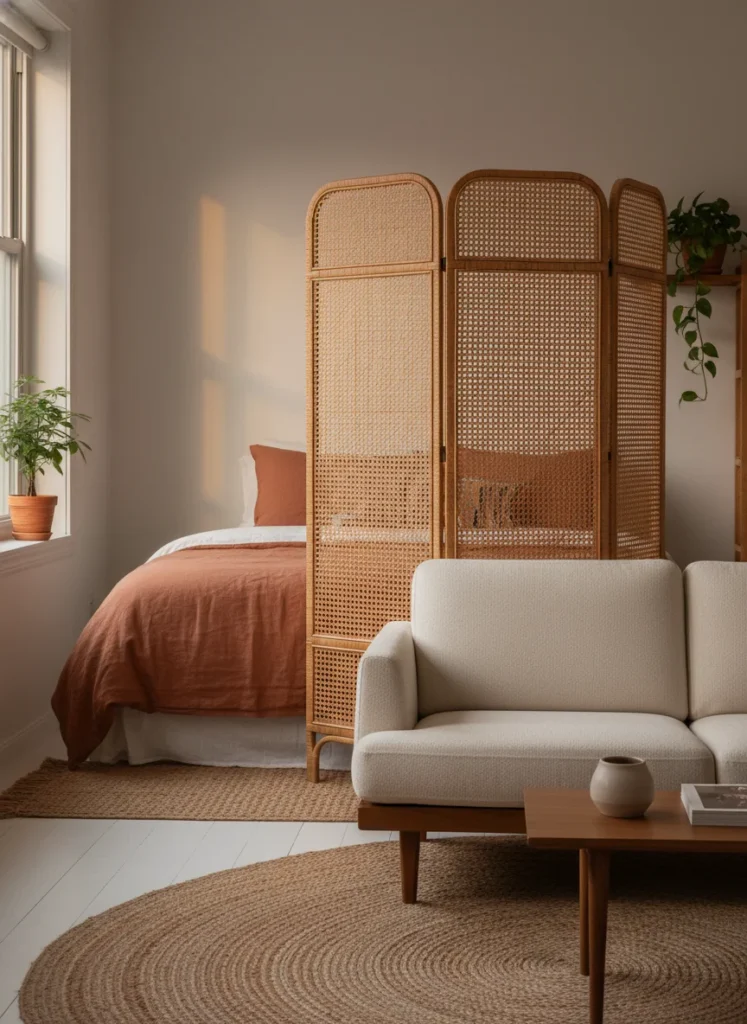
The first and most important spatial decision in a studio apartment under 400 square feet is separating the sleeping zone from the living zone. Without that separation, the bed is visible from the sofa and the sofa is visible from the bed, which means the studio functions as one room with competing identities rather than two distinct spaces that happen to share a footprint.
A freestanding room divider is the most flexible and renter-safe solution. A natural rattan or wood-frame folding divider at around $55 to $85 provides visual separation without blocking light or requiring installation. Position it so the sleeping zone is its own clearly defined area when you are in the living zone, even if the two zones share ten feet of total depth.
The psychological impact of the separation is significant. When the bed is not in your line of sight from the sofa, the living area reads as a living area rather than a bedroom you happen to have a couch in. That perception change makes the studio feel like two rooms rather than one, which is the primary quality that separates studios that look like they cost millions from studios that look like a single room you sleep and eat in.
2. Use a Sheer Curtain Hung From a Ceiling Track as an Alternate Divider
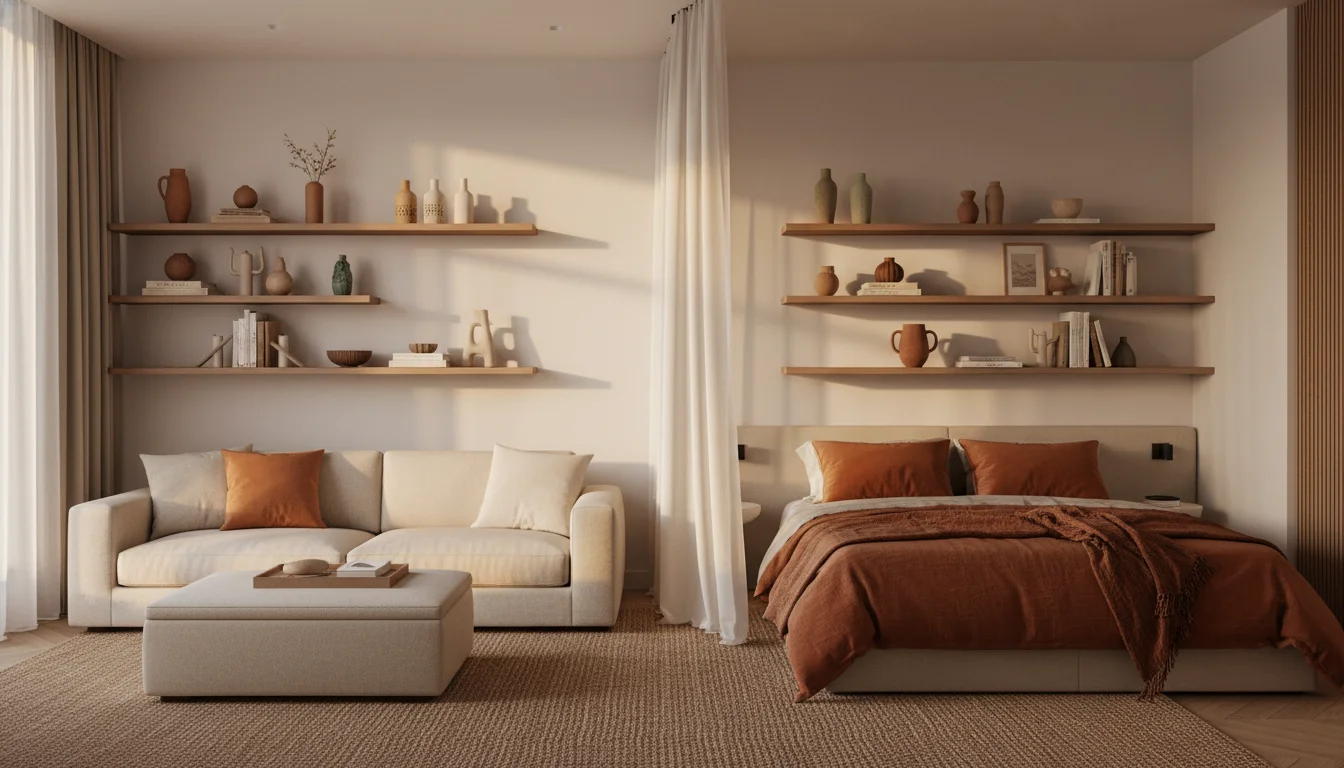
For renters who cannot install a ceiling track, a tension rod mounted between two walls can hold lightweight sheer curtain panels that divide the sleeping area from the living area. The sheerness matters: a solid curtain divider makes the studio feel like a room with a wall built across it, which reads as smaller. A sheer panel filters light, maintains the sense of visual flow, and provides just enough visual separation to define the zones without shrinking the perceived space.
Linen-look sheer panels in cream or warm white are the most versatile choice across different studio aesthetics. They pair with natural wood, warm metals, terracotta, and sage green equally well. The renter-friendly bedroom ideas guide covers tension rod installation in detail as a damage-free alternative for situations where the ceiling is off limits.
3. Choose a Sofa That Faces Away From the Sleeping Area
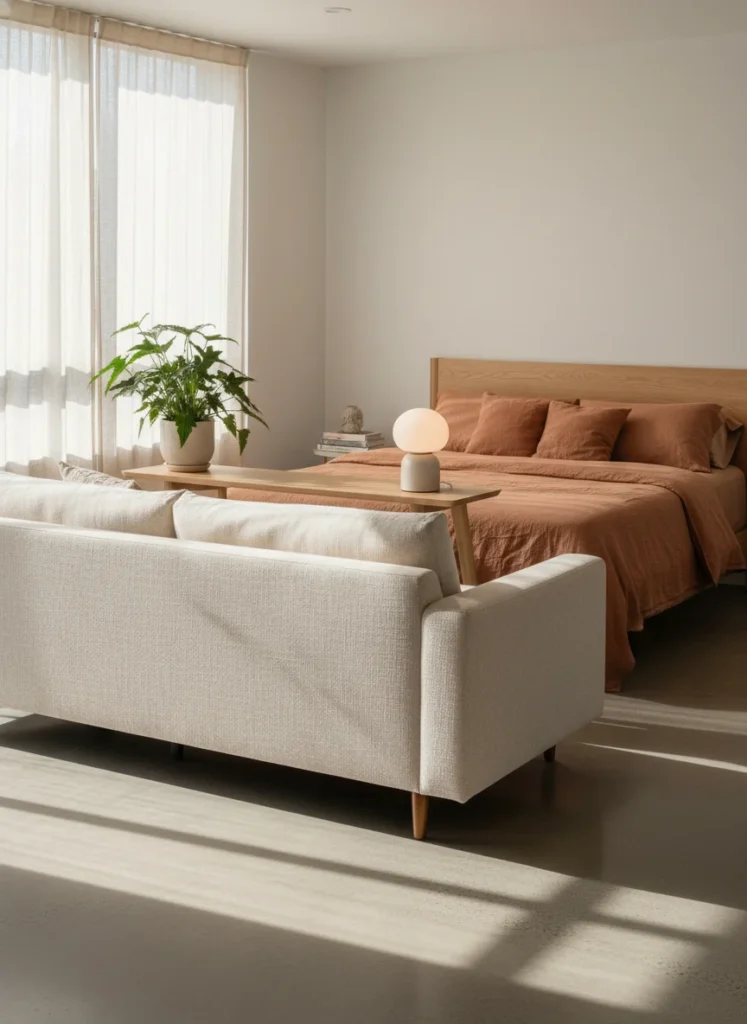
The orientation of the sofa in a studio apartment under 400 square feet is one of the highest-impact spatial decisions available. A sofa that faces toward the sleeping area constantly directs the eye toward the bed, reinforcing the single-room feeling. A sofa oriented away from the sleeping area, facing the main window or the television, creates a clear primary direction for the living zone and uses the sofa back as a secondary visual divider between the two areas.
A narrow console table positioned behind the sofa, in the space between the sofa back and the sleeping zone, provides an additional physical layer of separation and a useful surface for a lamp, a plant, and a few books. This behind-the-sofa table arrangement is one of those designer tricks that appears simple but does significant spatial work in a studio floor plan.
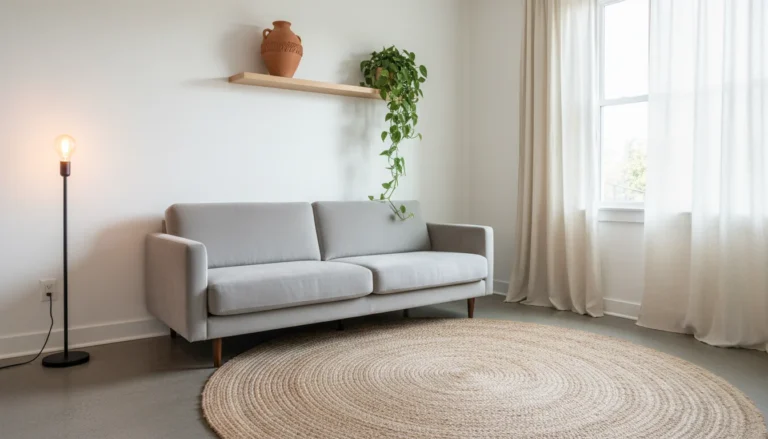
4. Let One Large Rug Define the Living Zone
In a studio apartment under 400 square feet, the rug is one of the primary zone-defining tools available. A large rug in the living area, large enough for the front legs of the sofa and any chairs to rest on it, creates a clearly demarcated living zone that the eye reads as separate from the rest of the studio even when there is no physical partition between them.
The sleeping area gets its own smaller rug beside the bed. The two rugs do not need to match perfectly, but they should be in the same general palette so the studio reads as a cohesive whole rather than two competing rooms. The principle of using rugs to define zones in a single open space is the foundation of every successful open-plan small space approach, and it works in studios under 400 square feet more reliably than any other non-structural zone definition method.
5. Build Vertical Storage on Every Available Wall
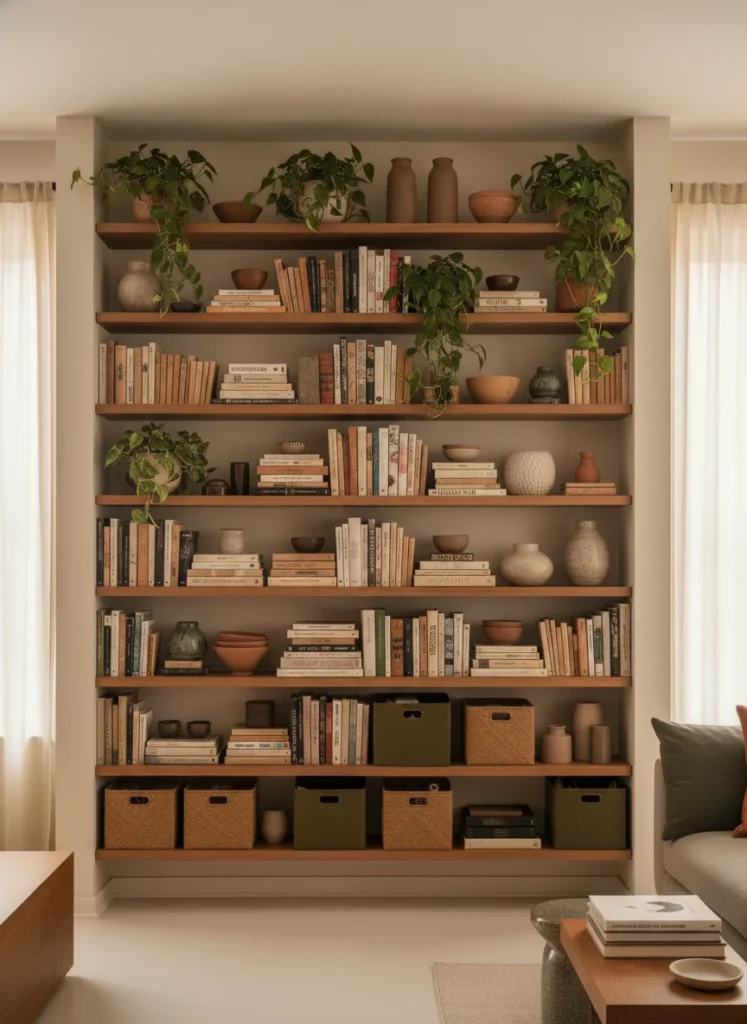
Floor space in a studio apartment under 400 square feet is the scarcest resource in the entire floor plan. Every piece of storage that lives on the floor occupies space that could be circulation space, visual breathing room, or a second function zone. The solution is moving storage vertical: floating shelves, tall wardrobes, wall-mounted organizers, and any other storage system that uses the wall height of the apartment rather than its floor depth.
Most apartments have eight to nine feet of ceiling height and use only the bottom three to four feet of that height for storage and display. The remaining four to five feet above eye level is usable vertical space that can hold significantly more than most people realise when properly shelved. A set of adjustable floating shelves at around $35 to $60 for a set of four, installed from waist height to just below ceiling height, converts unused wall space into meaningful storage without touching the floor at all.
In the sleeping zone specifically, the organization principles covered in the guide to how to decorate a 10×10 bedroom apply directly to the sleeping zone of a studio apartment. The space constraints are equivalent and the vertical storage logic translates fully.
6. Choose a Dining Table That Functions as a Desk
A studio apartment under 400 square feet cannot afford a separate dining table and a separate desk. They are functionally identical surfaces at different heights, which means a single table can serve both purposes if chosen correctly. A compact round dining table at 36 inches in diameter seats two comfortably and functions as a full desk during working hours. The round format eliminates corners, which makes it more navigable in a tight floor plan, and it looks more considered than a rectangular table of equivalent function.
Position the dining-desk table in the zone between the living and sleeping areas if your layout allows it, or against the wall nearest the kitchen. When it is not being used for either dining or work, a small vase and one or two books on the surface styled as a display make it read as part of the room’s intentional decor rather than a utilitarian surface waiting to be used.
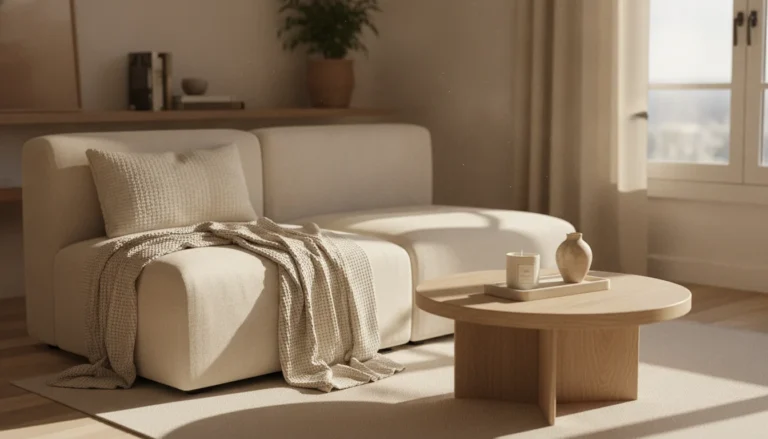
7. Use a Storage Ottoman as the Living Zone Coffee Table
A standard coffee table in a studio apartment under 400 square feet has one job: a surface. A storage ottoman has three jobs simultaneously: a surface with a tray on top, hidden storage inside, and additional seating when the studio has more visitors than the sofa can hold. In a floor plan where every piece of furniture needs to justify its square footage, multifunctional pieces are the most efficient use of the space available.
A large round storage ottoman at around $65 to $90 in a neutral cream or sage green boucle is the version that reads as a deliberate design choice rather than a compromise. Round, so it allows movement around it from any direction. Upholstered, so it contributes softness and warmth to the living zone. Internally accessible, so it eliminates the need for at least one additional storage piece elsewhere in the studio.
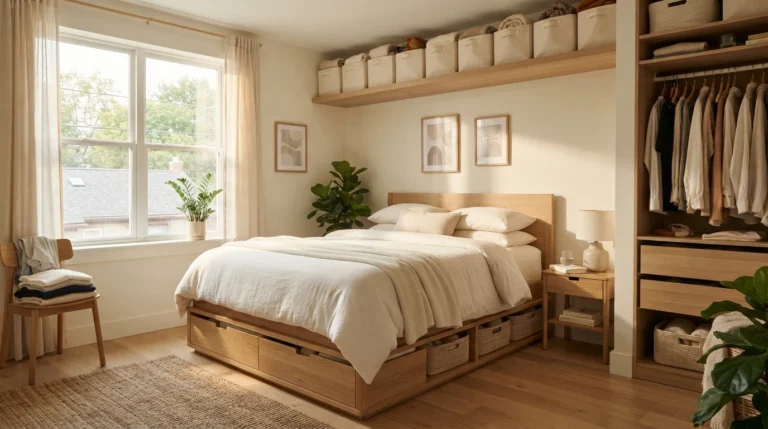
8. Use a Low Platform Bed to Preserve Vertical Space
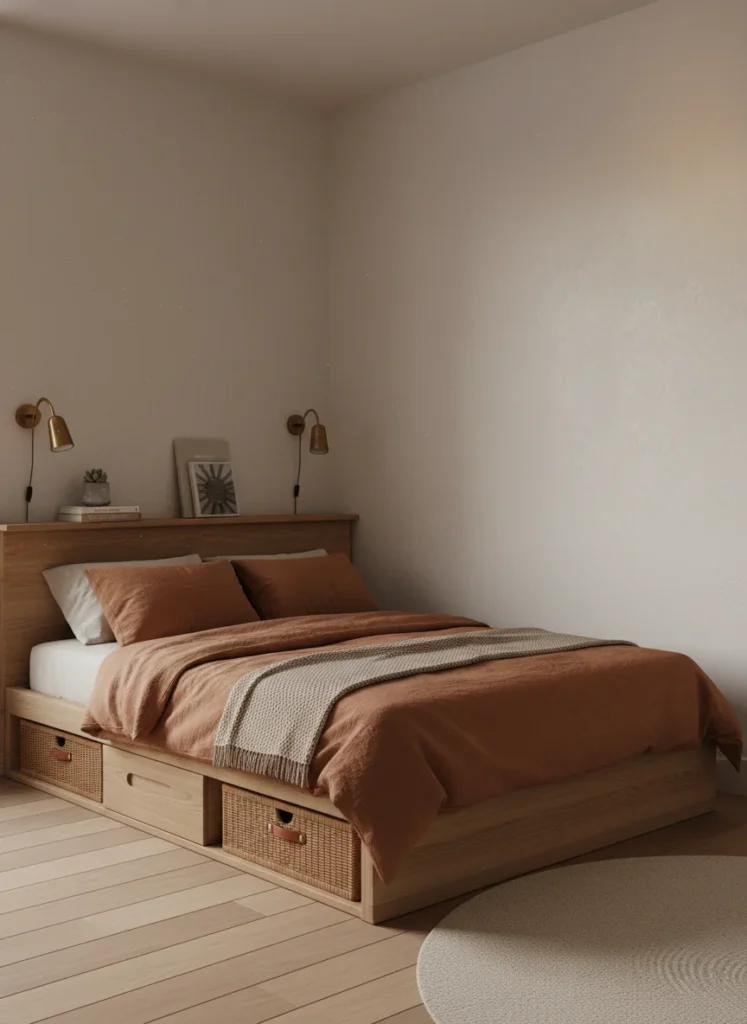
A tall bed frame with an imposing headboard in a studio apartment under 400 square feet visually dominates the sleeping zone and by extension the entire studio. A low-profile platform bed, ideally under 14 inches from floor to frame top, keeps the sleeping zone feeling proportionate and leaves the wall above the bed available for floating shelves, wall-mounted sconces, or a large piece of art that anchors the zone without the headboard doing all the visual work.
The under-bed space on a low platform bed is usable for flat rolling storage boxes, which means the low profile does not sacrifice storage. It simply redistributes it to a horizontal rather than vertical format under the bed rather than in a tall dresser beside it. The floor around the bed stays clear. The room reads as open.
9. Keep a Consistent Color Palette Across All Zones
In a studio apartment under 400 square feet, inconsistent color choices between zones make the studio feel smaller rather than more varied. When the living zone is in cream and sage and the sleeping zone is in dark blue and grey, the eye processes them as two separate rooms that do not belong together, which makes the shared space feel fragmented and tight.
A consistent palette across all zones unifies the studio into a single coherent interior rather than a collection of areas. The palette does not need to be identical in every zone. The sleeping zone can use deeper versions of the living zone’s colors: terracotta as the dominant bedding color where the living zone uses terracotta as an accent, for example. The shared palette is what makes the whole studio read as designed.
The 2026 dopamine decorating color palette guide provides the most practical framework for building a cohesive earthy palette that works across different room zones and different surface types without feeling monotonous or over-coordinated.
10. Install One Statement Light Fixture That Anchors the Living Zone
In a studio apartment, the default overhead light illuminates the entire space uniformly, which removes all the atmospheric variation that makes rooms feel designed. Turning off the overhead light and using a statement arc floor lamp over the sofa, a pendant above the dining table, and bedside sconces in the sleeping zone creates three distinct lighting environments in the same open floor plan. Each zone has its own light quality, which reinforces the zone separation that the furniture and rugs establish.
The statement light for the living zone does not need to be expensive. A sculptural floor lamp with a distinctive silhouette, a woven pendant shade above the table, and plug-in sconces at the bedside: all of these are available at under $50 each and together they transform the studio’s lighting from utilitarian to atmospheric.
11. Use a Large Leaning Mirror in the Living Zone to Double the Perceived Space
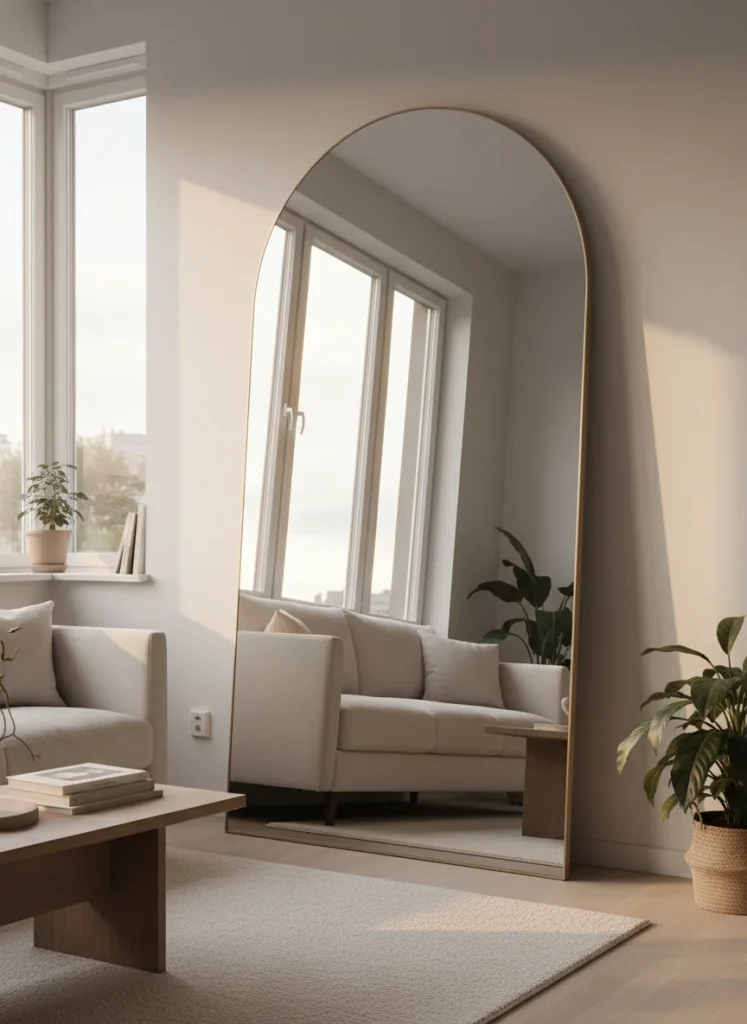
A large leaning mirror in the living zone of a studio apartment under 400 square feet creates the strongest possible visual expansion of the space. When positioned across from the main window it reflects the natural light back into the room and reflects the room itself into what appears to be a continuation of the space beyond the mirror plane. The studio looks like it continues further than it does.
A large leaning arch mirror at 65 inches in warm gold or black costs around $55 to $85, requires no installation, and delivers more spatial expansion per dollar than any other single purchase available in a studio apartment under 400 square feet. Position it, step back, and look at what the room does. The effect is immediate and consistent across every studio configuration I have seen it applied to.
For the small living room elements that apply directly to the living zone of a studio, the complete guide on small apartment living room ideas on a budget covers rugs, lighting, and furniture arrangement in the depth that a studio’s living zone deserves.
A studio apartment under 400 square feet is the most demanding decorating challenge available in residential design. But the constraints are specific and the solutions are specific. None of the eleven decisions above require a renovation, a significant budget, or structural changes. They require knowing which moves matter most in the smallest possible floor plan. Which of these are you most ready to try first?