
This post contains affiliate links. We may earn a small commission if you purchase through our links, at no extra cost to you.
Small living room ideas fall into two categories: the ones that tell you to buy things, and the ones that tell you how designers actually think. This is the second kind. Most of what separates a small living room that looks elevated from one that looks ordinary is not the furniture or the budget. It is a set of specific decisions that professional designers make automatically and that rarely appear in standard decorating guides because they feel too simple to write a headline about.
These fourteen things are what I have observed consistently across every well-designed small living room I have studied, photographed, or spent time in. Some of them will require a purchase. Most of them require only a different decision about what is already in your space.
Before we continue, if you’re tired of buying decor that doesn’t look right together, I created something specifically for this…
What Most Small Living Room Ideas Miss
The most common small living room mistake is treating the size as a constraint to work around rather than a parameter to design within. Designers do not try to make a small living room look like a large one. They design specifically for what a small living room does well: intimacy, focus, the feeling that every element is in close enough relation to the others to form a coherent whole.
These fourteen elements reflect that approach. They are not tricks for making a room look bigger. They are the specific choices that make a small living room look finished, considered, and expensive, which is a more useful goal than the illusion of more square footage.
1. A Mirror That Is Bigger Than You Think You Need
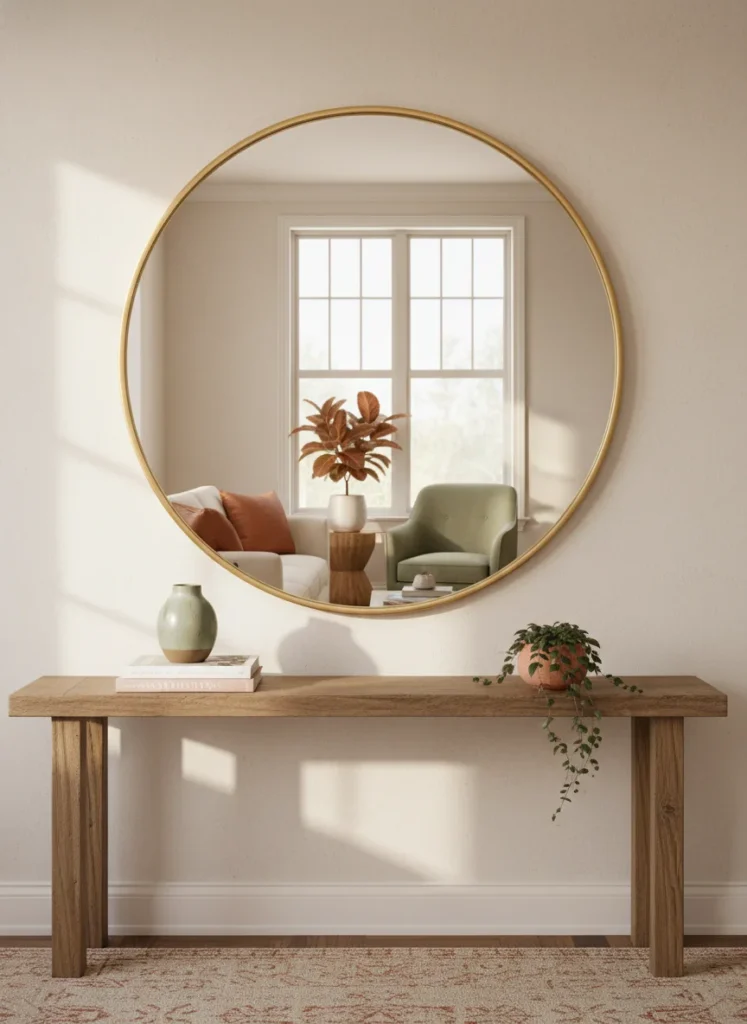
In a small living room, the size of the mirror the designer chooses is almost always larger than the homeowner would have chosen independently. This is intentional. A mirror at 30 to 36 inches in diameter or larger does not just reflect the room. It becomes a focal point in its own right, contributes a sense of depth and spatial expansion, and catches and redistributes light in ways that a smaller mirror does not achieve.
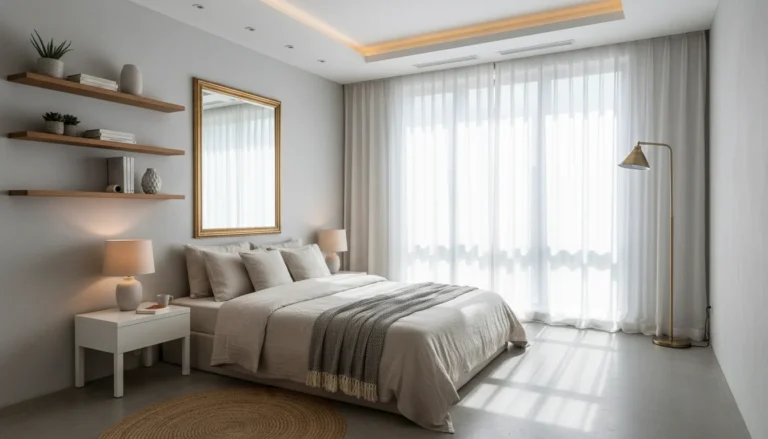
Position matters as much as size. The mirror goes across from the main source of natural light, typically across from the window, where it catches incoming light and reflects it back into the room. A large round gold-framed wall mirror at around $45 to $75 hung opposite the window is one of the best single purchases in the small living room toolkit.
The shape matters too. Round mirrors in small living rooms read as decorative objects rather than functional afterthoughts. They soften the hard angles of the furniture and introduce a circular form that contrasts with the rectangular planes of the walls, sofa, and coffee table. That contrast is part of what makes the room feel designed.
2. One Floor Lamp Instead of Multiple Table Lamps
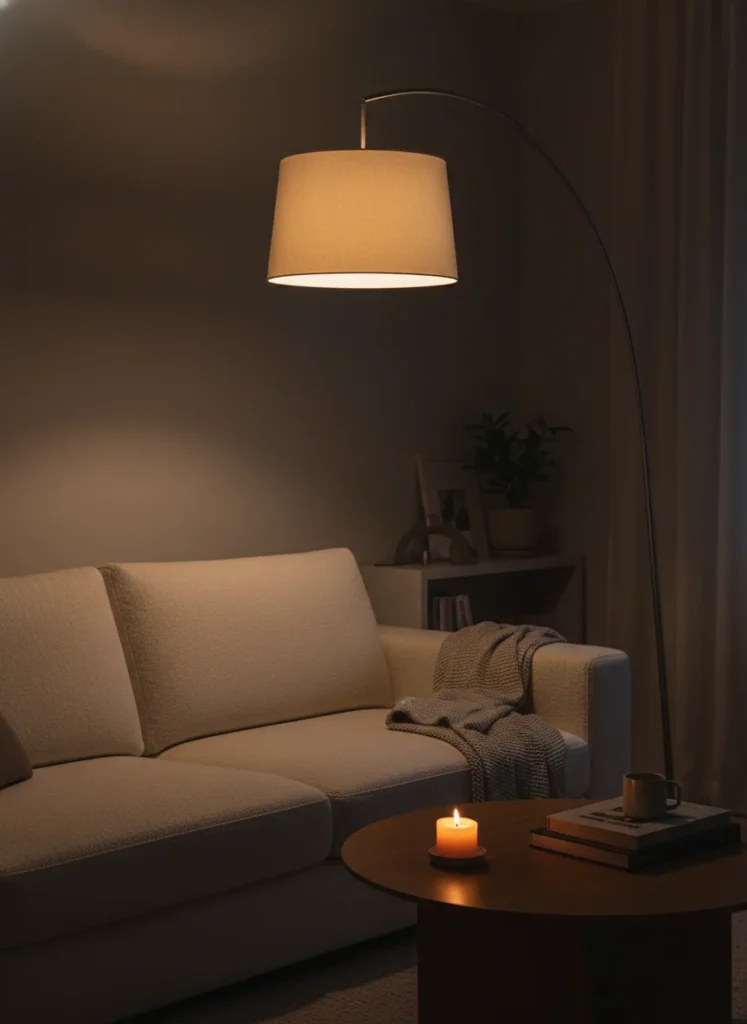
Multiple table lamps in a small living room compete for visual attention, require surface space, and create a scattered lighting effect that feels residential in the least elegant sense of the word. One well-positioned floor lamp with a quality shade does the opposite: it consolidates the lighting, creates architectural presence, and adds a sculptural element that table lamps can never replicate.
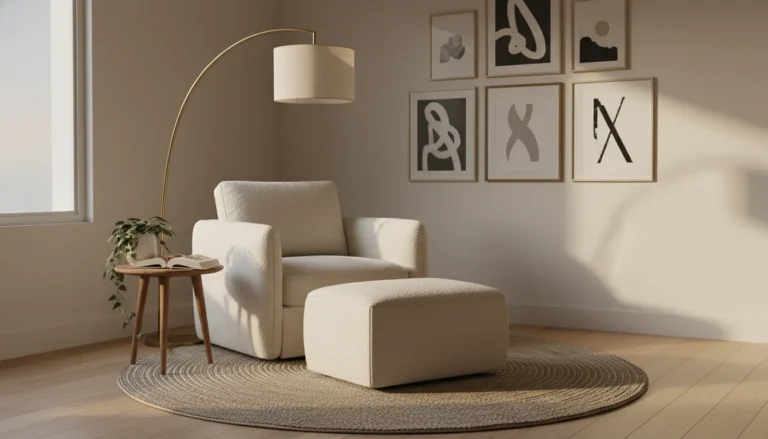
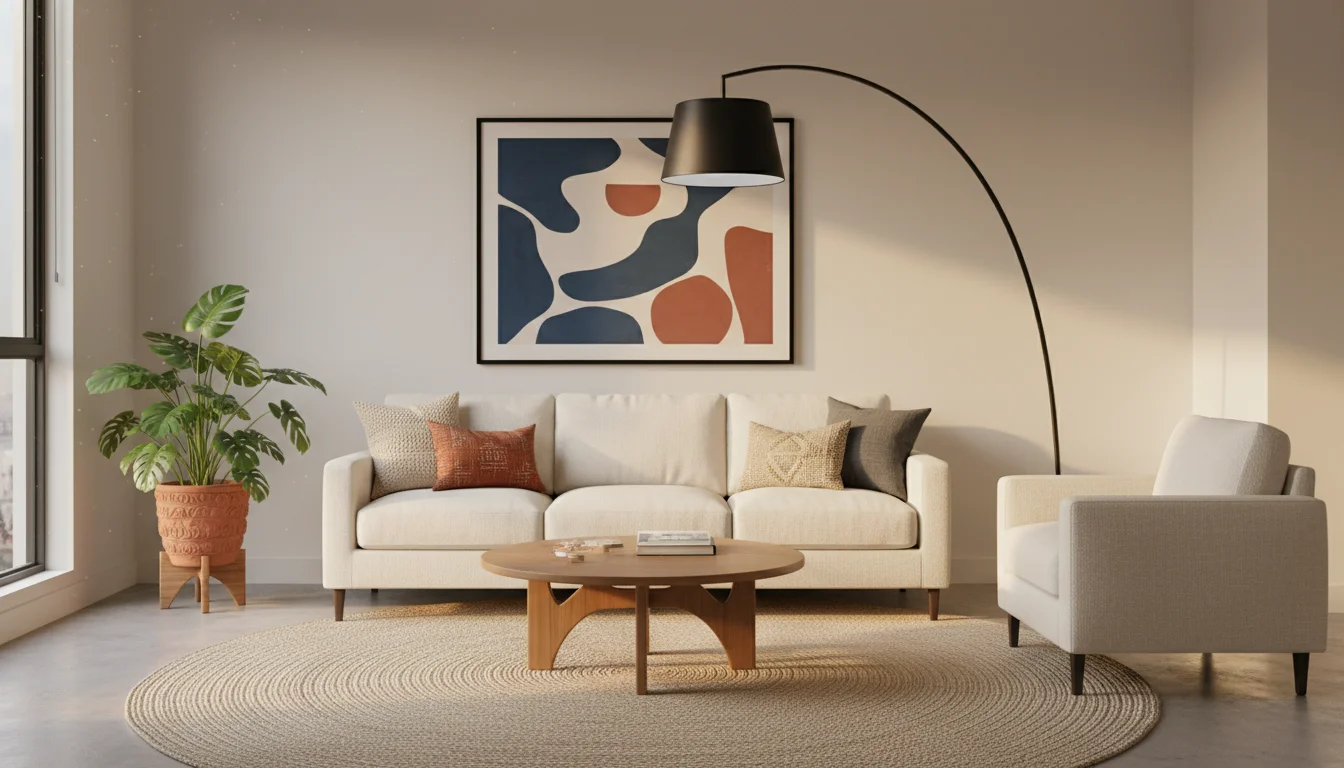
The arc floor lamp is the specific format that designers reach for most consistently in small living rooms. The curving arm that extends over the sofa provides directional overhead-style lighting without a ceiling fixture, makes the room feel like it has more height, and introduces an asymmetric element that prevents the space from feeling static. A brushed brass arc floor lamp with a cream linen shade runs around $55 to $90 and earns its space in a small living room by functioning as both a lighting source and a designed object.
3. A Rug That Is Bigger Than the Furniture
The rug size mistake that appears in almost every non-designer small living room: the rug is too small. A rug that only sits under the coffee table and does not extend to the front legs of the sofa makes the furniture look like it is floating unanchored in the middle of the room. That floating quality is what makes a room feel incomplete regardless of what else is in it.
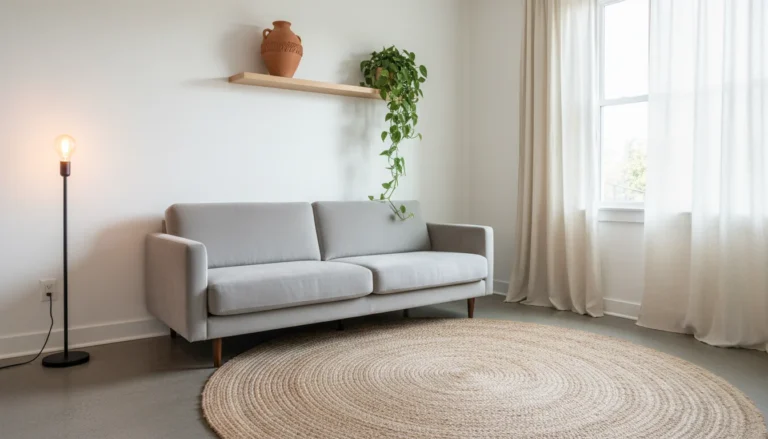
The designer rule for a small living room: the rug should be large enough for the front legs of all seating to rest on it. For most apartment living rooms, that means a minimum of 8 by 10 feet. This feels counterintuitive because in a small room a large rug seems like it would make things feel smaller. It does the opposite. By anchoring the furniture into a defined zone, it creates the impression of a purposefully composed room within the larger space.
A natural jute area rug at 8 by 10 feet in a neutral tone runs around $55 to $90 and is genuinely one of the most impactful single purchases in the small living room upgrade sequence. The natural fiber texture adds warmth and depth at floor level that synthetic rugs at the same price point rarely match.
4. Furniture Pulled Away From the Walls
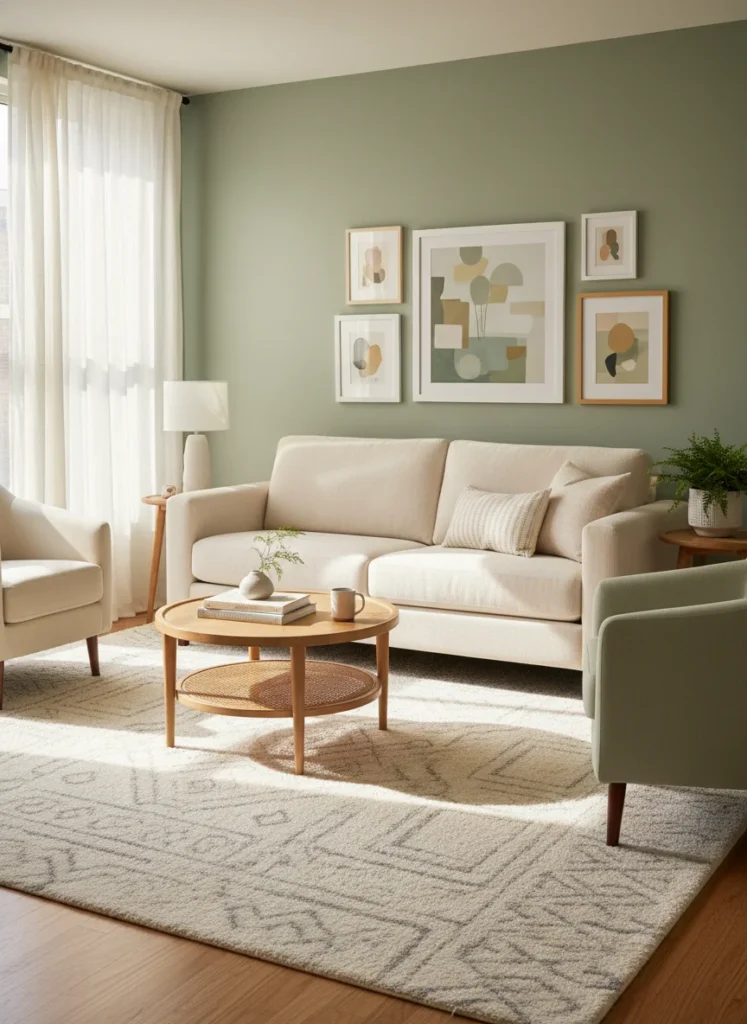
The instinct in a small room is to push all the furniture against the walls to maximize the central floor space. Designers do the opposite. Furniture pulled six to twelve inches away from the wall creates breathing room around each piece, which makes individual items read as intentionally placed objects rather than things pushed out of the way. The central floor space that looks like it would be maximized by wall-hugging furniture is actually made more functional and more visible when the furniture is pulled inward.
Pull the sofa forward from the wall. Create a deliberate gap. If space allows, place a narrow console table in the gap between the sofa back and the wall, which provides a surface for a lamp or plant and fills the gap with purpose. The room will feel more designed within thirty seconds of making this change.
5. One Large Piece of Art Instead of Many Small Ones
In a small living room, a gallery wall of six to eight small prints creates visual noise rather than visual impact. Each piece competes with the others for attention and the wall reads as busy rather than bold. One large print, specifically a piece that is at least 24 by 30 inches or larger, functions as a proper focal point: the eye finds it, settles on it, and the room feels anchored.
The most reliable approach for a small apartment living room: one piece in a frame that is large enough to make a statement above the sofa, in colors that are present elsewhere in the room’s palette. A large framed abstract art print in warm earthy tones at 24 by 36 inches runs around $30 to $55 and creates the kind of deliberate focal point that makes small living room ideas actually land the way they are supposed to. Hang it so the center of the piece is at eye level, approximately 57 to 60 inches from the floor.
6. A Plant That Is Taller Than the Furniture
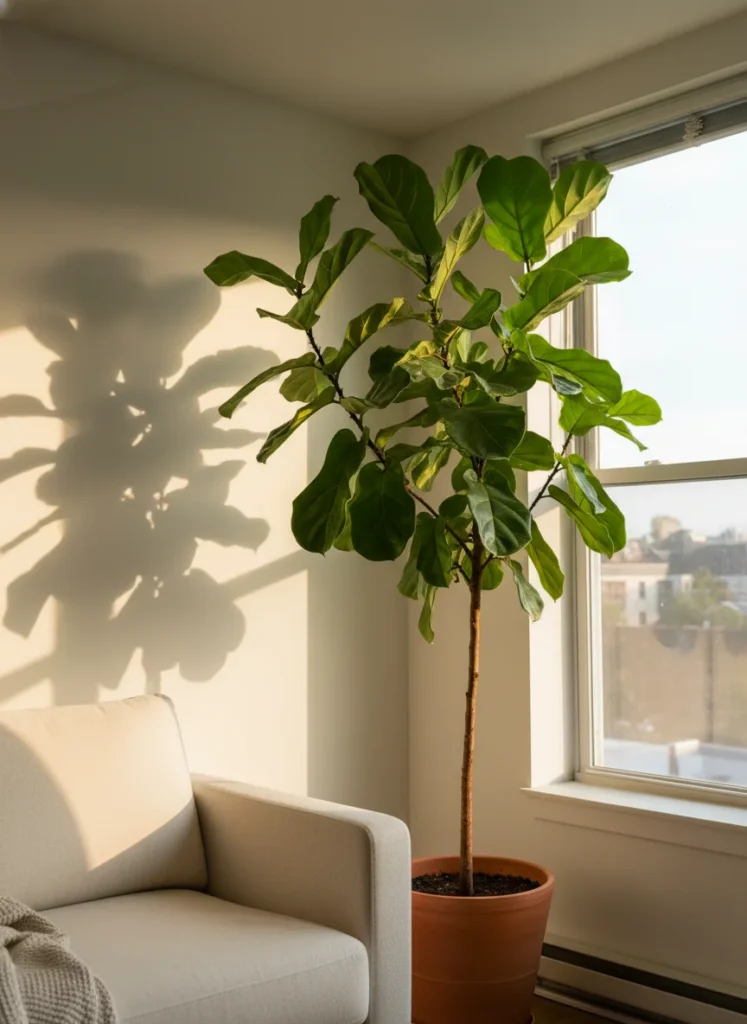
Small plants in small living rooms disappear. They become part of the visual background because they are too close in scale to the objects around them to register as a distinct design element. A large plant, specifically one tall enough that its canopy reaches above the top of the sofa or side table, introduces vertical scale into a room that tends to feel compressed horizontally.
The plant in the corner between the sofa end and the window is the designer’s standard positioning because it fills a zone that furniture cannot fill effectively, draws the eye upward to the ceiling, and creates the kind of living, organic presence that makes a room feel inhabited rather than styled. For small living rooms with limited natural light, a large realistic artificial alternative achieves the same visual result. For those with adequate light, a monstera, fiddle leaf fig, or large snake plant in a terracotta pot is the real version.
7. A Tray on the Coffee Table That Edits the Surface
The coffee table in most small living rooms becomes a flat storage surface: remotes, coasters, books, candles, chargers, and whatever else landed there. It looks like a surface being used rather than a surface being designed. A tray changes that in a specific way: it creates a defined zone within the larger surface that visually contains the objects inside it, making them read as a composed grouping rather than accumulated clutter.
Style the tray with three objects maximum: one candle, one small vase or plant, and one book with the cover facing up. Everything else, including the remotes, goes off the tray and ideally off the visible surface entirely. The tray tells the eye where to look and the objects inside it read as curated because they have been given a defined space rather than just sitting on an undifferentiated surface.
8. Curtains That Pool Slightly on the Floor
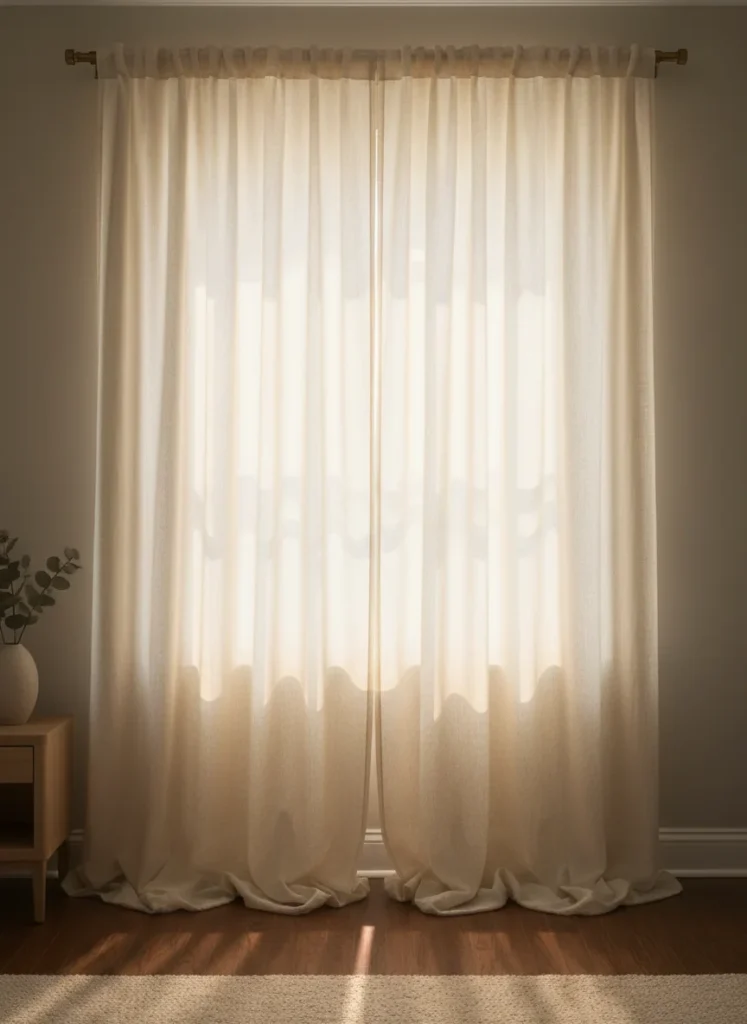
Curtains that end exactly at the window frame cut the wall at the window height. Curtains that hang from ceiling height and pool slightly on the floor create an unbroken vertical line from ceiling to floor, which is one of the most reliable visual height tricks available in any small living room. The slight pool at the floor, typically one to two inches of fabric resting on the floor, adds the quality of deliberate excess that reads as luxury.
Sheer or semi-sheer linen in cream or warm white is the material that works in the widest range of small living room aesthetics: it lets light through while providing privacy, it drapes well without requiring an expensive fabric, and it reads as soft and considered rather than heavy and imposing. For the full guide to small living room ideas that combine all of these elements into a cohesive approach, the small apartment living room ideas guide covers each component in detail.
9. A Consistent Metal Finish Throughout the Room
Mixed metal finishes in a small living room read as uncoordinated even when each individual piece is beautiful. Chrome legs on the coffee table, brass handles on the side table, silver picture frames on the wall, and matte black lamp base: each piece is fine in isolation and together they create visual noise that prevents the room from feeling coherent.
Designers pick one metal finish and use it across every metallic element in the room: lamp base, picture frames, mirror frame, curtain rod, cabinet hardware if applicable. Brushed brass is the most versatile choice for warm-toned small living rooms. Matte black works better in cooler, more graphic palettes. The consistency is what makes the room feel designed rather than assembled.
10. One Deliberately Empty Corner
The instinct in a small living room is to fill every corner with something useful or decorative. Designers regularly leave one corner intentionally empty, and the empty corner does more for the room than filling it ever would. An empty corner gives the eye somewhere to rest between the more composed elements of the room. It prevents the space from feeling dense and overworked.
If the empty corner feels unresolved, a single tall plant or a floor lamp is the lightest possible addition that maintains the sense of openness while giving the corner a purpose. But genuinely: sit with an empty corner for a week before filling it. The room may not need what you think it needs in that space.
11. Books Displayed With Intention in One Location
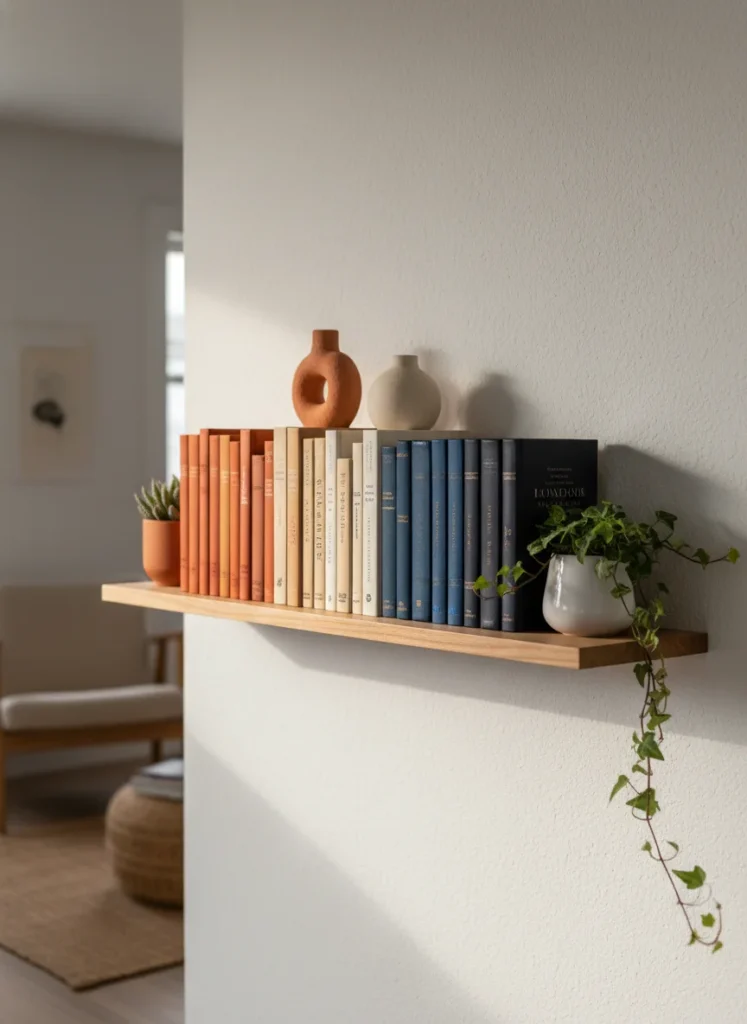
Books scattered across multiple surfaces in a small living room create visual fragmentation. Books concentrated in one well-styled location create a focal point and a sense of intellectual character that nothing else in a room replicates at the same cost. Choose one shelf, one section of the coffee table, or one corner of the sofa table and make it the book zone. Style the books by spine color grouping and add one or two small objects between the groupings.
A few books stacked horizontally rather than standing vertically adds variety to the display and creates a base for a small object on top of the stack. The horizontal stack with a small vase on top is one of the most consistently elegant small details in a well-styled living room and it requires nothing except the books you already own and a vase from the kitchen.
12. A Throw That Matches Nothing Perfectly
A throw blanket that matches the sofa exactly looks like an accessory that was purchased as a set. A throw blanket in a color that relates to but does not exactly match the sofa and pillows looks like an independent design choice. The distinction between a room that looks shopped and a room that looks lived in is often as simple as whether the textiles appear to have been chosen together or chosen separately for different reasons and happened to coexist beautifully.
In small living room ideas specifically, a throw in a warm earthy tone that picks up one of the secondary colors in the rug pattern, rather than matching the dominant sofa color, gives the room the layered quality that makes it look like it evolved over time rather than arrived fully formed from a catalog.
13. One Item That Is Clearly Vintage or Secondhand
A room where every item is new has a quality that designers call “unbroken.” Everything is perfect. Nothing has any history. The result is a space that looks like a showroom rather than a home. One vintage or secondhand item, a lamp from an estate sale, a ceramic vase from a thrift store, a small piece of art from a flea market, introduces the irregularity and character that makes a room feel inhabited by a real person with a real taste history.
It does not need to be prominently displayed. A small terracotta pot on a shelf that is clearly handmade and slightly imperfect does more for the room’s authenticity than a set of matching machine-made ceramics from a big box store. The imperfection is what reads as real. For the approach to dopamine decorating a living room on a budget, vintage and secondhand objects are one of the most consistent recommendations for exactly this reason.
14. A Storage Ottoman as the Coffee Table
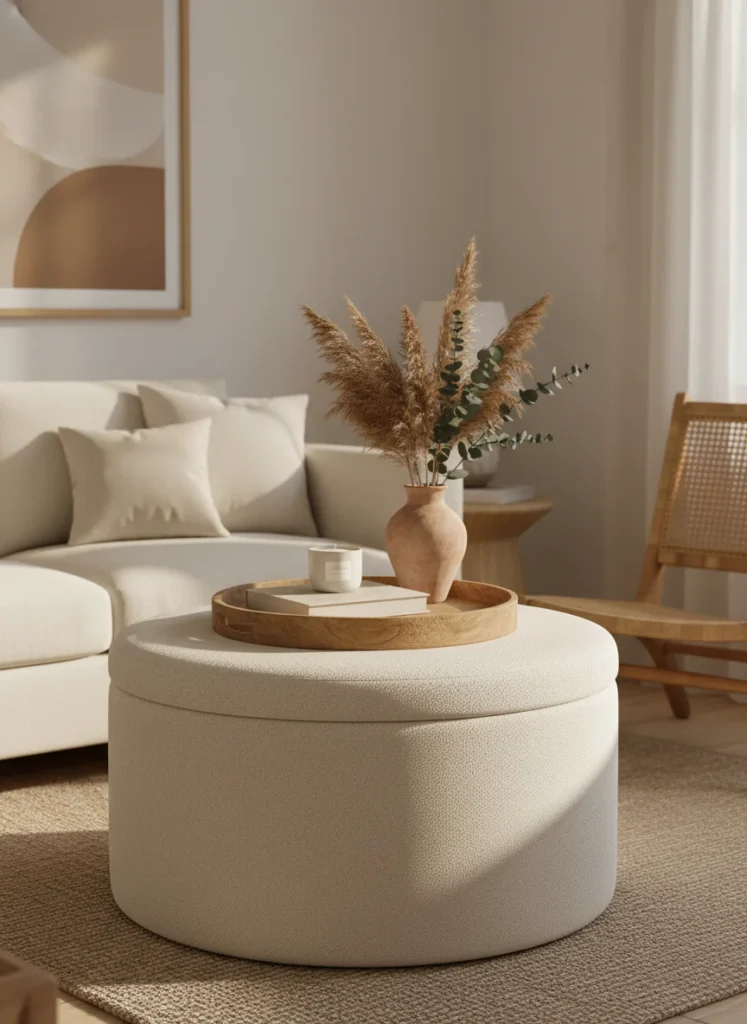
A standard coffee table in a small living room occupies floor space, has edges that bruise shins, and offers only one function: a surface. A storage ottoman of similar dimensions occupies the same floor space, has no sharp edges, provides hidden storage inside, functions as additional seating when needed, and with a tray on top provides the same coffee table surface. It also introduces a soft texture to the room that a hard-surface coffee table cannot offer.
The round format works best in small living rooms because it eliminates corners and allows movement around it from any direction. A large round boucle storage ottoman at around $65 to $95 in cream or sage green is genuinely one of the most practically and aesthetically sound purchases in the small living room toolkit. It solves three problems simultaneously and does not look like a compromise solution. It looks like a design choice.
The small living room that feels elevated is almost never the one with the most objects or the most expensive individual pieces. It is the one where every decision has been made with the room as a whole in mind rather than as individual purchases. That is the consistent pattern across every one of these fourteen elements. Which one of them are you most ready to implement right now?