
This post contains affiliate links. We may earn a small commission if you purchase through our links, at no extra cost to you.
The most common reason people give for not trying dopamine decorating is the paint conversation. Either they rent and cannot get permission, or they own and cannot face the commitment, or they simply do not want to roll up their sleeves on a weekend and spend six hours with a brush and a roller and a dozen YouTube tutorials.
Here is what nobody mentions often enough: dopamine decorating without painting your walls is not a compromise. For small spaces specifically, the no-paint approach often produces results that are just as bold, just as personal, and significantly more flexible than anything paint can achieve. You can change your mind. You can evolve the room. You are not locked in.
Everything in this article connects to the broader approach covered in the full dopamine decorating guide and the specific color choices explored in the 2026 dopamine decorating color palette. The difference here is that none of these moves require a paint brush, a primer, or a landlord’s permission.
Before we continue, if you’re tired of buying decor that doesn’t look right together, I created something specifically for this…
Peel-and-Stick Wallpaper: The Closest Thing to Paint Without Painting
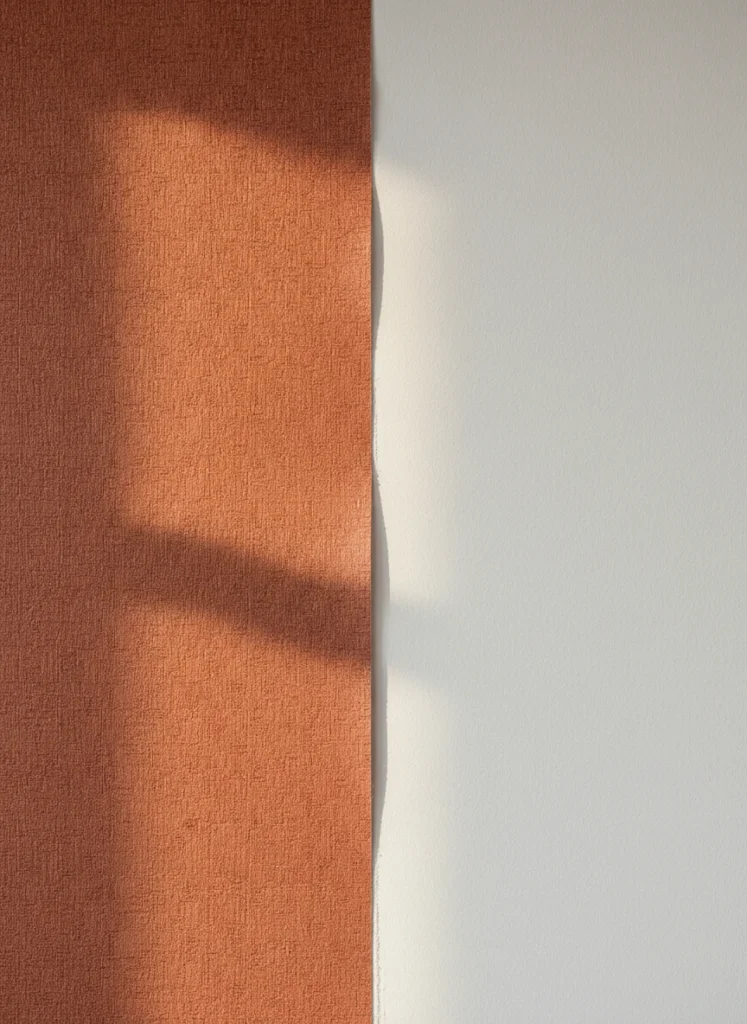
Peel-and-stick wallpaper is the most direct substitute for paint in a dopamine decorating scheme. It goes on in an afternoon, comes off without damaging the surface beneath, and delivers the same wall-as-color-anchor effect that paint does, sometimes more dramatically because the texture of the wallpaper adds a tactile dimension that a painted wall cannot.
The application matters as much as the pattern choice. Clean the wall first with a damp cloth and let it dry completely before applying any panel. Start from the top and work downward, smoothing each section with a credit card or a squeegee to eliminate air bubbles. Take your time on the first panel because everything that follows aligns to it. A rushed first panel produces a finished wall that looks rushed.
For the 2026 dopamine decorating palette, a terracotta textured peel-and-stick panel at around $38 to $52 delivers wall-color impact in the right palette without any of the commitment. Apply to a single accent wall rather than the whole room. The impact of one bold wall in a small room is equivalent to four bold walls in a large room.
How to Try Dopamine Decorating Without Painting Using Bold Textiles
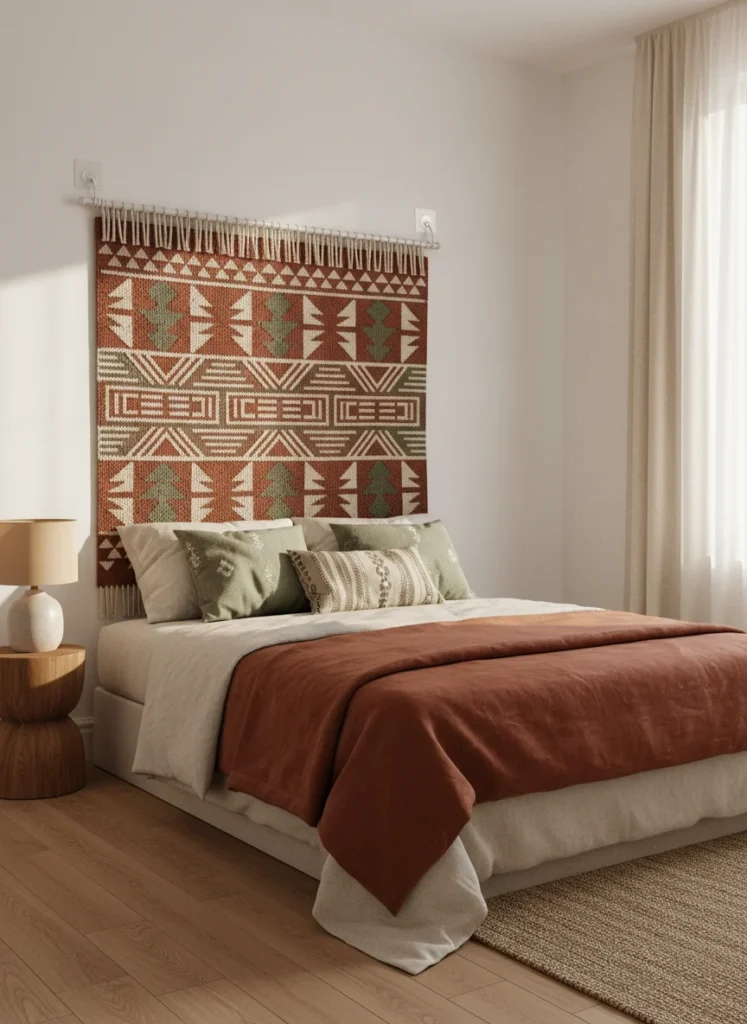
Textiles do something that paint cannot: they add texture, warmth, and softness to a wall simultaneously. A large tapestry or woven wall hanging on the main feature wall of a bedroom or living room delivers color, pattern, and dimension in a way that a flat painted surface never achieves. And it hangs on command hooks. It comes down in thirty seconds.
The key to a tapestry that reads as intentional rather than improvised is scale. The tapestry should be at least as wide as the furniture it hangs above, a full queen-bed-width tapestry above a bed, or a sofa-width piece above a sofa. A tapestry that is too small for the wall behind it looks like it wandered in from a college dorm rather than a deliberately decorated apartment.
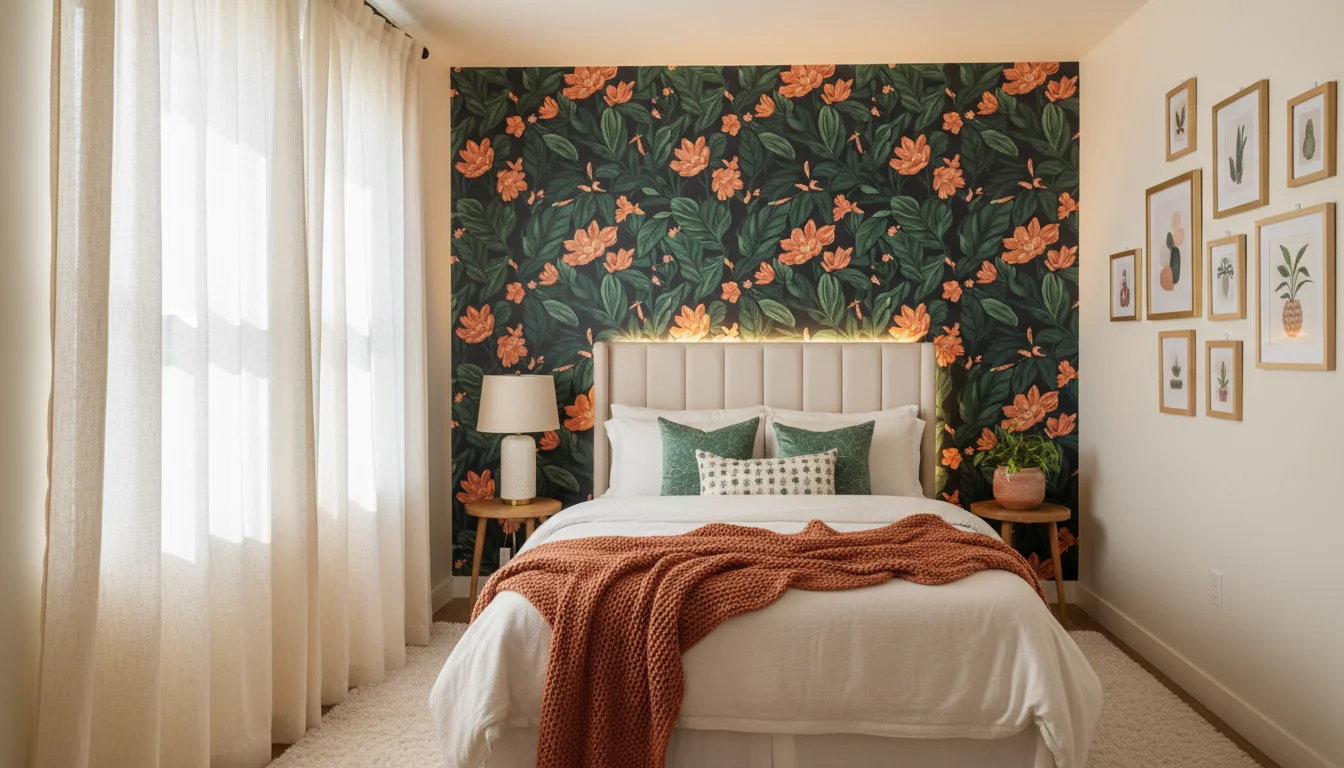
A large woven tapestry in terracotta and cream geometric pattern at around $30 to $45 changes the entire character of a room with a single purchase and two command hooks. In my bedroom, the tapestry I used served as both the headboard and the color foundation for the entire room. Everything else I chose responded to what was in that textile.
Rugs as Floor-Level Color Anchors When You Cannot Touch the Walls
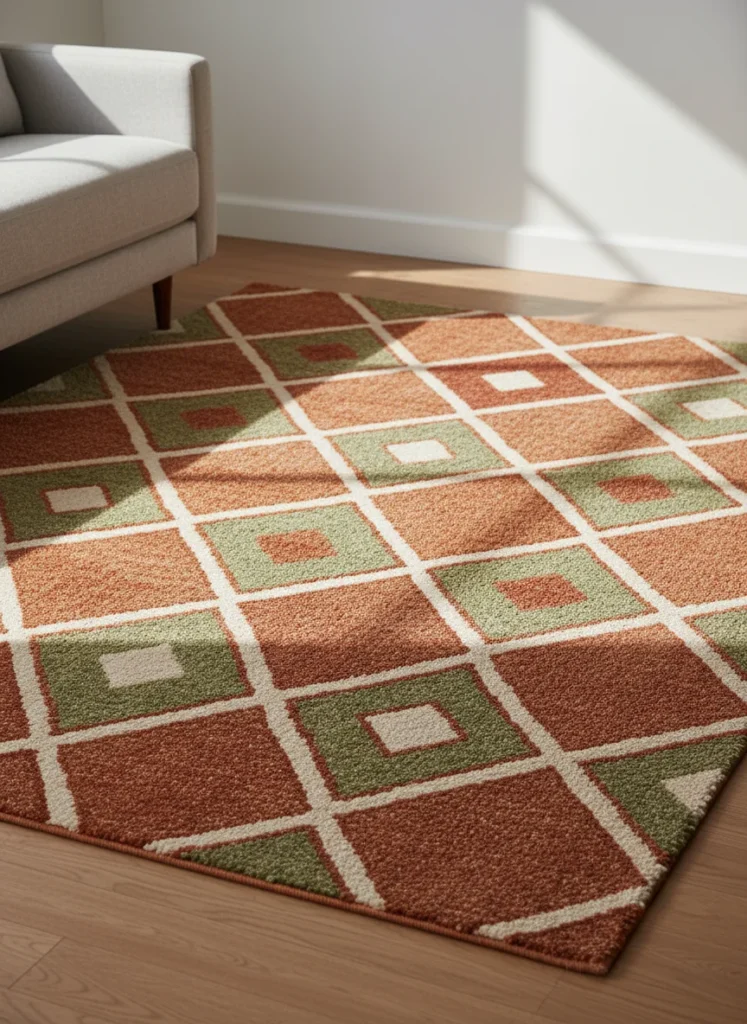
When the walls are off limits, move the color to the floor. A bold area rug in the right pattern and palette becomes the color anchor for an entire room from the ground up. Every piece of furniture that sits on it, every object on the shelves above it, reads in relation to what the rug establishes. It is the foundation that makes the rest of the room cohere.
For dopamine decorating without painting, the rug needs to carry more visual weight than it would in a room where the walls are doing some of the color work. Go bolder in pattern and richer in color than you think is necessary. In a small apartment living room, a deeply saturated terracotta geometric at 8×10 does more for the dopamine decorating aesthetic than five small accent pieces scattered around a room with white walls.
Pair the rug with bold velvet throw pillow covers in palette-matching colors at around $25 for a set of four. The rug establishes the color story from the floor. The pillows echo it at seated eye level. Together they fill the room with the dopamine decorating palette without touching a single wall.
The Gallery Wall That Replaces a Feature Wall When You Cannot Paint
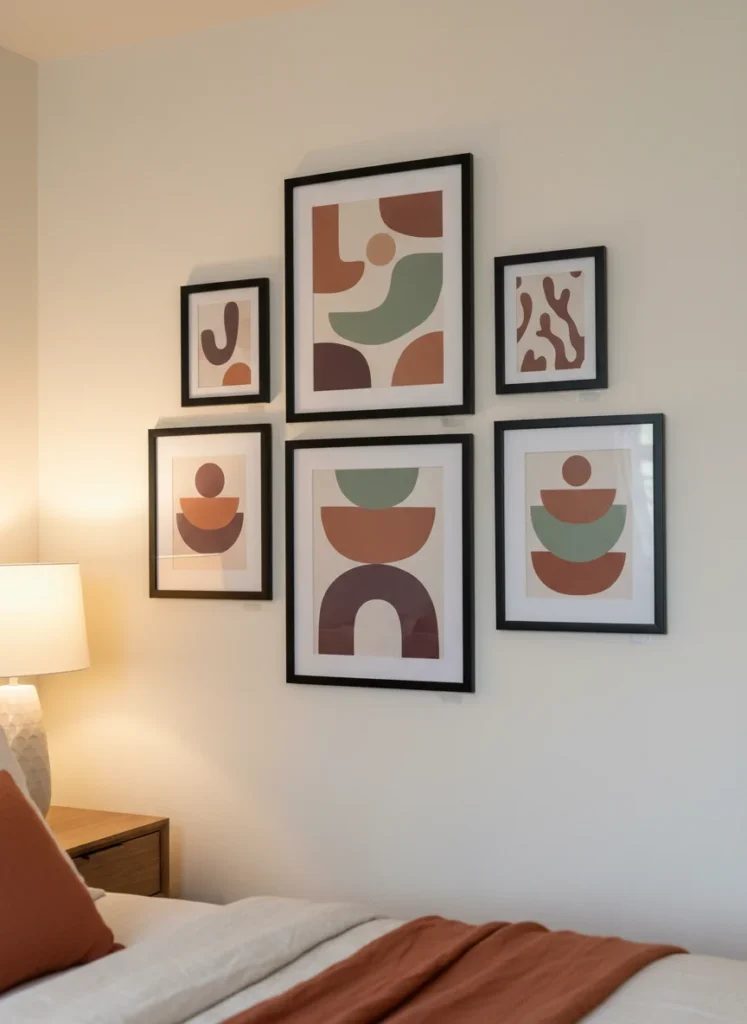
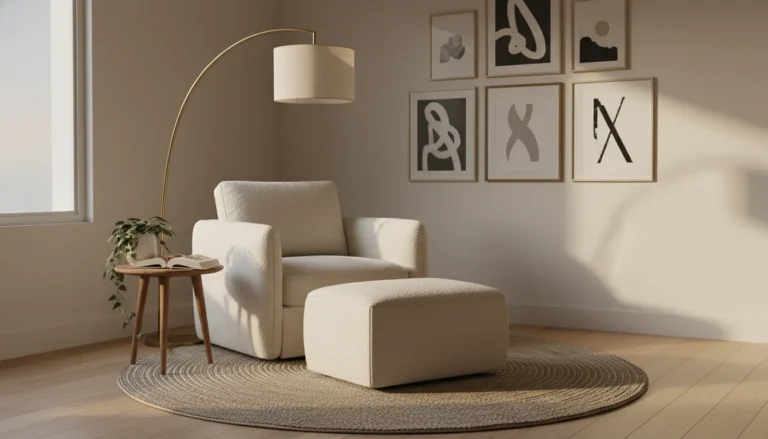
A well-executed gallery wall achieves something that a single paint color cannot: it introduces multiple colors, multiple textures, and a personal visual story simultaneously. When the walls themselves are off limits for color, a gallery wall on a single key wall does the work of a feature wall in a completely removable way.
Choose prints in the dopamine decorating color palette you have established elsewhere in the room. Three to five pieces in a cohesive color story across varying sizes feels curated. More than seven pieces on a small wall tips into visual noise. Use large damage-free picture hanging strips at around $12 for a pack of sixteen. They hold frames up to 16 pounds and leave absolutely no marks on rental walls when removed correctly.
Plan the arrangement on the floor before touching the wall. Photograph the floor arrangement, then transfer it to the wall using the photograph as your reference. The fifteen minutes you spend planning on the floor saves you from the thirty minutes of repositioning holes and misaligned frames on the wall.
Furniture as the Color Statement When Walls Stay White
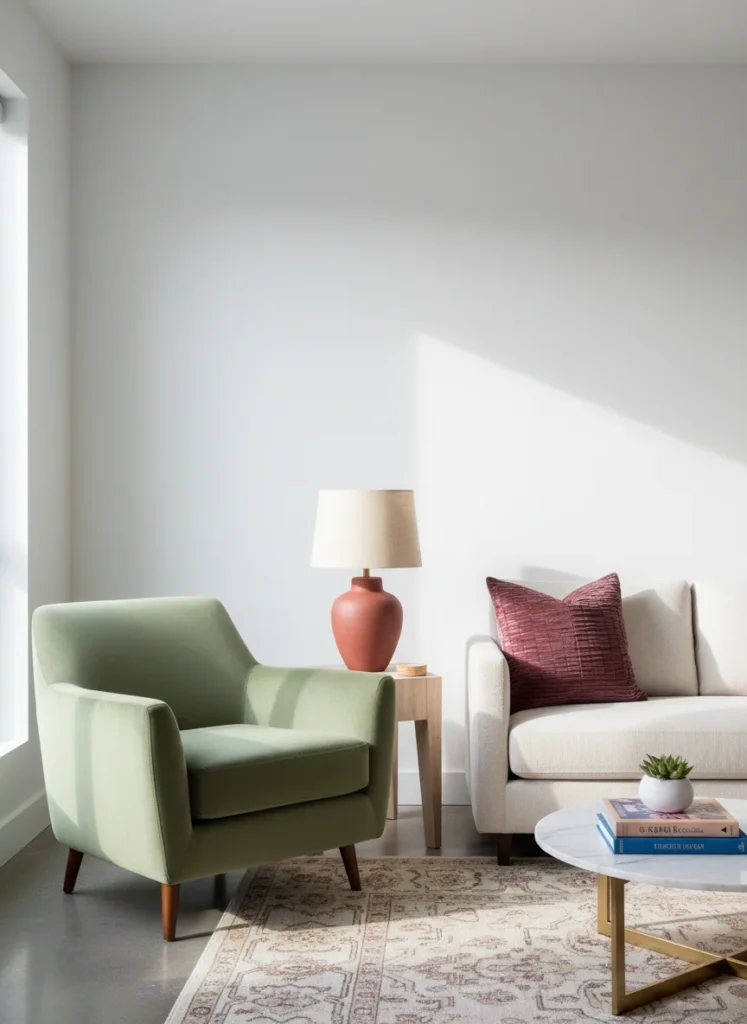
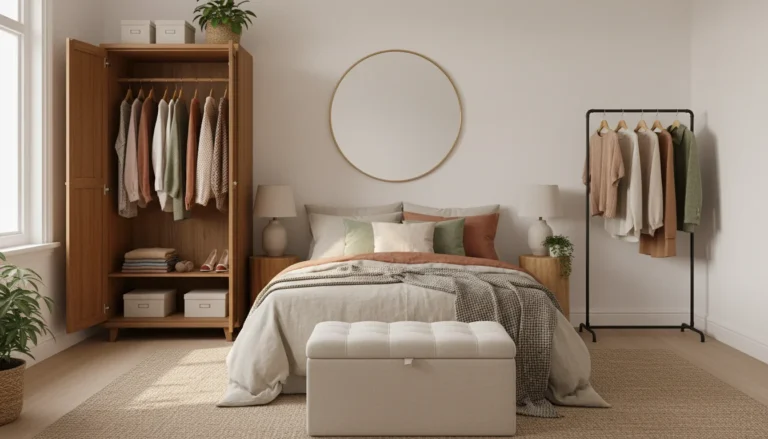
White walls with intentionally colored furniture is one of the strongest dopamine decorating strategies available precisely because of the contrast. Every colored piece of furniture stands out more clearly against white than it ever would against a competing wall color. White walls are not a failure of ambition in dopamine decorating. Used deliberately, they are the canvas that makes every other bold choice land harder.
A sage green velvet armchair in a living room with white walls does not need the wall behind it to be anything other than white. The chair speaks for itself. A terracotta ceramic lamp on a side table against a white wall is a color story on its own. The white wall amplifies the impact of each individual choice by giving it nowhere to hide and nothing to compete with.
For the bedroom specifically, the dopamine decorating bedroom ideas in this cluster cover in detail how bold bedding on a white-walled bed creates exactly this effect at the room’s largest surface. The principle is the same whether it is a chair, a lamp, or a duvet. White walls plus one deliberately colored piece equals a dopamine decorating result without painting a single surface.
Color Through Lighting: The No-Paint Move Nobody Talks About
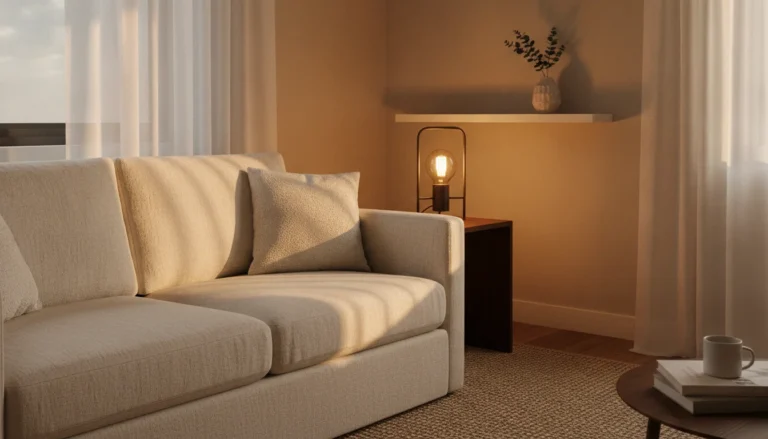
Warm-toned lighting changes the color of every surface in a room. A white wall under a 2700K warm lamp reads as cream. A cream wall reads as warm ivory. A white-walled room with layered warm lighting from floor lamps and strip lights behind furniture reads as a warm, intimate space rather than a clinical one. The color is in the light, not the paint.
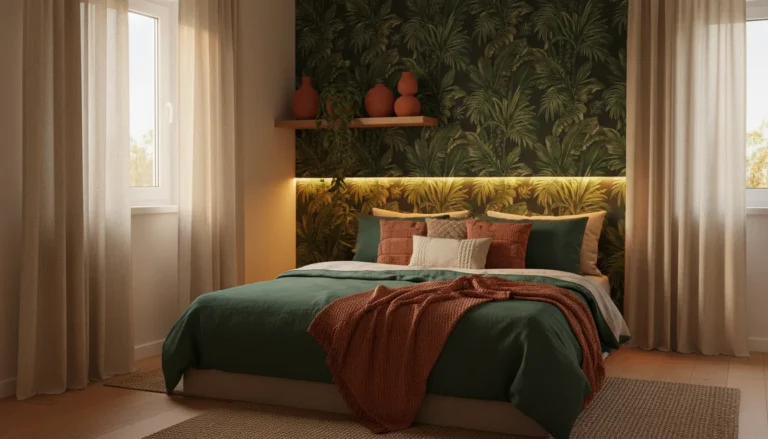
This is the no-paint move that has the broadest impact for the least investment. Swap any cool white bulbs in your apartment for warm 2700K alternatives. Add a floor lamp with a linen or ceramic shade in a warm tone. Add LED strips behind a headboard or TV unit. The temperature of the light changes the apparent color of every surface in the room without touching any of them.
Combine that with the 2026 dopamine decorating color palette choices in textiles and objects and you have a room that reads as deliberately and warmly colored without a single square inch of paint. What specific constraint is stopping you from going bold right now? Tell me in the comments and let me suggest a no-paint alternative.