
This post contains affiliate links. We may earn a small commission if you purchase through our links, at no extra cost to you.
A 10×10 bedroom is exactly 100 square feet. A standard queen bed takes up 33 of those square feet before you have placed a single other thing in the room. The dresser, the nightstand, the closet you probably cannot fully open, the door swing: by the time you account for all of it, the actual livable floor space left is closer to 40 square feet.
That math feels tight. And it is. But here is what most small bedroom guides do not tell you: the rooms that look twice the size of their actual footprint are almost never the ones with more square footage. They are the ones where every decision was made with the way the eye reads a room in mind. Knowing how to decorate a 10×10 bedroom is not about fitting more in. It is about understanding which eleven moves make the most visual difference.
I spent eight months in a bedroom smaller than this before I finally figured out why it always felt cramped despite being tidy. The answer was not the size. It was the decisions. Here are the eleven things I would do differently from day one.
Before we continue, if you’re tired of buying decor that doesn’t look right together, I created something specifically for this…
1. Measure the Room Before You Buy Anything
This sounds obvious. It is not. I spent $340 on a sofa once because I thought it would fit and it did not. In a bedroom the equivalent mistake is buying a bed frame, nightstands, and a dresser that collectively leave you 18 inches of walking space on one side of the bed.
In a 10×10 room, a queen bed leaves roughly 4.5 feet across the width and about 2 to 3 feet at the foot of the bed depending on the frame. That is not much. A king bed technically fits but leaves almost no circulation space on either side. A full or double bed is often the more livable choice in a strict 10×10 because the extra floor space it frees up changes how the room feels to be in every single day.
Before ordering anything, tape out the bed dimensions on the floor using painter’s tape. Then tape out where the dresser would go, where the door swings open to, and where you would actually stand to get dressed. That thirty-minute exercise saves more money and frustration than any decorating tip on this list.
2. Choose a Low-Profile Bed Frame
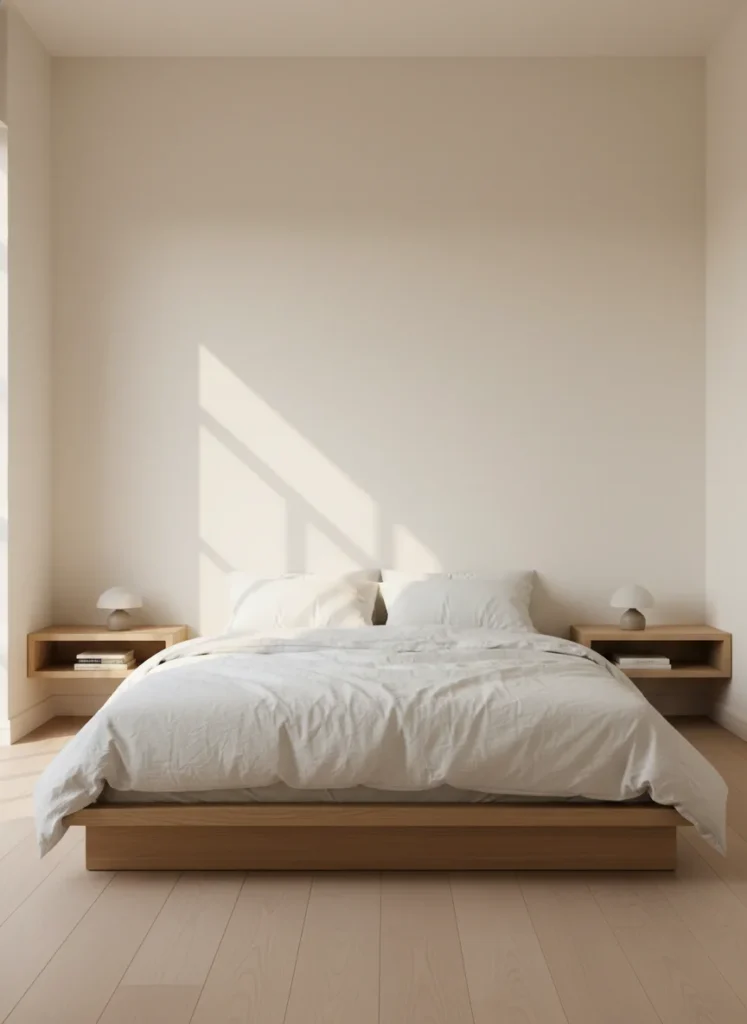
Bed frame height is one of the most overlooked decisions in a small bedroom. A tall, imposing headboard that reaches toward the ceiling in a 10×10 room visually cuts the room in half. It makes the ceiling feel lower than it is and makes the space on either side of the bed feel like a corridor rather than a room.
A low-profile platform bed frame, ideally under 14 inches from floor to the top of the frame, keeps more of the wall visible above it. That visible wall reads as height. More perceived height equals more perceived space. A low-profile platform bed frame in natural wood or matte black typically runs $120 to $180 for a queen and it is one of the highest-impact structural decisions you can make in a 10×10 bedroom before you touch a single decorative element.
If a headboard is important to you aesthetically, keep it to a maximum of 48 inches tall. Anything taller competes with the ceiling in a small room and creates a heavy, compressed feeling that no amount of good styling will fully correct.
3. Mount Your Bedside Lighting on the Wall
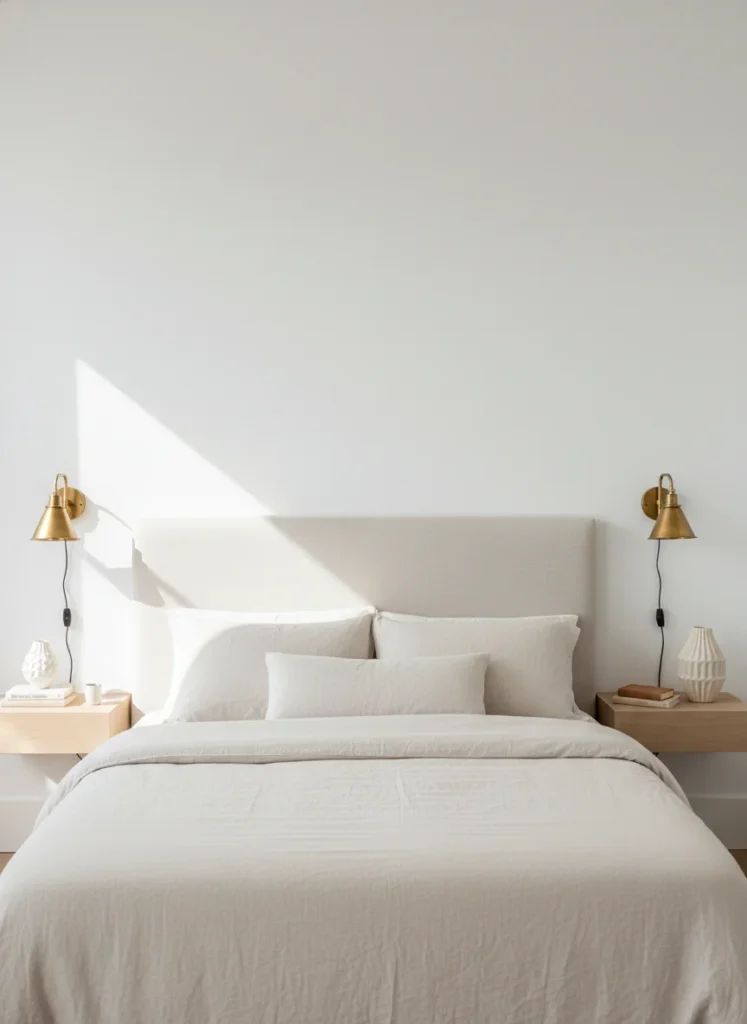
Table lamps on bedside surfaces take up somewhere between a third and half of the available nightstand surface in most configurations. In a 10×10 bedroom where nightstand real estate is already limited, that surface space is too valuable to give to a lamp base and cord.
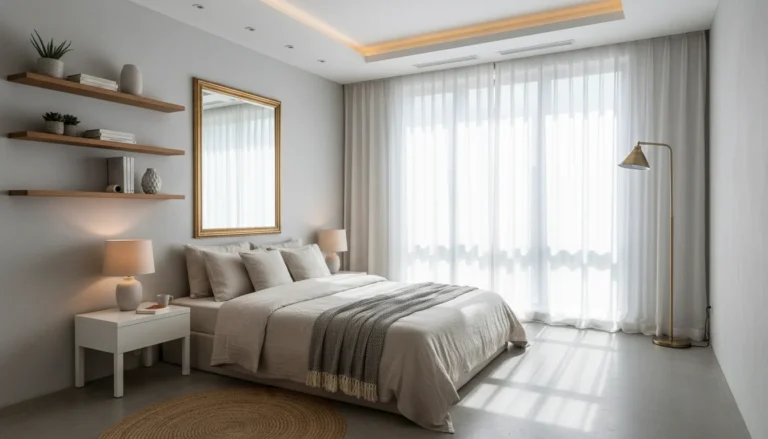
Wall-mounted sconces solve this completely. They provide the same warm directional reading light at exactly the right height, they keep the surfaces beneath them completely free, and they make the room look more intentionally designed because the placement is architectural rather than incidental. A set of plug-in wall sconces that require no hardwiring runs around $35 to $55 for a pair. They plug into a standard outlet and are installed with two screws per sconce. Completely removable for renters.
4. Replace Nightstands With Floating Shelves
A traditional nightstand, even a small one, sits on the floor and takes floor space. In a 10×10 bedroom with 18 inches of walking space on each side of the bed, that floor footprint matters.
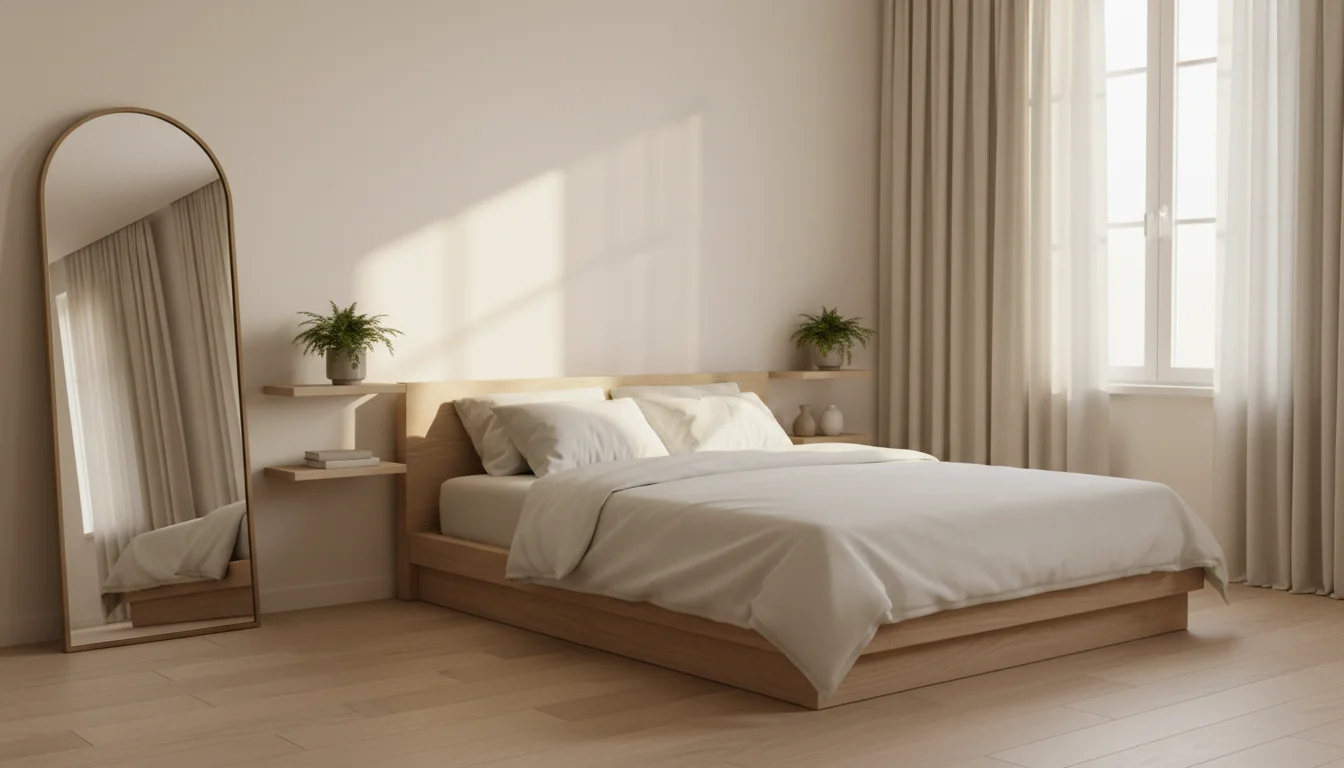
Floating shelves mounted at nightstand height, roughly 24 to 26 inches from the floor, give you the same surface area for your lamp, book, water, and phone charger without touching the floor at all. The floor beneath them stays visible, which makes the room feel like it has more circulation space even though the shelf is there. A set of two floating wood shelf nightstands runs around $28 to $40 and the visual result is worth every dollar in a 10×10 room.
5. Use Under-Bed Storage to Eliminate the Dresser
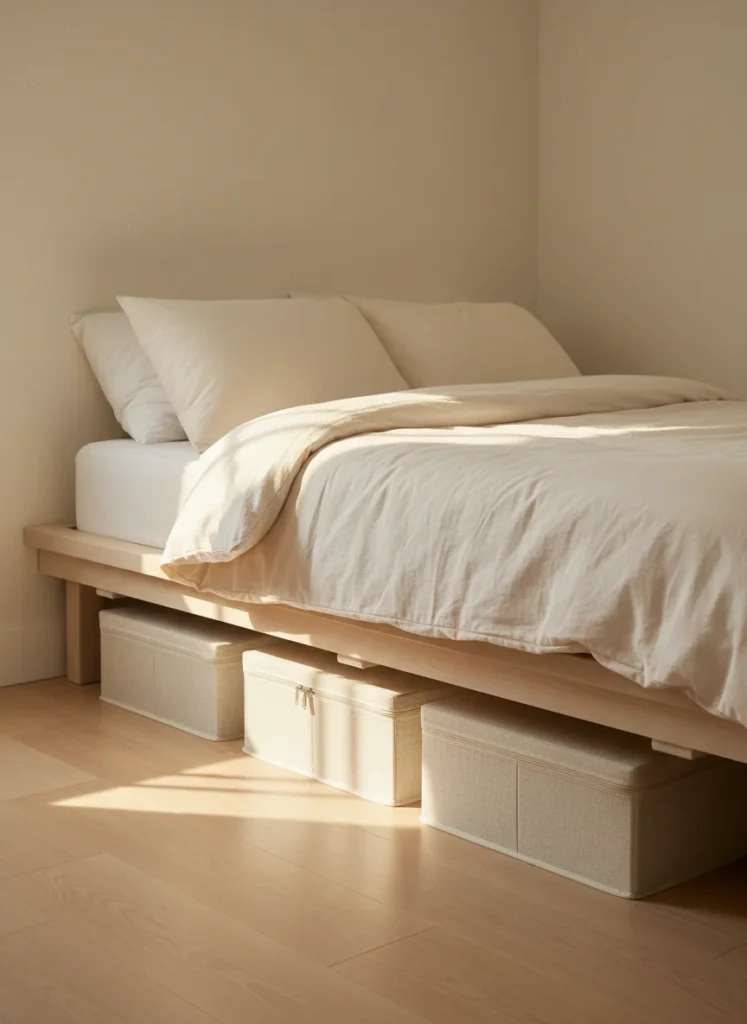
A full-width dresser in a 10×10 bedroom typically occupies 30 to 36 inches of wall width and 18 inches of floor depth. That is a significant percentage of the total wall space in a room where every wall counts. Under-bed storage eliminates the need for a dresser entirely in many cases.
The math works: a standard queen bed has approximately 25 to 30 square feet of under-bed space. With the right flat rolling under-bed storage boxes at around $28 to $38 for a set of four, you can store seasonal clothes, extra bedding, and anything else the dresser was holding without sacrificing a single square inch of visible floor space. Add bed risers at around $18 to $22 if your current frame sits too low to accommodate storage boxes.
6. Hang Curtains at the Ceiling, Not at the Window
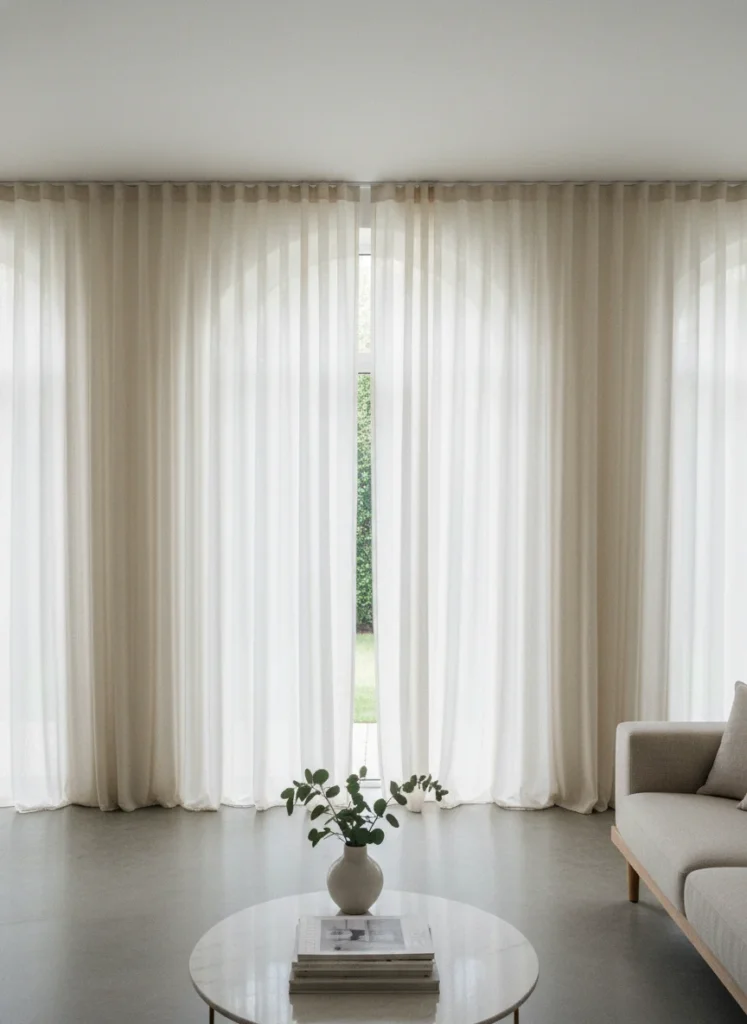
This single change does more for how a small bedroom feels than almost any furniture decision. Curtains hung just above the window frame cap the visual height of the room exactly where the frame is. Curtains hung at ceiling height, even if the window is 18 inches below, create an unbroken vertical line that the eye reads as the full height of the room.
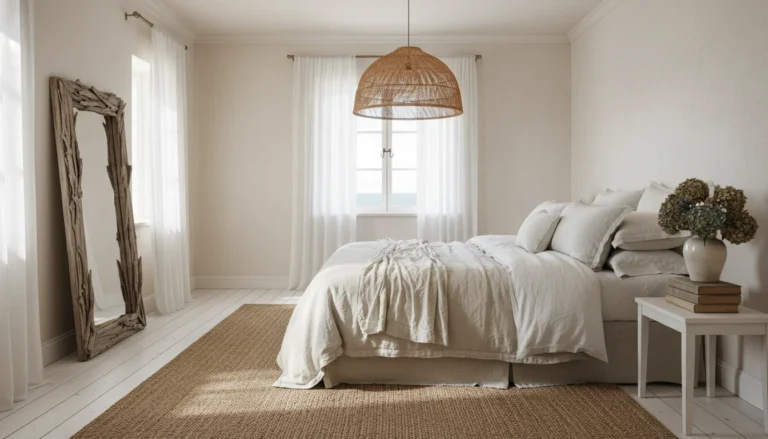
In a 10×10 room with an 8-foot ceiling, ceiling-height curtains make the room feel like it has 10-foot ceilings. That perceived height is the single most effective way to make a small room feel less compressed. Use an adjustable tension rod that can reach near the ceiling if your walls are rental-restricted. Long sheer cream or white linen panels that pool slightly on the floor complete the look for around $25 to $40.
7. Place a Large Mirror Directly Across From the Window
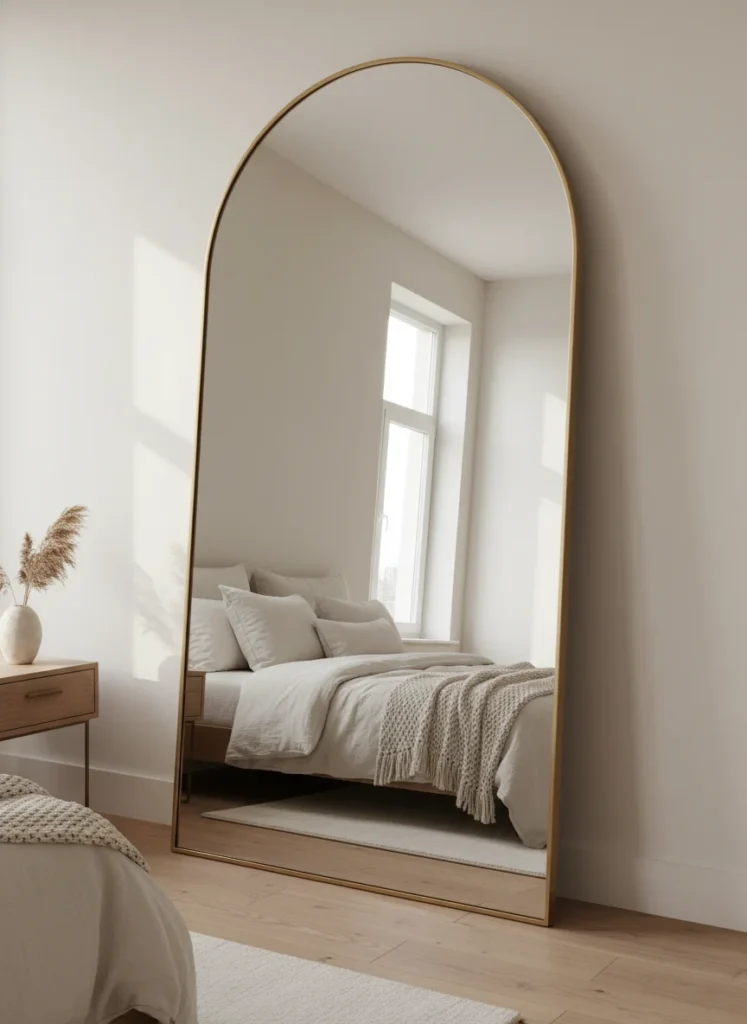
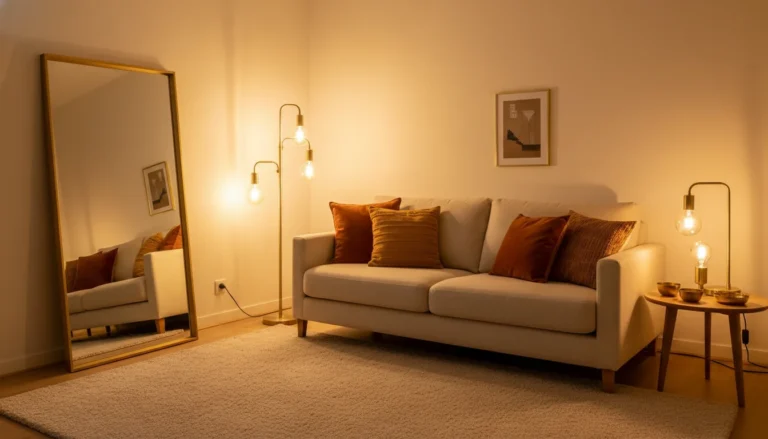
A mirror in a small bedroom does not just reflect the room. It reflects light. Place it across from the window and it catches natural light and redistributes it across the space, making the room feel brighter and deeper simultaneously. This is the move that made my living room feel twice the size for the cost of zero dollars, since I already had the mirror and just repositioned it.
For a 10×10 bedroom specifically, an arch-shaped floor mirror at 60 to 65 inches tall and 22 to 24 inches wide is the right proportion. Tall enough to create a strong vertical element. Narrow enough not to crowd the wall. A large leaning arch mirror in warm gold or black runs around $55 to $85. It requires no mounting, no drilling, and it can be repositioned until you find the placement where it makes the most difference in your specific room’s light.
8. Choose Furniture With Legs, Not Furniture That Goes to the Floor
This is a principle rather than a single purchase. Furniture that sits on visible legs allows the eye to see the floor beneath it, which visually extends the floor plane of the room. A sofa, bench, or side table that goes directly to the floor creates a visual barrier that makes the room feel like it has less open floor space than it does.
In a 10×10 bedroom, apply this to anything that sits in an open area: a bench at the foot of the bed on four slim legs rather than a storage ottoman that sits on the floor, a nightstand on hairpin legs rather than a solid base. Each individual piece contributes a small visual gain and together they produce a room that feels open and airy at floor level, which is the primary driver of perceived spaciousness in a small room.
9. Go Vertical With Storage Using a Tall Wardrobe
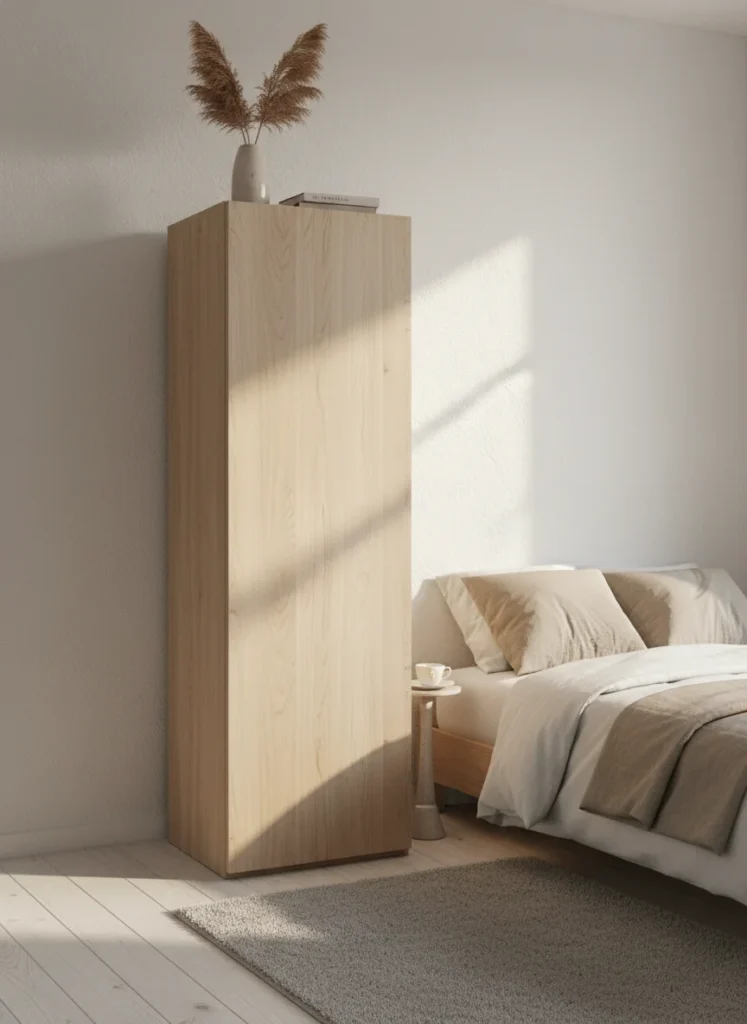
Horizontal storage spreads across the floor. Vertical storage uses the wall height that every room has in abundance. A tall wardrobe at 72 inches high versus a low six-drawer dresser at 30 inches high stores roughly the same volume of clothes while occupying a fraction of the visual footprint at eye level, because the eye registers the floor-level width more than the height.
In a 10×10 room where every inch of wall counts, a narrow wardrobe at 24 inches deep positioned in a corner gives you full closet-equivalent storage while freeing the floor in front of it. The vertical form also creates a visual line that draws the eye upward, contributing to that perceived ceiling height that makes small rooms feel larger.
10. Keep the Color Story Anchored to One Dominant Choice
The common mistake in small bedrooms is trying to be neutral everywhere in the belief that less color means more space. What it actually produces is a room with no focal point, which makes the eye move restlessly around the room without landing anywhere satisfying. That restlessness reads as claustrophobia.
One deliberate color choice gives the room direction. The eye finds the focal point, feels satisfied, and the room reads as composed rather than compressed. For a 10×10 bedroom that color choice most naturally goes on the bedding, since it is the largest surface the eye finds from the doorway. For more on how color specifically affects small bedroom perception, the guide on what color makes a small bedroom look bigger covers the specific color choices and why each one works the way it does.
11. Keep the Floor as Unobstructed as Possible
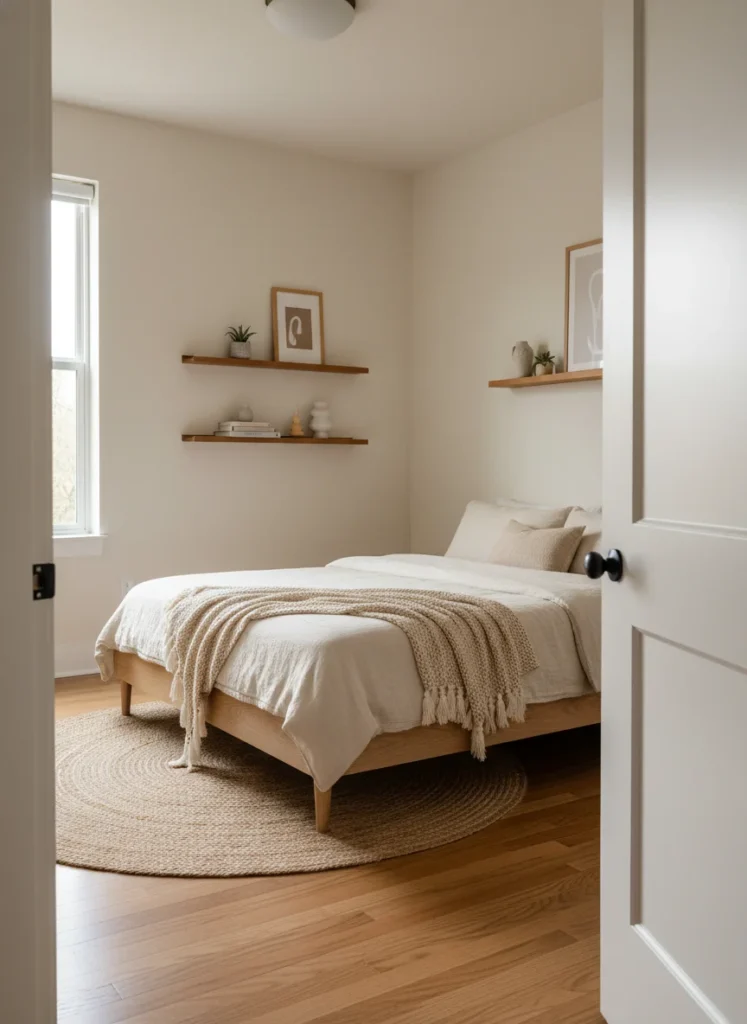
The amount of visible floor in a room is one of the primary signals the brain uses to assess its size. More visible floor equals a larger-feeling room, even when the actual dimensions have not changed. In a 10×10 bedroom, this principle is worth building every storage and furniture decision around.
Apply it consistently: floating shelves instead of floor bookcases, wall-mounted sconces instead of table lamps, under-bed storage instead of a dresser, a compact rug under and around the bed rather than a large rug that covers most of the floor. Each decision individually contributes a small gain. Together they produce a room where the floor feels open and the space feels generous despite the measurements.
If you are working with a rental where some of these moves require landlord-safe installations, the complete guide to renter-friendly bedroom ideas that need zero landlord permission covers every technique on this list from a damage-free angle. None of the eleven tricks above require permanent modification. They just require intention.
Which of these are you tackling first? And if you have already tried one of them in a truly small bedroom, I want to hear what actually moved the needle for you in the comments.