
This post contains affiliate links. We may earn a small commission if you purchase through our links, at no extra cost to you.
My landlord installed beige cabinets, a cracked vinyl countertop, and a backsplash that looks like it was chosen by someone who had never cooked a meal in their life. For the first eight months I lived in this apartment, I just accepted that the kitchen was going to be the one room I did not love. It felt too permanent, too built-in, too much like a renovation problem rather than a decorating one.
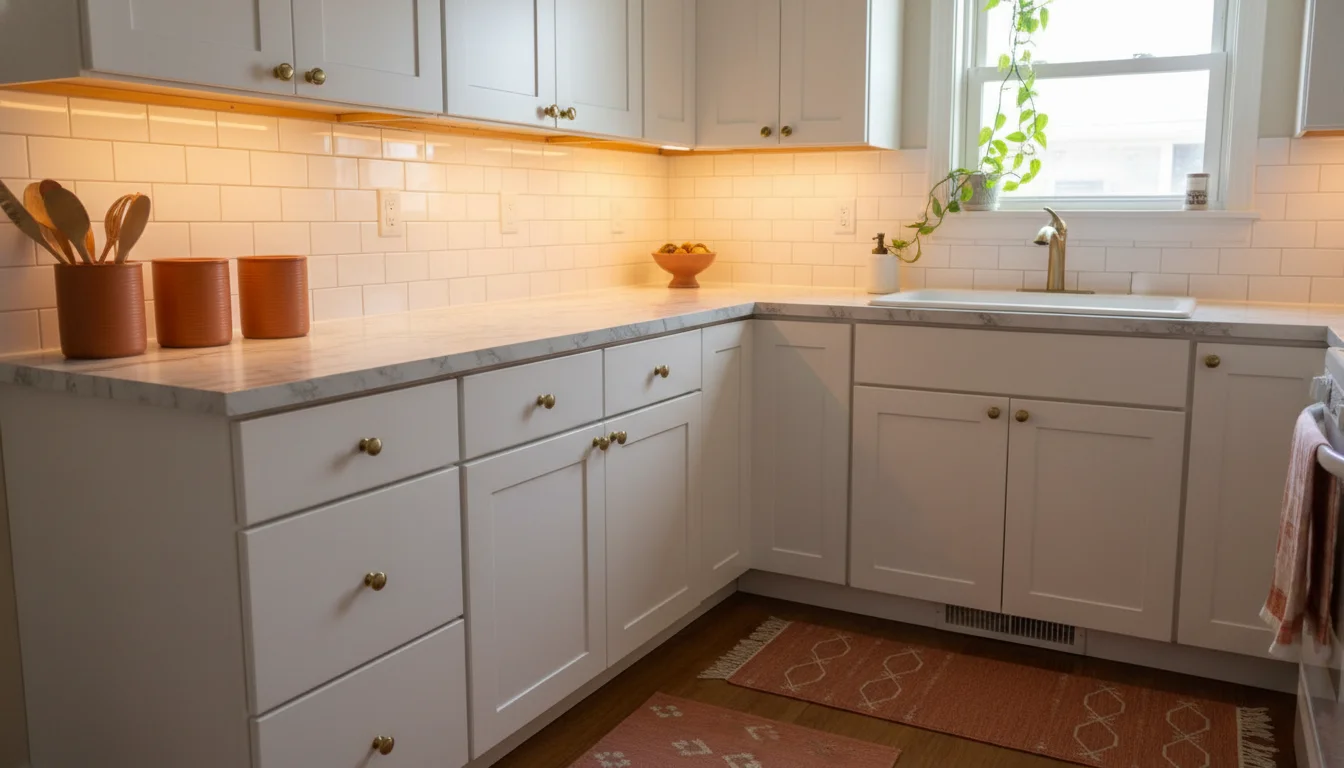
Then I started actually looking at what was possible without touching anything permanently. The list was longer than I expected. These are the 13 renter friendly kitchen decor ideas I have either tested myself or seen work in apartments just like mine, and every single one of them passes the most important renter test: your landlord will not know you did it.
If you are in the middle of a full apartment refresh and the kitchen is just one room in a bigger project, the guide to renter-friendly bedroom ideas that need zero landlord permission and the complete approach to dopamine decorating for renters without damage cover the rest of the space with the same no-damage philosophy.
Before we continue, if you’re tired of buying decor that doesn’t look right together, I created something specifically for this…
1. Peel-and-Stick Backsplash Tiles
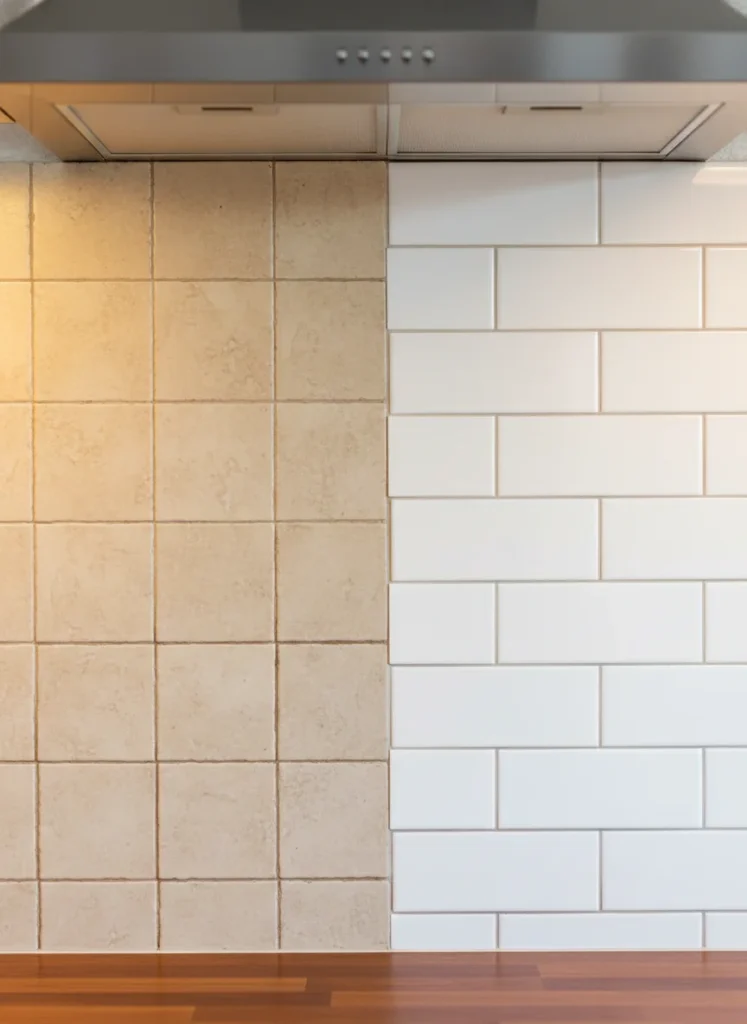
The backsplash is the first thing the eye goes to in any kitchen and it is almost always the ugliest thing in a rental. Outdated ceramic, dated grout lines that no longer clean properly, patterns that were chosen for durability rather than aesthetics: this is the surface that makes most rental kitchens feel irredeemably institutional.
Peel-and-stick backsplash tiles go directly over the existing surface. No grout, no adhesive, no power tools. A set of peel-and-stick subway tile sheets runs around $28 to $40 for enough to cover a standard kitchen backsplash area. They apply in about two hours, peel off cleanly when you leave, and the transformation is genuinely dramatic. The kitchen goes from 2004 to considered in a single afternoon.
For application: clean the existing surface with rubbing alcohol and let it dry completely before peeling the backing. Start from the center of the most visible section and work outward. Press each tile firmly from center to edges to eliminate air pockets. Trim edges with a sharp craft knife and a metal ruler.
2. Marble-Look Contact Paper on Countertops
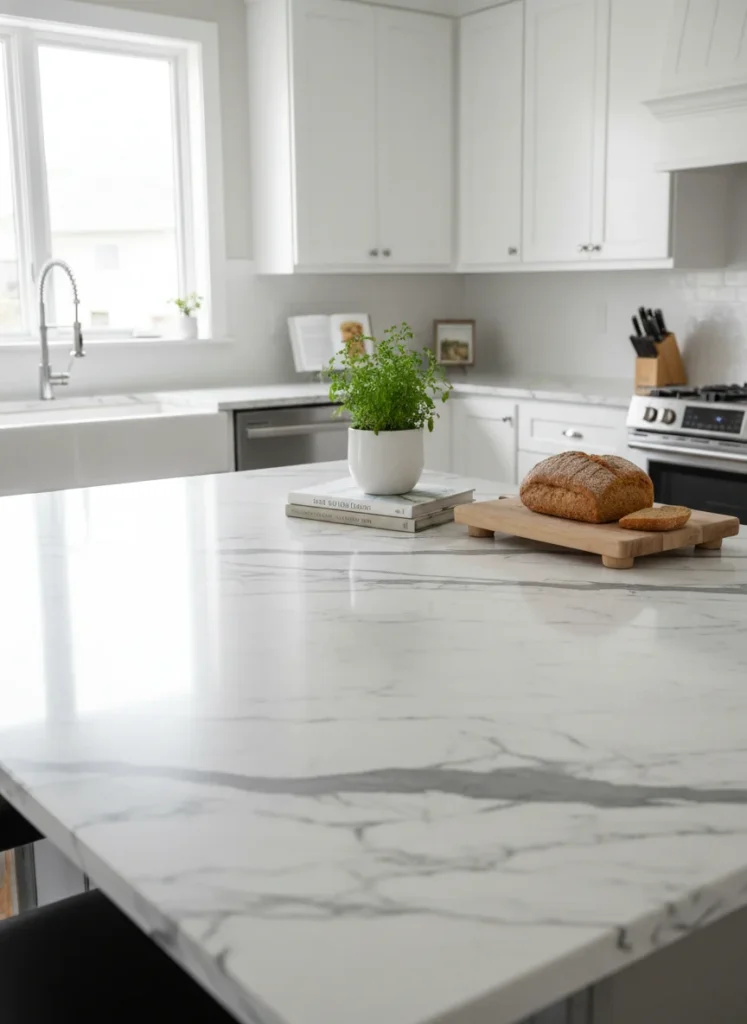
A cracked, stained, or outdated laminate countertop is one of the most demoralizing surfaces to cook on every day. It signals age and neglect even in an otherwise clean kitchen. Contact paper applied over it signals intention and care.
Marble-look contact paper is the most popular choice because the grey-white veining reads as expensive and works with almost any cabinet color. A quality waterproof marble-look contact paper roll at around $18 to $26 covers a standard kitchen countertop run and is completely removable with a heat gun and patience. Apply it with a squeegee, work from one end to the other to avoid bubbles, and trim edges with a razor blade for clean lines at the sink and wall edges.
The one honest caveat: contact paper countertops require a little care. They are not as heat-resistant as real surfaces, so use trivets under hot pans. They look exceptional and they are a real improvement, but they are not indestructible. That is completely fine for a rental where the goal is transformation, not renovation.
3. Swap the Cabinet Hardware
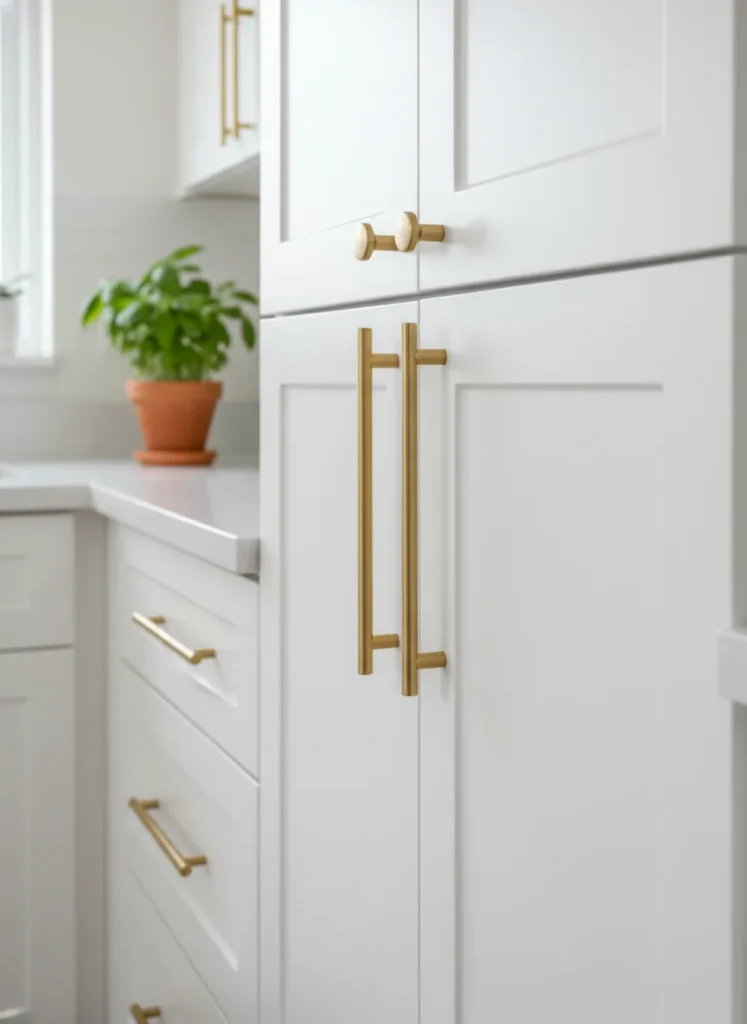
Cabinet hardware is the single fastest kitchen change available to a renter. It takes a screwdriver and twenty minutes. The existing hardware comes off, goes into a labeled bag, and gets reinstalled exactly when you leave. The new hardware goes on with the existing screw holes in almost all cases.
The choice that makes the most visual impact in 2026: brushed brass bar pulls rather than traditional knobs. Bar pulls elongate the cabinet face and give it a modern, considered look that knobs rarely achieve at the same budget. A set of brushed brass bar pulls at around $22 to $32 for a ten-piece set covers most apartment kitchens completely. Matte black is the second-best choice if the kitchen already has warm tones that would compete with brass.
4. Peel-and-Stick Floor Tiles Over Vinyl
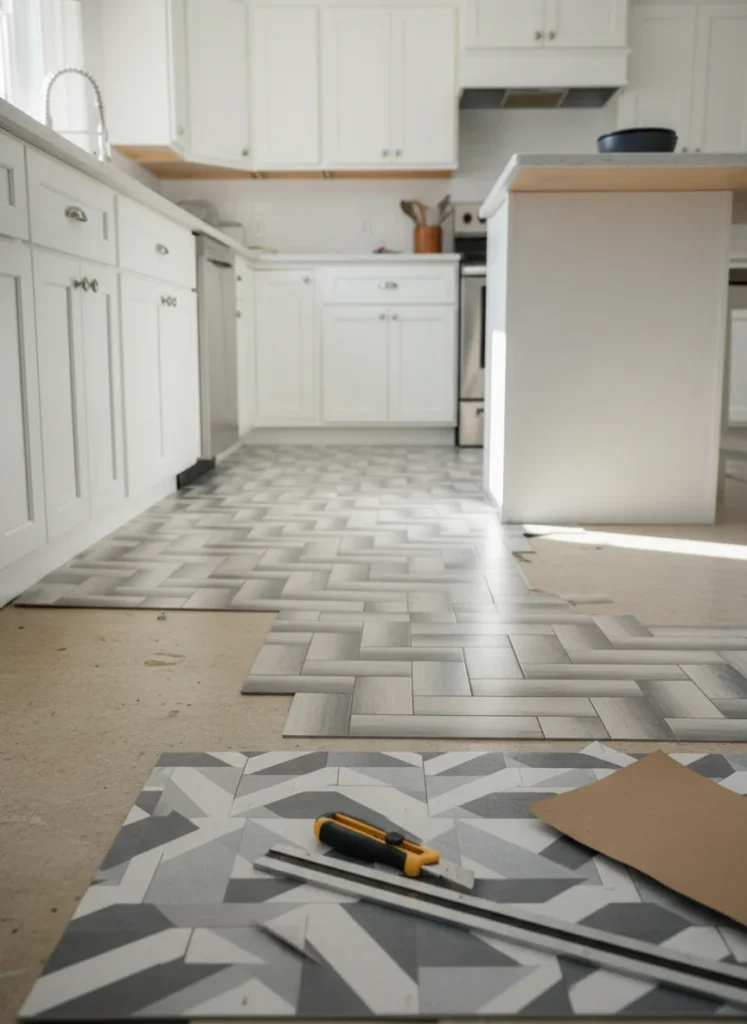
The kitchen floor in most rentals is vinyl chosen for durability rather than aesthetics. It is usually either a pattern that was discontinued in 2008 or a solid color that has yellowed slightly from years of cleaning. Either way, it is not contributing anything positive to how the kitchen looks.
Peel-and-stick vinyl floor tiles go directly over existing flooring, require no tools beyond a sharp utility knife to trim edges, and come off cleanly when you leave. A pack of peel-and-stick floor tiles in a classic black-and-white pattern runs around $25 to $35 for twenty tiles, which covers most apartment kitchens completely. The checkerboard look in particular gives small rental kitchens a bistro quality that looks intentional and costs almost nothing to achieve.
5. Add Under-Cabinet Lighting
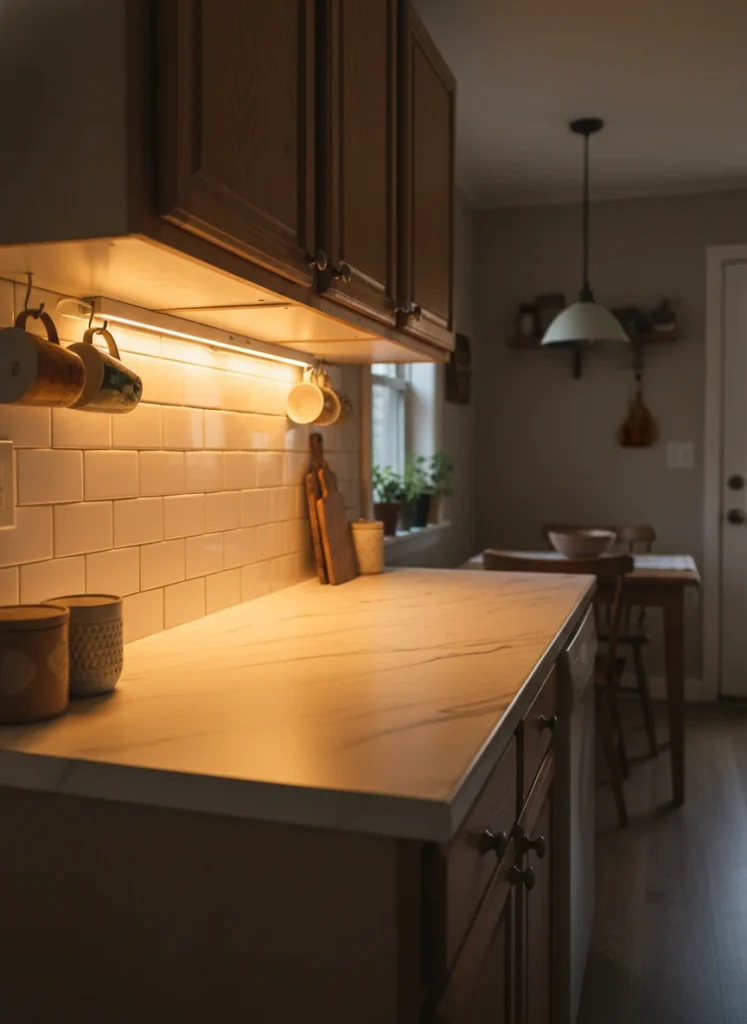
Most rental kitchens have one overhead light that illuminates the room evenly and unattractively. It is functional in the same way a hospital corridor is functional: everything is visible but nothing feels good. Under-cabinet lighting changes the entire atmosphere of a kitchen at the cost of about $16.
Plug-in LED strip lights installed under the upper cabinets require no hardwiring. They stick on with the adhesive backing, plug into a nearby outlet, and provide warm, directional counter illumination that makes cooking feel better and makes the kitchen look dramatically more considered. Use 2700K warm white rather than cool white. Cool white under cabinets makes a kitchen feel like a commercial space. Warm white makes it feel like a home.
A plug-in warm white LED under-cabinet light runs around $16 to $22 for a set that covers a standard kitchen run. It is the least glamorous purchase on this list and consistently one of the most impactful.
6. Lay a Statement Kitchen Runner
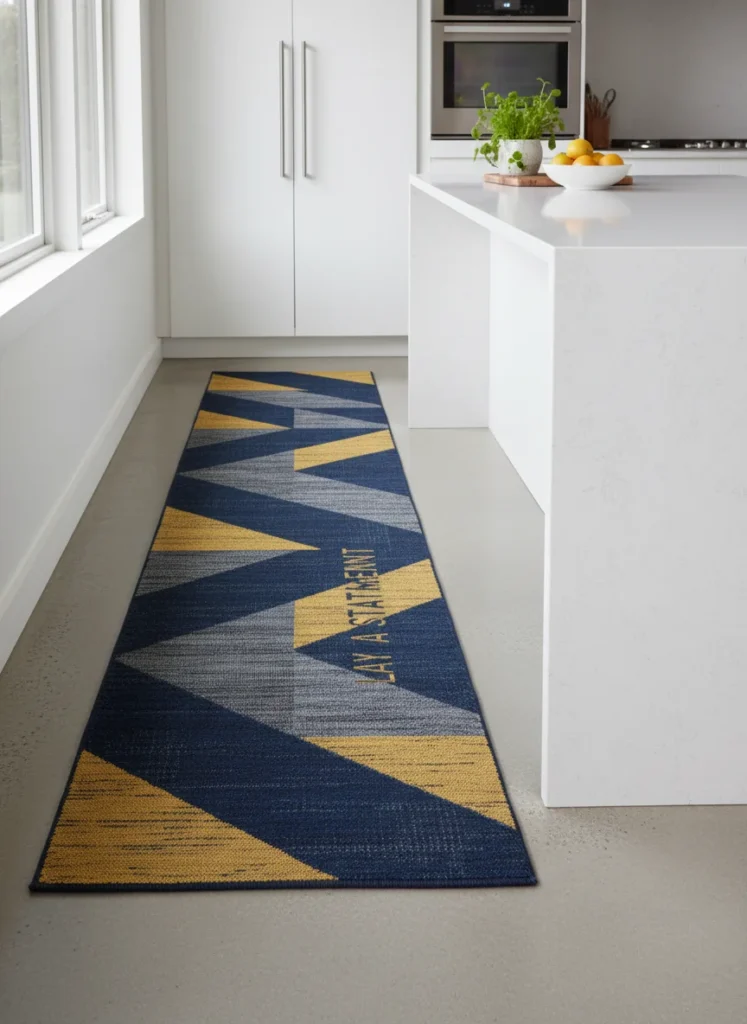
The kitchen floor is the most ignored surface in rental apartment decorating. Most people put effort into the walls and counters and leave the floor as whatever the landlord installed. A bold printed runner in front of the sink or stove changes the character of the kitchen with zero permanence and zero installation.
Choose a pattern that is intentionally different from the floor beneath it, something with a motif, a stripe, or a color that reads as chosen rather than default. A printed kitchen runner in terracotta, cream, or a bold geometric runs around $25 to $45 for a 2-by-6-foot size, which is standard for most apartment kitchen configurations. It makes the kitchen feel like someone who cares about things lives there.
7. Apply Contact Paper to Flat-Panel Cabinet Fronts
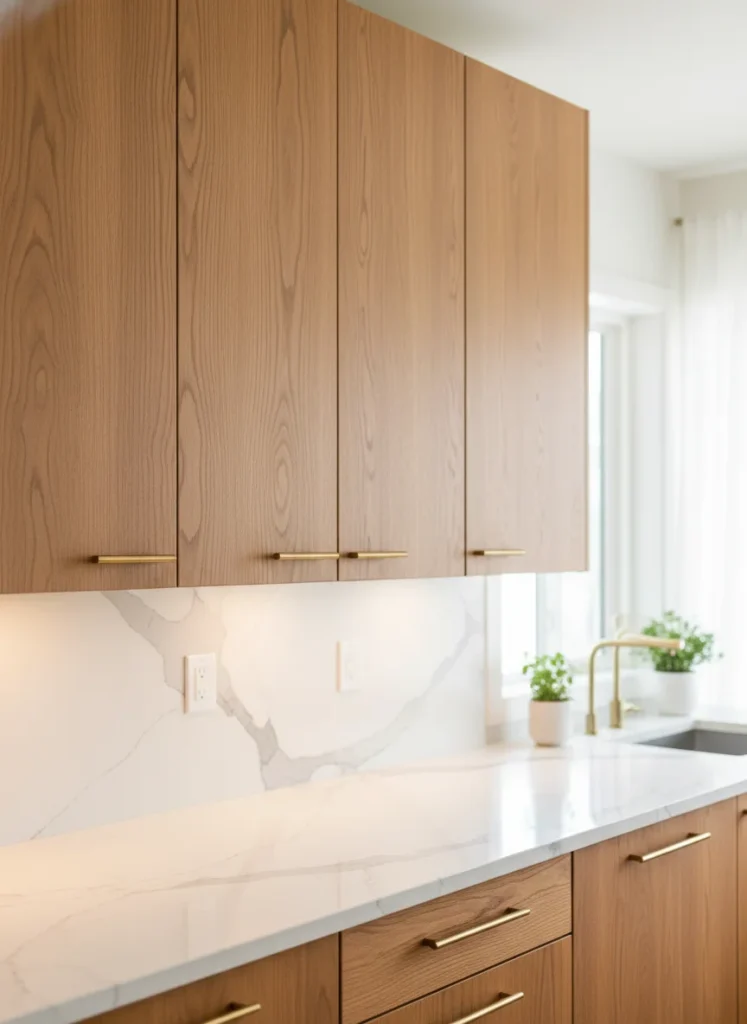
This works specifically on flat-panel cabinets, not raised-panel ones. Flat panels are a clean, smooth surface that contact paper adheres to evenly. If your rental kitchen has flat-panel cabinet doors, applying a wood grain, dark linen, or stone-look contact paper to the fronts transforms the entire look of the kitchen more dramatically than any single other change on this list.
A warm wood grain contact paper on white flat-panel cabinets reads as a deliberate design choice. It looks like someone paid for a professional cabinet refinish. The cost is a roll of wood grain self-adhesive vinyl at around $18 to $28 and a few hours on a weekend morning. Remove with a heat gun and patience when you move out.
8. Organize the Counter With Matching Canisters
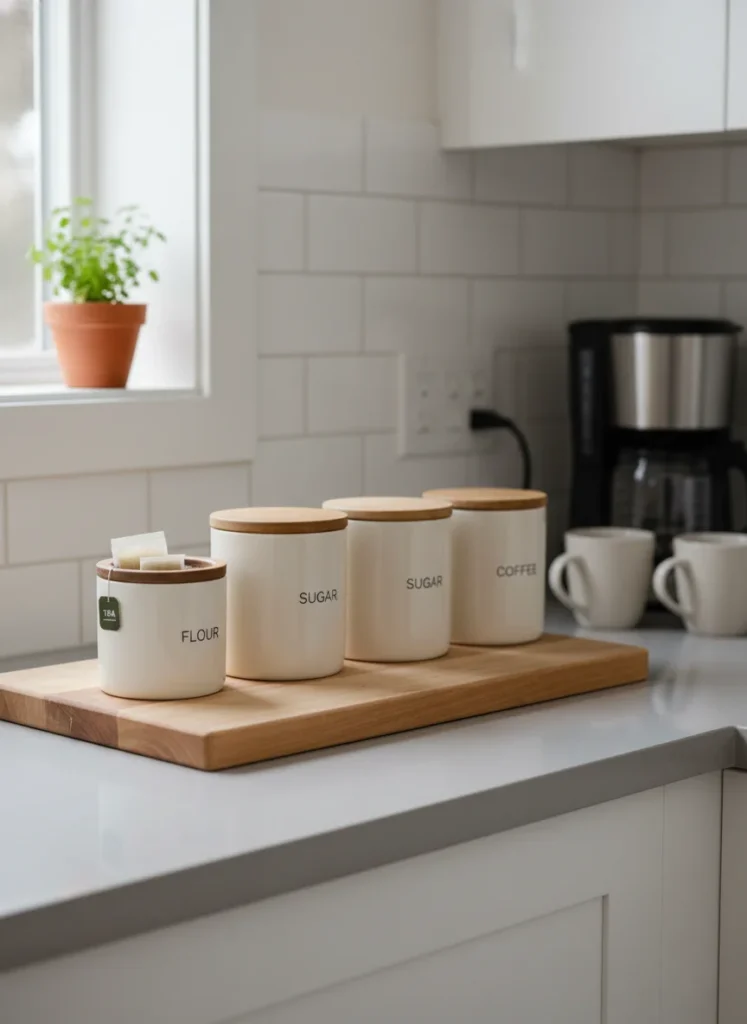
The countertop visual in most rental kitchens is a collection of random appliances, mismatched containers, plastic bags, and things that technically belong somewhere else. The counter looks chaotic because it is chaotic, and chaotic counters make the whole kitchen feel smaller and less functional than it is.
Replacing the visual noise with a small set of coordinated canisters for coffee, tea, sugar, and flour, plus a knife block, a fruit bowl that earns its spot, and nothing else, changes the kitchen from a storage surface to a workspace. A ceramic canister set in terracotta or cream runs around $32 to $45 for four pieces. Everything on the counter should either be beautiful, useful, or both. If it is neither, it goes in a cabinet.
9. Mount a Magnetic Knife Strip With Command Strips
A knife block on the counter occupies about 6 by 8 inches of countertop space. In a small rental kitchen where counter space is the limiting resource, that footprint matters. A magnetic knife strip mounted on the wall or on the side of a cabinet using heavy-duty command strips moves the knives off the counter entirely and adds the organized, chef’s kitchen visual that most rental kitchens lack.
A stainless steel magnetic knife strip at around $18 to $28 holds six to eight knives and installs in ten minutes with two large command strips rather than screws. The result looks deliberate and professional, the knives are more accessible than they are in a block, and the counter underneath is completely free.
10. Use Tension Rods Inside Cabinets for Vertical Storage
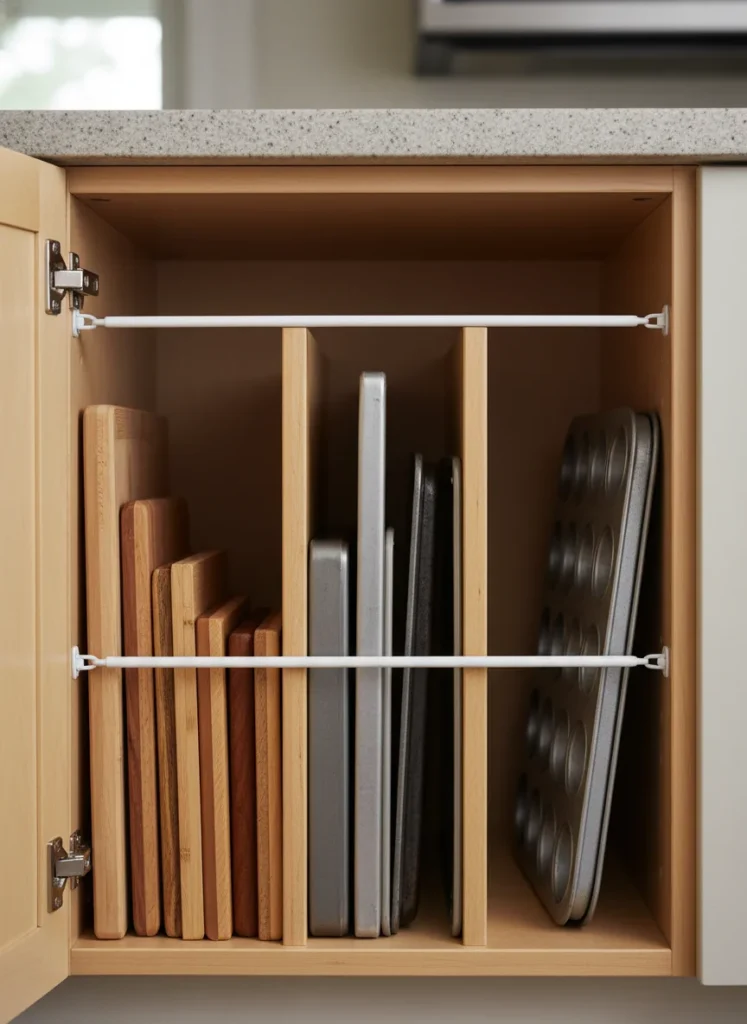
This is one of those tricks that sounds too simple to make a meaningful difference and then you try it and wonder why you waited. Install two or three tension rods vertically between the front and back walls of a lower cabinet and suddenly you have organized vertical slots for baking sheets, cutting boards, pot lids, and muffin tins that previously all piled on top of each other.
Tension rods require no installation, leave no marks, and cost about $8 to $12 each. Three rods in one cabinet effectively doubles its usable storage capacity and eliminates the avalanche that happens every time you try to pull out a cutting board from the bottom of a pile. This is the most cost-effective organizational change in the kitchen by a significant margin.
11. Remove One Cabinet Door for Open Shelf Styling
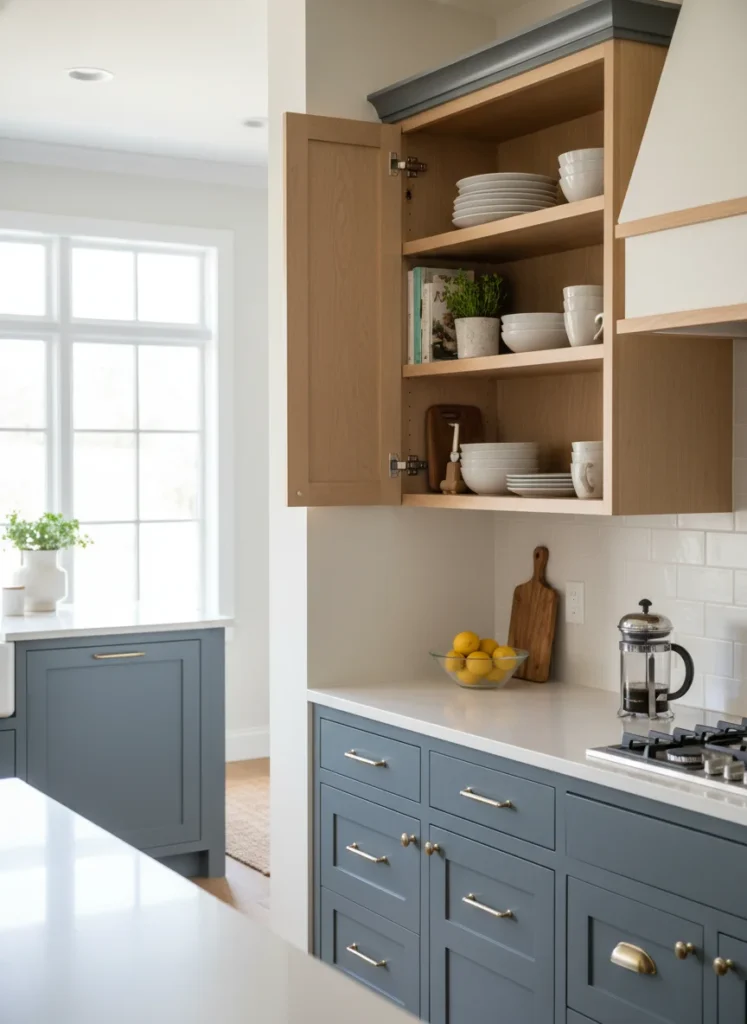
If one of your upper cabinet doors is particularly ugly or damaged, remove it temporarily. Keep the hinges and the door stored somewhere safe so you can rehang it when you leave. The open cabinet becomes a styled open shelf: a few ceramic mugs, a couple of interesting glasses, a small plant, and two or three cookbooks turned with the spines facing a consistent direction.
Open shelving in a rental kitchen looks like a design decision when it is styled intentionally. It breaks up the repetition of closed cabinet doors and gives the kitchen a more considered, curated look. The key is editing the shelf ruthlessly: only display things that are beautiful or meaningful. Everything functional goes in the closed cabinets.
12. Display Tea Towels as Kitchen Textiles
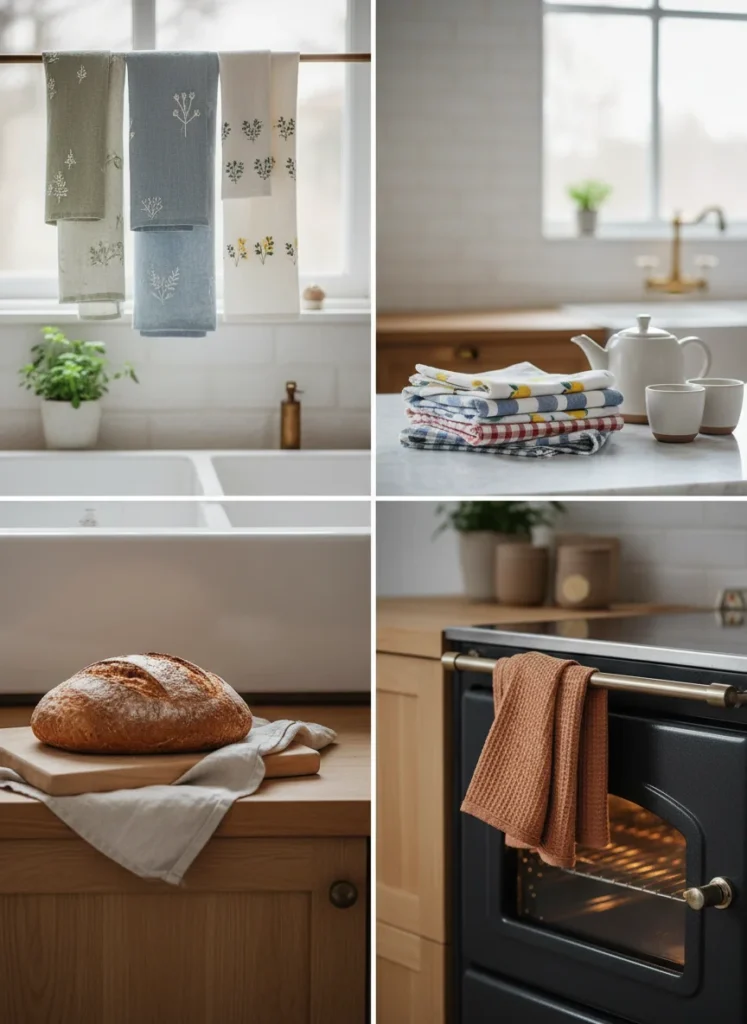
A set of matching linen kitchen towels hung on a command hook strip on the cabinet front or the oven handle is one of those small details that makes a kitchen feel like someone thought about it. Not a major design move. A finishing detail. But finishing details are what separate a kitchen that looks decorated from one that looks like a rental default.
A set of matching linen kitchen towels in terracotta, sage, or cream runs around $18 to $25 for a set of three. Hang two on the oven handle and one on a command hook on the nearest cabinet. Fold them so the pattern faces out rather than the hem. This detail takes thirty seconds and people will notice it without knowing what exactly they are noticing.
13. Put a Plant on the Windowsill
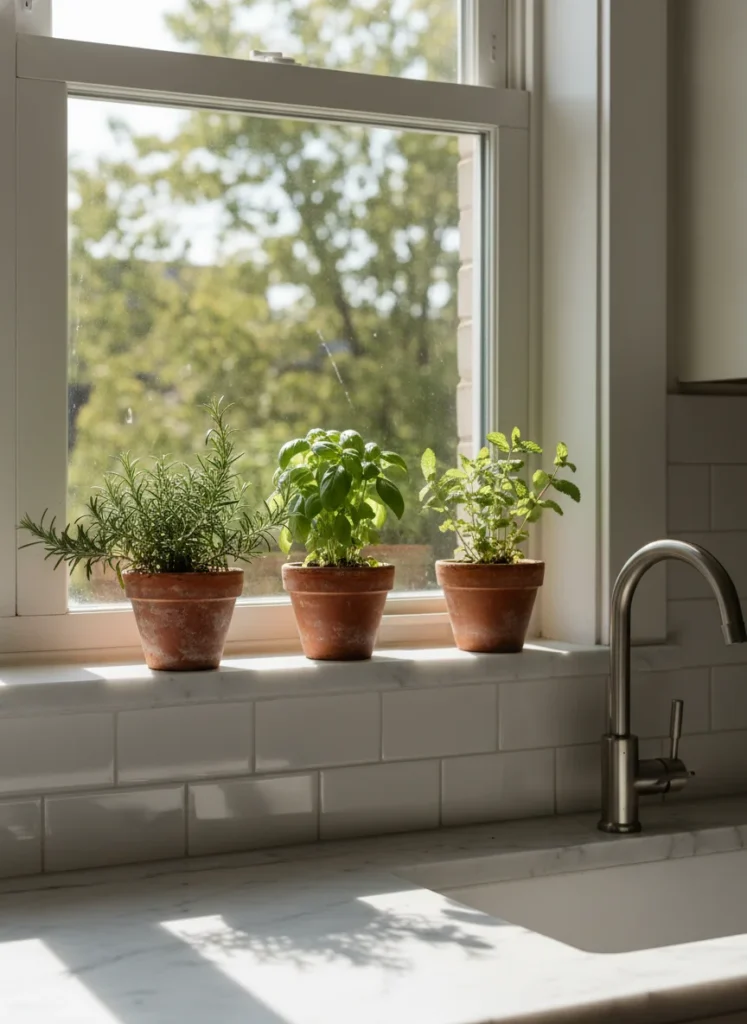
Every kitchen looks better with at least one plant. Not a plastic one, not a fake succulent in a white pot, but something actually alive. The kitchen window almost always gets more light than any other window in a small apartment, which makes it the best possible location for herbs that you will actually use and a plant that will actually thrive.
Three small terracotta pots with rosemary, basil, and mint on the kitchen windowsill cost about $12 total from any garden center. They look beautiful, they make the kitchen smell alive, they provide fresh herbs for cooking, and they are the single detail that makes visitors immediately comment on how much they like the kitchen. I have had mine for eleven months and they are the reason the kitchen is now my second-favorite room in the apartment.
One thing worth saying clearly: you do not have to do all thirteen of these at once. Pick the two or three that address what bothers you most about your kitchen right now and start there. The backsplash and the hardware swap together will do more than anything else on this list for most rental kitchens. Everything else is a layer you add when you are ready.
Which rental kitchen problem are you most desperate to solve right now? Drop it in the comments and let me suggest a specific renter-safe fix.