
This post contains affiliate links. If you buy something through my links, I may earn a small commission at no extra cost to you. I only recommend things I genuinely use or believe in.
A small bedroom with high ceilings gives you something most bedrooms do not have: a vertical dimension that almost no one uses. The ceiling rises 10, 12, sometimes 14 feet above the floor and most of that space is empty air. The walls above eye level hold nothing, the curtain rod sits at window height, the bookshelves are 6 feet tall in a room that goes 12 feet up. All of that unused vertical footage is the exact square footage you have been wishing you had, just redirected 90 degrees. Here is how to use every inch of it.
💡 Before you start decorating, see how your room could look with AI.
🏡 See Your Room Before You Spend a Dollar
Still wondering if that new furniture, paint color, or decor style will actually look good in your space?
- Upload a photo of your room and let AI instantly generate beautiful design ideas.
- Explore different interior styles, furniture layouts, and color combinations before you spend a single dollar.
Why High Ceilings in Small Bedrooms Create a Specific Problem
The issue with high ceilings in small bedrooms is not the height itself. It is the disconnect between the ceiling plane and the activity plane. Human activity in a bedroom happens between the floor and about 7 feet up. Everything above that is empty unless you deliberately extend your design into it. When you do not, the room feels unresolved: the lower half is furnished and personal while the upper half is a blank void that makes the walls feel like they are leaning away from each other. The room reads as smaller at the functional level because all the scale cues are in the lower portion of the space.
The 13 ideas below address this in two directions: vertically filling the space so the ceiling feels connected to the room, and using the vertical dimension to absorb storage and function that would otherwise eat floor space. Both solve the problem. The best rooms do both.
13 Ways to Decorate a Small Bedroom With High Ceilings
1. Hang Curtains at Ceiling Height, Not Window Height
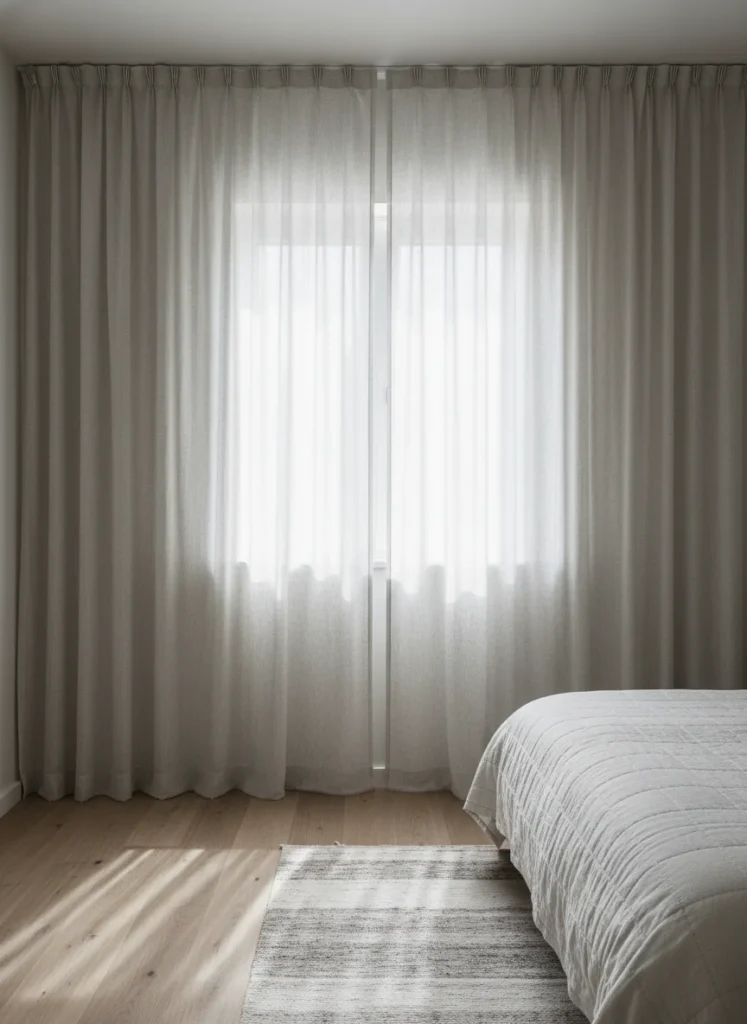
This is the first and highest-impact move when decorating a small bedroom with high ceilings, and it costs nothing extra if you are already planning to buy curtains. Mounting the curtain rod at the ceiling line rather than above the window frame extends the curtain’s visual journey from the very top of the wall to the floor, which is the full height of the room. The eye reads the full curtain drop as the room’s height marker, and the room immediately reads as both taller and more architecturally considered.
In a room with 12-foot ceilings, standard 84-inch curtain panels will not reach the floor if the rod is at ceiling height. You need 120-inch or 144-inch panels, which are widely available but require a deliberate purchase. Measure from the ceiling to the floor before ordering. Extra-long floor-to-ceiling curtain panels in linen or linen-blend in ivory, warm white, or oat are the right starting point. They run $35 to $65 for a pair in the extended length. The visual return on this single move in a high-ceiling bedroom is the highest of anything on this list.
2. Install Floor-to-Ceiling Shelving on One Wall
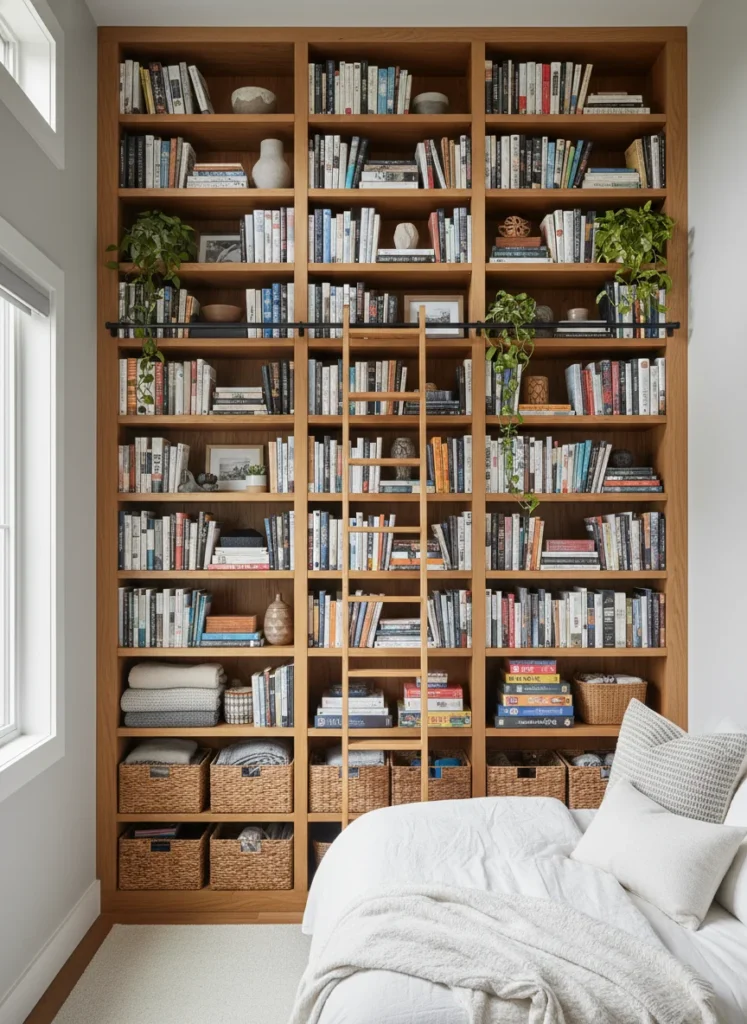
Floor-to-ceiling shelving in a small bedroom with high ceilings solves two problems at once: it fills the vertical space that is currently empty and disconnected from the room, and it provides storage that would otherwise require additional floor furniture. A full-height shelving wall transforms a high-ceiling bedroom from a room with awkward scale into a room with a genuine library quality that most people find immediately compelling.
The shelving does not need to be custom built-ins to work. IKEA’s BILLY bookcase system, at 93 inches tall, gets close to filling a standard 9-foot ceiling and multiple units placed side by side create the full wall effect. For ceilings above 10 feet, adding a height extension piece or using a different system brings it to the ceiling line. The upper shelves hold books, art objects, and occasional-use items. The lower shelves hold daily-use items. A small rolling library ladder leaning against the shelves is both functional and the most characterful piece you can add to a bedroom. For the IKEA approach to high-ceiling bedroom storage more broadly, the post on IKEA small bedroom hacks that make a $200 room look like a $2000 room covers the specific systems that scale well to unusual room proportions.
3. Hang a Statement Pendant or Chandelier Low Over the Bed
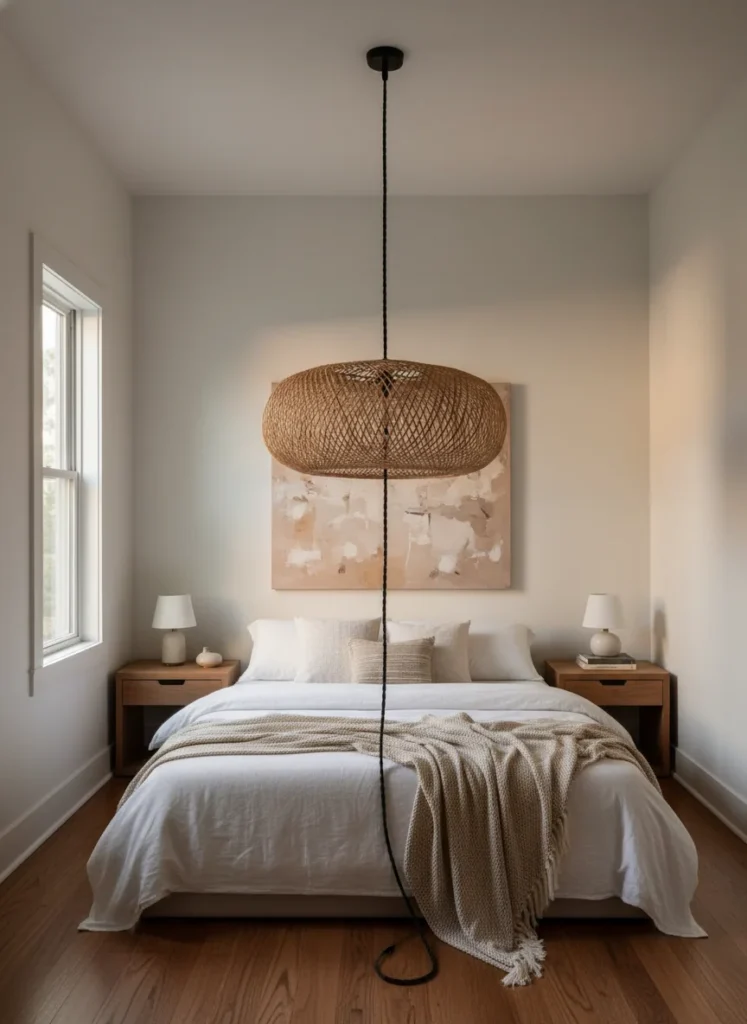
In a standard 8-foot room, ceiling lights are mounted close to the ceiling because there is nowhere for them to go. In a high-ceiling bedroom, that constraint disappears. A pendant or chandelier on a long cord, hanging 5 to 6 feet below the ceiling, creates a layered lighting plane that draws the eye up to the ceiling while also making the bed zone feel intimate and defined. It is a canopy effect achieved with light rather than fabric.
The pendant should hang so that its lowest point is approximately 7 feet from the floor, which puts it above head height while creating a clear visual relationship between the ceiling and the sleeping zone below. A rattan or woven pendant lamp on an extended cord is the right choice for most small bedrooms with high ceilings because its natural material reads warm rather than industrial, and its open weave allows light to fill the room rather than casting a single downward cone. Priced at $35 to $90 depending on size and material.
4. Create a Vertical Gallery Wall That Stacks From Low to High
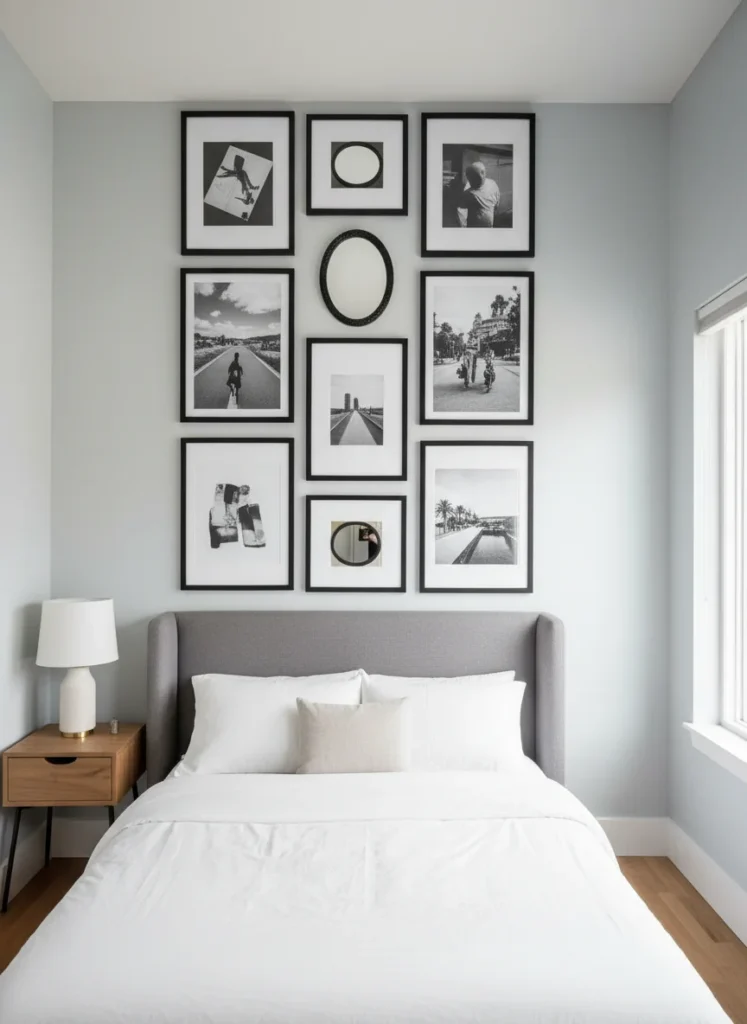
A standard gallery wall arranged at eye level leaves everything above it blank, which in a high-ceiling room is a significant amount of empty wall. Extending the gallery wall vertically, stacking frames in columns that reach from just above the headboard to within 12 inches of the ceiling, fills the space and connects the two planes. It also reads as more architecturally interesting than a gallery wall that stops at a conventional height because the vertical extension implies that the room’s personality extends all the way up.
The frames in the upper portion of the vertical gallery can be smaller and lighter because they are seen from a distance. The frames at eye level, where the detail is visible, carry the most visual weight. Keep consistent frame colors across all levels, either all black, all natural wood, or a mixed set, so the gallery reads as a unified installation rather than two separate arrangements stacked accidentally. Building a complete gallery wall affordably using Amazon frames and free printable art is something covered in detail in the post on free ways to make a bedroom look expensive.
5. Use a Tall Headboard That Fills the Wall Above the Bed
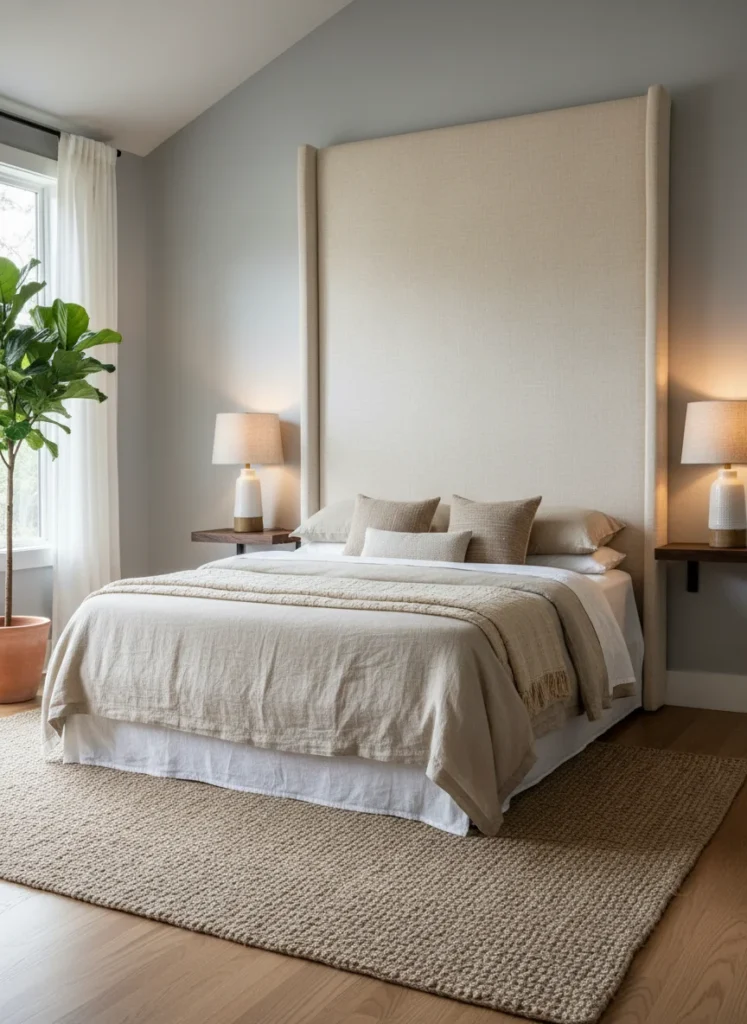
A standard headboard at 36 inches tall looks undersized in a room with 10 or 12-foot ceilings. The proportional relationship between the headboard height and the ceiling height matters in the same way that a small sofa looks lost in a large living room. A tall headboard, 60 to 80 inches from the floor, fills the space between the mattress level and the point where the eye naturally reads as the room’s upper boundary, which is approximately 7 to 8 feet. It grounds the bed zone and makes the sleeping area feel deliberately designed rather than placed in a room that is too big for it.
An upholstered panel headboard mounted directly to the wall, rather than attached to the bed frame, is the most flexible option because it can be cut or ordered to any height. Fabric panel headboards in a simple linen or boucle can be DIYed with plywood, foam, and fabric for $40 to $80, or purchased pre-made in extended heights in the $100 to $200 range. The headboard does not need to match the bed frame; it is a wall-mounted architectural element that happens to sit behind the bed.
6. Paint a Two-Tone Wall to Give the Room Human Scale
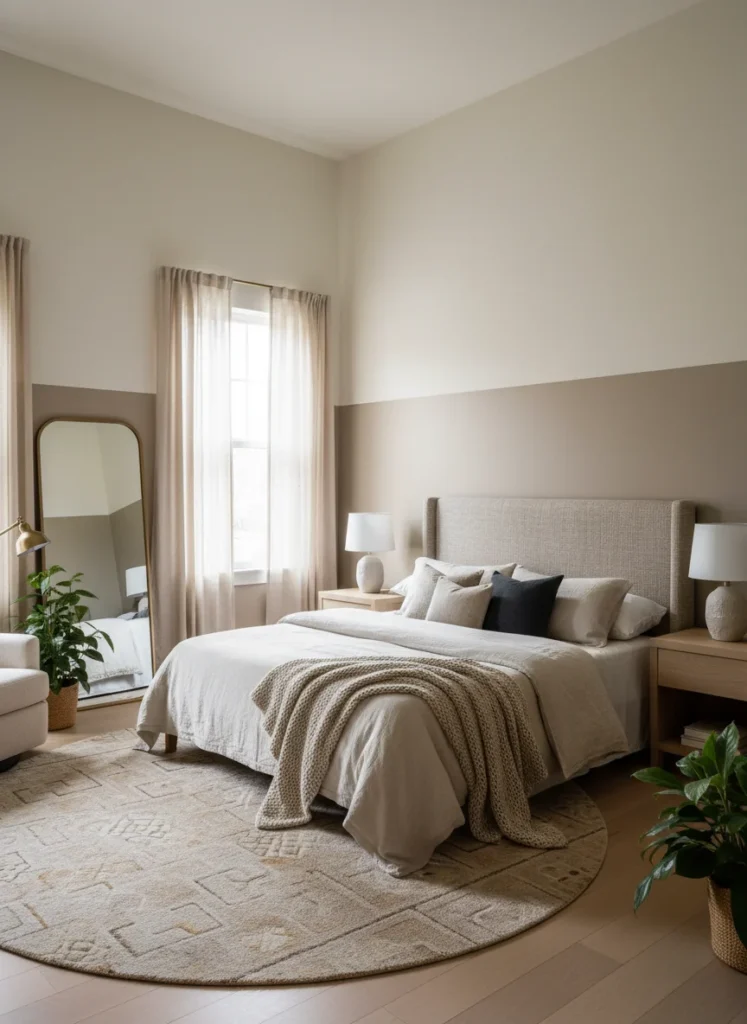
A high-ceiling room with uniform color from floor to ceiling can feel cavernous rather than grand because there is no visual break that gives the eye a sense of scale. Painting the lower two-thirds of the wall in a richer color and leaving the upper third and ceiling in a lighter tone creates a horizontal divide that makes the room feel more intimate and proportional. The lower zone becomes the lived-in, warm space where furniture and people exist. The upper zone becomes the airy, light-filled space above.
The color break line sits at approximately two-thirds of the ceiling height. In a 12-foot room, that is 8 feet, which is above standard door height and creates a generous lower zone. The divide can be a clean painted line, a picture rail or architectural molding installed at the break point, or a natural color fade if you prefer a softer transition. The lower color should come from the room’s main palette, whether that is earthy warm neutral, dusty sage, deep mocha, or soft blush.
7. Hang Plants From the Ceiling or High on the Wall
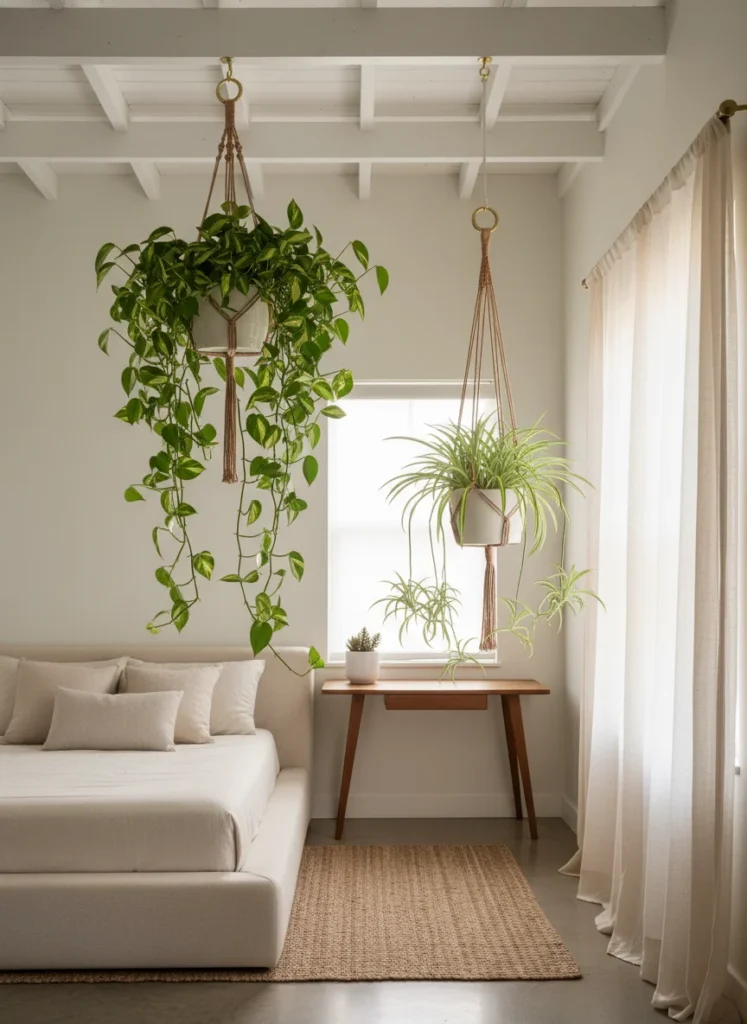
Hanging plants address the high-ceiling problem in a specific way: they occupy the vertical space between the furniture level and the ceiling with something organic and alive, rather than a static object. A trailing pothos or heartleaf philodendron suspended from a ceiling hook at 8 to 9 feet, with vines cascading down, creates a living element that pulls the eye upward and connects the ceiling plane to the room below. Multiple hanging plants at different heights create a layered indoor garden effect that is genuinely beautiful in a high-ceiling bedroom.
Macrame plant hangers are the most visually interesting suspension method because the knotted rope adds texture and warmth to the upper zone. A simple macrame plant hanger runs $8 to $18. The plants best suited to high-ceiling hanging: pothos (extremely low maintenance, trails beautifully), heartleaf philodendron (similar trailing habit), and spider plants (produces cascading runners that extend the vertical element even further). All tolerate the lower light levels typical of upper-room zones where direct sunlight rarely reaches.
8. Use a Loft Bed to Create a Functional Zone Below
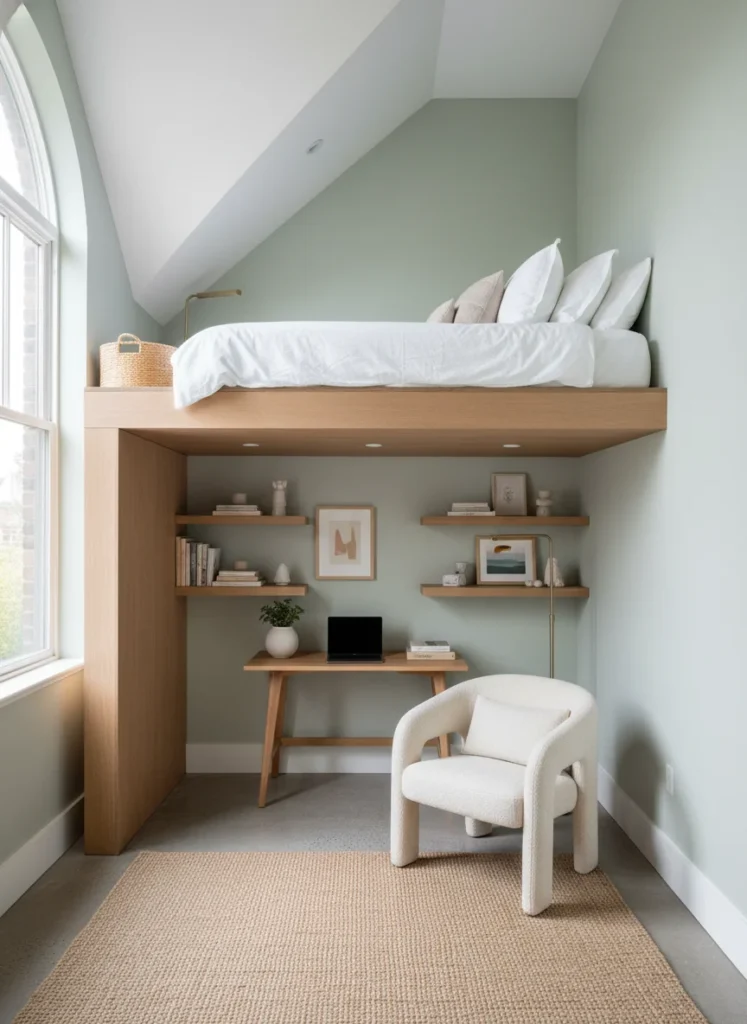
A loft bed in a room with high ceilings is not a compromise. It is the most efficient spatial solution available. Standard loft beds require a minimum ceiling height of 9 to 10 feet to provide 4 to 5 feet of clearance above the mattress, which is enough to sit up and sleep comfortably. The floor zone beneath the loft, typically 6 to 7 feet of height, becomes a full functional space: a dedicated desk, a reading nook with a chair and lamp, open wardrobe storage, or a combination of all three.
This is the only idea on this list that doubles the functional square footage of the room rather than simply addressing the visual scale. A small bedroom of 100 square feet with a loft effectively has 100 square feet of sleeping area above and 100 square feet of functional area below, minus the footprint of the loft frame. That is the most significant spatial return available in a high-ceiling small bedroom. Loft bed frames for adults run $200 to $450 and require a ceiling clearance of at least 9 feet total, with 4.5 feet as the minimum comfortable sleeping clearance above the mattress.
9. Install Sconces High on the Wall to Create Ambient Upper Light
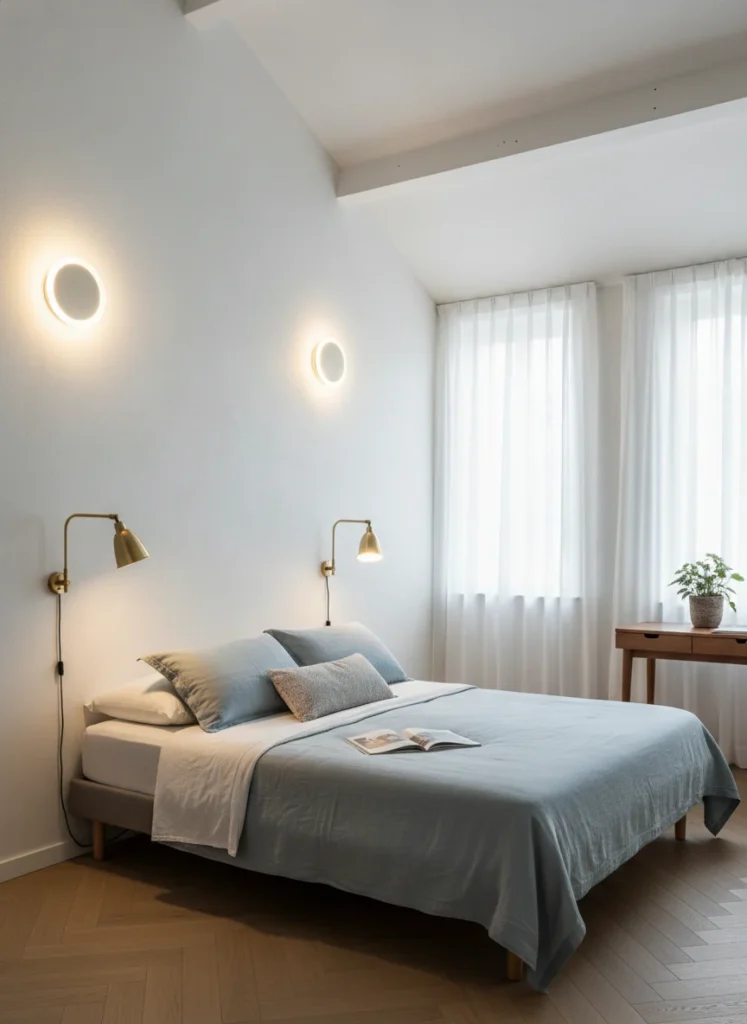
Most bedrooms are lit entirely from below the ceiling, which in a high-ceiling room creates a cave effect: everything at floor level is brightly lit and everything above it is dark and disconnected. Adding wall sconces at two heights, a functional pair at reading height beside the bed and a decorative pair at 8 to 9 feet for ambient uplighting, eliminates this disconnect. The upper sconces cast light toward the ceiling and upper walls, making the full vertical space feel inhabited and warm rather than dark and void.
Uplighting sconces at height do not need to be hardwired. Battery-operated or plug-in sconces in a simple form work equally well for the upper position. The cord can be secured along the wall with a cord cover. The visual purpose of the upper light is ambient warmth, not functional illumination, so the light level can be low. Warm 2700K bulbs at 40 to 60 watts are enough. A set of plug-in wall sconces for bedroom ambient lighting runs $35 to $65 for a pair.
10. Add Architectural Detail to the Upper Wall With Molding or Panels
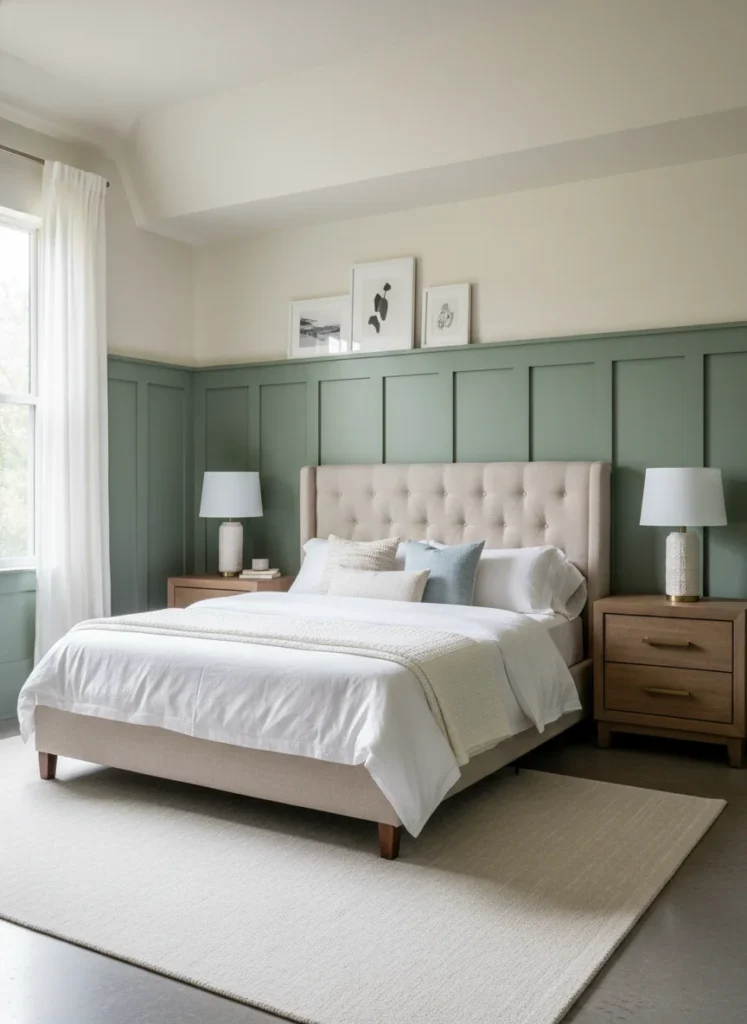
Empty upper wall in a high-ceiling bedroom reads as unfinished unless something architectural gives it texture or definition. Peel-and-stick wall paneling, DIY board and batten, picture rail molding, or simply a painted wainscoting line at the two-thirds mark all add architectural interest to the wall without requiring permanent structural changes in most cases. These details make the room read as a room with considered architecture rather than a box with high ceilings.
Peel-and-stick wall panel systems are the renter-friendly version of this approach and have become significantly more convincing in recent years. Applied to the lower two-thirds of the wall while the upper section stays smooth and lighter, they create the two-tone architectural effect with a textural component that paint alone cannot achieve. The investment is $40 to $90 for a wall section in peel-and-stick form. For renters who want architectural interest without any permanent changes, this is the specific approach that works best in combination with the two-tone paint idea above.
11. Use Tall Mirrors to Reflect the Full Room Height
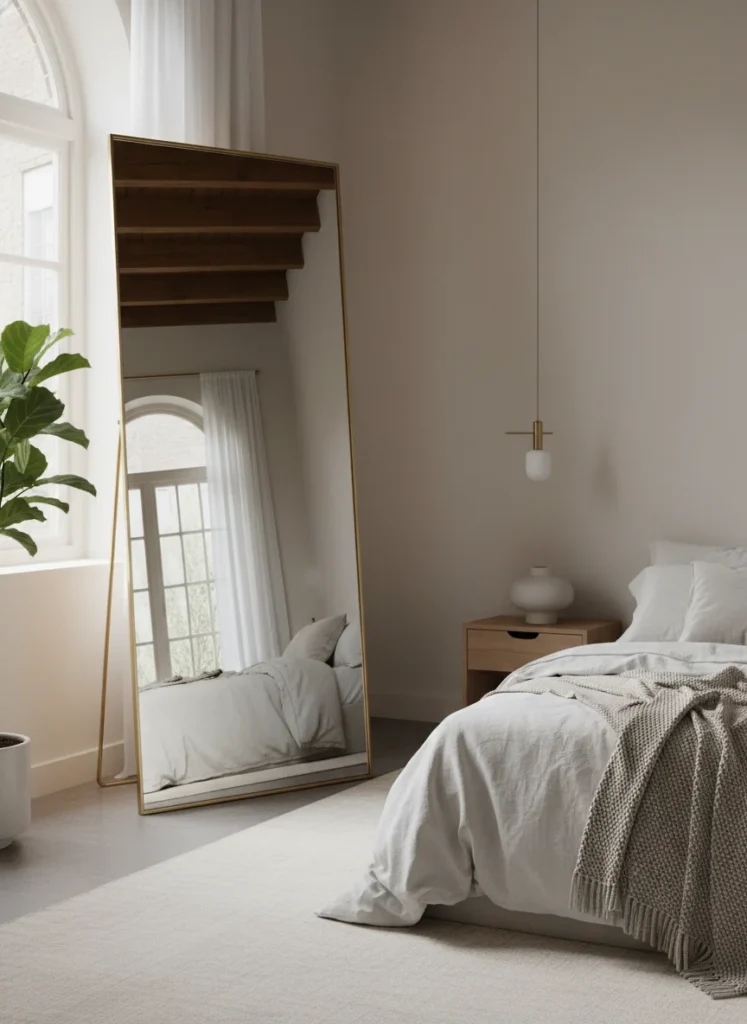
A standard full-length mirror at 65 inches reflects the room from approximately waist height to just above head level. In a room with 12-foot ceilings, it reflects less than half the vertical space. A taller mirror at 72 to 78 inches, placed against the wall perpendicular to the window, reflects the full room height including the ceiling and its connection to the upper walls. The room appears to continue beyond the mirror plane, which doubles the perceived vertical space and brings the full ceiling height into the visual field from the mirror side of the room.
The proportion of the mirror matters: a mirror that is taller than it is wide reads as vertical and suits a high-ceiling room better than a wide landscape mirror. A tall leaner in a simple thin frame at $60 to $90 is the right starting point. If you have already covered the mirror strategy for making small rooms feel larger in the post on how to make a small bedroom feel bigger, note that in a high-ceiling context the vertical orientation of the mirror is as important as the placement, which is the specific addition this idea makes to that principle.
12. Install a Ceiling Canopy Over the Bed for Coziness
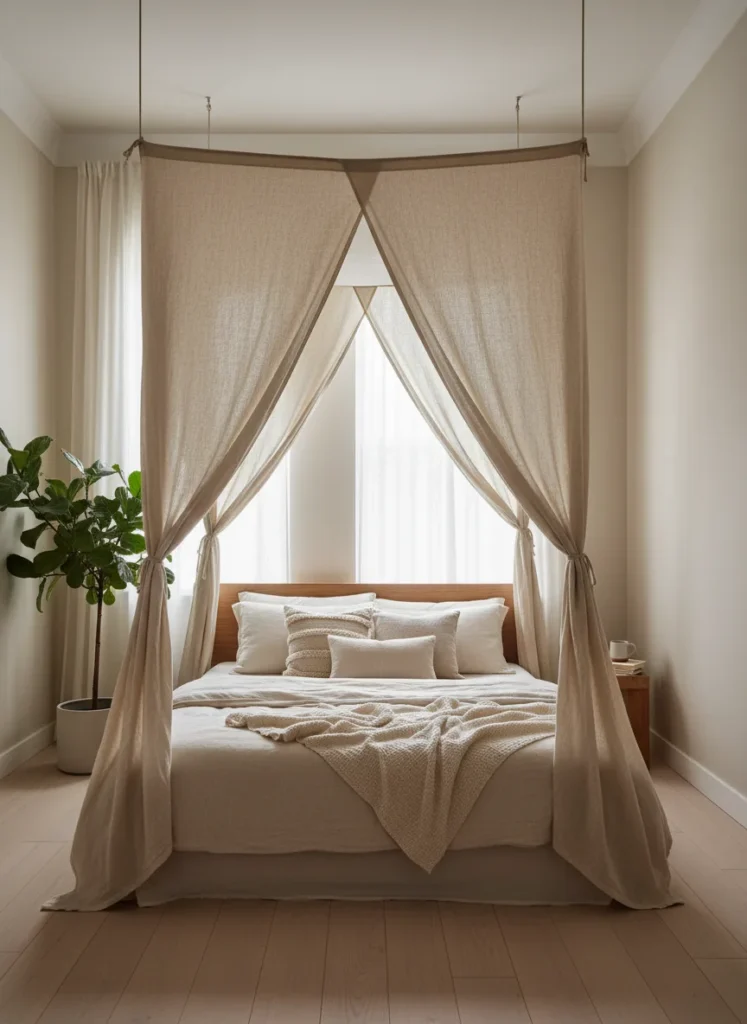
A high-ceiling bedroom can feel cold and exposed at sleeping level because the ceiling is so far away it provides no sense of enclosure. A fabric ceiling canopy addresses this directly: four panels of lightweight linen or sheer fabric attached to the ceiling in a square above the bed and falling to the headboard height on the sides create a soft enclosure that makes the sleeping zone feel intimate without closing off the rest of the room’s vertical space above the canopy line.
The canopy uses the ceiling height rather than fighting it. The fabric is attached to the ceiling at the four corners of the bed footprint using ceiling hooks or an adhesive mounting system, and the panels fall freely. Sheer white or natural linen in 120-inch panels works for rooms with ceilings up to 12 feet. This is a renter-friendly installation when done with removable ceiling hooks rated for the fabric weight. The total fabric cost is $40 to $80 for four panels. The canopy effect is one of the most dramatic coziness moves in any high-ceiling bedroom and costs less than most bedding sets.
13. Ground the Room With a Larger Rug Than You Think You Need
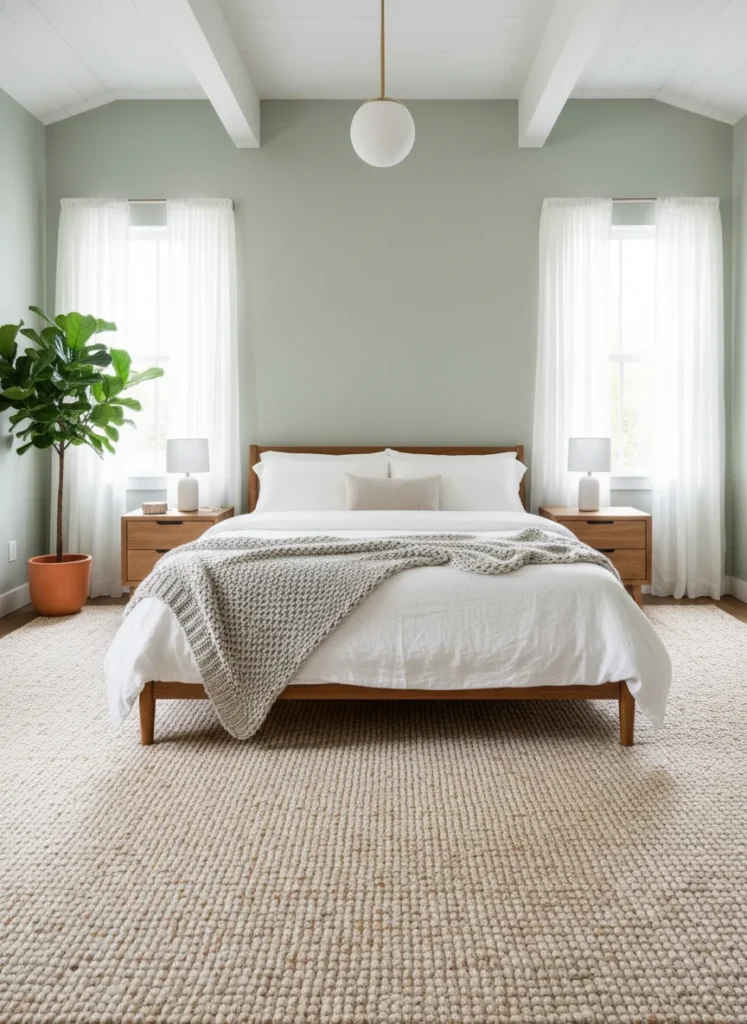
In a high-ceiling bedroom, furniture that sits on a small or no rug looks like it is floating in an unanchored space. The visual relationship between the ceiling height and the floor space requires a larger rug than a standard-height room needs to ground the furniture zone and create a sense of intentional definition at floor level. A rug that is correctly sized for the furniture in a standard room reads as too small in a high-ceiling room because the increased vertical space makes the floor zone proportionally smaller by comparison.
Go up one rug size from what you would normally choose. If a 5×8 would work in a standard bedroom, use an 8×10 in the high-ceiling version. The extra rug perimeter creates a visual boundary at floor level that the large room requires to feel grounded. A natural jute or wool area rug at the larger size runs $70 to $120 and is a foundational element in making a small bedroom with high ceilings feel anchored rather than sparse. The specific sizing logic for bedroom rugs is covered in detail in the post on how to make a small bedroom feel bigger, where the rule about rug extending beyond the bed perimeter is explained in the context of standard rooms, but the principle amplifies in high-ceiling proportions.
Before we continue, if you’re tired of buying decor that doesn’t look right together, I created something specifically for this…
The One Thing That Ties All of This Together
Every idea above is solving the same underlying problem: the relationship between the ceiling plane and the human-scale plane needs to be bridged so the room feels cohesive rather than disconnected. You bridge it upward, with shelving, curtains, and lighting that travel the full vertical distance. You bridge it downward, with canopies, two-tone walls, and large rugs that give the lower zone a sense of boundary and warmth. Do two or three of these ideas and the room transforms. Do most of them and the room becomes the kind of space that is genuinely difficult to leave in the morning.