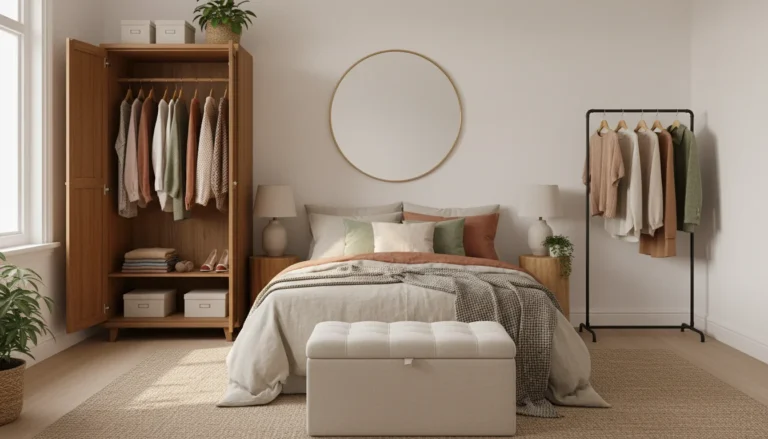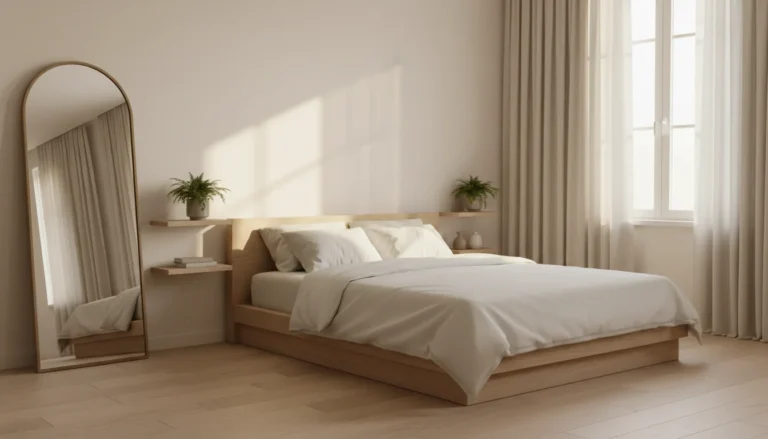

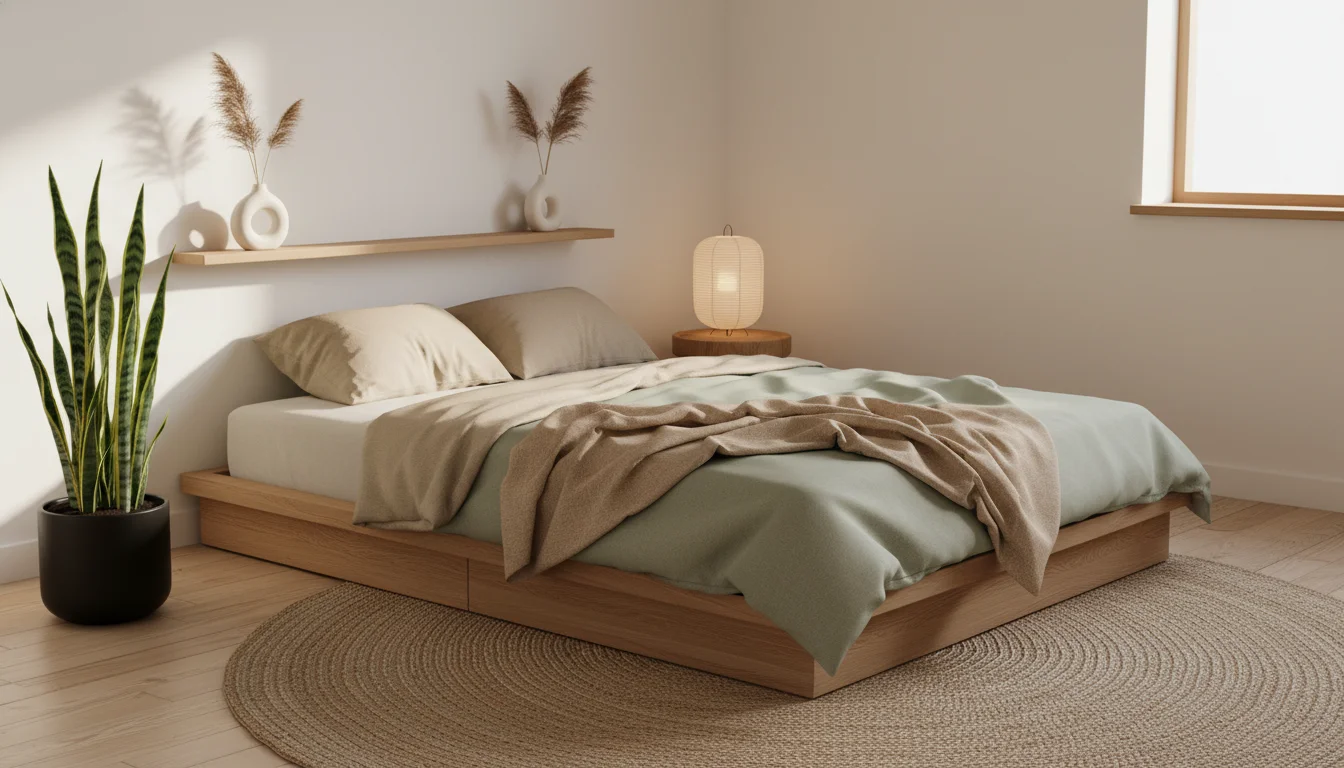
This post contains affiliate links. If you buy something through my links, I may earn a small commission at no extra cost to you. I only recommend things I genuinely use or believe in.
Japandi is not minimalism. That is the first thing to understand, and it is the thing that most articles about this aesthetic completely miss. Minimalism removes things until nothing is left. Japandi removes things until only the right things remain, and those things are warm, natural, imperfect, and deeply personal. It is the marriage of Japanese wabi-sabi, the philosophy of finding beauty in imperfection and transience, and Scandinavian hygge, the pursuit of cozy comfort and quiet contentment. The result is a design philosophy that feels calm without feeling cold, and expensive without feeling untouchable.
Small rooms are actually where japandi is at its best. A large room styled in japandi can feel sparse. A small room styled in japandi feels intentional, considered, and deeply restful. The constraint of square footage forces you to choose carefully, and careful choosing is the whole point. Every object stays because it earns its place. That is not a limitation. That is the philosophy working perfectly.
These 17 japandi bedroom ideas for small rooms are organized to build a complete room, not just a list of things to buy. Read through all of them before deciding where to start. The ones that feel immediately right for your space are the ones to begin with.
💡 Before you start decorating, see how your room could look with AI.
🏡 See Your Room Before You Spend a Dollar
Still wondering if that new furniture, paint color, or decor style will actually look good in your space?
- Upload a photo of your room and let AI instantly generate beautiful design ideas.
- Explore different interior styles, furniture layouts, and color combinations before you spend a single dollar.
What Japandi Actually Is and Why It Works in Small Rooms
Japandi emerged as a named aesthetic around 2020 but its principles are centuries older. Japanese interior design emphasizes ma, the concept of meaningful negative space, simplicity of form, and materials that age beautifully. Scandinavian design emphasizes warmth, functionality, and the use of natural light and natural materials to create a sense of hygge, of being comfortably at home in a space. Combined, they create something neither culture fully achieves alone: a room that is both spare and warm, both structured and soft.
The japandi color palette is not gray and white. It is warm whites with earthy undertones, charcoal that reads as almost-black, muted sage, warm oak, and the kind of stone-beige that looks different in every light. The materials are natural without exception: linen, wood, ceramic, jute, rattan, and stone. The forms are simple and functional. Nothing is purely decorative. If it cannot justify its presence through beauty and use simultaneously, it does not stay.
In a small bedroom, this philosophy is not a constraint, it is a liberation. You do not have to figure out what to add. You have to figure out what is worth keeping.
17 Japandi Bedroom Ideas for Small Rooms
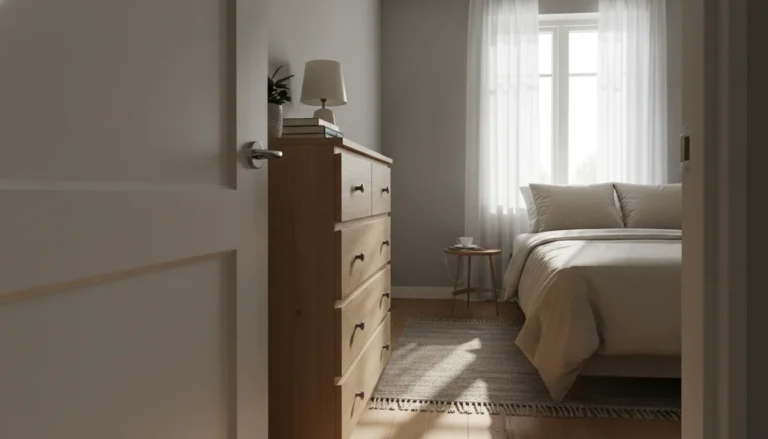
1. A Low Platform Bed Frame in Natural Oak or Walnut
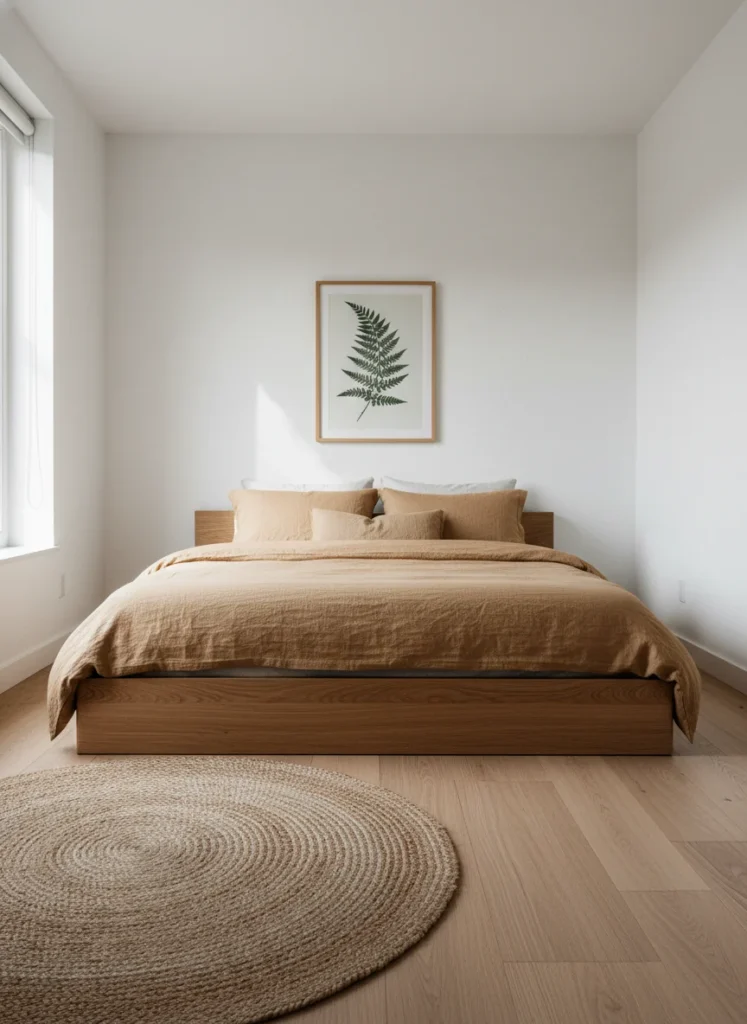
The bed is the most important decision in a japandi bedroom because the bed height sets the entire visual tone of the room. A standard Western bed frame, 24 to 30 inches off the floor, eats vertical space and makes a small bedroom feel crowded. A low platform bed, 8 to 14 inches off the floor, leaves a generous band of clear wall above it, makes the ceiling feel higher, and signals the calm groundedness that is central to Japanese interior design.
The wood tone matters as much as the height. Warm oak and walnut are the japandi standards: they read as natural and warm without being rustic. Pine looks budget. Painted wood breaks the material integrity. Look for low platform bed frames in solid oak or walnut-look in the $100 to $200 range for a queen. Secondhand furniture stores and Facebook Marketplace frequently have these at a fraction of retail. IKEA’s TARVA and MALM frames in natural pine, stripped of hardware and given brass pulls, can get very close to this look for under $150.
The IKEA japandi connection is worth noting here. Many IKEA pieces are actually designed with Scandinavian principles that translate directly to japandi. I covered the best IKEA pieces for a budget bedroom in this post on IKEA small bedroom hacks that make a $200 room look like a $2000 room, which includes several pieces that work perfectly in a japandi context.
Budget: $100-200
2. Warm White or Greige Walls
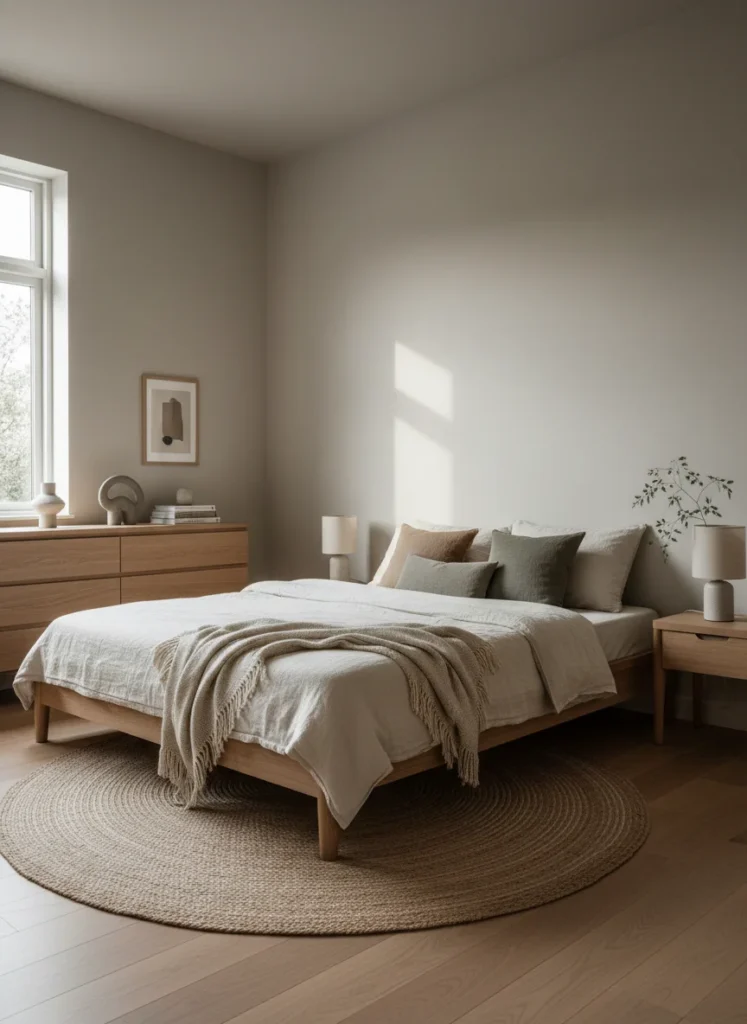
The japandi wall color is not white. It is warm white. The difference is significant enough that choosing the wrong shade can make every other japandi element in the room look slightly off. Bright white reads as clinical and sharp. Warm white with an earthy, slightly creamy undertone reads as calm and enveloping. The wall color in a japandi bedroom should feel like it belongs to the same family as the linen and the wood, even though it is paler than both.
Specific paint colors that hit this mark well include Benjamin Moore White Dove (OC-17), Sherwin-Williams Alabaster (SW 7008), and Behr Ultra Pure White with a warm tint mixed in. All of these read as white in photographs but feel warm and soft in person. For renters who cannot paint, the wall color becomes a styling problem to solve: placing warm-toned art, warm wood furniture, and linen curtains against the existing wall creates enough visual warmth that the wall color recedes into the background. This is something I covered in more depth in my post on paint colors that make a small bedroom look bigger.
Budget: $0-40 (paint swatch testing) or $0 (for renters)
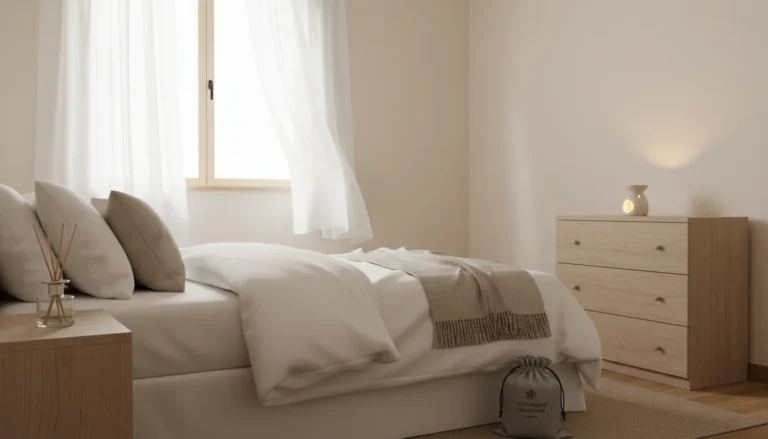
3. Linen Bedding in Earth Tones
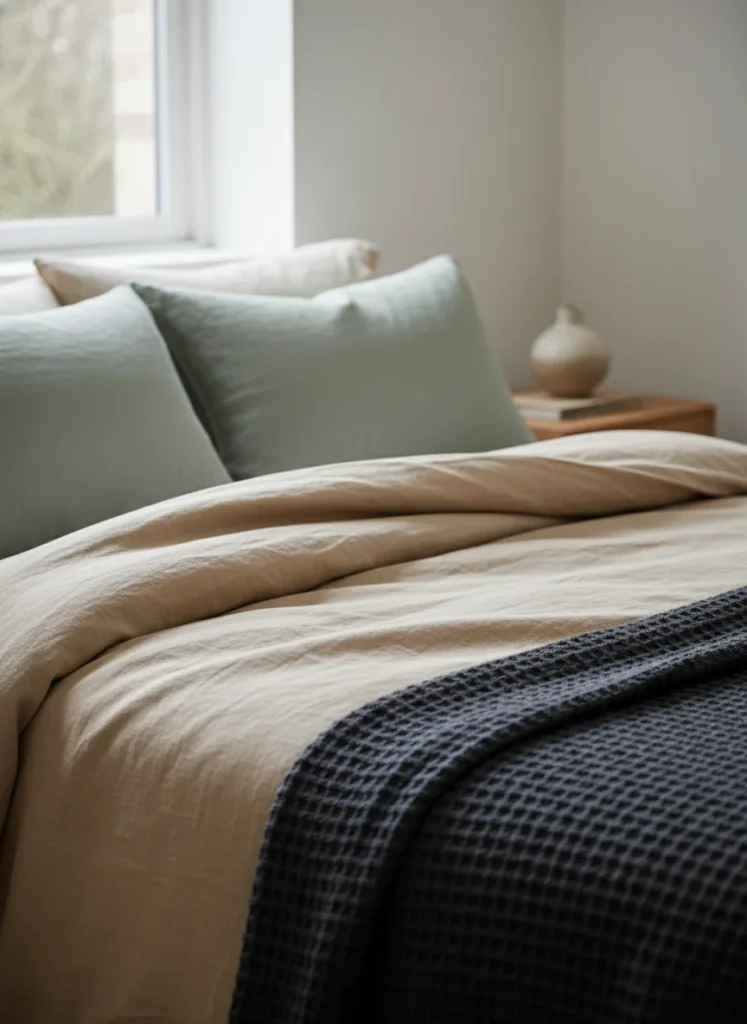
Linen is the japandi fabric because it embodies wabi-sabi in textile form. It wrinkles beautifully. It softens with every wash. Its color deepens slightly over time rather than fading. The natural imperfection of linen, the slight variation in weave, the way it drapes with weight, is not a flaw to be ironed out but the point of using it. In a small japandi bedroom, linen bedding in earth tones is the foundational textile decision that everything else builds around.
The earth tones that work best are warm oat, clay, muted sage, and warm charcoal. Avoid cool grays, which read as modern-minimalist rather than japandi. Avoid bright whites, which read as clinical. Avoid high-contrast patterns of any kind. The interest in japandi bedding comes from subtle tonal variation and texture contrast, not pattern. Mix a warm oat duvet cover with sage green pillowcases and a charcoal waffle-knit throw for a bed that reads as deeply composed without matching. Look for natural linen duvet cover sets in earth tones in the $50 to $80 range.
Budget: $50-80
4. Floating Bedside Shelves Instead of Nightstands
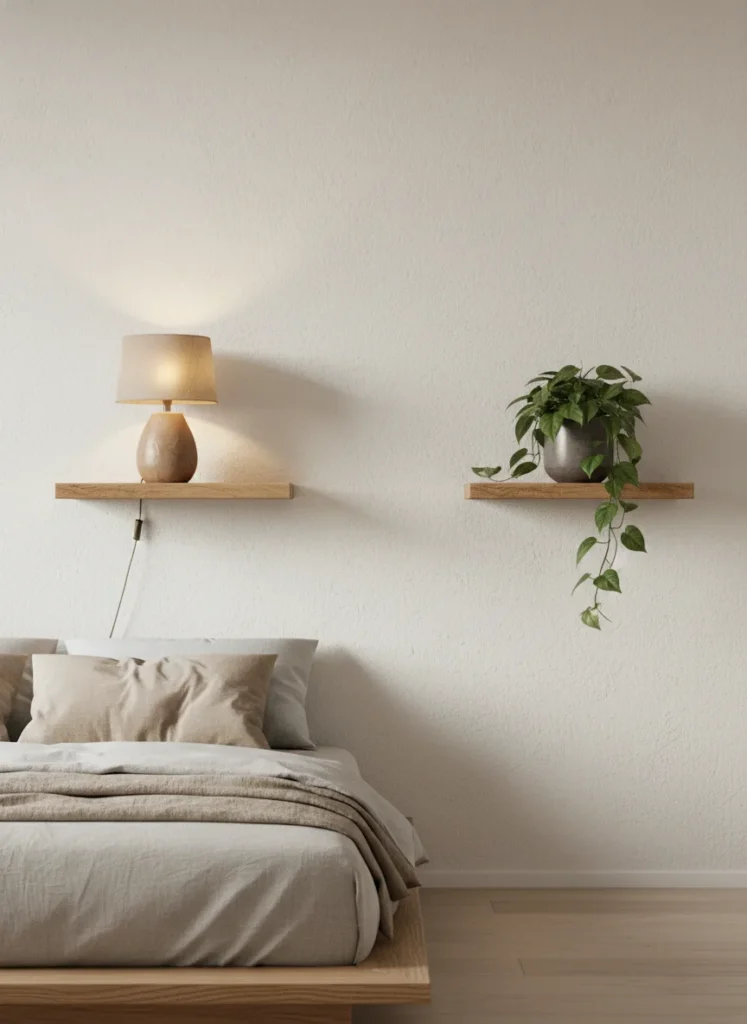
Nightstands take up floor space that a small bedroom often cannot afford to give. Floating bedside shelves mounted at the same height as a standard nightstand, about 26 to 28 inches from the floor, do the same functional job while leaving the floor completely clear. That cleared floor space makes the room feel significantly larger because the eye reads it as open breathing room rather than occupied territory.
In japandi, the styling on these shelves follows a strict rule: maximum three objects, and ideally fewer. A lamp, a plant, and one small object is the complete set. Anything more than that tips from intentional into cluttered. For renters, floating wood shelves mounted with Command strips rated for 15 to 20 pounds work well for lightweight bedside styling. These run $20 to $40 for a pair of small shelves.
Budget: $20-40 for a pair
5. A Single Large Wabi-Sabi Ceramic Vase
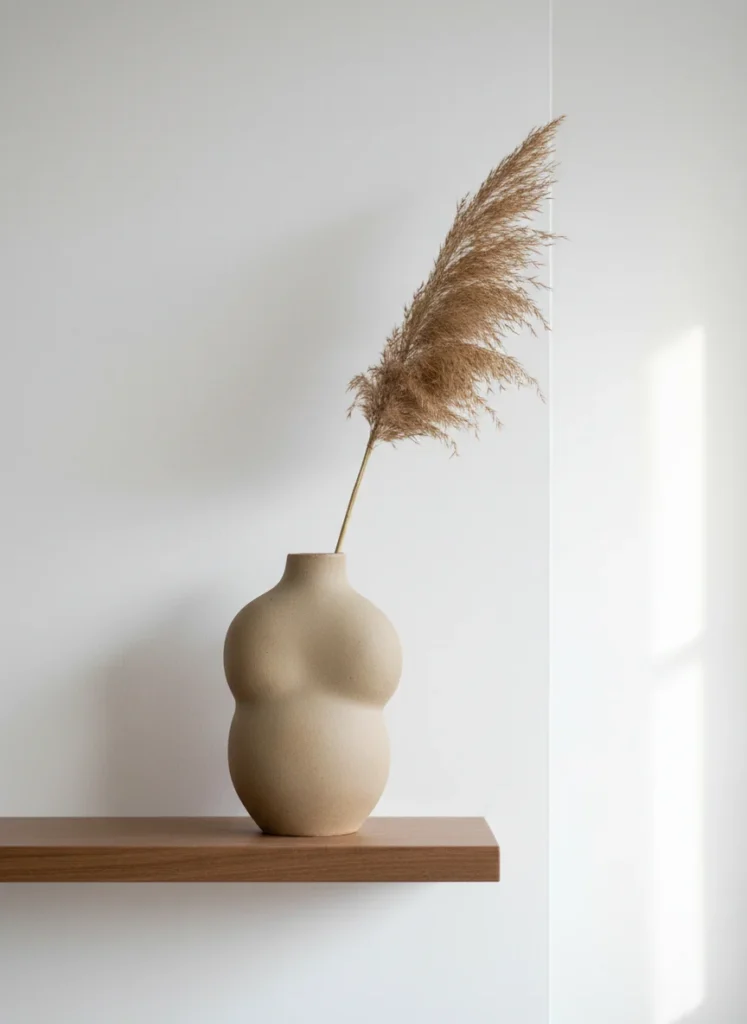
Wabi-sabi is the Japanese aesthetic of finding beauty in imperfection, incompleteness, and the marks of time. In a japandi bedroom, it is expressed most naturally through ceramics. A vase with a slightly irregular form, a glaze that is not perfectly uniform, a surface that looks handmade even if it is not, carries this philosophy in a way that a perfectly smooth, mass-produced object never can. One large ceramic vase placed on a shelf or dresser, holding a single dried stem or nothing at all, says more about japandi than a shelf full of matching objects.
When sourcing ceramic vases for this aesthetic, thrift stores are genuinely the best place to start. The ones that read as wabi-sabi, with visible throwing marks, uneven rims, or matte textured glazes, tend to be the ones sitting on thrift store shelves for $4 while the perfectly smooth ones sell first. On Amazon, search for wabi-sabi style ceramic vases in neutral matte finishes in the $15 to $35 range.
Budget: $15-35
6. Natural Wood Floating Shelves Styled with Restraint
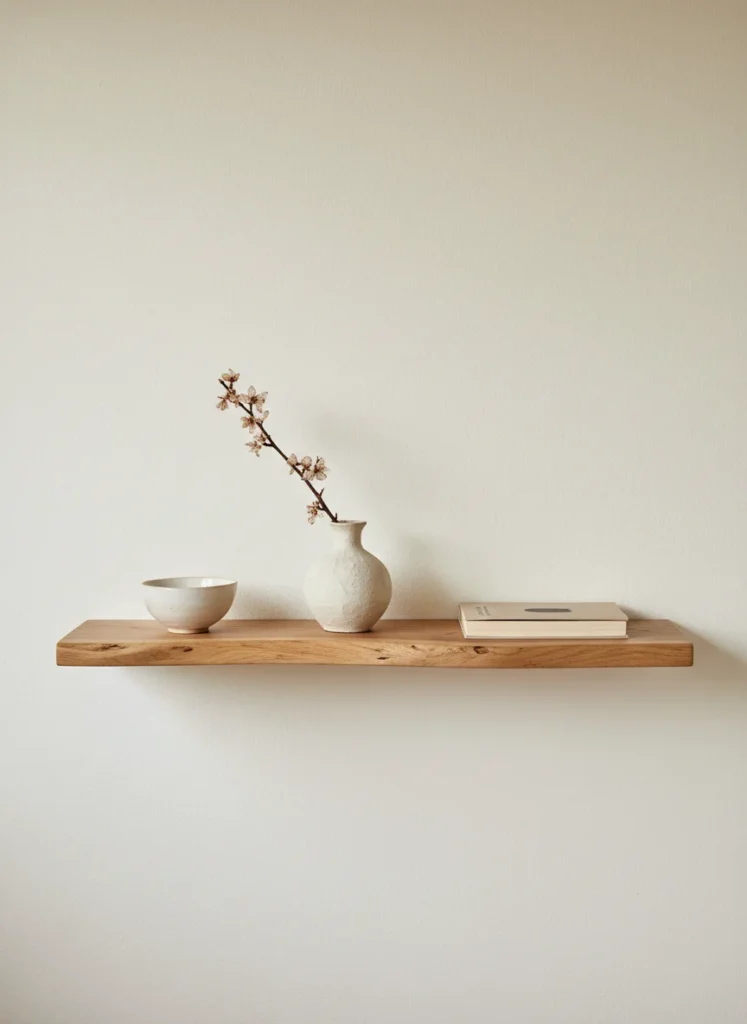
Shelves in a japandi bedroom are not for storage. They are for the deliberate display of objects that earn the right to be seen. This is the key distinction between a japandi shelf and a shelf in most decorated rooms. Most shelves are filled until they look full. A japandi shelf is styled until it looks right, which usually means about 30 to 40 percent of the surface is empty. That negative space, the ma principle, is not wasted space. It is the space that lets the objects breathe and be noticed.
For a small bedroom, one or two floating shelves at eye level on the wall opposite the bed is the right scale. A solid wood shelf with a visible wood grain, not a painted or laminate shelf, reads as japandi. Live-edge shelves lean more rustic but work well if the rest of the room is clean and minimal. Search for solid wood floating wall shelves in the $30 to $60 per shelf range. Three objects maximum per shelf. Odd numbers. Varying heights.
Budget: $30-60 per shelf
7. A Shoji-Inspired Lamp or Paper Lantern
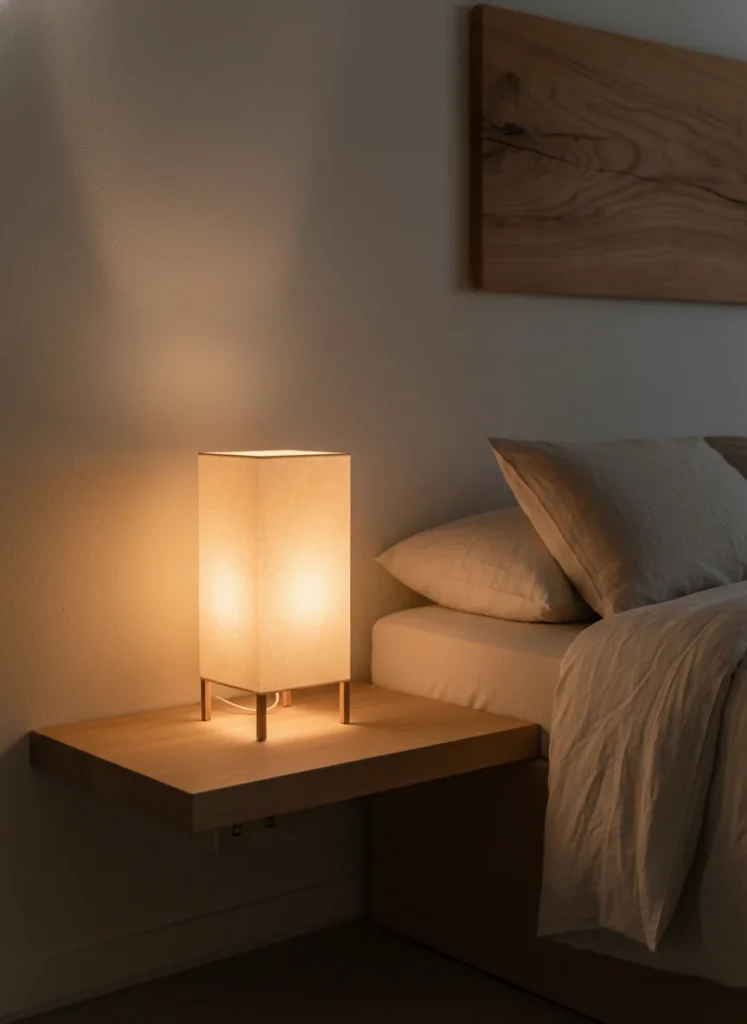
Light diffused through paper or fabric has a quality that no other lamp shade can replicate. Japanese shoji screens use translucent paper to filter light into rooms in a way that softens the source completely, making the light itself feel like a material rather than just illumination. A shoji-inspired table lamp or a paper lantern pendant replicates this in a modern bedroom and is the single most specifically Japanese design element you can bring into a japandi room.
For a small bedroom, a compact shoji-style square table lamp on a floating bedside shelf is the right scale. Floor-standing paper lanterns work well in corners but require floor space. A pendant paper lantern is the ceiling version and works beautifully in bedrooms where you want to replace the overhead fixture. Look for shoji-inspired paper lamp shades or lantern table lamps in the $20 to $40 range. Pair with a 2700K warm white LED bulb.
Budget: $20-40
8. Bamboo or Rattan as One Natural Material Accent
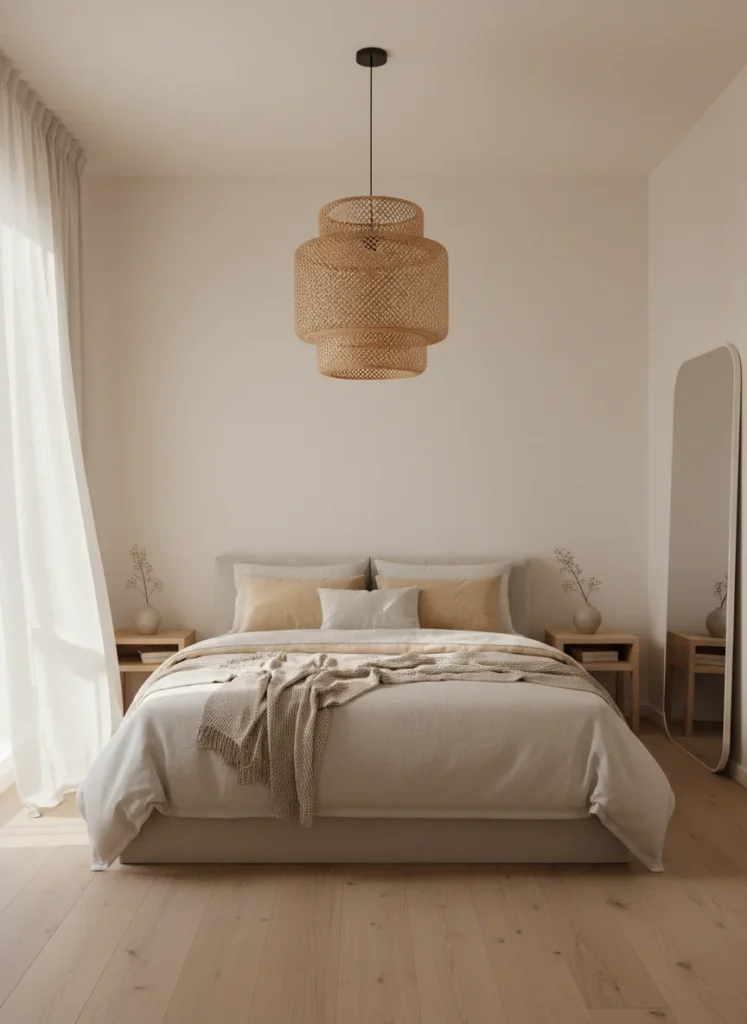
Bamboo and rattan are the natural materials that bridge Japanese and Scandinavian design. Both cultures use woven natural fibers in interior spaces, but differently: Japan tends toward structure and restraint, Scandinavia toward warmth and texture. In japandi, the right approach is one rattan or bamboo element used as an accent, not a pattern repeated throughout the room. One rattan pendant lamp. One bamboo blind on the window. One woven basket as storage.
In a small bedroom, a rattan pendant ceiling lamp is the highest-impact single placement because it occupies no floor space and transforms the overhead lighting from functional to atmospheric. Look for rattan pendant ceiling lamps in a round or drum form at $20 to $50. Avoid overly tropical shapes like wide flat discs with fringe. Simple, clean dome or cylinder forms read as japandi rather than coastal.
Budget: $20-50
9. A Muted Sage or Olive Throw Blanket Folded at the Foot
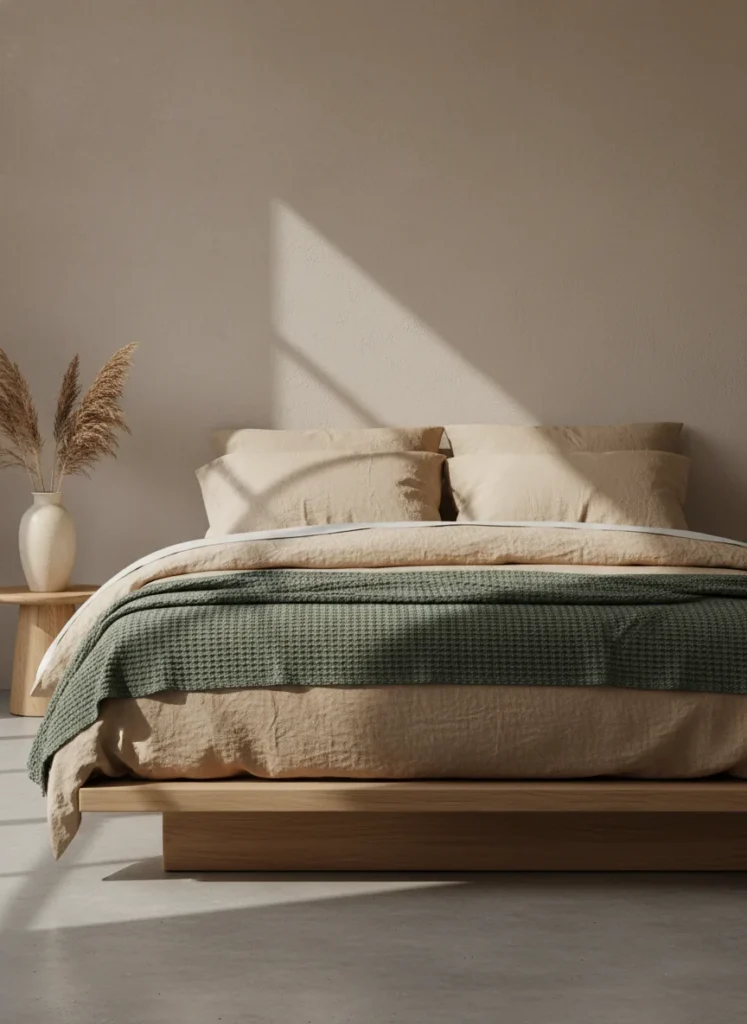
Muted sage is the japandi color that works harder than any other single accent tone. It is neither warm nor cool. It does not compete with natural wood or warm white walls. It does not fight with linen bedding. It simply belongs, in the same way that moss belongs in a forest, as though it grew there rather than was placed there. A sage or olive throw blanket folded at the foot of a japandi bed adds the only color in the room and it does it so quietly that many people do not even register it as a color choice, just as a feeling.
The waffle-knit weave is the most japandi fabric for this because the texture reads as interesting up close and neutral from a distance. Cotton waffle-knit in muted sage is widely available on Amazon in the $25 to $45 range. Avoid fleece, which reads as casual, and chunky knit, which reads as hygge-maximalist rather than japandi-restrained. Look for muted sage waffle-knit throw blankets in neutral, non-saturated tones.
Budget: $25-45
10. Minimal Art: One Large Print With a Natural Subject
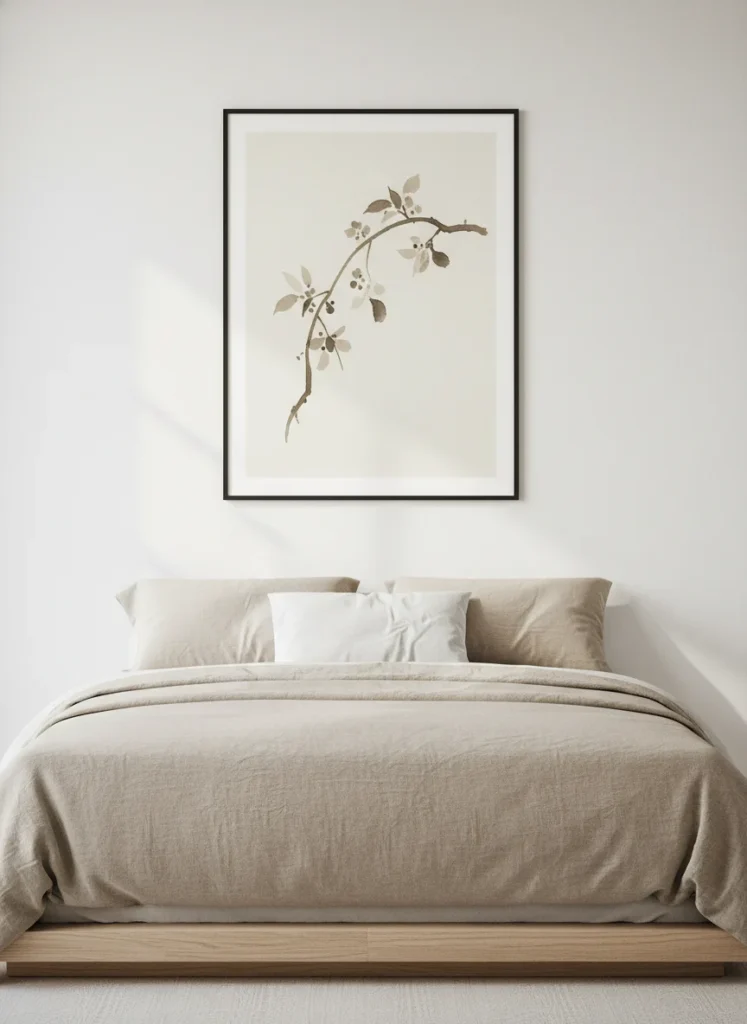
Japandi does not do gallery walls. The gallery wall is the opposite of ma, the Japanese concept of meaningful negative space. In japandi, one piece of art on one wall, chosen carefully and sized correctly, says everything that a gallery of twelve smaller pieces tries to say and fails to say because there is too much visual noise competing for the same attention.
The right subject matter for japandi art is nature, specifically: botanical illustrations, ink-wash paintings of branches or grasses, abstract nature photography in a neutral palette, or simple geometric forms inspired by natural shapes. The right frame is thin and simple: matte black, thin gold, or unfinished wood. The right size is larger than you think, 18×24 inches minimum in a small bedroom, because a small print on a wall reads as an afterthought. A large print on a bare wall reads as a considered choice. Search for japandi-style botanical or ink wash art prints in the $15 to $35 range and frame them yourself for maximum impact at minimum cost.
Budget: $15-35 (print) + $15-30 (frame)
11. A Jute or Wool Area Rug in a Natural Tone
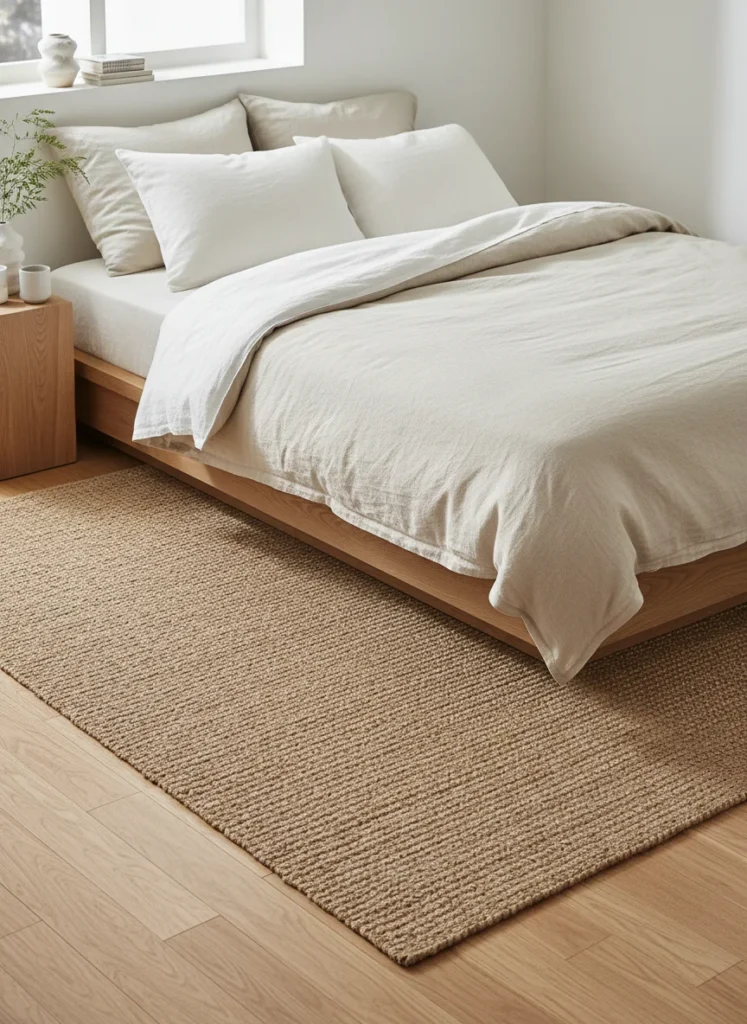
In a japandi bedroom, the rug is not a color statement. It is a texture statement and a spatial anchor. A natural jute rug in warm beige-brown tones grounds the bed, adds tactile warmth underfoot, and introduces natural fiber texture at floor level where the eye rests when the room is at its most intimate, first thing in the morning and last thing at night. Jute is the most japandi rug material because it is visually neutral and increasingly textural the closer you get to it.
Size is important and most people in small bedrooms choose too small. The rug should extend at least 18 to 24 inches on both sides of the bed and 12 inches beyond the foot. In a small bedroom, this often means an 8×10 foot rug under a queen bed, which feels large until you put it in and realize it is what makes everything look anchored. I have a full breakdown of rug sizing and placement in small bedrooms in this post on how to make a small bedroom feel bigger. Look for natural jute area rugs in a flat weave in the $40 to $80 range for a 5×8 in a smaller bedroom.
Budget: $40-80
12. Intentional Hidden Storage
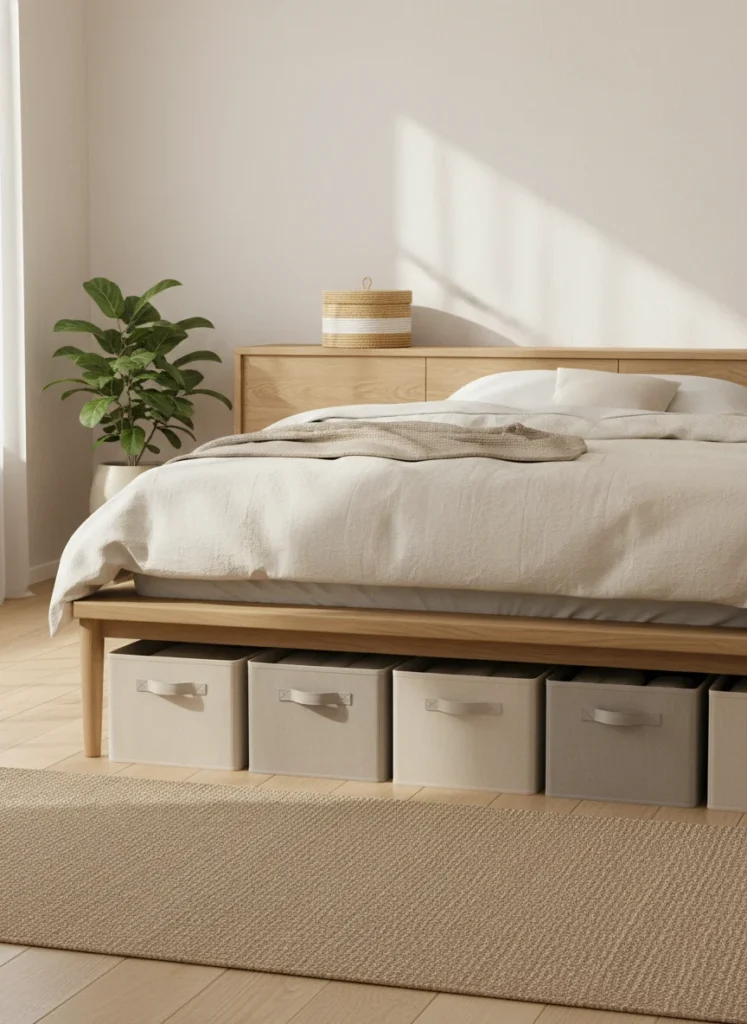
In japandi, disorder is not just messy, it is philosophically disruptive. The visual calm of a japandi bedroom depends entirely on the absence of visual clutter, which means storage has to be solved before styling can begin. The japandi approach to storage is to make it invisible: under-bed bins in neutral fabric, lidded baskets that look like decor, built-in style shelving with closed compartments. Nothing should be sitting out that does not serve a clear purpose or hold genuine beauty.
Under a low platform bed, the gap is typically 8 to 12 inches, which is enough for flat fabric storage bins in a neutral linen or canvas tone. On a dresser, a lidded rattan or woven basket handles the miscellaneous items that would otherwise live on the surface. The IKEA SKUBB system, fabric boxes designed for the KALLAX and PAX units, are very japandi-friendly in their neutrality and functionality. This kind of approach to organization in a small bedroom is something I explored in more detail in this post on free ways to make your bedroom look expensive.
Budget: $0-50
13. A Single Plant With Architectural Form
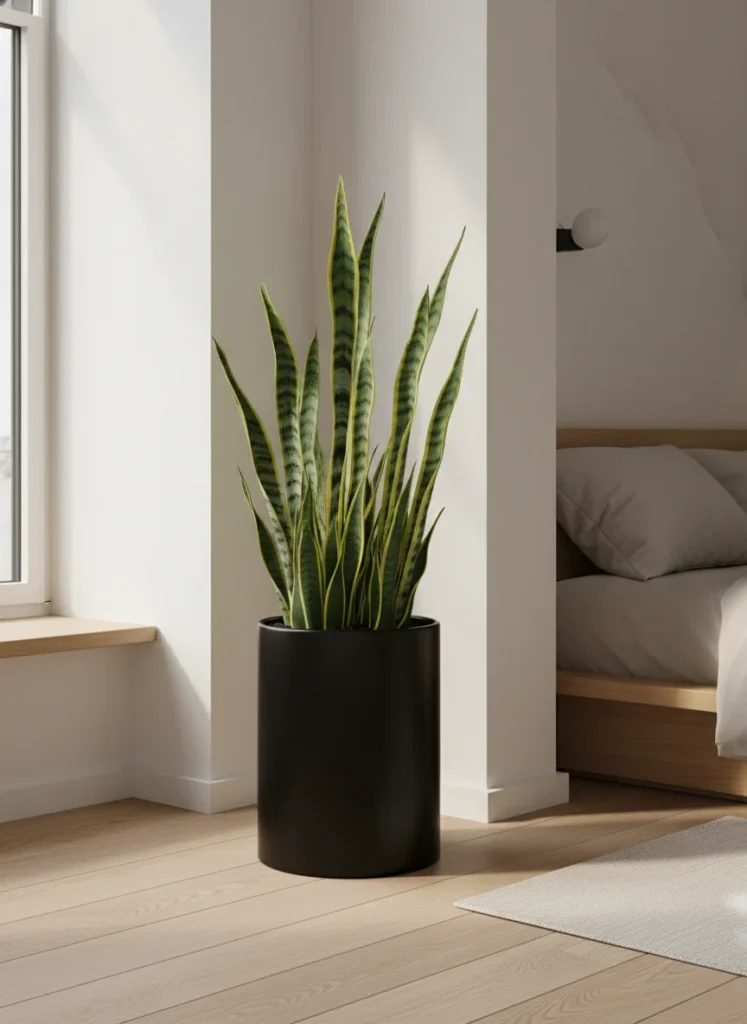
Japandi is not a plant-free aesthetic, but it is not a plant-dense one either. The rule is one plant with a strong, clean architectural form. Not a trailing pothos that softens and sprawls, not a bushy fern that fills a corner in an unruly way. A snake plant with its vertical spikes. A fiddle leaf fig with its bold, graphic leaves. A single peace lily in full bloom. One plant that reads as a sculptural element rather than a nature reference.
The pot matters as much as the plant. A matte black ceramic pot reads as japandi. A terracotta pot reads as boho. A white plastic nursery pot breaks the entire composition of the room. Match the pot material and finish to the other ceramics in the room. Snake plants and ZZ plants are particularly good for small bedrooms because they thrive in low to medium indirect light, do not require frequent watering, and maintain their architectural form without sprawling. A snake plant in a matte black ceramic pot costs about $15 to $25 total from a garden center or online.
Budget: $10-25
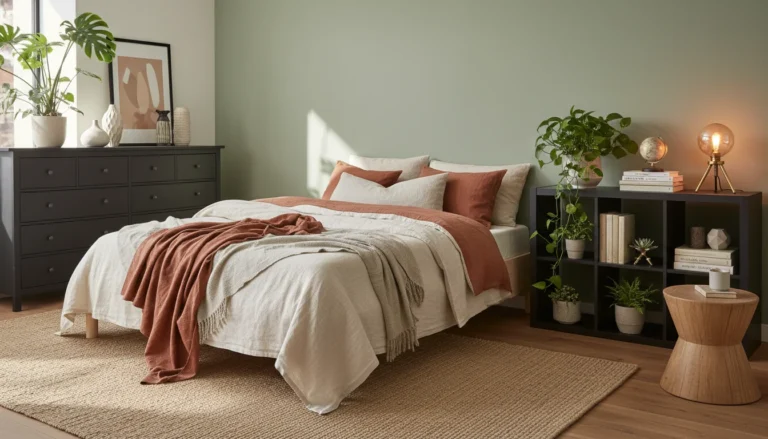
14. A Charcoal or Dark Sage Accent Wall for Renters
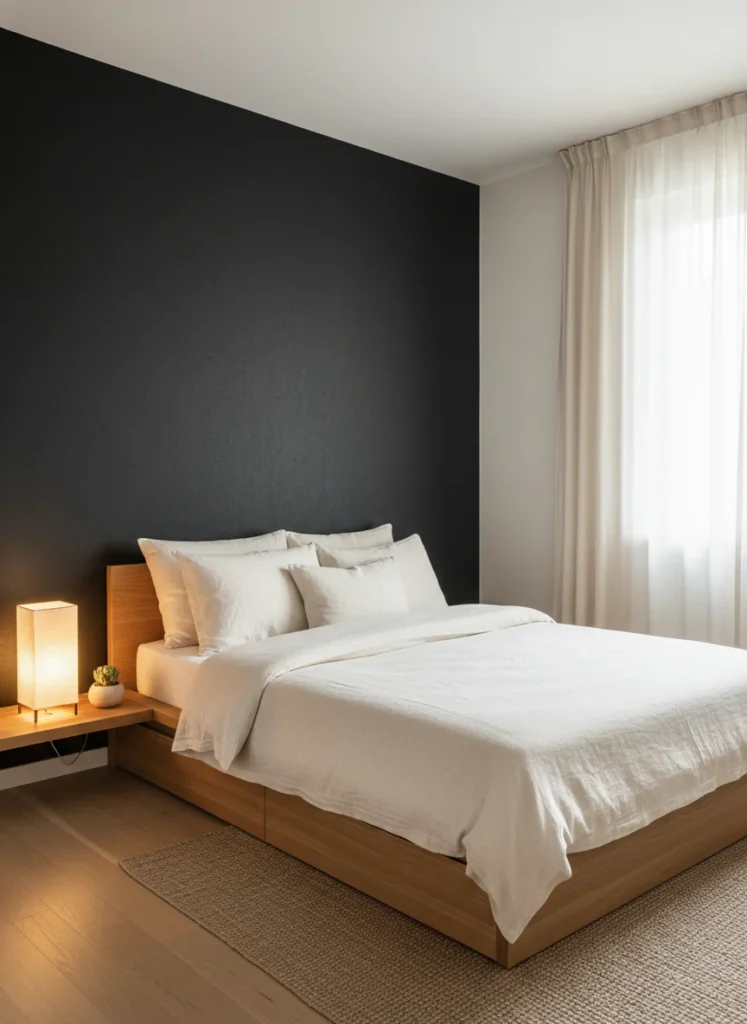
Dark walls in a small bedroom do not make it feel smaller if you do them correctly. This is counterintuitive and most people resist it, but the japandi bedroom proves the principle. A deep charcoal or dark sage wall behind the bed creates a dramatic, sophisticated backdrop that makes the linen bedding and natural wood glow against it. The room does not shrink. The focal point intensifies. The result feels expensive and intentional in a way that light walls with art sometimes do not.
For renters, peel-and-stick wallpaper panels in deep charcoal or dark sage are the answer. Brands like RoomMates and Chasing Paper have matte, large-format panels that install without damage and remove cleanly. Cover only the wall behind the bed, not all four walls, and the effect reads as an intentional accent rather than a mistake. The full wall typically takes three to five panels at $40 to $70 total. This is one of the more advanced japandi moves and it pays off more than almost anything else on this list. More renter painting and wall alternatives are in this post on renter-friendly bedroom ideas.
Budget: $40-70
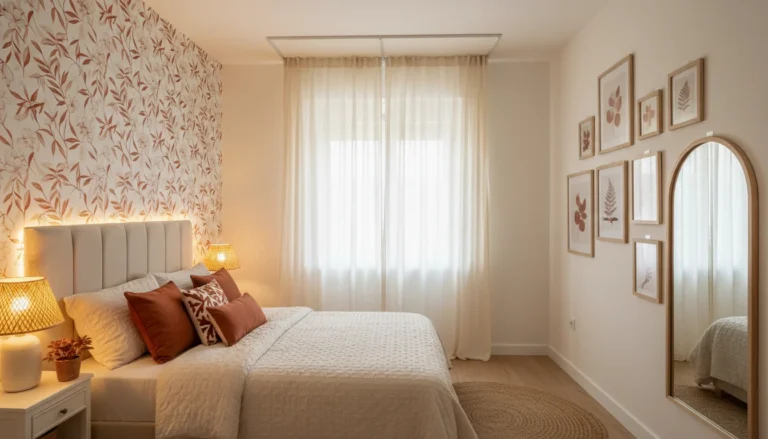
15. Warm Ambient Lighting Only
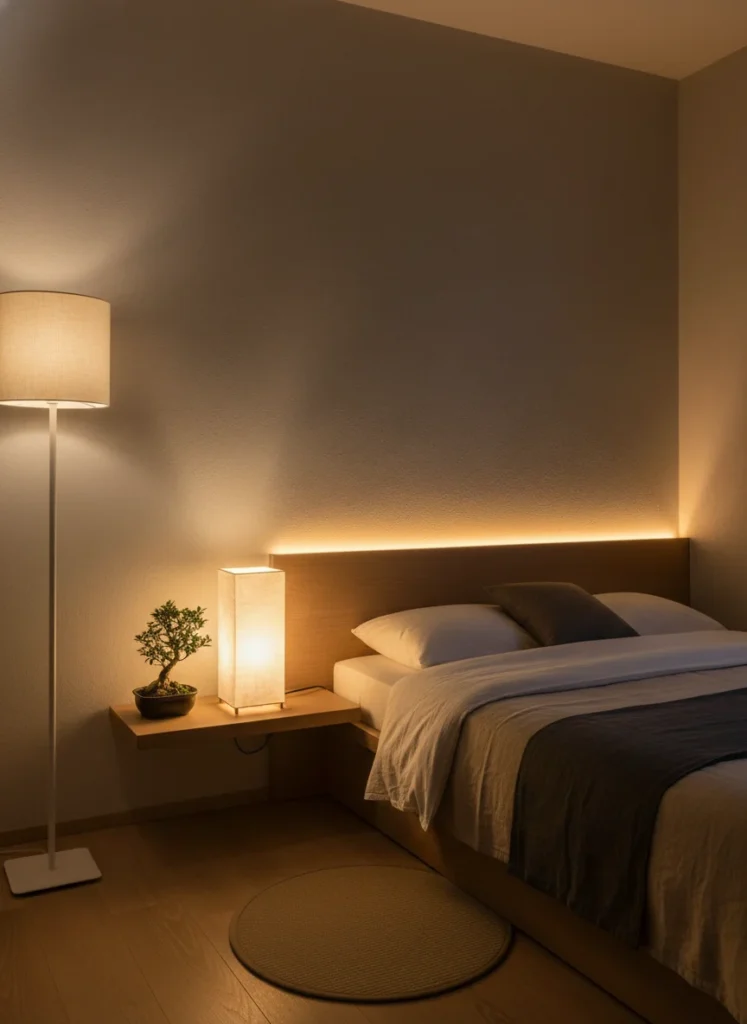
Overhead lighting is the enemy of the japandi bedroom. Overhead light illuminates everything at once, flattens shadows, eliminates the depth that makes a room feel three-dimensional, and reads as office rather than sanctuary. The japandi lighting approach uses multiple low-level ambient sources positioned at different heights to create layers of light that the eye moves between rather than a single source the eye can only accept or reject.
In a small japandi bedroom, the ideal lighting setup is three sources: a lamp on each bedside shelf, a floor lamp or secondary lamp in a corner, and optionally a warm LED strip behind the headboard as a soft backlight that creates depth against the wall. All at 2700K warm white. No cool light anywhere. The total investment for this kind of setup is $30 to $60 if you already have one lamp and need to add one or two more. Minimalist plug-in floor lamps with linen or paper shades in the $30 to $50 range are widely available and very japandi in their simplicity.
Budget: $30-60
16. A Wall-Mounted Hook Rail for Functional Japandi Living
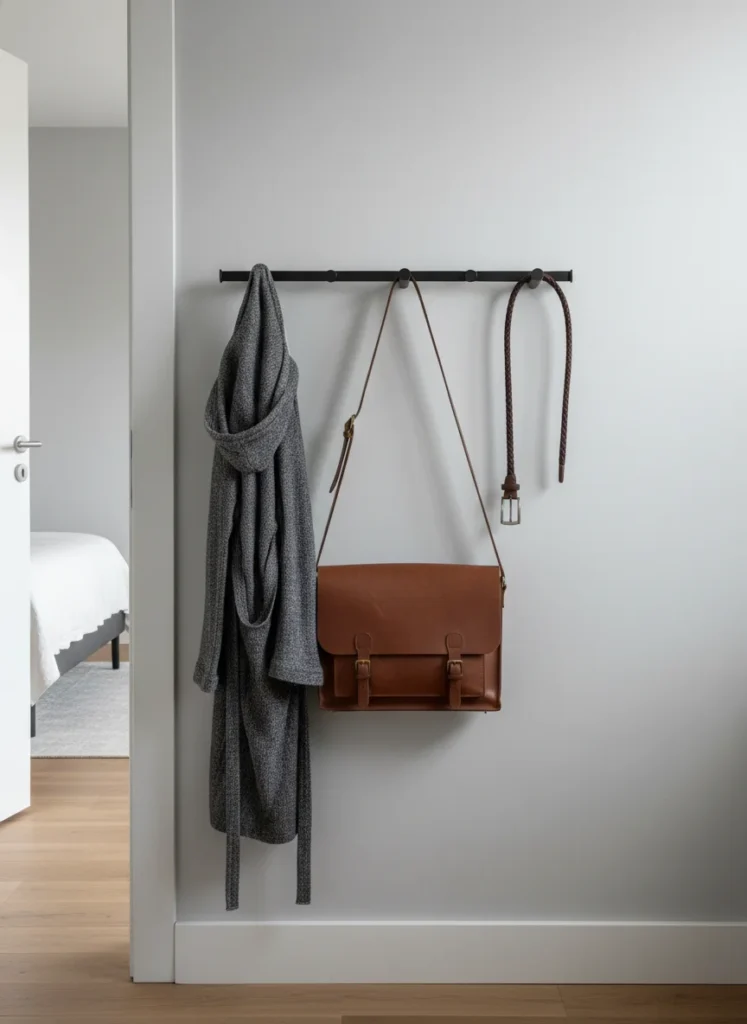
Japandi design takes functional objects seriously as design objects. A hook rail for robes, bags, and tomorrow’s outfit is not a utilitarian afterthought in a japandi bedroom, it is a considered element that keeps the floor clear and makes everyday objects part of the room’s composition rather than clutter that needs to be hidden. This is the ma principle applied practically: the clear floor space created by using the hooks is the space that makes the room breathe.
Look for a wall-mounted hook rail in solid wood with integrated hooks or a slim black metal rail with minimal round hooks. Both read as japandi. Five hooks maximum in a small bedroom, any more and it starts to look like a mudroom. Japandi-style wall hook rails in wood or black metal run $15 to $30. Use Command strips rated for the weight of what you plan to hang if drilling is not an option.
Budget: $15-30
17. Textural Contrast Without Color Contrast
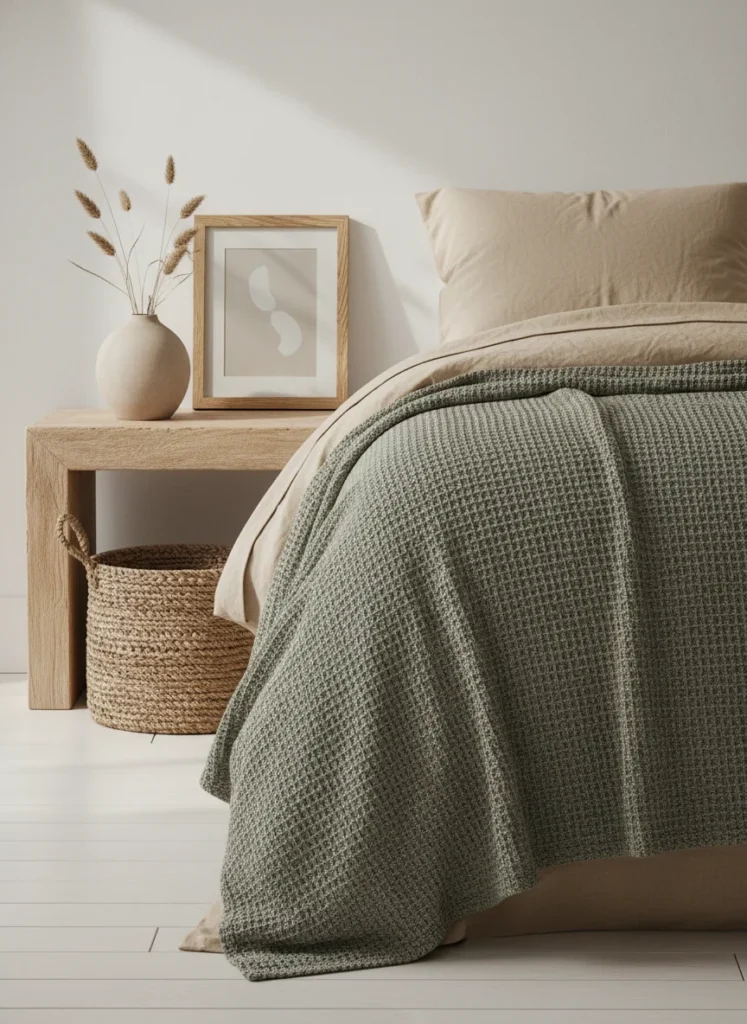
This is the most advanced japandi principle and the one that separates a japandi bedroom that reads as deeply calm from one that reads as simply bare. The idea is that visual interest in a japandi room comes entirely from the contrast between textures rather than the contrast between colors. A linen duvet and a waffle-knit throw are both in the same warm oat family, but the surfaces feel completely different. A ceramic vase and a wooden frame are both in warm neutral tones, but one is smooth and the other is grained. That contrast is all the interest the room needs.
To apply this principle, do a texture audit of your current bedroom. Look at each surface: what material is it? What does it feel like? Is there any variety in material between the objects in the room? If everything is smooth or everything is soft, the room will feel flat even at a japandi scale. Add one contrasting texture to each surface zone: a rough ceramic beside the smooth lamp, a woven basket beside the flat-front drawer, a waffle throw beside the linen duvet. The budget for this is zero if you style what you already have differently. This is the japandi principle that costs nothing and delivers everything.
If you are unsure where to start with your current bedroom, the post on free ways to make your bedroom look expensive has several moves that align perfectly with this kind of styling-first approach.
Budget: $0
Before we continue, if you’re tired of buying decor that doesn’t look right together, I created something specifically for this…
What It Feels Like to Live in a Japandi Bedroom
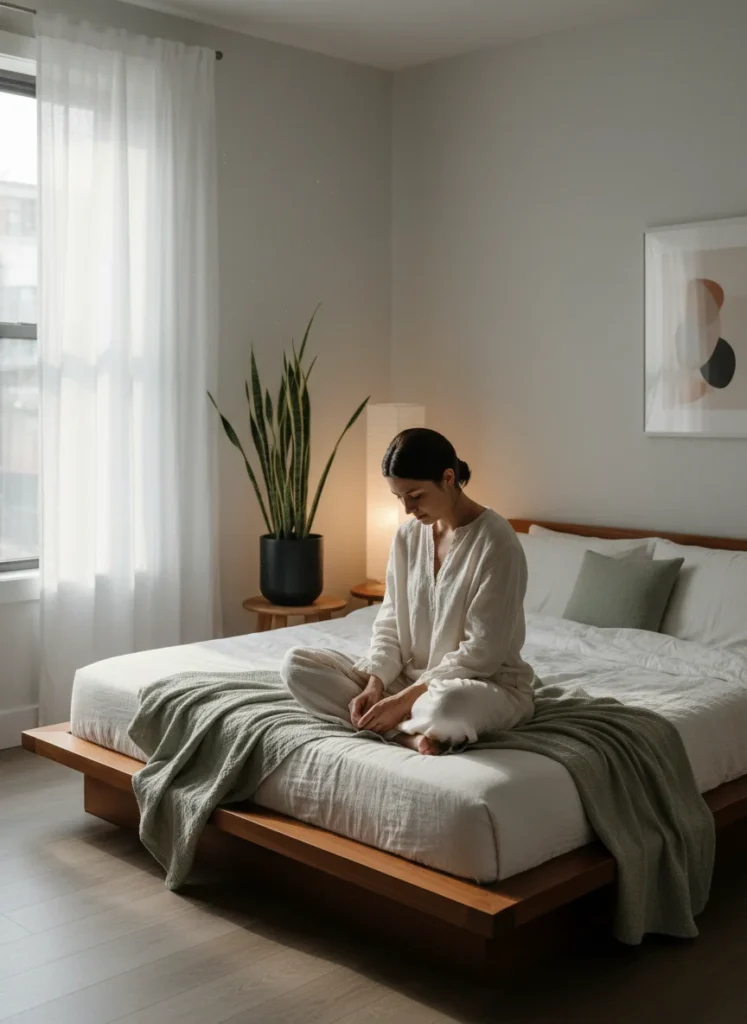
Here is what nobody tells you about japandi bedrooms: the goal is not how the room looks in a photograph. The goal is how the room feels at 6am when your alarm goes off and you stay in bed for an extra five minutes not because you are tired but because the room is genuinely pleasant to be in. That is a different design goal than most bedroom aesthetics aim for, and it is the one that japandi actually achieves.
The calm is not decorative. The linen that softens with every wash, the ceramic that holds the warmth from the afternoon light, the plant that quietly converts carbon dioxide in the corner, these are objects doing their jobs while also being beautiful. That is wabi-sabi. That is hygge. That is the thing that no amount of purchasing captures if the underlying principle is not understood first.
Start with one idea. Not seventeen. The low bed or the linen bedding or the floating shelves cleared down to three objects. Get that right, live with it for a week, and then see what the room asks for next. Japandi is not a checklist. It is a practice of choosing carefully, and the practicing is the point.
For more on building a calm, beautiful small bedroom on a real budget, the post on quiet luxury bedroom ideas on a budget covers the overlap between japandi and the quiet luxury aesthetic, which share more than most people realize.