
This post contains affiliate links. If you buy something through my links, I may earn a small commission at no extra cost to you. I only recommend things I genuinely use or believe in.
The fear is always the same. You want a sectional, you love the look of a sectional, but your living room is small and you are convinced a sectional will eat the entire space and leave you with something that looks like a furniture store made a wrong turn into your apartment. I had this exact fear for two years before I finally figured out how to make it work. And now I will not go back to a regular sofa.
Small living room ideas with a sectional sofa are absolutely possible. The key is not sacrificing the sectional. It is knowing which sectionals work, how to orient them, and what to do around them so the room feels generous rather than overwhelmed. Here are thirteen approaches that actually work in compact spaces.
Before we continue, if you’re tired of buying decor that doesn’t look right together, I created something specifically for this…
1. Go L-Shaped, Not U-Shaped
A U-shaped sectional is built for large rooms with substantial square footage on all four sides. In a small living room, it becomes a wall of furniture that consumes the center of the space and leaves awkward leftover corners with nowhere to go. The L-shape is the sectional format that actually works in compact spaces.
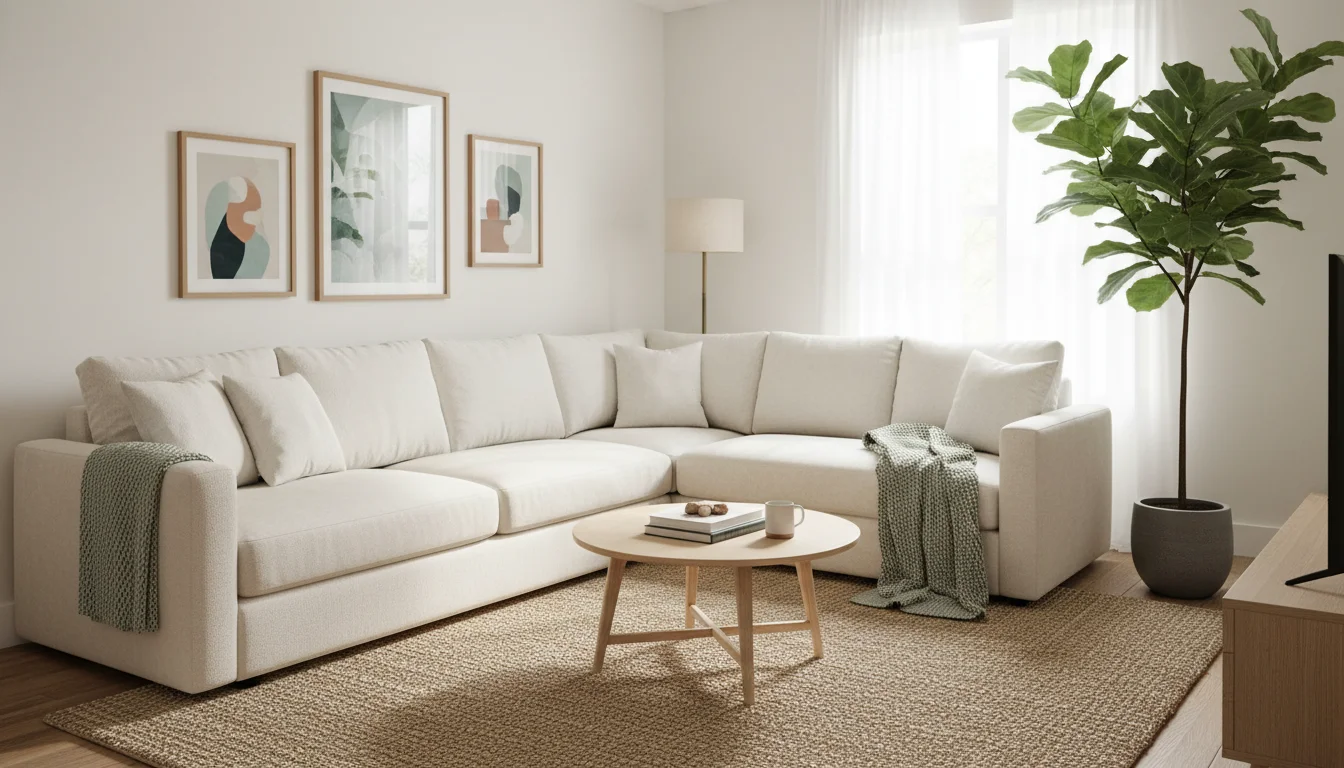
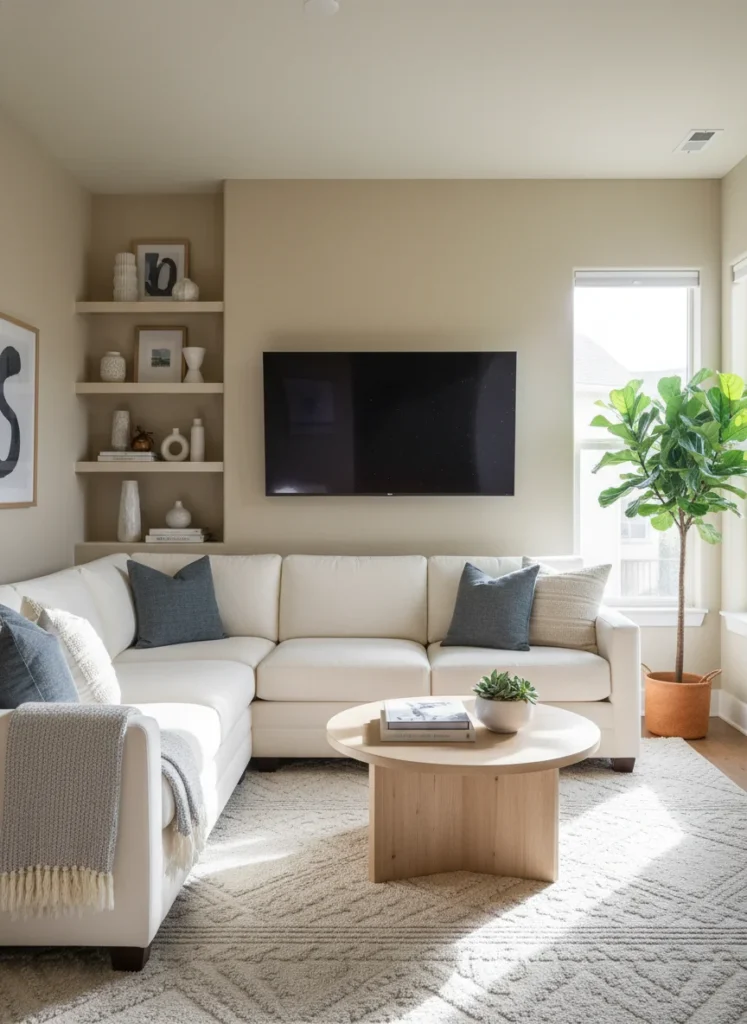
An L-shaped sectional runs along two walls rather than three, which keeps one full side of the room open. That open side is where the rest of your living room happens: the coffee table, the floor lamp, the visual breathing room that keeps the space from feeling like the sofa took over. An apartment-sized L-shaped sectional in the 95 to 110 inch range fits most small living rooms without dominating them.
2. Measure the Long Side Against Your Longest Wall
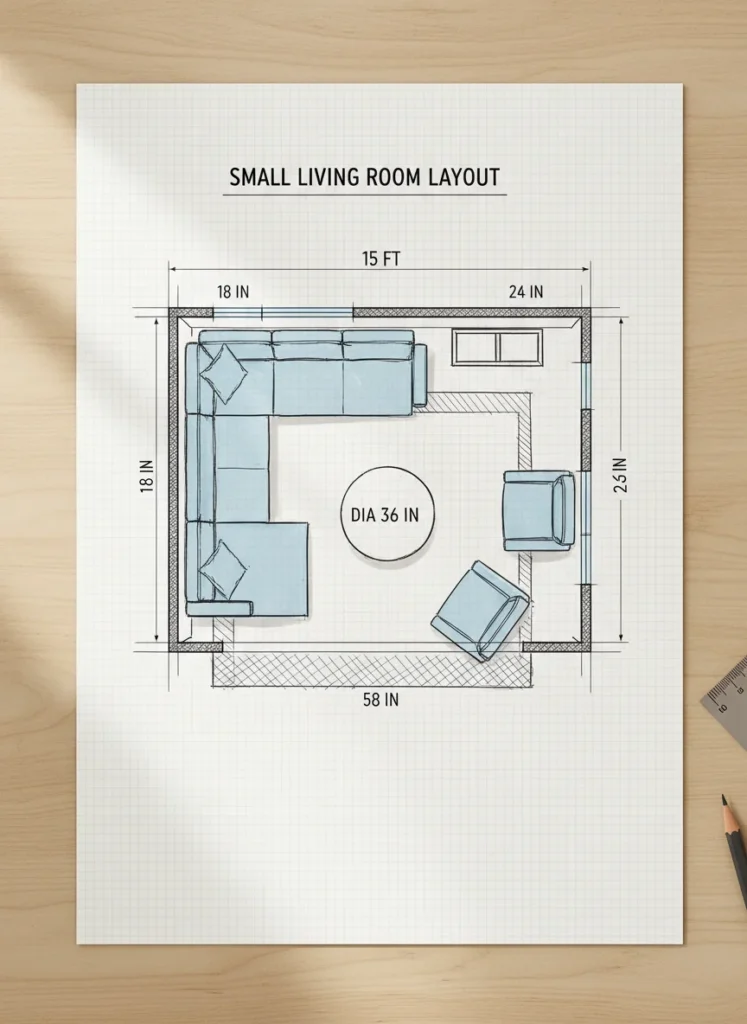
The most common sectional sizing mistake in small rooms is not measuring the long arm of the L against the available wall length. A sectional’s long side needs to fit comfortably along one wall with at least 12 to 18 inches of clearance to the adjacent wall or doorway. If the sectional’s long side is longer than your wall, you will feel it every time you walk through the room.
Measure your longest available wall. Then measure the return distance: how far the short arm of the L will extend into the room. This number is critical in a small space. A sectional where the return extends more than 60 to 65 inches into a small room will likely overwhelm it. Look specifically for sectionals described as “apartment-sized” or with a chaise length under 60 inches.
3. Choose a Sectional With Visible Legs
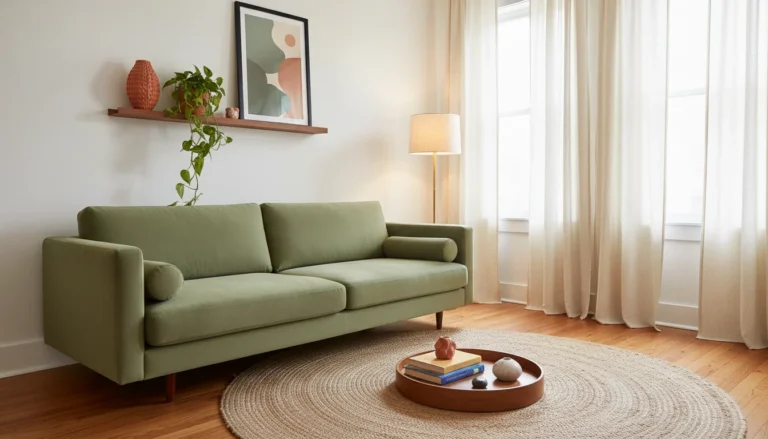
A sectional that sits on legs rather than a solid base reads as lighter and less massive in a small room. The visible floor space beneath the sofa is part of the perceived floor area of the room. When you can see the floor under a sectional, the room feels more open. When the base is solid to the floor, the sofa becomes a visual barrier that closes the space.
Look for sectionals with tapered wood or metal legs that are at least 4 to 6 inches high. The difference in perceived room size between a legless and a legged sectional in a small living room is meaningful. Mid-century style apartment sectionals almost always have legs and work particularly well in compact spaces for this reason.
4. Use a Round Coffee Table, Not a Rectangular One
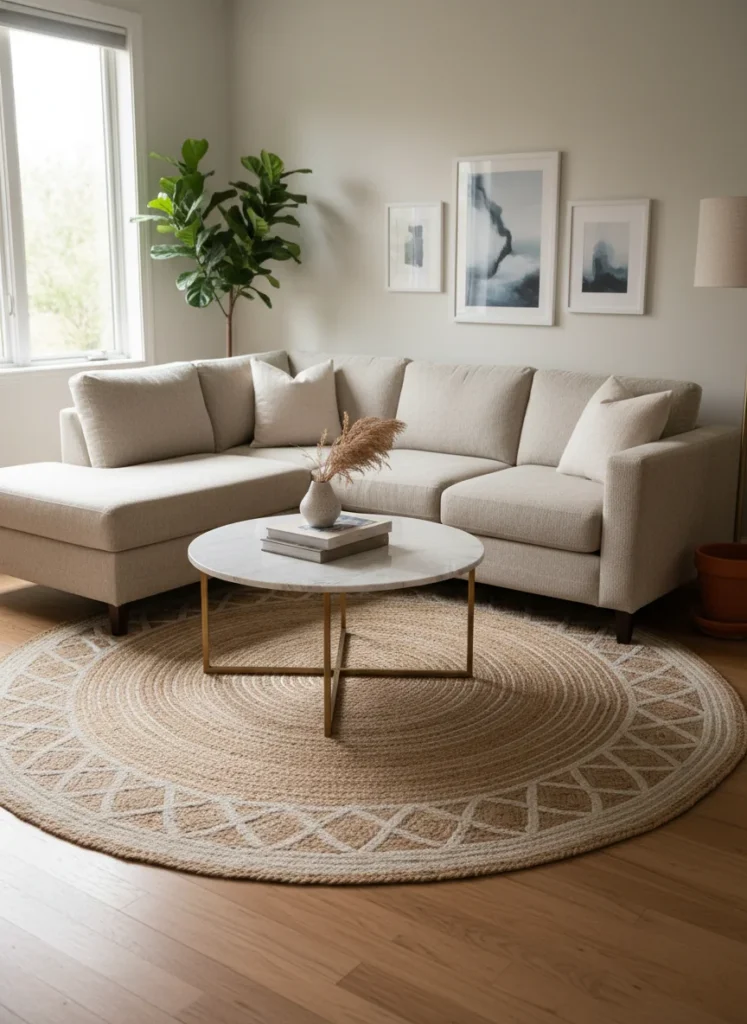
In a small living room with a sectional, the coffee table in the center of the L needs to complement the sofa without fighting it. Rectangular coffee tables in small rooms create an additional set of parallel lines that can make the space feel more boxed in. A round table removes that tension.
A round table also allows easier movement around the sectional because there are no corners to navigate. This is both practical and visual. The softer geometry of a round coffee table relaxes the angular energy of the sectional and makes the seating arrangement feel less like a furniture installation and more like a living room.
5. Float the Sectional Away From the Wall
The instinct in a small room is to push the sectional all the way to the wall to save floor space. This is usually the wrong move. A sectional shoved flat against the wall looks like it was stored there, not placed there. It also eliminates the visual gap that makes the room feel deeper.
Pulling the sectional 4 to 8 inches off the wall, enough to slide a slim console table or a narrow shelf behind the back, immediately makes the room feel more intentional and more spacious. The gap between the sofa and the wall reads as depth. A slender console table behind the sectional also gives you a surface for a lamp or a plant without occupying any additional floor space.
This is the same principle covered in the full small apartment living room ideas guide — floating furniture slightly off the wall consistently makes a small room feel more open and considered.
6. Match the Sectional Color to the Walls
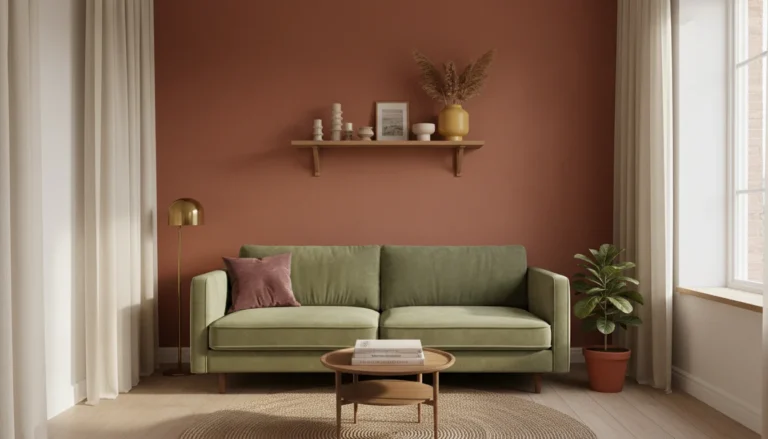
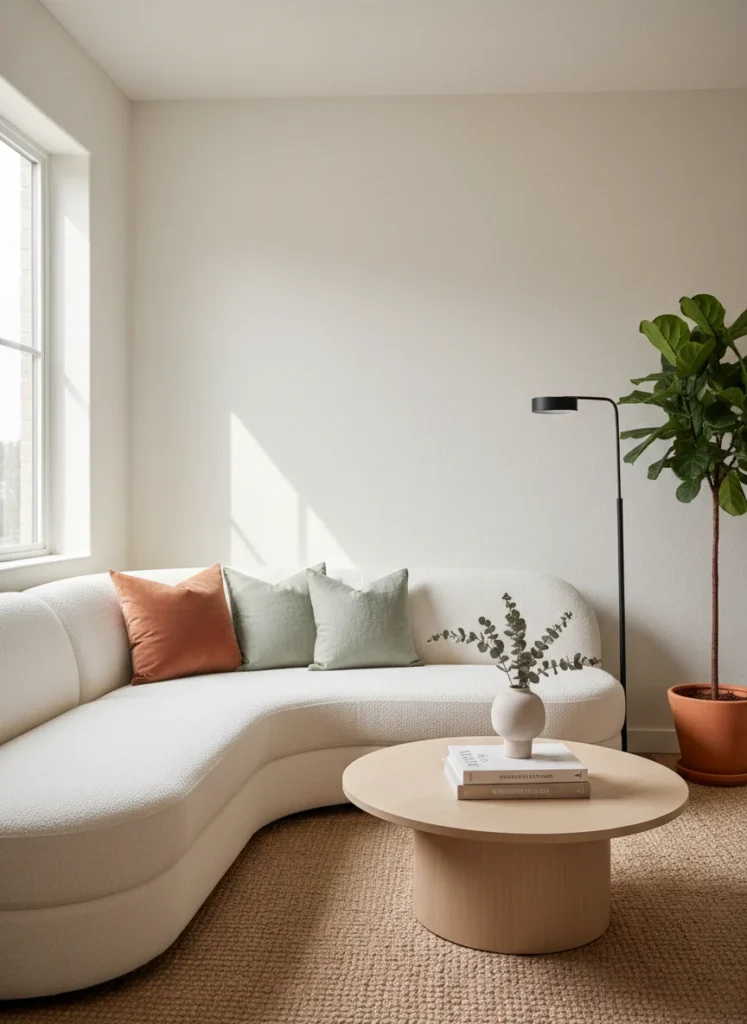
A sectional that contrasts sharply with the wall color behind it reads as a large object placed in front of a wall. A sectional in a tone that reads close to the wall color blends into the architecture and stops competing with the room for attention. This is one of the oldest tricks in small-space design and it works every time.
You do not need to match exactly. Matching the general warmth family is enough. A cream sectional against a warm white or light beige wall disappears into the architecture in the best way. The room gets larger because the largest piece of furniture stops demanding to be seen. A cream or oatmeal boucle sectional against a warm white wall is one of the combinations that consistently photographs beautifully in small rooms.
7. Replace the Second Sofa With an Ottoman
A small living room with a sectional does not need a second sofa. A second sofa doubles the upholstered bulk and leaves no visual breathing room. An ottoman does everything a second sofa does in a small room, additional seating, a surface for drinks and books, and a footrest, while occupying a fraction of the visual space.
A large round storage ottoman in the center of the L serves as the coffee table, extra seating, and hidden storage simultaneously. In a small living room, a single piece doing three jobs is significantly more valuable than three separate pieces each doing one.
8. Use One Large Rug to Anchor the Entire Arrangement
A rug that is too small under a sectional makes the sofa look marooned. The sectional sits on part of the rug and the legs of the coffee table sit off it, and the whole arrangement looks like it slid into position accidentally. The rug should be large enough for all front legs of the sectional and the coffee table to sit on it comfortably.
In a small room with a sectional, this usually means an 8×10 rug minimum. The rug unifies the seating zone, signals to the eye that this arrangement is intentional, and makes the room feel larger by defining the living area as a distinct zone within the space. A low-pile neutral area rug in the 8×10 range under a sectional is the combination that makes small living rooms look professionally decorated.
9. Put the Chaise Side in the Corner, Not Against the Main Wall
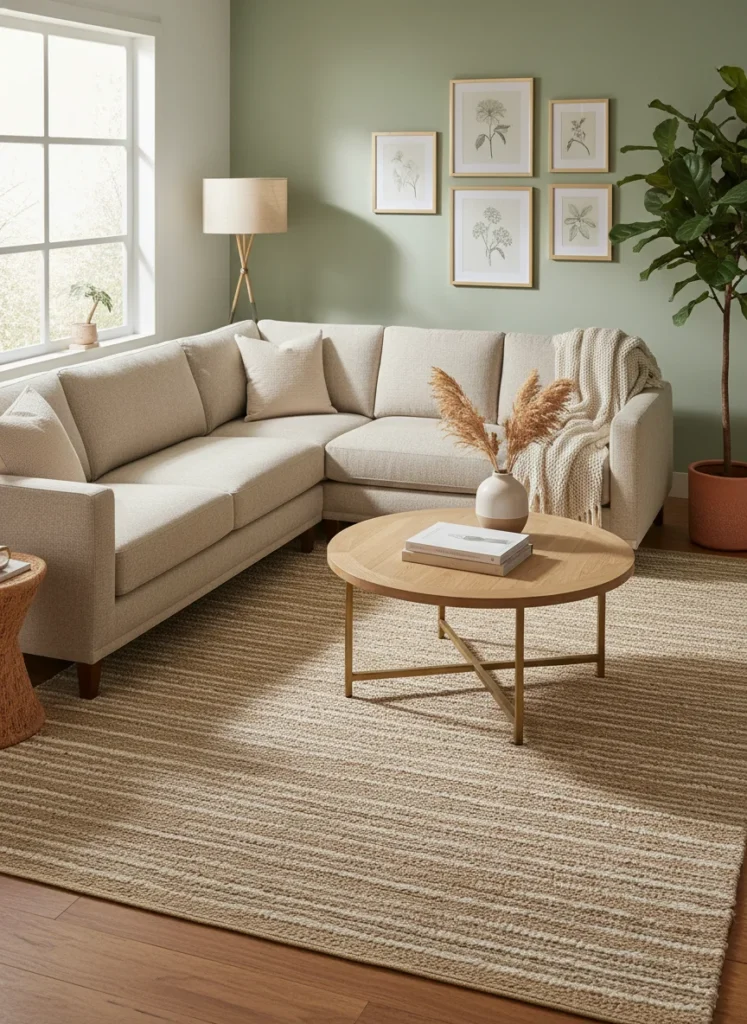
The orientation of the chaise within the L makes a significant difference in how a small room feels. Placing the chaise portion in the corner, with the main sofa body running along the longer wall, keeps the longer visual line along the wall where it belongs. The chaise tucks into the corner and the room opens up in front of the main sofa section.
When the chaise runs along the main wall instead, it creates a long, low barrier at the wall that makes the room feel narrower. The corner placement of the chaise is almost always the more space-conscious configuration in a small room. Test both orientations before committing. In many small rooms, a 180-degree flip of the sectional completely changes how spacious the room feels.
10. Add a Single Tall Vertical Element to Balance the Horizontal Mass
A sectional is an inherently horizontal piece of furniture. It runs wide and low. In a small room, all that horizontal energy without anything vertical to counter it makes the room feel compressed and flat. One tall vertical element, a floor lamp, a tall plant, and a bookshelf give the eye somewhere to travel upward.
The best position for this vertical element is in the corner adjacent to the sectional, either behind the chaise or beside the end of the main sofa body. A tall arc floor lamp arching over the end of the sectional is both functional as reading light and visually effective as a vertical counterweight to the sofa’s horizontal spread.
11. Keep Every Other Piece of Furniture Small and Low
When the sectional is the largest piece in the room, everything else should defer to it. Tall side tables, large accent chairs, wide console tables; these compete with the sectional for visual dominance and make the room feel crowded even when the floor space technically permits them. The sectional wins by being the biggest. Everything else stays lean.
Think: one round coffee table, one small side table at the end of the chaise, one lamp, one plant. That is a complete living room. Anything added beyond that needs a very specific reason to exist in a small space with a sectional already in it.
12. Use Pillows to Add Color Without Adding Furniture
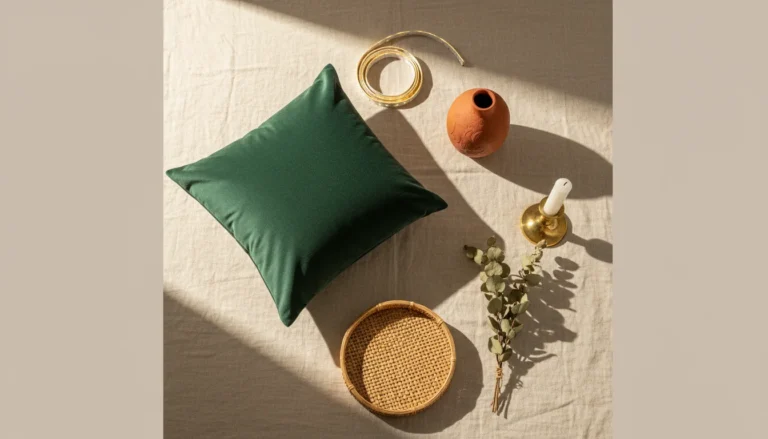
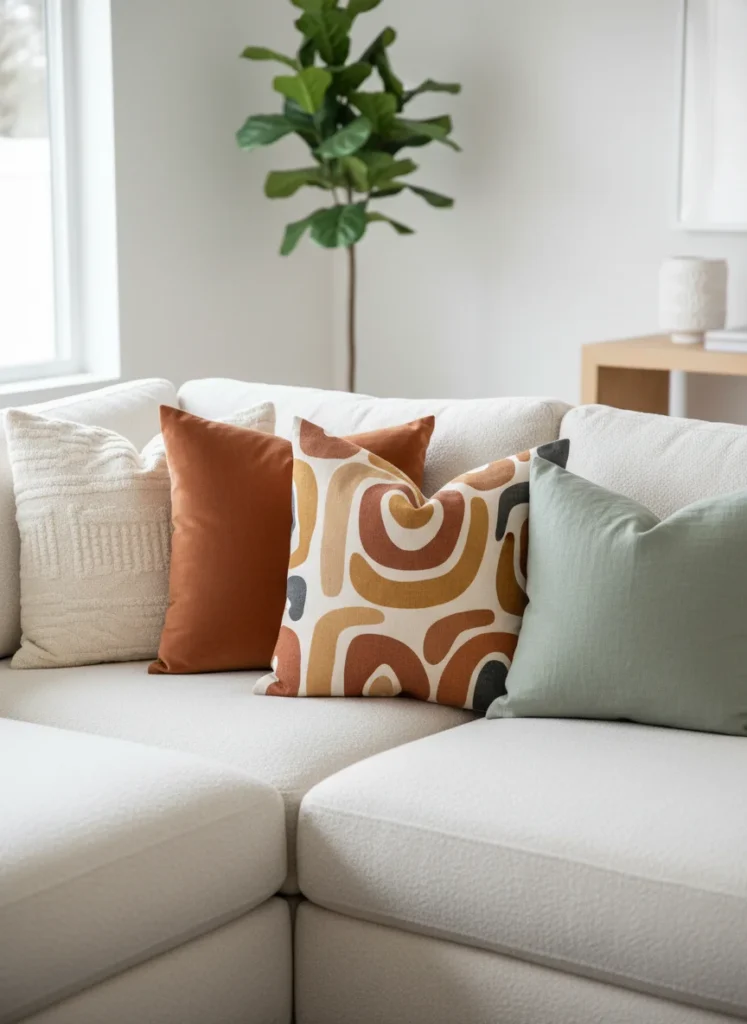
In a small living room with a neutral sectional, throw pillows are how you add personality without adding more furniture. Three to five pillows in coordinating colors and textures, not a matching set, but a curated mix of solids, textures, and one pattern, give the sectional visual interest that carries through the whole room.
This is significantly more effective than adding an accent chair or a side table for visual interest. Pillows add color, texture, and warmth without taking up any floor space. Pillow cover sets in warm neutrals with one accent tone are the move here — they let you swap the color palette seasonally without buying new furniture.
13. Position the TV on the Same Wall as the Short End of the L
In a small living room with an L-shaped sectional, the TV placement determines whether the seating arrangement makes sense or creates an awkward viewing angle. Placing the TV on the wall that the short arm of the sectional faces means the main seating section looks directly at the screen, and the chaise section watches from a comfortable angle.
Placing the TV on the wall behind the main sofa body forces the chaise to crane sideways and the main seating to twist. In a small room, this tension between the sofa and the screen is uncomfortable both physically and visually. The TV wall and the chaise-facing wall should be the same wall. That single orientation decision determines whether the whole arrangement feels resolved or awkward.
For the broader picture of how to arrange a small living room so every element works together, not just the sectional, the 14 things designers always include in small living rooms post covers the placement principles that make the most difference.
The Sectional Was Never the Problem
A sectional in a small living room is not automatically a mistake. An incorrectly sized, wrongly oriented, or poorly styled sectional in a small living room is a mistake. The ideas in this list exist to make sure yours is none of those things.
Measure carefully, choose the L-shape, put the chaise in the corner, match the color to the walls, and keep everything else in the room deliberately lean. A sectional done right in a small space feels like the best decision you ever made for the room.