
This post contains affiliate links. If you buy something through my links, I may earn a small commission at no extra cost to you. I only recommend things I genuinely use or believe in.
Here is the thing about a cramped bedroom: the square footage is rarely the actual problem. I spent the first eight months in my 580 square foot apartment convinced my bedroom was just too small to look good. Then I moved one piece of furniture, changed out one set of curtains, and the room felt like it had gained 40 square feet. It had not. I had just stopped doing the things that were actively making it feel smaller.
Learning how to make a small bedroom feel bigger is not about buying more stuff or knocking down walls. It is about identifying the specific thing your room is doing wrong. Here are the eleven most common culprits, and exactly how to fix each one.
Before we continue, if you’re tired of buying decor that doesn’t look right together, I created something specifically for this…
1. Your Curtains Are Hung at Window Height
This is the single most common mistake that makes small bedrooms feel shorter and tighter than they are. When curtains hang at window height, they draw the eye to the window frame and stop it there. The ceiling above looks like dead space that belongs to the room but is not being claimed.
The fix is straightforward: mount the curtain rod as close to the ceiling as possible, and let the curtains fall all the way to the floor. This one change visually stretches the wall from floor to ceiling, makes the window appear much larger, and gives the room an instant sense of height. I hung my curtains right above the window frame for a full year before someone pointed this out. The before and after was genuinely embarrassing.
Use sheer or semi-sheer curtain panels in a light neutral if you want to maximize light while keeping the height. Dark curtains work too, but only if they are hung high and fall clean to the floor without bunching.
2. Your Rug Is Too Small
An undersized rug makes a bedroom feel fragmented. The furniture looks like it is floating in disconnected pieces, and the eye cannot find a visual anchor for the room. This is one of the most reliable ways to make a space feel smaller than it is, and most people do not realize they are doing it.
In a bedroom, the rug should extend at least 18 to 24 inches beyond the sides and foot of the bed. For a queen bed, that means a minimum 8×10 rug. For a king, go 9×12. The rug should feel like the floor of the room, not a mat placed under part of the bed. When furniture sits on a rug that actually fits, the room reads as one cohesive zone rather than several competing pieces.
A light-toned, low-pile rug in the correct size is often the single fastest fix for a bedroom that feels cramped. Light colors on the floor open the room. Dark or busy patterns close it.
3. There Is No Mirror in the Room
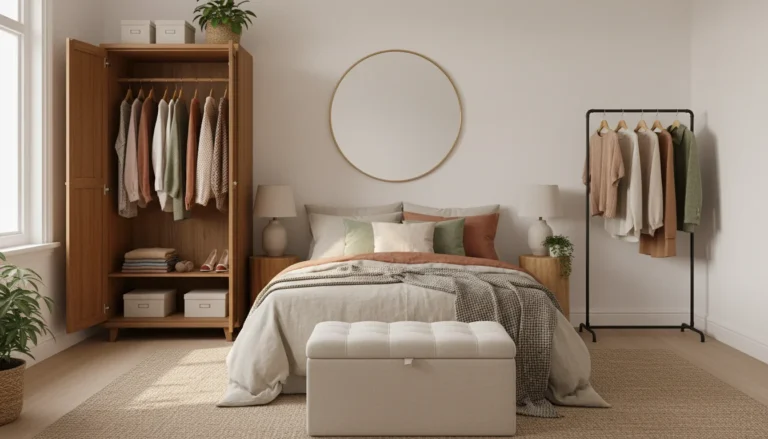
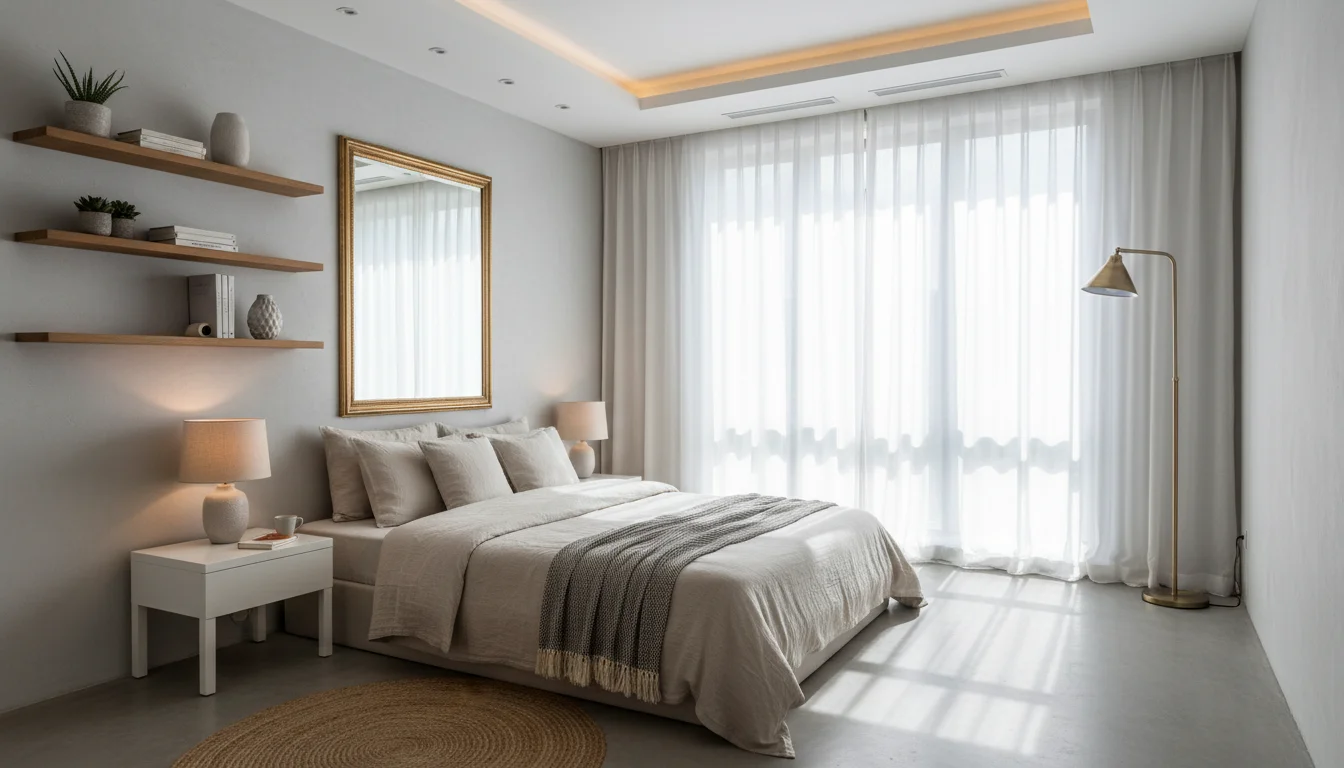
Mirrors are the closest thing to actually expanding a room that you can buy without a contractor. A large mirror reflects light and creates the visual illusion of depth behind it. To your eye, the room appears to extend beyond the wall the mirror is mounted on.
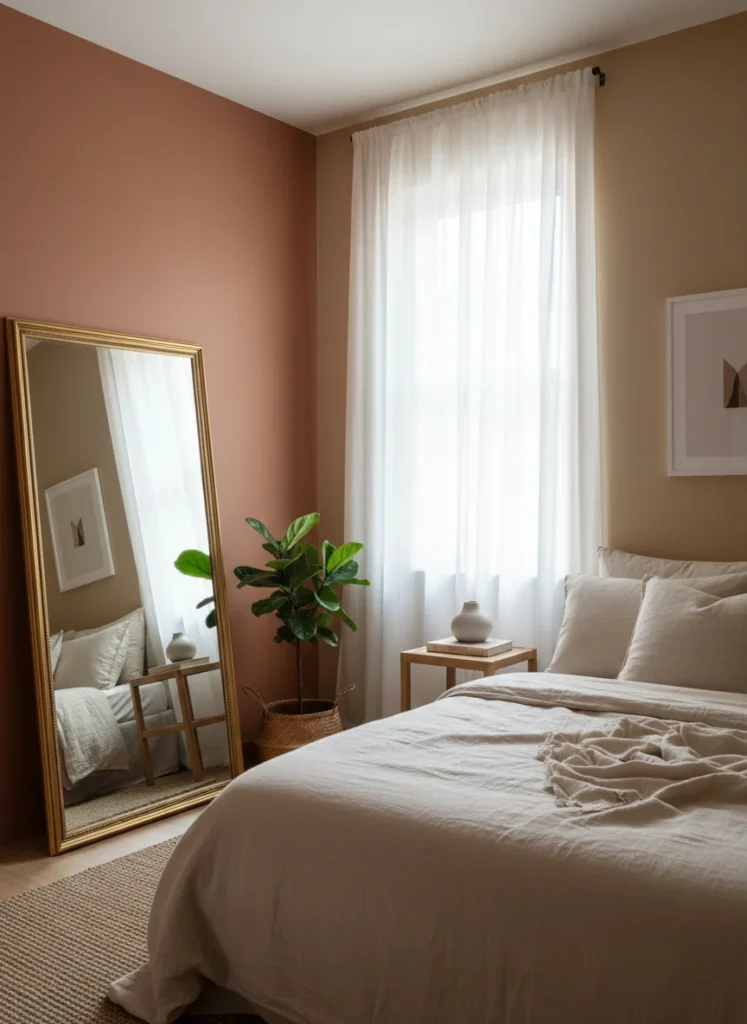
The placement matters significantly. A mirror opposite a window doubles the natural light in the room by bouncing it across the space. A mirror on the wall beside the door makes the room feel wider when you walk in. A full-length leaning floor mirror requires no installation, can be repositioned, and reads as intentional decor rather than a utility item.
For renters who cannot hang a large wall mirror, a leaning mirror in the corner at a slight angle is the best alternative. It catches both the window and the room, which multiplies the effect.
4. Your Bed Frame Is Too Big for the Room
A bed with a tall headboard, thick footboard, and bulky side rails consumes visual space even when the mattress dimensions are perfectly appropriate. The frame’s physical presence extends far beyond the sleeping surface. In a small bedroom, this is often what turns a workable room into one that feels like the bed just moved in and claimed squatter’s rights.
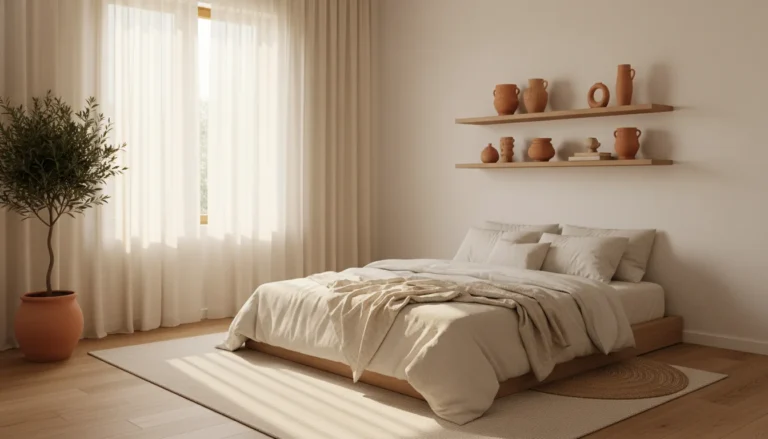
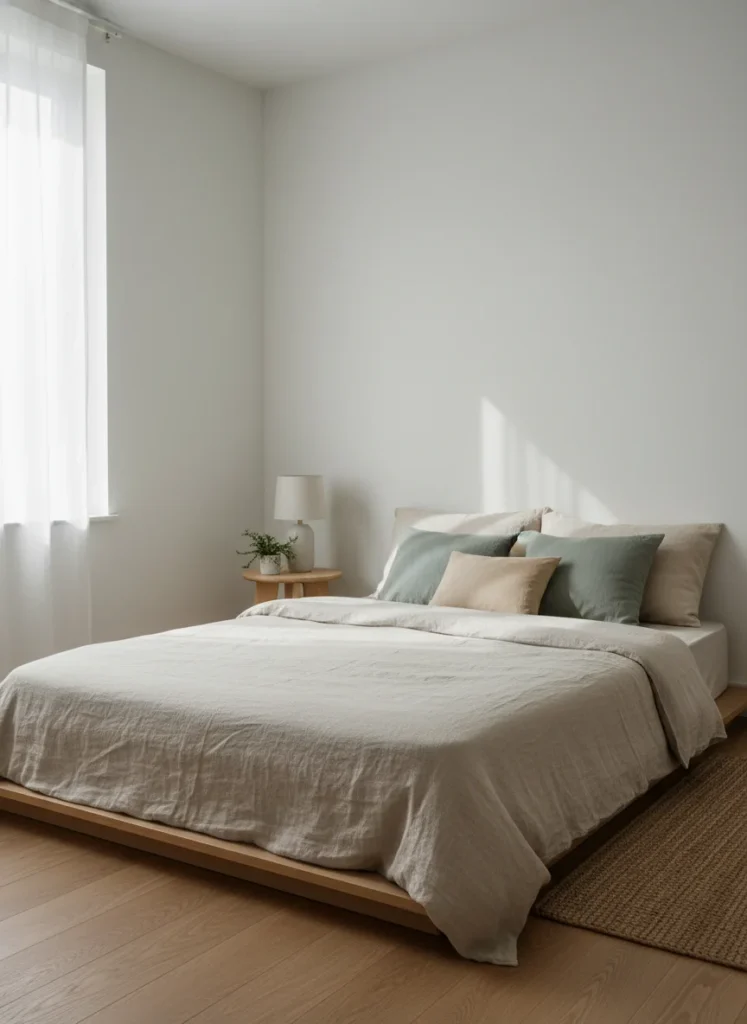
The fix is a low-profile bed frame. A platform bed with a simple, low headboard or no headboard at all dramatically reduces the visual mass in the room. Low-platform frames also create visual floor space beneath them, which makes the room feel larger. The bed stops being the largest object in the room and becomes part of it.
5. Your Bedding Is Dark or Heavily Patterned
The bed occupies the largest surface area in a bedroom. Whatever color and pattern is on that surface is the dominant visual in the room. Dark bedding in a small room pulls the eye down and inward, reinforcing the sense of compression. Heavy patterns fragment the space and add visual noise that the eye reads as clutter, even when the room is tidy.
Light bedding reflects more light back into the room and lets the walls, ceiling, and floor breathe around it. This does not mean all-white, which can feel sterile. It means opting for soft linens in warm neutrals: oatmeal, sage, dusty rose, warm cream. A linen duvet in a warm neutral with layered textured pillows gives you visual interest without the compression that comes from dark saturated fabric.
For more on how bedding choices interact with room size perception, the full breakdown is in this guide to using color confidently in a small bedroom — it covers which tones expand and which compress.
6. Every Piece of Furniture Is Pushed Against a Wall
This feels counterintuitive. When a room is small, the instinct is to push everything to the edges to free up floor space in the middle. But furniture that is pressed flat against every wall makes the perimeter feel chaotic and the center of the room feel awkwardly empty.
Pulling furniture a few inches off the wall, or angling a small piece in a corner, creates a sense of depth and breathing room. The space between the wall and the furniture is part of the composition. Designers call this negative space and it is one of the things that separates a room that feels designed from one that feels arranged.
Try pulling the nightstands out 2 to 3 inches from the wall. Angle a chair 15 degrees into the room rather than flush to the corner. These small moves make the room feel more dynamic and intentional without using more space.
7. Your Lighting Is Only Overhead
A single overhead light in a small bedroom is one of the most reliable ways to make it feel flat, clinical, and small. Overhead lighting creates shadows at floor level and flattens the vertical dimensions of the room. Everything below eye level goes dark, which makes the walls appear to close in.
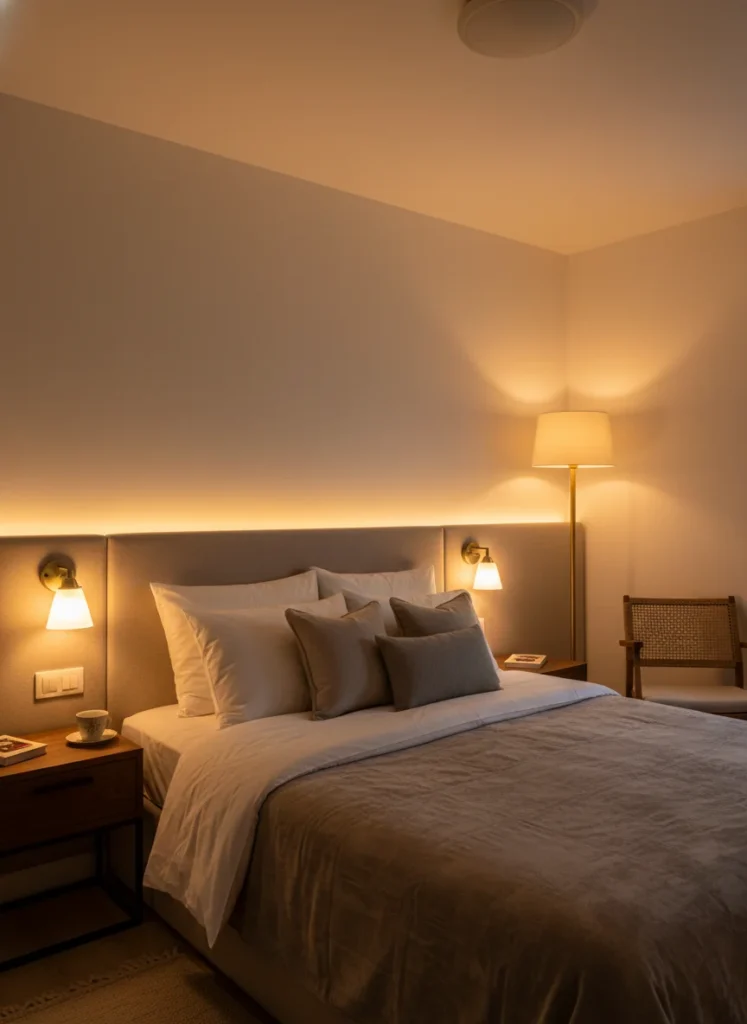
Layered lighting at multiple heights — a bedside lamp, a floor lamp in a corner, LED strip lights behind the headboard or along the bottom of the bed — creates depth and warmth that a single overhead source cannot. The room appears larger because the eye now travels up, across, and down the space rather than landing in one flat plane.
Use bulbs in the 2700K warm white range. Cooler daylight bulbs make a small room feel more clinical. A plug-in wall sconce on each side of the bed replaces table lamps and frees up nightstand surface area while lighting the room at exactly the right height.
8. You Have No Vertical Storage
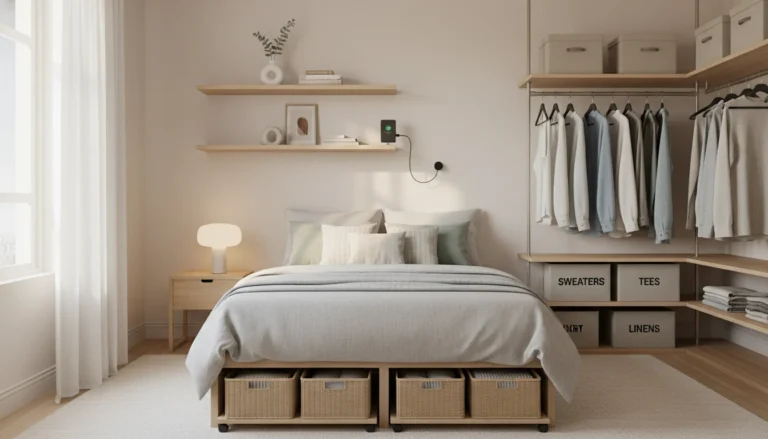
When storage lives only at floor level, in dresser drawers, under the bed, in bins on the floor, the room feels horizontally compressed. Everything reads as wide and low. Using vertical space draws the eye upward and gives the room a sense of height that floor-level arrangements cannot create.
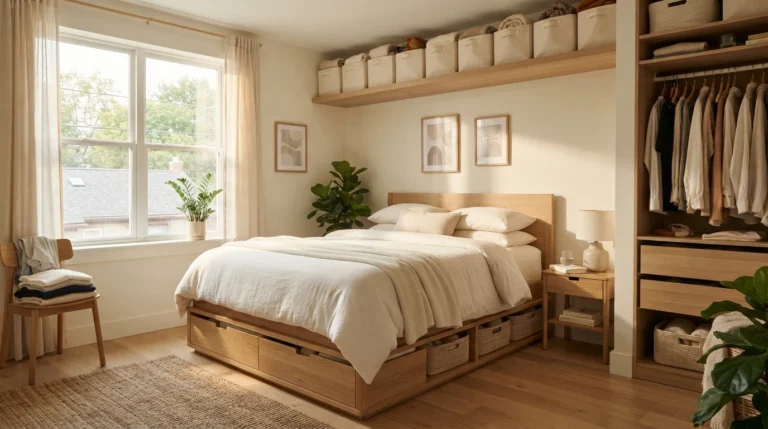
Floating shelves mounted high on the wall, a tall bookcase, or a wardrobe that reaches close to the ceiling all use vertical space productively. They also clear the floor, which makes the room feel more open at ground level. Floating wall shelves in a light finish mounted near the ceiling add storage and make the room appear taller simultaneously. Two benefits from one move.
The full approach to vertical space in a small bedroom is one of the 11 tricks covered in this 10×10 bedroom decorating guide — worth reading alongside this post if your room is under 130 square feet.
9. Your Color Palette Has Too Many Competing Tones
A bedroom that uses five or more distinct colors across walls, bedding, furniture, and accessories makes the eye work constantly. There is no visual resting point. The room feels busier than it is, and a busy room feels smaller.
A tonal palette, three to four colors that sit close together on the color wheel or vary only in depth, gives the room coherence. The eye reads the space as unified rather than fragmented. Warm neutrals with one or two accent tones work consistently well in small bedrooms because they do not introduce visual breaks that interrupt the sense of space.
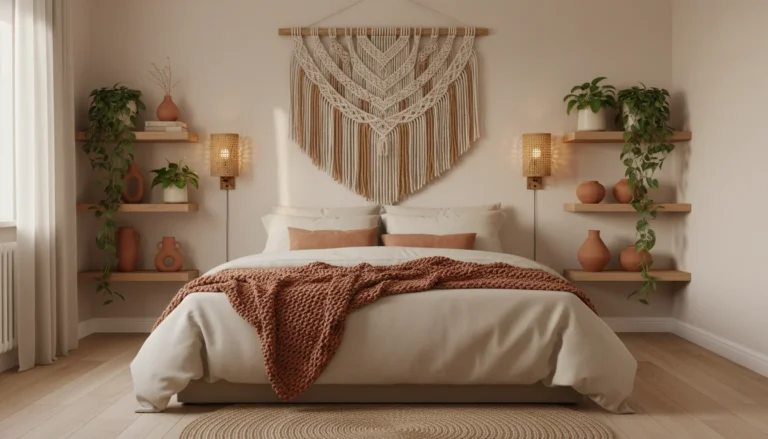
This does not mean boring. A tonal palette in terracotta, warm sand, and deep rust is rich and warm without being visually chaotic. The 2026 dopamine decorating color palette guide covers how to build a cohesive palette that feels bold without fragmenting a small space.
10. Your Furniture Has Solid, Heavy Bases
Furniture with thick solid bases that go all the way to the floor reads as heavier and larger than it physically is. The floor disappears under it, which reduces the visible floor area and makes the room feel more enclosed. This is why a chunky, solid dresser feels like it fills a room even when the dimensions are modest.
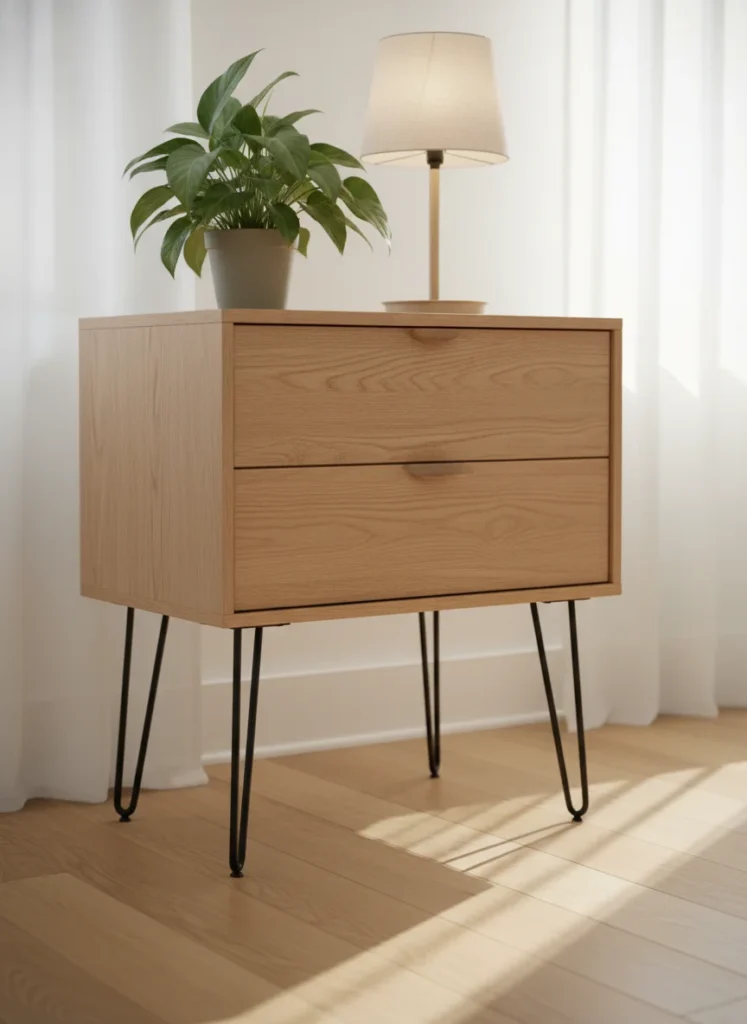
Furniture on legs solves this. When you can see the floor beneath a piece of furniture, the room feels more open because the visible floor area is larger. A dresser on hairpin legs, a bed frame that sits off the floor, a nightstand on thin tapered legs, all of these create breathing room at the base that makes the room read as more spacious. Replacement hairpin legs fit most flat-pack furniture and cost around $20 to $40 for a full set.
11. The Room Has No Clear Focal Point
A bedroom without a focal point is a room the eye cannot settle in. When everything competes at the same visual level, the eye moves restlessly around the space without finding anywhere to land. That restlessness registers as clutter and clutter registers as cramped, even when the room is actually tidy.
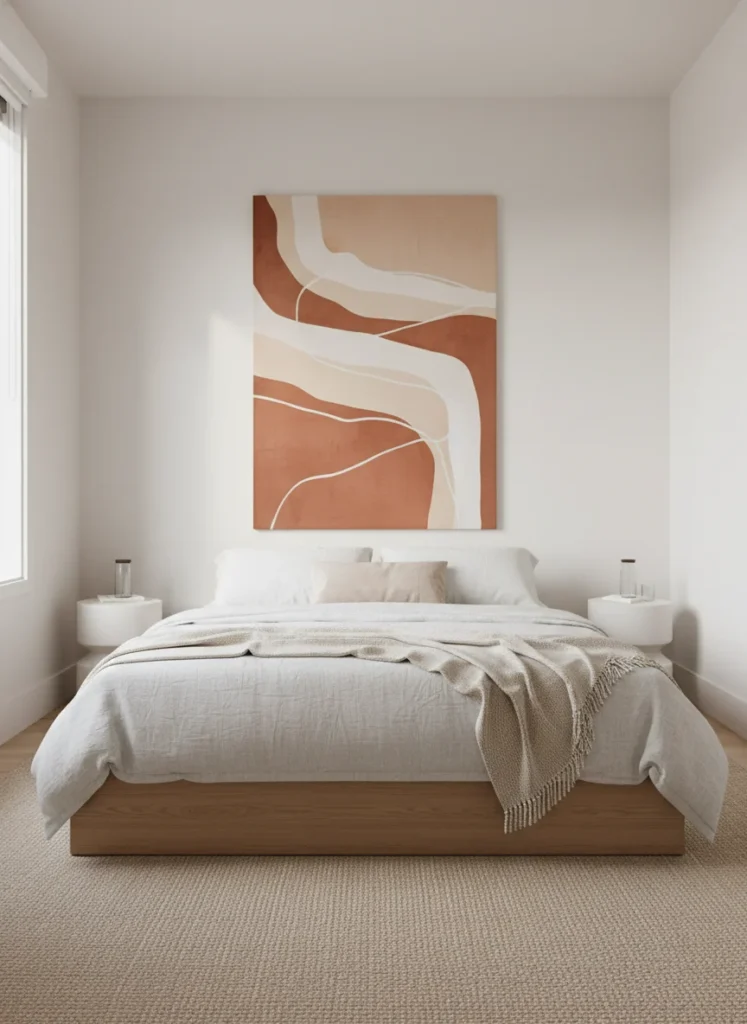
A focal point gives the eye permission to stop. The most natural focal point in a bedroom is the wall behind the bed. A bold headboard, a piece of large-scale art, a section of peel-and-stick wallpaper, or even a large mirror above the bed creates that anchor. Everything else in the room can be simpler because one point is doing the visual heavy lifting.
This is the same principle behind making a rental apartment feel intentionally yours — one confident design decision makes all the surrounding simplicity look chosen rather than incomplete.
Your Room Is Not Too Small. It Is Just Doing the Wrong Things.
Every one of these eleven problems is fixable without moving walls, buying new furniture, or spending more than you want to. Most of them are fixable this weekend with what you already have or a single low-cost addition.
Start with the curtains. Then the rug size. Then the mirror placement. Those three changes alone, in that order, will show you how to make a small bedroom feel bigger faster than anything else on this list.