
This post contains affiliate links. If you buy something through my links, I may earn a small commission at no extra cost to you. I only recommend things I genuinely use or believe in.
A full bed in a small bedroom is 54 inches wide and 75 inches long. That is 28.125 square feet of mattress before you account for the frame, the nightstands, the dresser, and the floor space you need to actually get dressed in the morning. Most small bedrooms run between 100 and 130 square feet total. The math is uncomfortable, which is why most advice about this problem stays vague. This post does not. Every idea here is specific, actionable, and tested in exactly the kind of tight layout you are dealing with.
💡 Before you start decorating, see how your room could look with AI.
🏡 See Your Room Before You Spend a Dollar
Still wondering if that new furniture, paint color, or decor style will actually look good in your space?
- Upload a photo of your room and let AI instantly generate beautiful design ideas.
- Explore different interior styles, furniture layouts, and color combinations before you spend a single dollar.
The Full Bed Math: What You Are Actually Working With
Before any layout decision, you need the real numbers. A full bed requires a minimum 24-inch clearance on at least one side for comfortable movement, and ideally 36 inches if you want to make the bed without climbing over it. If your room is 10 feet wide and your full bed sits centered, you have 33 inches on each side after the frame, which sounds fine until you add nightstands. Two standard nightstands at 18 inches wide eat those clearances down to 15 inches, which is where rooms start feeling like corridors.
The 17 ideas below address this math from every angle: placement, furniture swaps, vertical moves, and storage solutions that reclaim the square footage you thought you had already lost.
17 Small Bedroom Ideas With a Full Bed
1. Place the Bed Against the Longest Wall, Not the Shortest
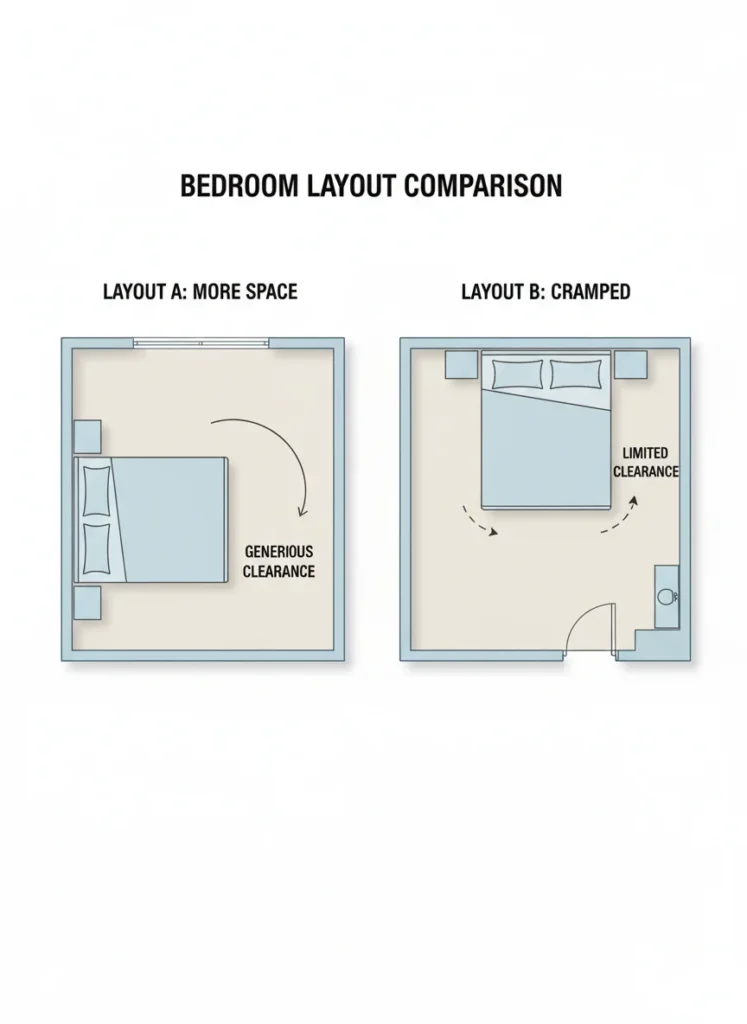
Most people default to centering the bed on the wall opposite the door. In a small bedroom, this is often the wrong choice. Placing the bed against the longest wall keeps the shorter walls free for a dresser, desk, or clear floor space. It also means you lose walkway on only one side of the bed instead of potentially both.
The trade-off is asymmetry. The room will not look perfectly symmetrical from the doorway, and that bothers some people. It should not. Symmetry is a luxury of large rooms. In a small bedroom with a full bed, function wins. Put the bed where it leaves the most usable floor space, not where it photographs best.
2. Use a Bed Frame With Built-In Drawers
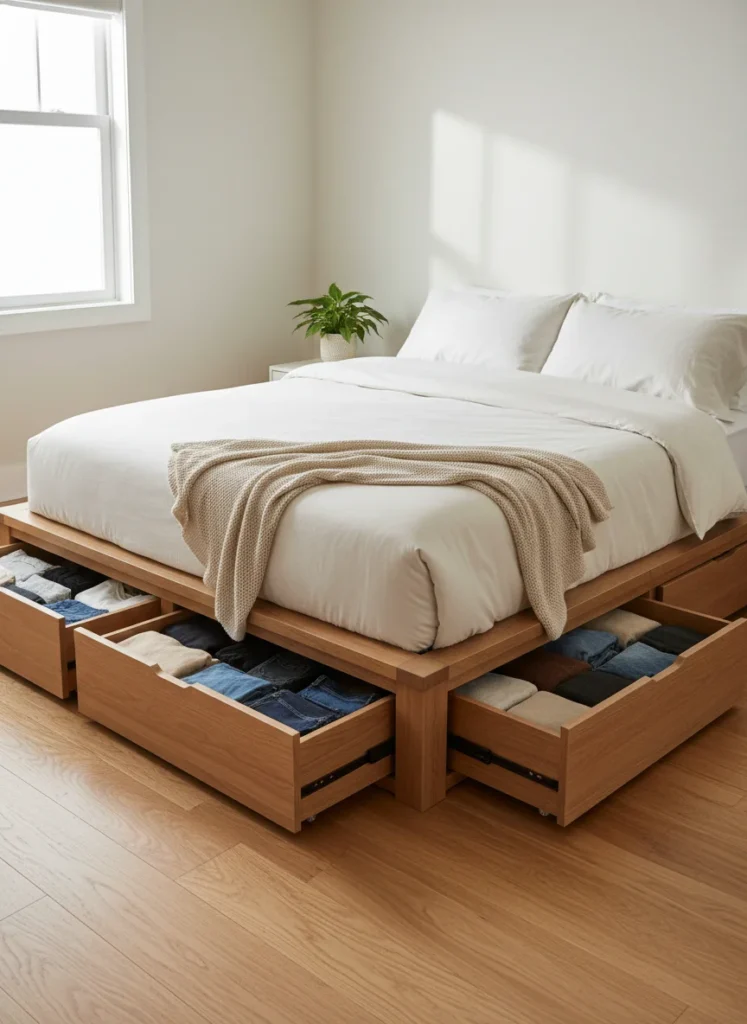
Under the bed is the most underused storage zone in a small bedroom, and a bed frame with built-in drawers is the cleanest way to use it. A quality storage bed with two to four drawers on the sides handles a significant portion of your clothing or linen storage without adding a single piece of furniture to the floor plan. That is a dresser you no longer need, and that square footage goes back to you.
Look for full bed frames with built-in storage drawers in the $180 to $350 range. The drawer depth and width vary significantly between models, so check the actual interior dimensions before buying. Some frames advertise four drawers but the drawers are shallow and only work for linens, not folded clothes. You want drawers at least 6 inches deep and 18 inches wide to store clothing usefully.
3. Swap Nightstands for Floating Wall-Mounted Shelves
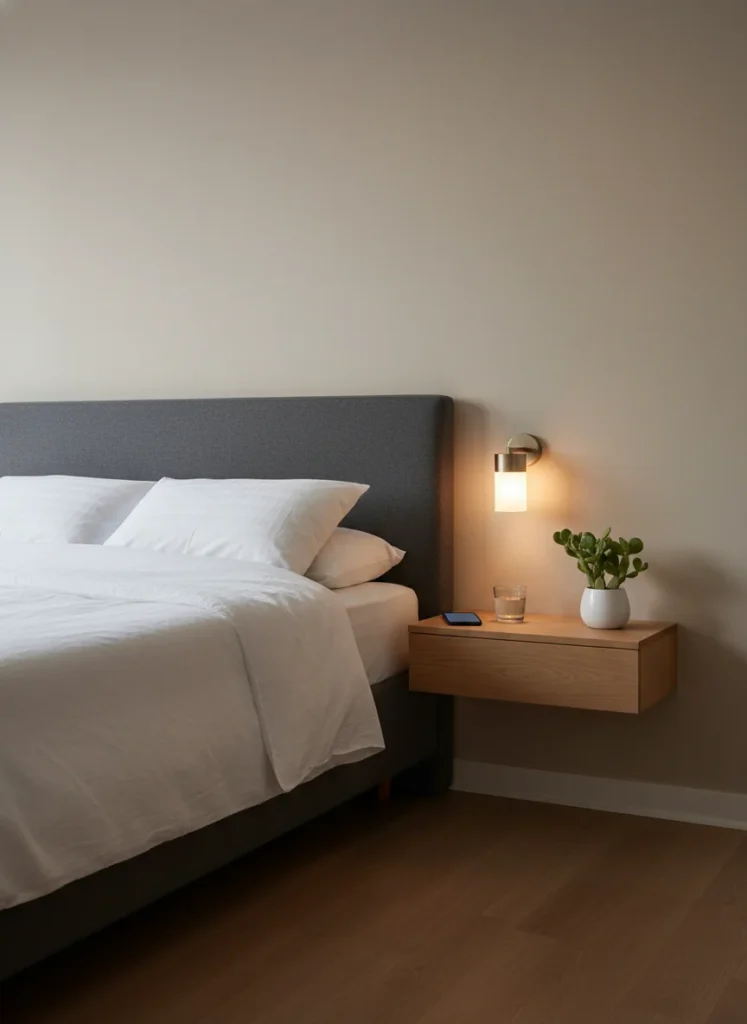
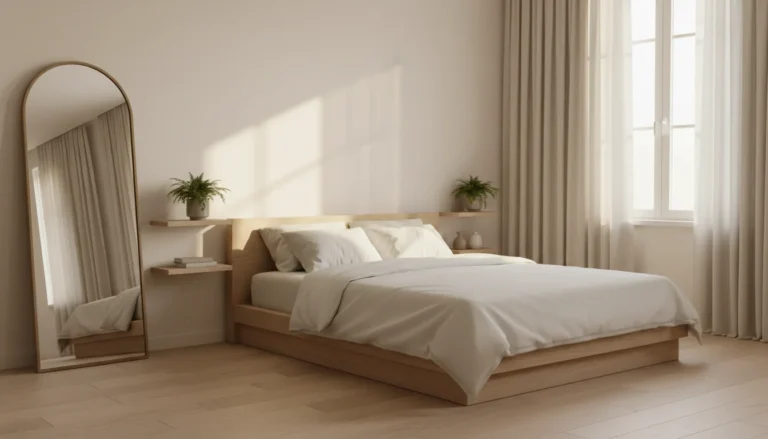
A standard nightstand is 18 to 24 inches wide and 16 to 18 inches deep. In a small bedroom with a full bed, that is a significant footprint on each side. A floating wall shelf at the same height takes zero floor space and holds everything a nightstand holds: a lamp, a phone, a book, a glass of water. The floor stays clear, the room feels more open, and you gain several square feet of visible floor space that registers immediately when you walk in.
Mount the shelf at 26 to 28 inches from the floor, which is standard nightstand height. A shelf 10 to 12 inches deep and 18 inches wide is plenty. Floating wood wall shelves for nightstand use run $15 to $40 each. For renters, Command strips rated for 15 to 20 pounds hold most lightweight shelves without drilling. If you want to understand the full range of space-saving bedroom tricks, the post on how to make a small bedroom feel bigger covers mirror placement, curtain height, and furniture leg strategies that compound well with this swap.
4. Mount Your Lamps on the Wall Instead of the Nightstand
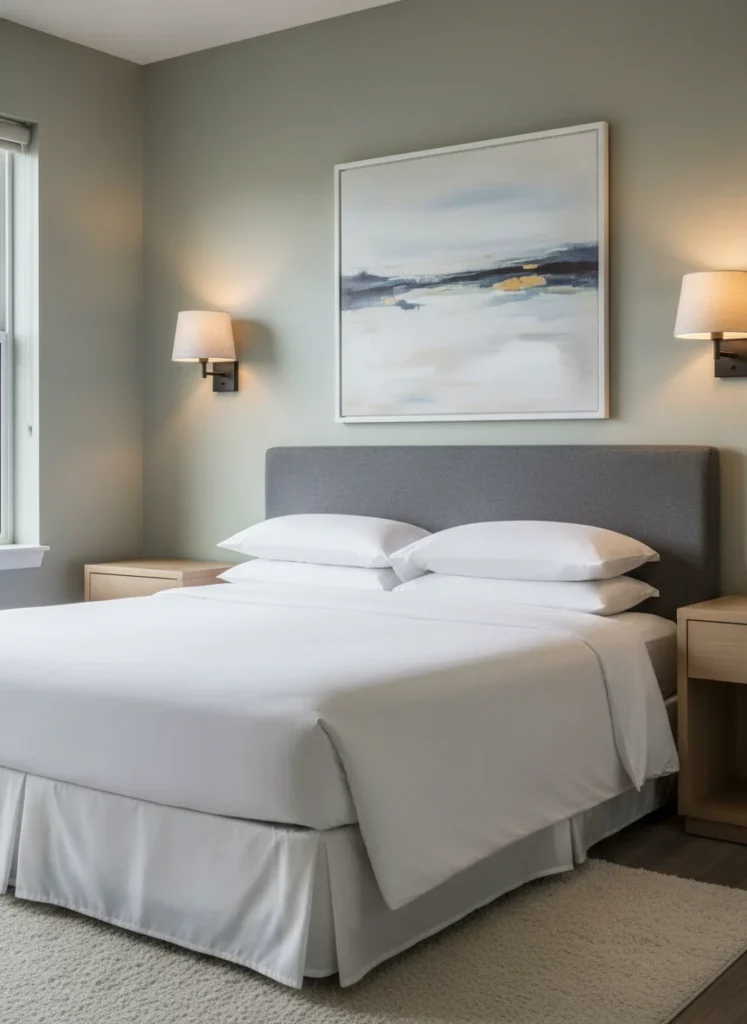
Table lamps on nightstands take up roughly 6 to 8 inches of depth on a surface that may already be 12 inches deep. Wall-mounted plug-in sconces eliminate that surface demand entirely and put the light exactly where you need it for reading, at eye level when you are sitting up in bed. No electrician required. The cord runs down the wall and plugs into the outlet behind the nightstand or shelf.
A pair of plug-in wall sconces for bedroom reading typically costs $35 to $70 for a set. Mount them 24 to 28 inches above the mattress surface and 6 to 8 inches to the side of where you sleep. Use 2700K warm white bulbs. The effect is hotel-level and costs less than most table lamp pairs.
5. Use Bed Risers to Double Your Under-Bed Storage Depth
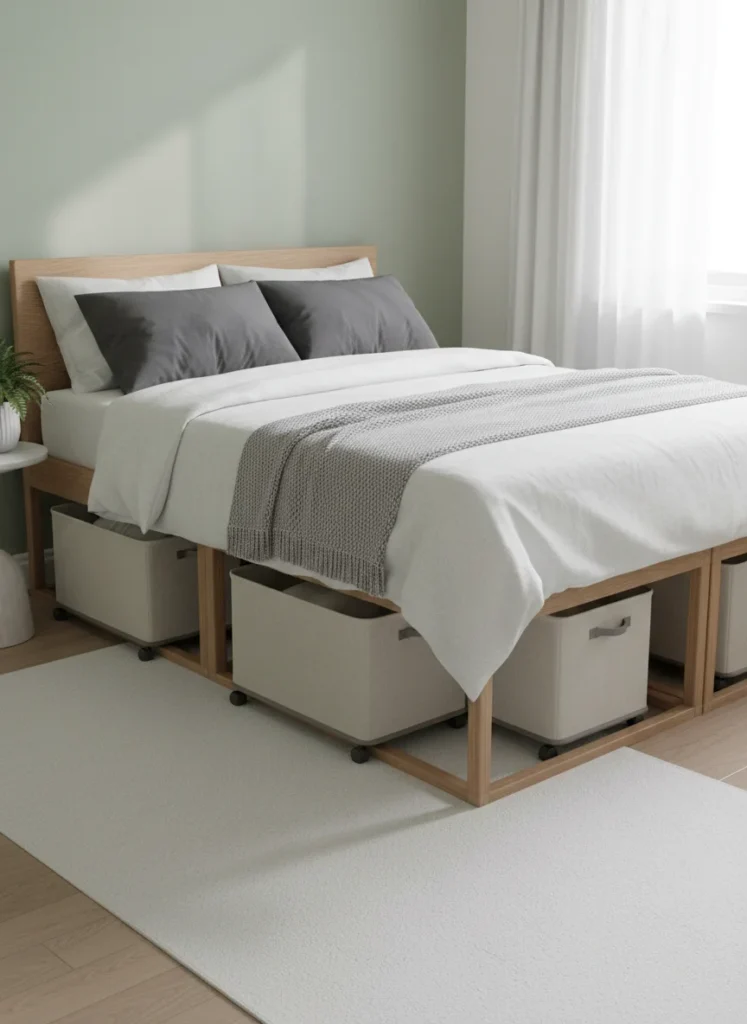
If your current bed frame sits low to the ground and has less than 6 inches of clearance, bed risers are a $15 to $25 fix that transforms the under-bed zone into usable storage. Adding 4 to 6 inches of lift gives you enough clearance for flat rolling storage bins, which are the most accessible and versatile under-bed containers. Look for risers rated for the total weight of your frame, mattress, and occupants, typically 1,200 pounds for a set of four.
Pair risers with flat rolling under-bed storage containers in a neutral canvas or natural color so if they are visible, they read as intentional. Dedicate the under-bed zone to seasonal clothing, extra bedding, or shoes, and you may be able to remove a dresser from the room entirely.
6. Install a Shelf Above the Headboard for Vertical Storage
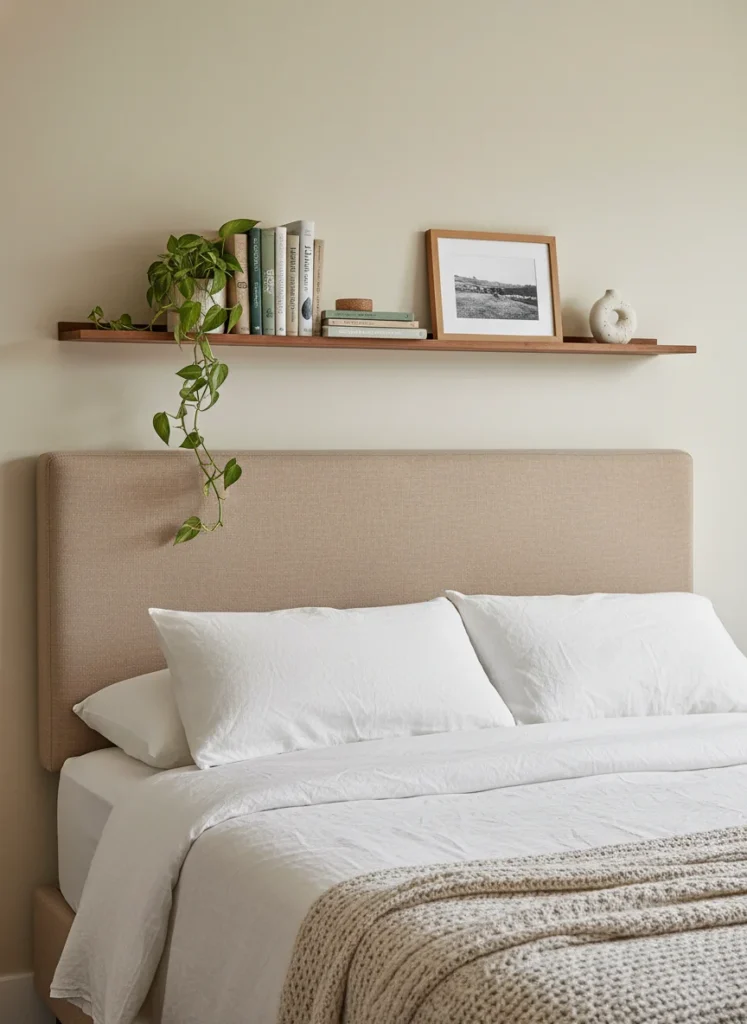
The wall above your headboard is prime real estate that most bedrooms leave completely unused. A single floating shelf at 12 inches above the headboard top, running the full width of the bed, gives you 54 inches of shelf length for books, plants, a few framed photos, or decorative objects. It uses vertical space that was previously air, adds warmth to the room, and keeps those items off every other surface.
Keep the shelf shallow, 6 to 8 inches deep, so nothing can fall on you during the night. Keep objects low-profile for the same reason. Books standing upright, trailing plants in lightweight pots, and small ceramics are ideal. A long floating shelf above the bed costs $20 to $45. This pairs perfectly with the floating nightstand strategy so that the entire wall beside and above the bed functions as one unified storage and display system without any floor furniture at all.
7. Choose a Low-Profile or Upholstered Headboard
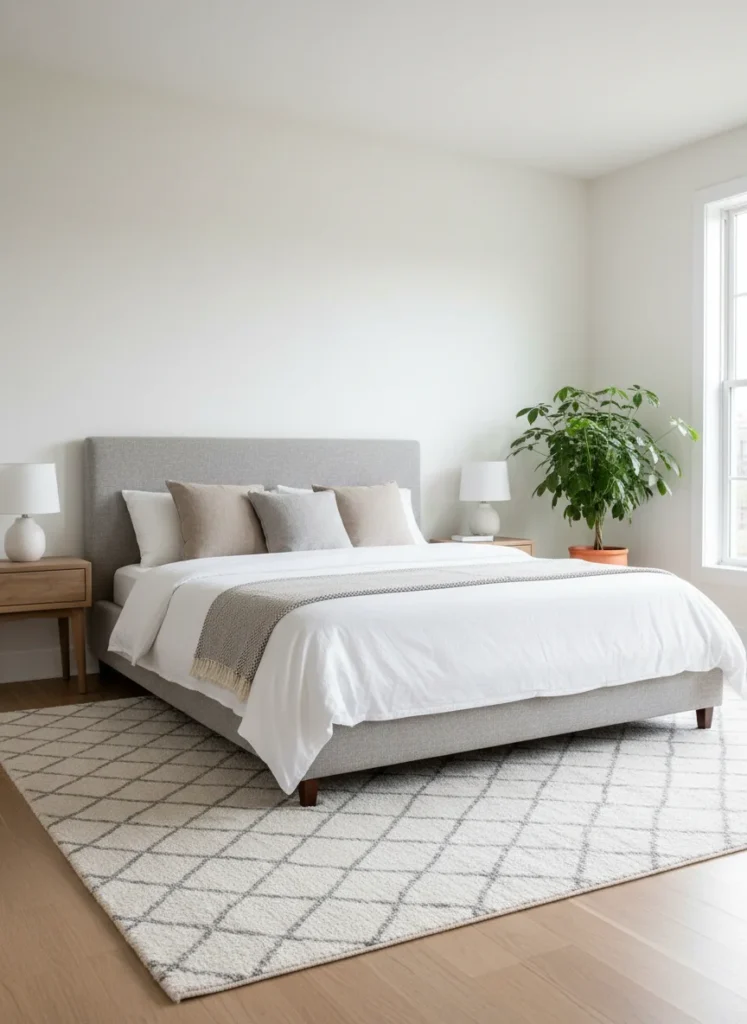
Tall headboards, the ones that extend 60 or more inches from the floor, act as a wall within your bedroom. They block the wall space behind the bed, reduce the sense of vertical openness, and visually anchor the room in a way that makes it feel smaller. In a small bedroom with a full bed, a headboard that sits 28 to 36 inches tall keeps the eye moving upward and leaves the upper wall available for art, a shelf, or simply open space that the brain reads as breathing room.
Upholstered headboards in a neutral linen or boucle also serve a practical function in small rooms: they absorb sound, which matters when the bedroom shares a wall with the living area or street. A simple padded headboard in warm greige or ivory in the $60 to $120 range is the best investment in the visual openness of the room after the bed placement decision itself.
8. Push One Side of the Bed Against the Wall if Needed
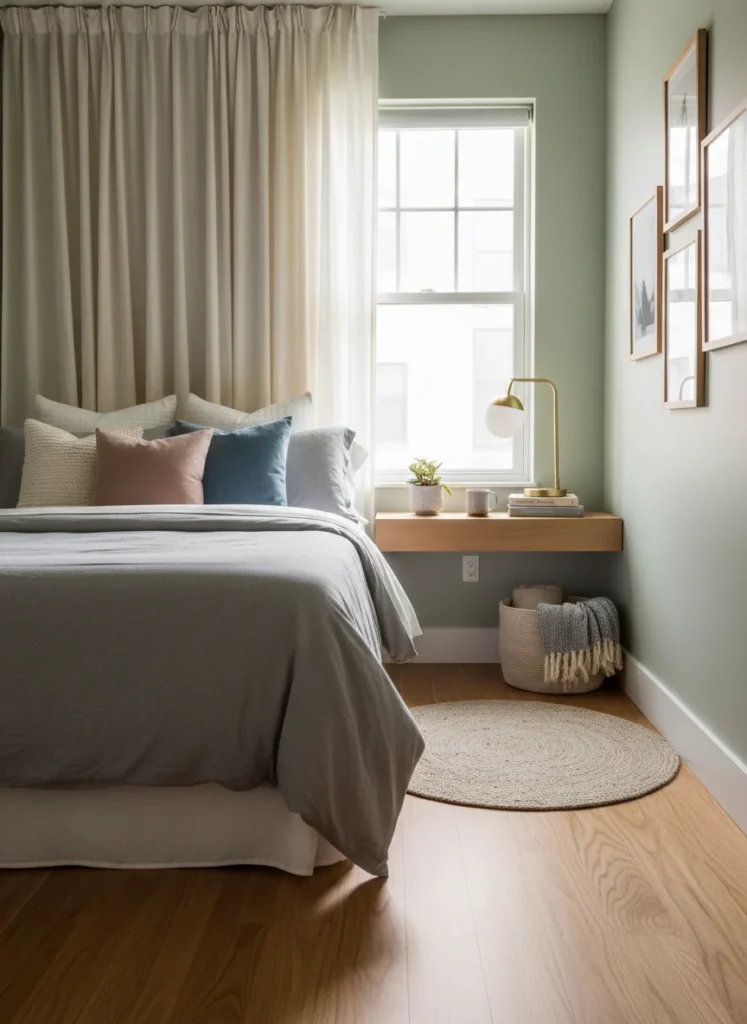
If your room is genuinely too narrow to have 24 inches on both sides of the bed, pushing one side against the wall is not a failure. It is the correct decision. You lose easy access to one side of the bed, but you gain 18 to 24 inches of clear floor space on the other side, which may be the difference between a room that functions and one that feels like a storage unit you sleep in.
Make the wall side feel intentional rather than accidental. A long curtain panel hung from ceiling to floor on the wall side creates softness and visual depth. A few large pillows stacked against the wall work as a de facto headboard for that side. The accessible side gets the floating shelf and the sconce. The room works, it just works asymmetrically, and that is fine.
9. Eliminate the Dresser and Use the Closet Fully
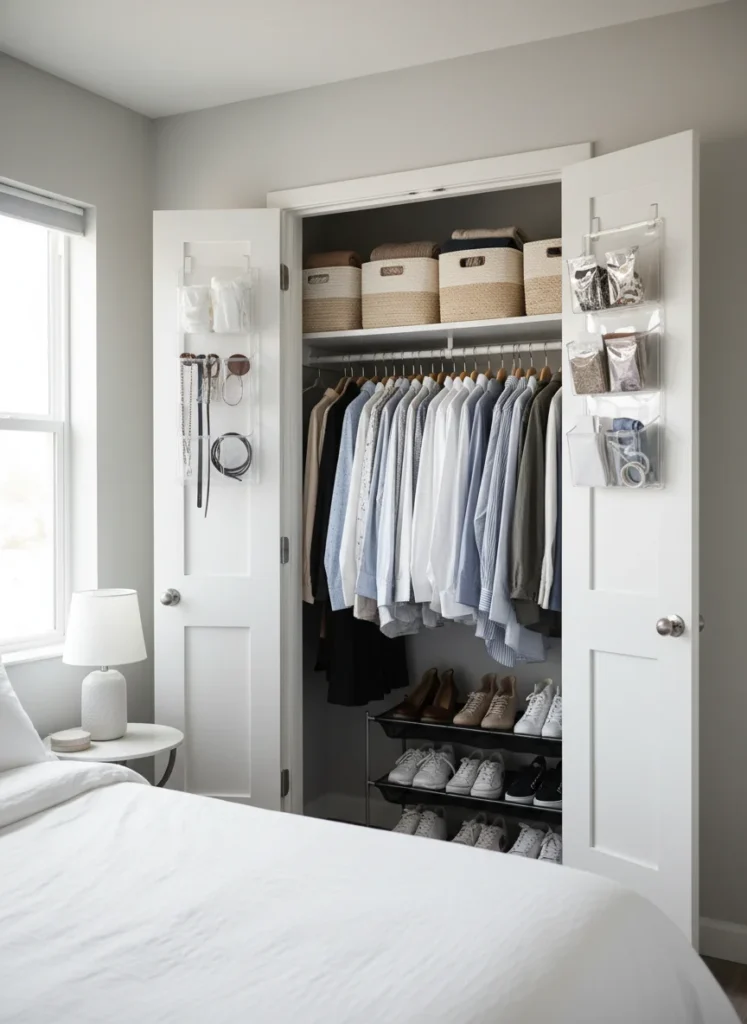
A standard dresser is 30 to 36 inches wide, 18 inches deep, and takes up 4.5 to 5.4 square feet of floor space. In a small bedroom with a full bed, that is the square footage that determines whether the room feels workable or not. If your closet is underused, fully optimizing it with a double hanging rod, shelf bins, and a door-mounted organizer can absorb all the clothing that the dresser was holding, and you get those 5 square feet back.
A complete closet organization kit with double rod, shelves, and bins runs $40 to $80 and takes an afternoon to install. The dresser either leaves the room entirely or moves to a secondary location. If you are not sure how to approach a small bedroom with limited or no closet space, the post on small bedroom ideas with no closet covers wardrobe systems and visible storage that look like intentional decor rather than overflow.
10. Use a Mirror Strategically to Double the Perceived Space
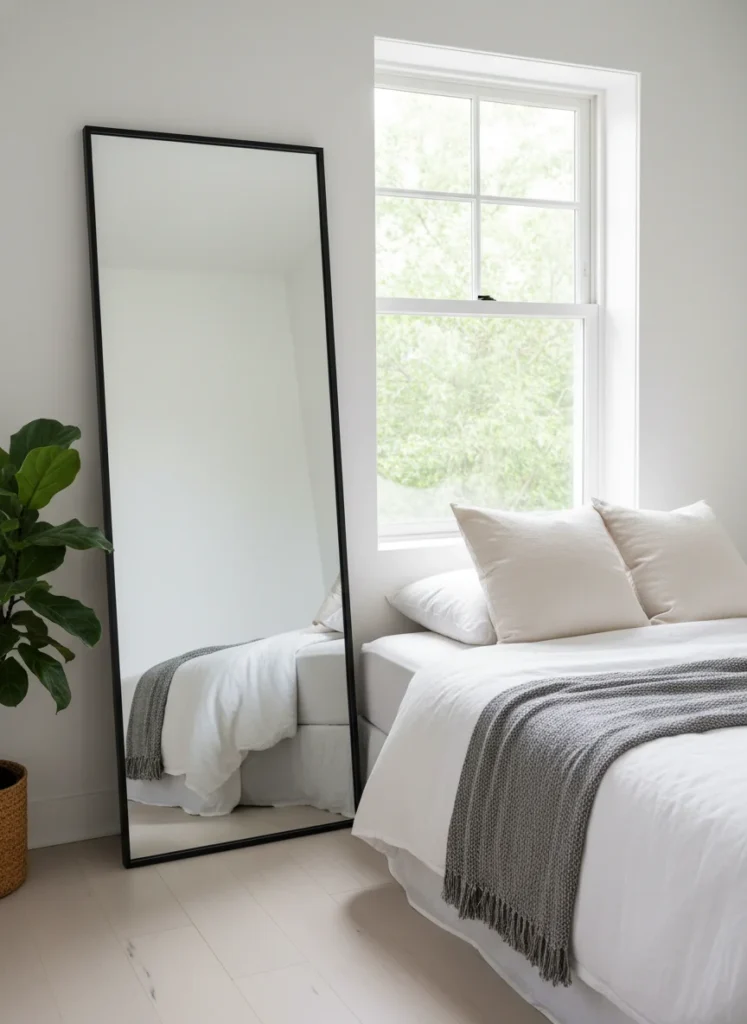
A large mirror placed opposite a window does something no other single item in a small bedroom can do: it reflects natural light back into the room and creates the perception of a second space beyond the wall. The brain reads depth in mirrors the same way it reads depth in windows, as an opening rather than a surface. A 48 to 65-inch leaner or wall mirror in a simple frame is the highest visual return per dollar in a small bedroom with a full bed.
Avoid placing the mirror directly opposite the bed if it bothers you to see yourself when you first wake up. The wall at the foot of the bed, the inside of a wardrobe door, or the wall perpendicular to the window are all effective placements that do not put the reflection in your direct sightline from the pillow. A simple leaner mirror costs $50 to $80. This one move addresses three problems simultaneously: it reflects light, expands perceived space, and eliminates the need for a separate vanity mirror.
11. Hang Curtains at Ceiling Height, Not Window Frame Height
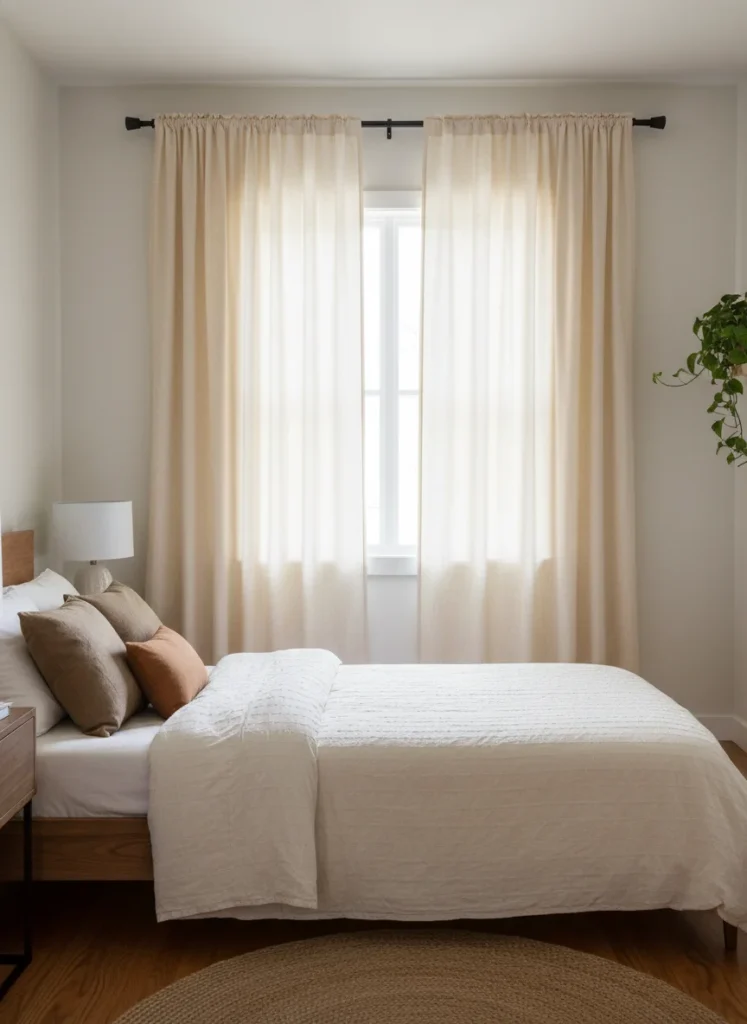
This costs nothing extra and takes 15 minutes. Moving your curtain rod from the window frame to within 2 inches of the ceiling, and using curtains long enough to reach the floor, makes the ceiling feel 20 to 30 percent taller. In a small bedroom with a full bed already dominating the floor space, adding perceived ceiling height is one of the most effective ways to reduce the claustrophobic feeling that comes from having a large bed in a compact room.
You may need longer curtain panels than what you currently have. Standard 84-inch panels work in rooms with 8-foot ceilings when the rod is at ceiling height. Rooms with 9-foot ceilings need 96-inch panels. Measure from the rod to the floor before buying. Linen-blend floor-to-ceiling curtain panels in ivory or warm white run $25 to $50 for a pair and transform the vertical read of any small bedroom.
12. Use Vertical Wall Storage Instead of Horizontal Surface Storage
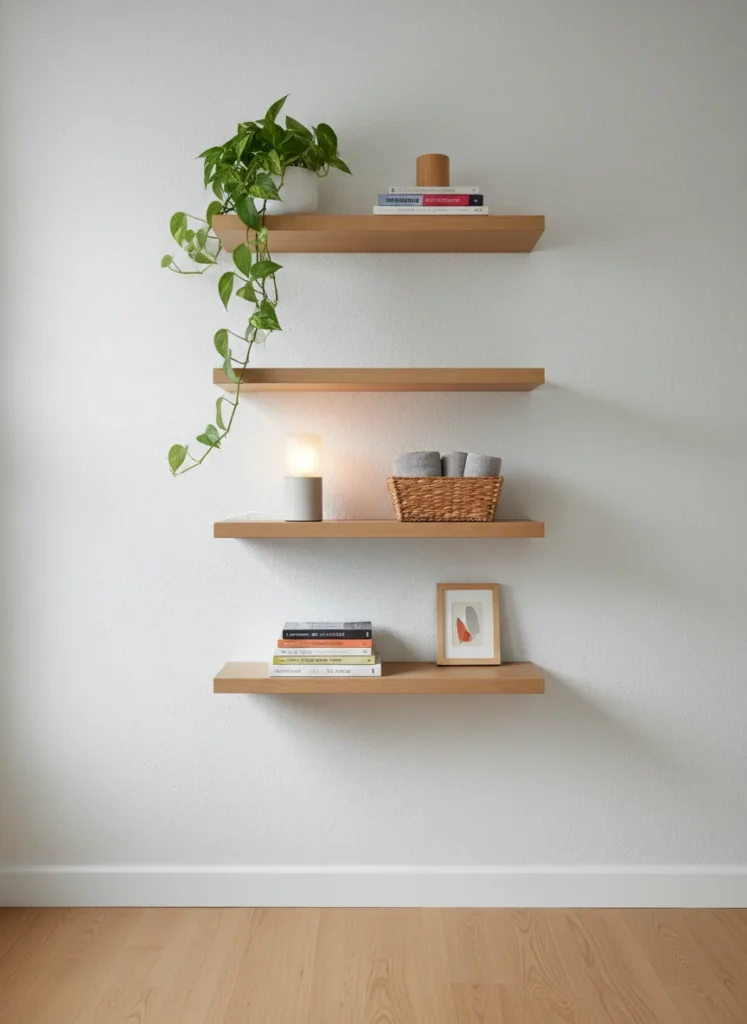
Every item sitting on a floor surface is competing for the clearance around your full bed. Moving storage to the walls, literally lifting it off the floor, is the principle that makes the most difference in tight bedrooms. Three floating shelves arranged vertically on one wall replace a bookcase, a nightstand, and a side table and take zero floor space. A pegboard panel with hooks replaces a dresser’s worth of accessory storage.
The wall between the door and the window, or the wall opposite the bed, is typically the best candidate for vertical storage because it is visible but not adjacent to the sleeping area. Sets of three staggered floating shelves run $25 to $55 and install with four screws each. If you want the full approach to decorating walls in a small bedroom beyond just storage, there are more ideas in the post on things to put on bedroom walls instead of pictures.
13. Choose a Slim Desk That Doubles as a Nightstand
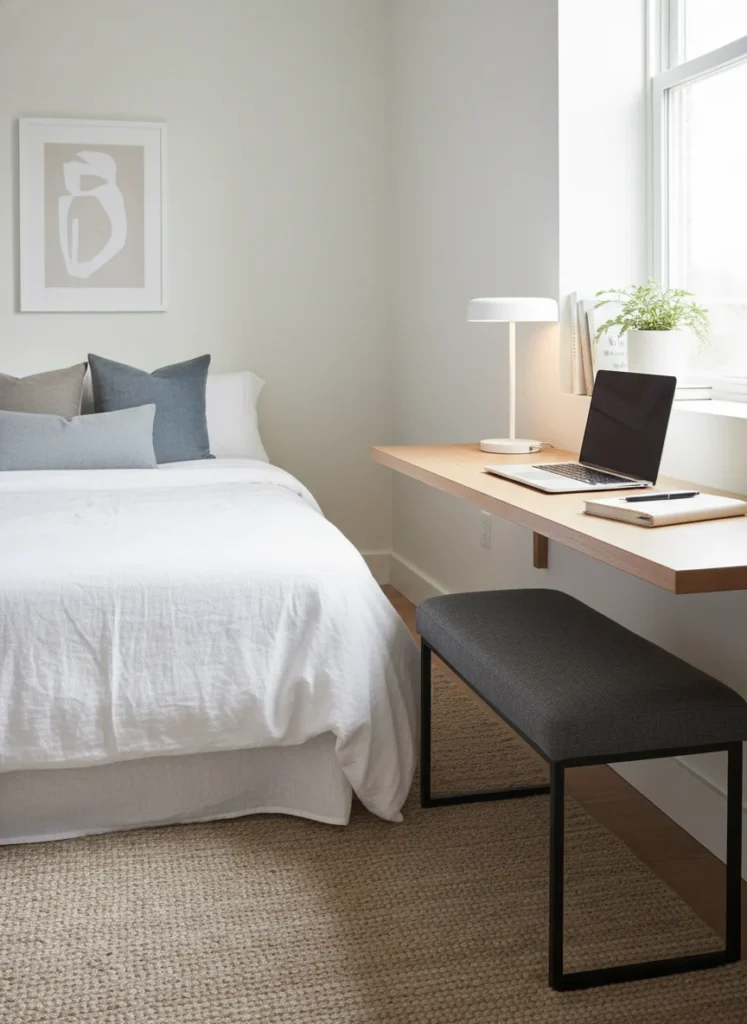
If the bedroom needs to serve as a workspace, a slim wall-mounted floating desk is the only kind that makes sense in a small room with a full bed. A standard desk at 24 inches deep adds nearly 2 feet to your floor footprint. A wall-mounted desk at 14 to 16 inches deep does the same job at roughly half the depth. It also folds up in some versions, reclaiming the surface when the workday is done.
Position the desk on the wall perpendicular to the bed if possible, so the two furniture zones do not compete. A slim bench stool or a backless chair tucks fully under the desk and takes zero floor space when not in use. Wall-mounted floating desks for small bedrooms run $60 to $150 and are one of the few pieces of furniture that actively return square footage to you rather than consuming it.
14. Use Light Neutral Bedding to Make the Bed Feel Less Dominant
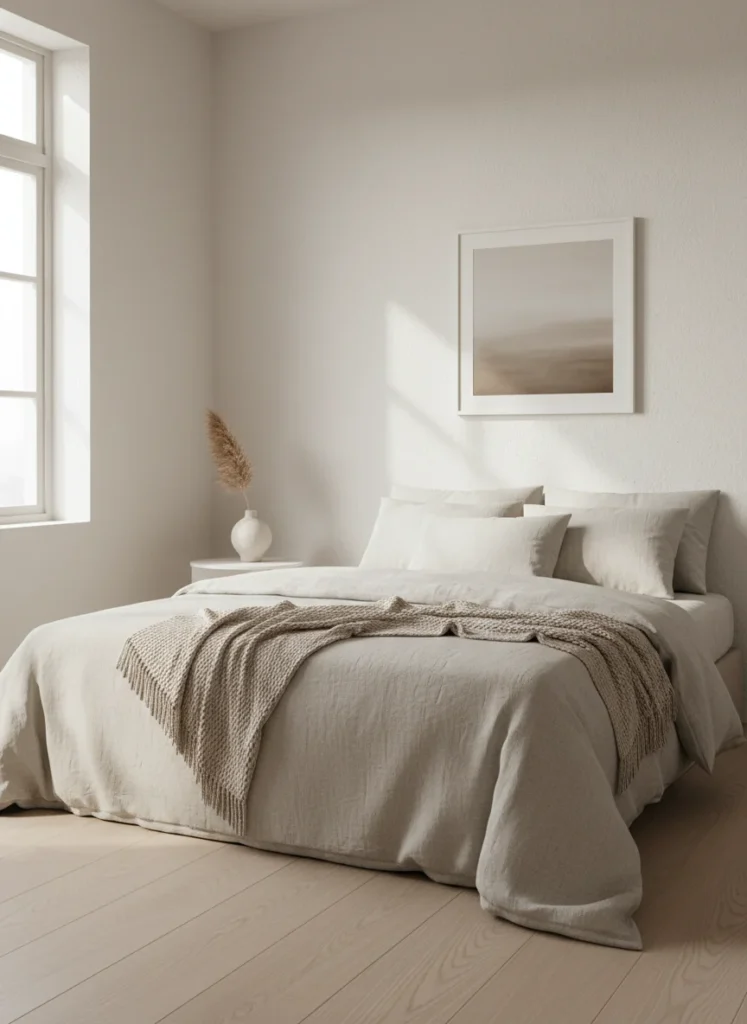
A full bed takes up a lot of visual real estate in a small room. Dark bedding or high-contrast patterns make that visual mass heavier and more dominant. Light neutral bedding in warm whites, oats, or pale sage makes the bed feel like part of the room rather than the thing the room is organized around. This is not about minimalism or aesthetics. It is about visual weight management in a tight space.
The same principle applies to the headboard. A headboard in a color that matches the wall nearly disappears visually, which makes the room feel larger. A headboard in a contrasting color becomes a feature, which makes the room feel smaller because the eye locks onto it. When you cannot make the bed smaller, make it blend. The post on paint colors that make a small bedroom look bigger has the specific wall color choices that work best with neutral bedding to maximize this effect.
15. Add a Folding or Stackable Ottoman at the Bed Foot
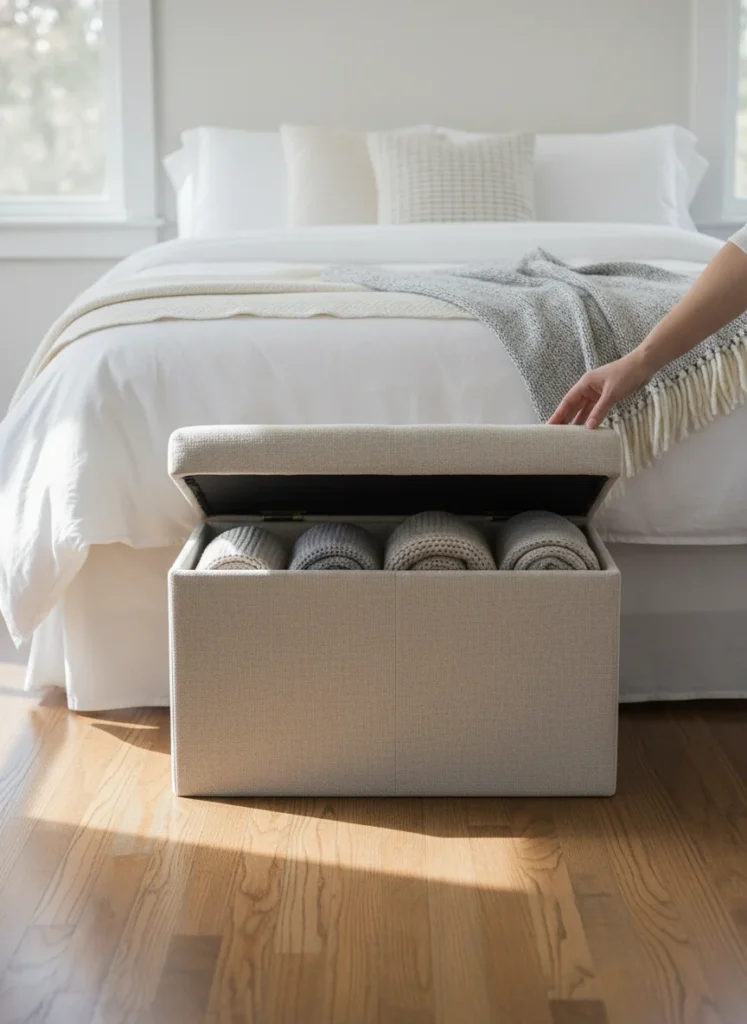
The space at the foot of the bed is often wasted in small bedrooms because people are afraid to place anything there that could reduce walkway clearance. A low, narrow storage ottoman at 30 to 36 inches wide and 14 to 16 inches deep sits within the bed footprint and adds significant storage without blocking the clearance path if the room is wider than the bed. Use it for extra blankets, seasonal clothing, or anything you want accessible but not visible.
The rule is: the ottoman should be narrower than the bed and low enough that it does not interrupt the visual flow of the room. At 16 to 18 inches tall, it is below eye level from the doorway and reads as part of the bed zone rather than a separate obstacle. Storage ottomans for the end of the bed in neutral fabric run $35 to $75.
16. Skip the Area Rug Under the Full Bed if the Room Is Under 120 Square Feet
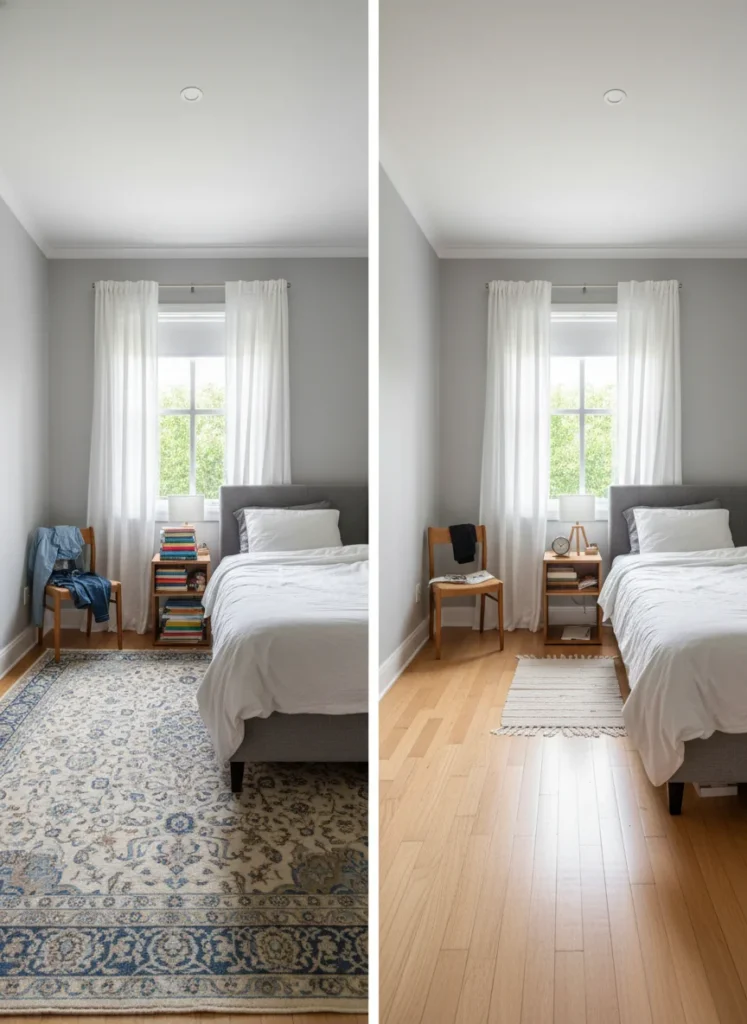
A correctly sized area rug under a full bed, extending 18 to 24 inches on both sides and 12 to 18 inches at the foot, requires a rug that is at minimum 6×9 feet. In a small bedroom under 120 square feet, this rug covers a significant portion of the floor and can make the room feel more cluttered rather than more designed, especially if the rug pattern or color adds visual weight. The floor reads as an extension of space. Cover it with a large rug and you shrink it.
The alternative that works better in very small bedrooms: a small bedside runner, 24 by 60 inches, placed only on the accessible side of the bed. It gives you the soft landing your feet need in the morning, defines the bedroom zone visually, and leaves the majority of the floor exposed. A bedside runner in jute or a neutral flat weave costs $15 to $30 and solves the rug problem without creating a visual crowding problem.
17. Create a Dedicated Zone on One Side of the Bed With a Curtain
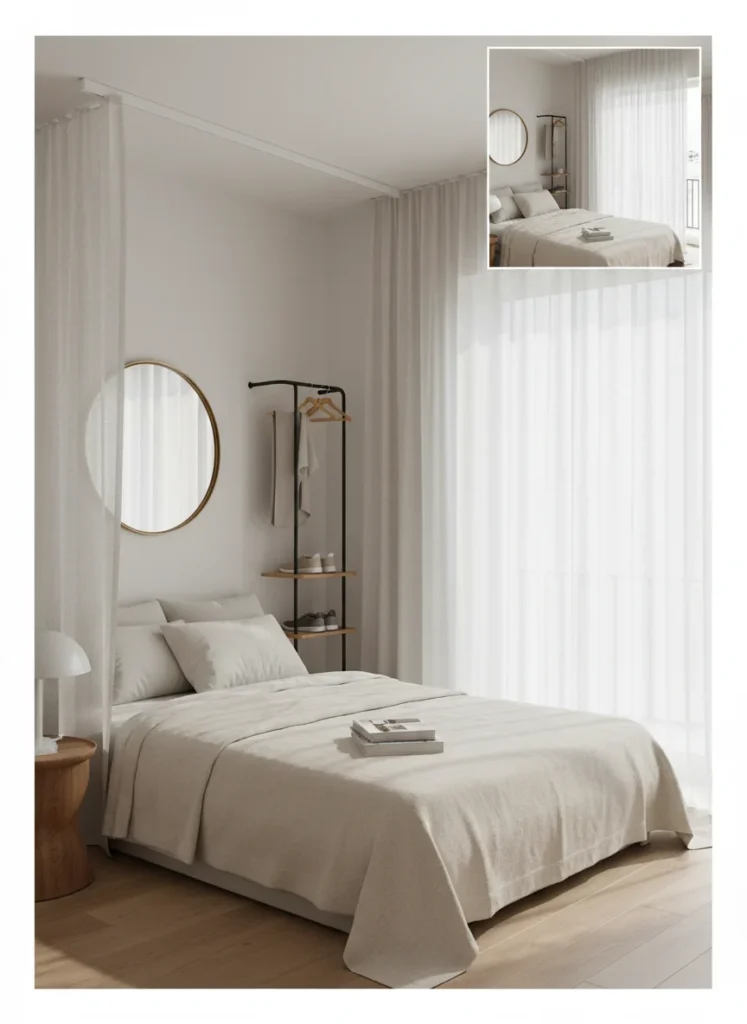
If the room has more square footage on one side of the bed, a ceiling-mounted curtain track with a linen panel is a renter-friendly way to create a defined dressing or storage zone without building a wall. Pull the curtain open during the day. Close it when guests are over. Behind it, a freestanding clothing rack, a narrow shoe shelf, and a mirror create a complete dressing area in what might otherwise be dead space against a wall.
Ceiling curtain tracks mount with adhesive or small hooks depending on the ceiling type, and linen curtain panels in the right length cost $25 to $50. This is the kind of solution that looks designed when done well and gives a small bedroom the zone separation that makes it feel larger than it is. For more renter-safe approaches to creating zones and personality in a bedroom you cannot permanently alter, the post on renter-friendly bedroom ideas that require zero landlord permission covers everything from peel-and-stick solutions to freestanding furniture arrangements.
Before we continue, if you’re tired of buying decor that doesn’t look right together, I created something specifically for this…
The Layout Rule That Overrides Everything Else
Every idea above has one underlying principle: protect the clearance. A minimum of 24 inches on the accessible side of the bed is not a design preference. It is the functional floor that determines whether the room works or just exists. Once you have protected that clearance, every other decision becomes about reclaiming floor space through vertical and under-bed storage, and reducing visual weight through color, scale, and material choices.
The full bed is not the problem. It is the constraint that forces every other decision to be precise. Rooms with constraints often end up feeling more considered than rooms with room to spare, because every object has to earn its place. Start with the bed placement, protect your 24 inches, and work outward from there.