
This post contains affiliate links. If you buy something through my links, I may earn a small commission at no extra cost to you. I only recommend things I genuinely use or believe in.
Maximalism in a small bedroom fails for one specific reason: abundance without intention reads as clutter. The maximalist small bedrooms that actually work, the ones that stop you mid-scroll, are not rooms that have more things in them. They are rooms that have more considered things in them. The distinction is everything. You can have bold color, pattern on pattern, gallery walls, and layered textiles in a 120-square-foot bedroom and it can feel expansive and alive rather than overwhelming. The 11 ideas below are how you get there on a budget without losing the plot.
💡 Before you start decorating, see how your room could look with AI.
🏡 See Your Room Before You Spend a Dollar
Still wondering if that new furniture, paint color, or decor style will actually look good in your space?
- Upload a photo of your room and let AI instantly generate beautiful design ideas.
- Explore different interior styles, furniture layouts, and color combinations before you spend a single dollar.
What Makes Maximalism Work in a Small Space
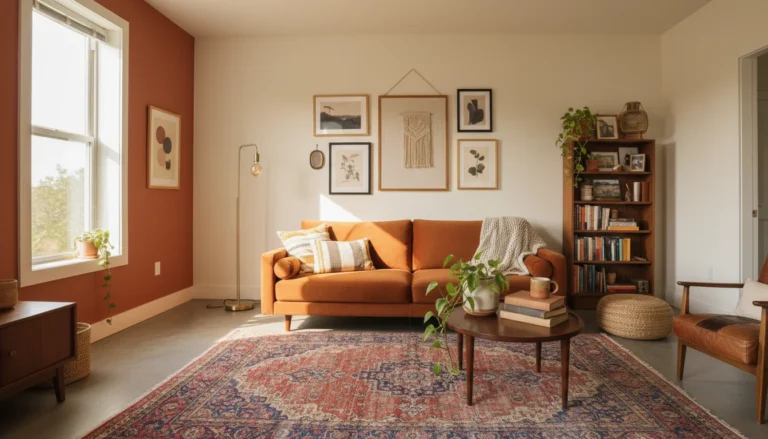
The rule that separates maximalist small bedrooms that work from ones that feel chaotic is a cohesive color palette. Maximalism is not about having every color. It is about having your colors with complete commitment. Choose three to five colors and let everything in the room belong to that family. Pattern can clash with pattern, texture can compete with texture, and the room still reads as intentional because the colors are singing the same song even when the arrangements are loud.
The second rule: the floor stays clear. In a small maximalist bedroom, visual abundance lives on the walls, the bed, and the shelves. The floor, the only zone where visible clutter directly shrinks the perceived room size, stays as open as possible. This is the structural discipline that allows the room to carry more visual weight in every other zone without collapsing into chaos.
11 Ways to Get the Maximalist Small Bedroom Look Without It Feeling Chaotic
1. Choose a Core Palette of Three to Five Colors and Commit
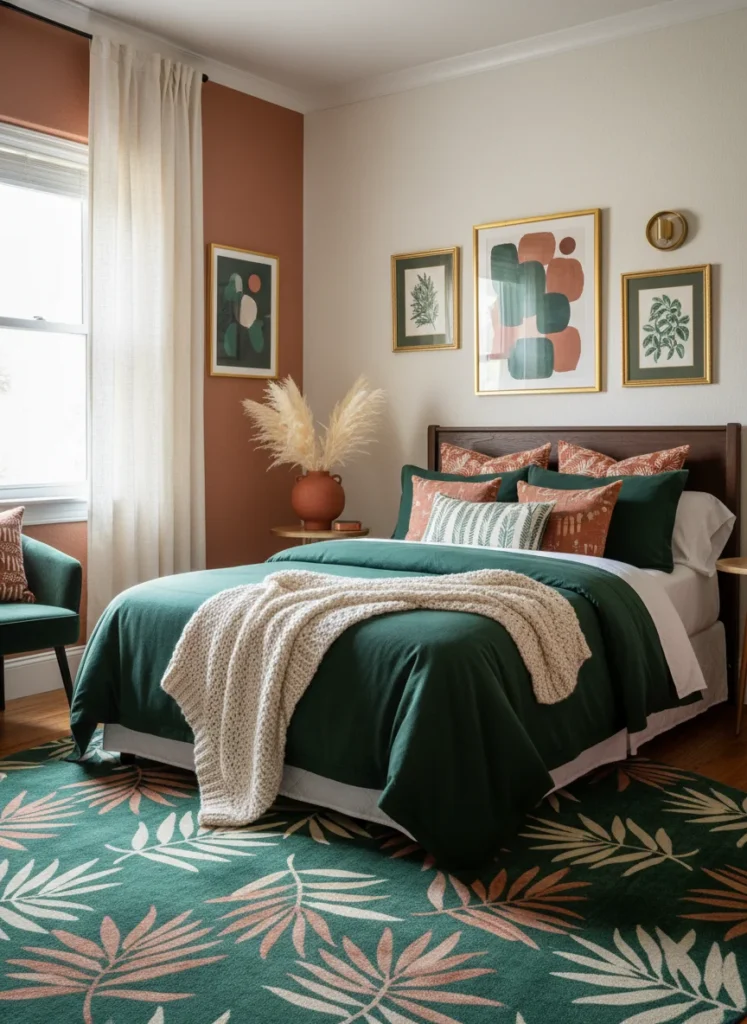
The fastest way to make a maximalist small bedroom feel chaotic is to use too many different colors without a relationship between them. The fastest way to make it feel expensive and designed is to pick three to five colors and use every object in the room as an opportunity to repeat those specific tones. Deep emerald, warm terracotta, and cream as the palette means your bedding is in those colors, your wall art pulls those tones, your ceramics are in those glazes, and your throw pillows repeat the family. The room has maximum visual information, but it all belongs to the same conversation.
The palette does not need to be complex. Some of the most effective maximalist small bedrooms use a very simple palette at high intensity: cobalt blue and warm white. Burgundy and blush. Forest green and mustard. Two colors deployed everywhere with complete commitment reads more maximalist than five colors deployed tentatively across a few accent pieces. Decide on your palette before buying anything, and let every purchase be a decision about which color from the palette it belongs to.
2. Build a Gallery Wall That Covers the Headboard Wall Fully
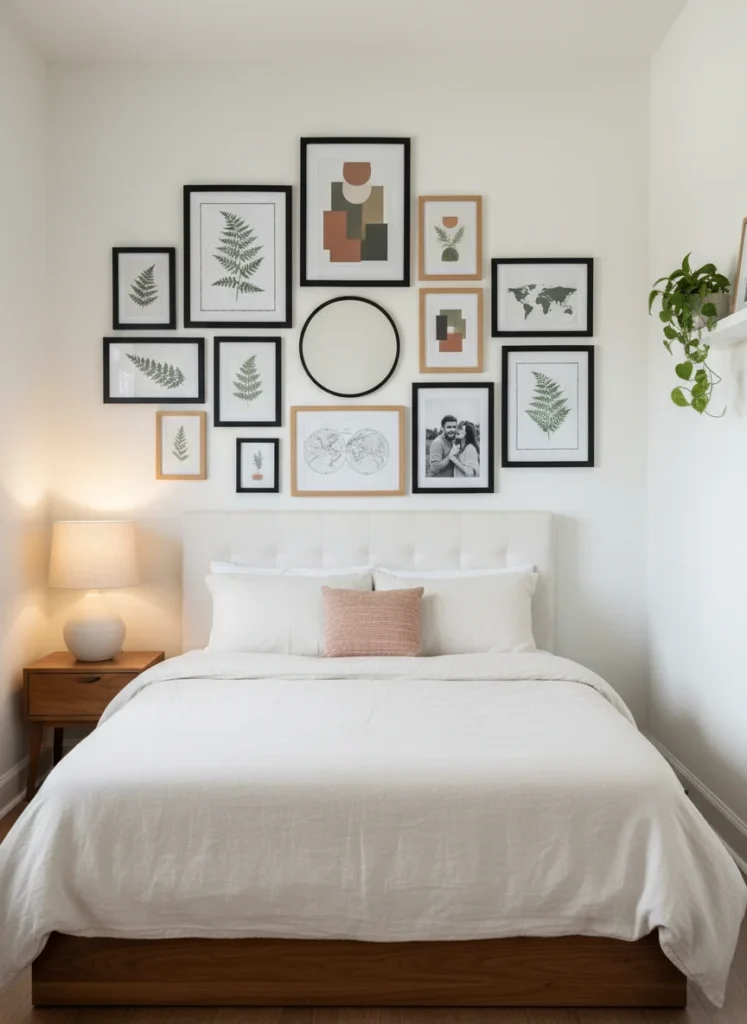
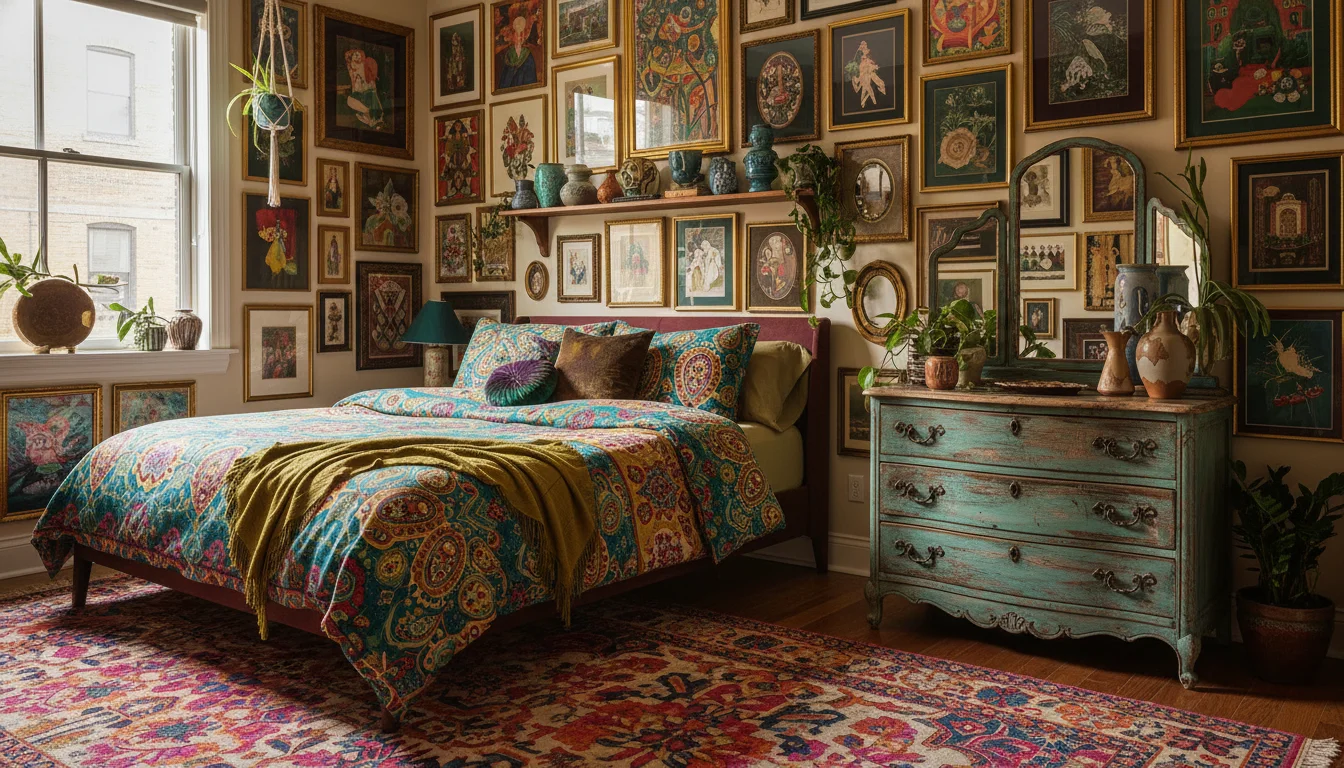
A gallery wall is the maximalist move that adds the most visual depth to a small bedroom wall while taking zero floor space. Done densely on the headboard wall, covering from near the ceiling to just above the headboard, it transforms a flat surface into the room’s primary personality statement. The key to making it read as curated rather than chaotic: consistent frame tones across different frame sizes, and art that pulls from your core palette even when the subjects are varied.
Mix frame sizes but keep the frame color in one or two families: all black, all natural wood, or a mix of black and brass. Mix art subjects freely: botanical prints, abstract color fields, photography, text-based prints, small mirrors, even dried florals pinned flat. The visual variety comes from the content, not from competing frame finishes. Space frames 2 to 3 inches apart for a tight gallery that reads as maximalist, not 6 inches apart which reads as unfinished. For building a gallery wall with a minimal budget using Amazon frames and free digital prints, the post on free ways to make a bedroom look expensive covers the specific approach I used to build a gallery wall for $38.
3. Layer Patterns by Varying Scale, Not Color
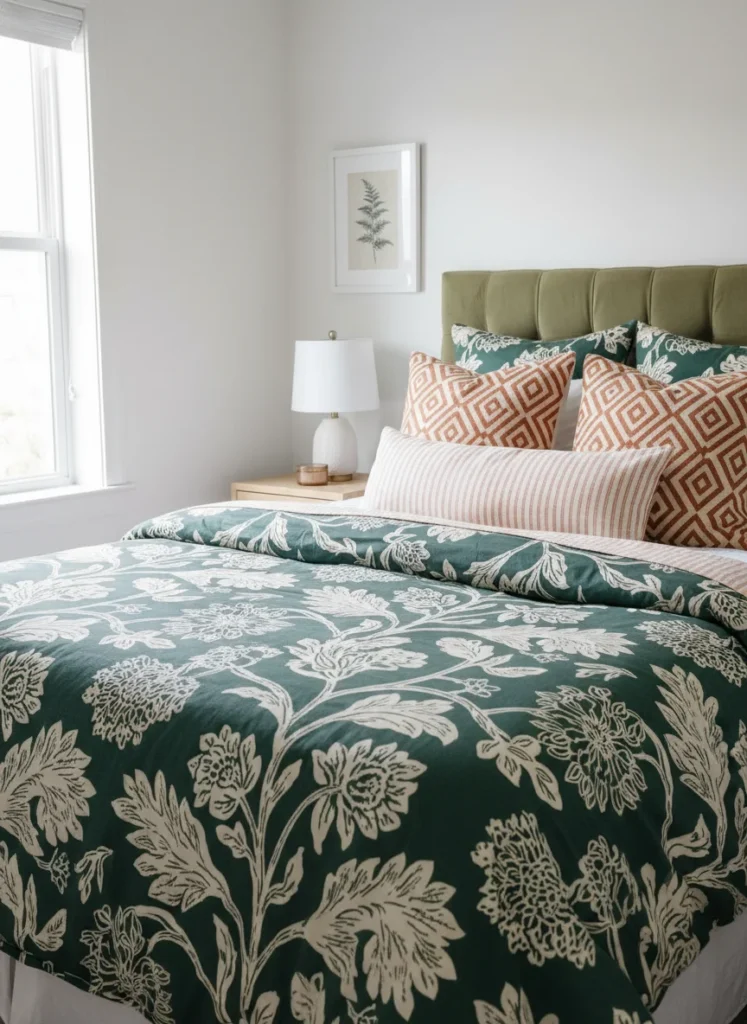
Pattern mixing is where most people lose confidence in maximalism and retreat to a single pattern against a neutral background. The rule that makes it work is scale variation. A large-scale floral, a medium-scale geometric, and a small-scale stripe or solid texture can coexist on the same bed without competing because the eye reads them as different scales rather than competing patterns. What makes them fight is when all three patterns are the same scale and the eye cannot find a place to rest.
The second rule for pattern mixing: share at least one color across all the patterns. The large-scale floral has deep green and cream. The medium geometric has terracotta and cream. The texture has cream as a base. Cream is the thread that runs through all three and makes them read as a deliberate combination rather than a pile of patterns that happen to be in the same room. Look for a large-scale botanical or floral duvet cover as the foundation pattern, then build the pillow patterns around it using the two most prominent colors in the duvet.
4. Use Peel-and-Stick Wallpaper on One Wall or the Ceiling
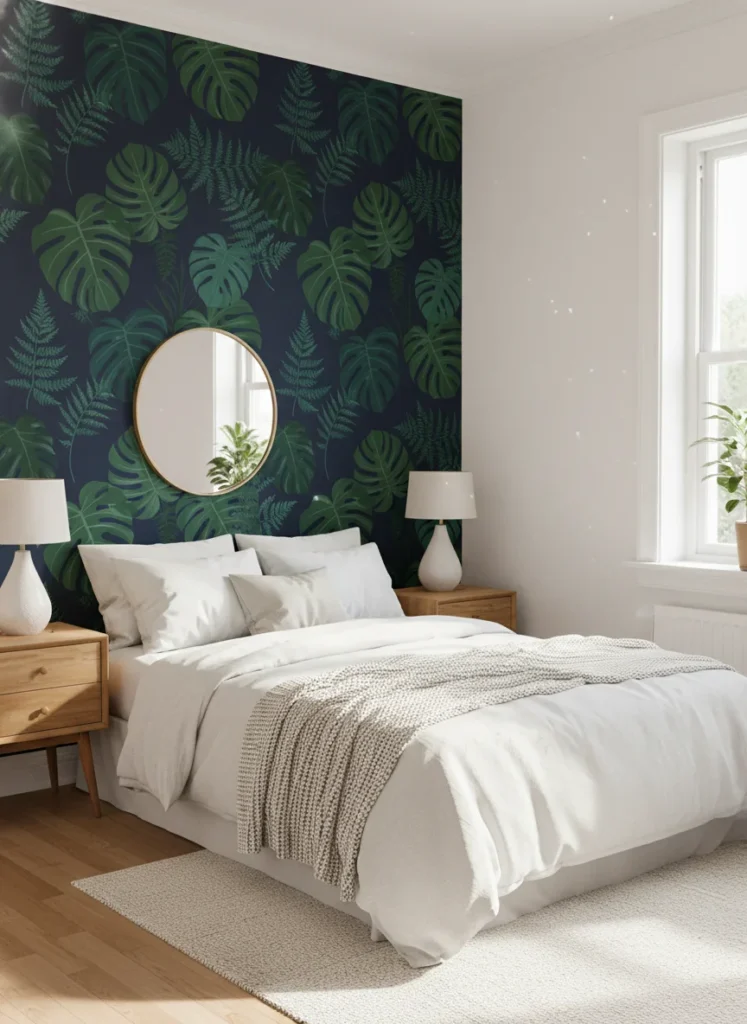
A single bold wallpaper wall is the highest-drama move available to a renter on a budget, and in a small bedroom it works better than wallpapering all four walls because the visual impact of one statement wall is actually more maximalist than the same wallpaper on all four sides, where it reads as wallpaper rather than a design choice. One dramatic wall with three plain walls creates contrast that makes the bold pattern feel like a considered statement.
The maximalist ceiling is the version of this that most people do not consider but that rooms use to extraordinary effect: a bold botanical, geometric, or abstract print on the ceiling with white walls below creates a room that reads as deeply personal and surprising without reducing any wall space for art or shelves. Peel-and-stick wallpaper goes on ceilings with the same adhesive as walls. A single accent wall or ceiling typically requires two to three rolls at $40 to $80 total. Look for bold peel-and-stick wallpaper in botanical or pattern prints for the renter-safe version.
5. Group Decorative Objects in Clusters, Not Scattered Individually
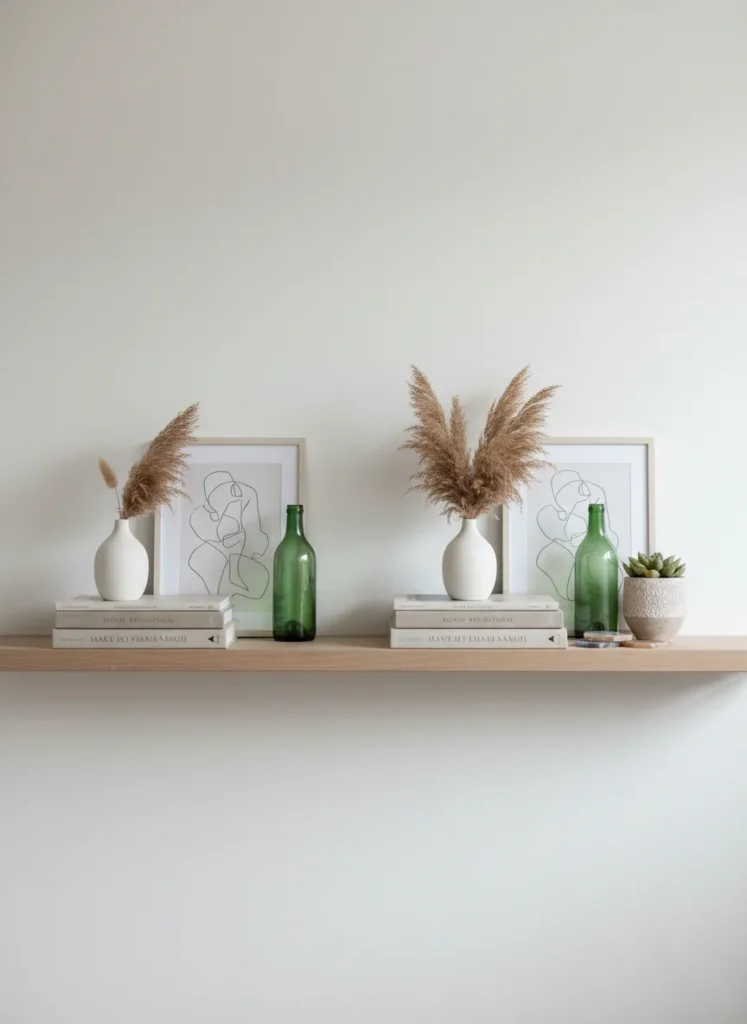
Individual objects scattered across surfaces and shelves read as random clutter regardless of how beautiful each object is. The same objects clustered in intentional groupings of three to five items read as collections, which is exactly what maximalism is made of. A grouping of three ceramic vases in different heights on a shelf tells a story. The same vases placed individually at intervals across three different surfaces tell nothing and read as stuff.
The cluster rule: odd numbers work better than even (three or five, not two or four). Vary the heights within the cluster so the eye moves across the arrangement. Include at least one natural element, a plant, a dried branch, a stone. The maximalist bedroom shelf is not decorated, it is curated: each cluster is a considered arrangement, not a placement of individual items. This approach costs nothing if you already own the objects and simply rearranges them differently.
6. Use Color Drenching on One Wall or the Ceiling for Cocooning
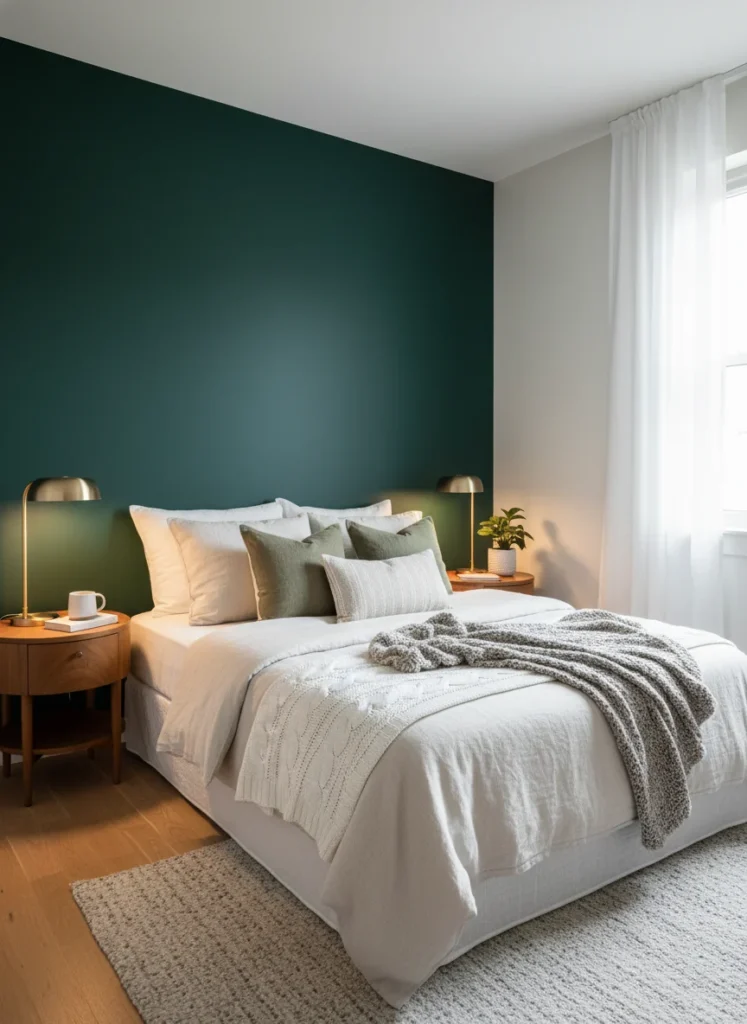
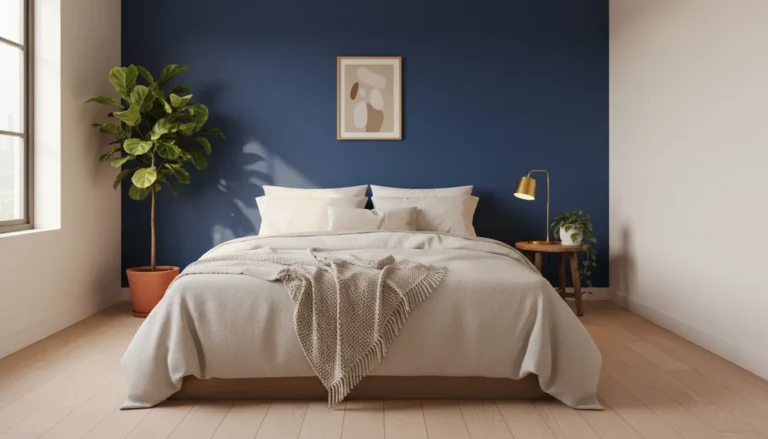
Color drenching is the technique of painting a wall, including the trim and ceiling of that wall section, in a single saturated color. In a maximalist small bedroom, this creates a cocooning effect: the deeply colored wall recedes visually rather than advancing, making the room feel more intimate and intentional than a pale color would in the same space. Counterintuitively, a saturated dark color on the headboard wall often makes a small bedroom feel larger and more resolved than the same wall in a safe neutral.
Forest green, deep burgundy, midnight blue, aubergine, and deep terracotta all work well as drench colors in a small maximalist bedroom. The key is that the color is pulled from the room’s established palette so it reads as the deepest expression of the color story rather than a separate choice. For renters, this is where the dark peel-and-stick wallpaper or peel-and-stick paint panels come in. For owners with permission, one quart of paint is enough for a single accent wall. The psychological impact of a deeply colored wall on the room’s feel is something I saw firsthand in the post on japandi bedroom ideas with the charcoal accent wall, which uses the same cocooning principle in a very different aesthetic direction.
7. Layer Rugs to Define and Add Pattern at Floor Level
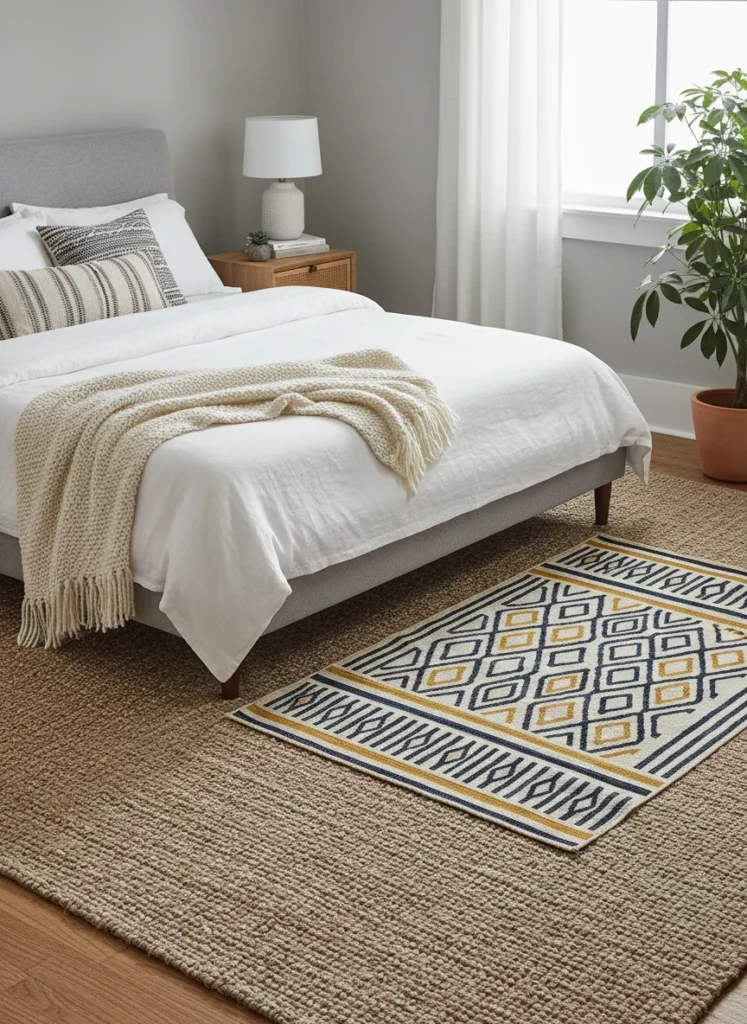
A layered rug arrangement, one large neutral rug as the base and one smaller bold patterned rug on top, is a maximalist technique that adds pattern at floor level without reducing the apparent floor space. The large neutral base, jute, cream, or natural wool, reads as floor extension. The smaller bold rug on top reads as a design object within that floor space. Together they create the maximalist layered look without using a single large loud rug that would make the small bedroom feel like the floor is closing in.
The smaller top rug should pull colors from the room’s established palette. A kilim rug in terracotta and navy on a jute base works in a jewel-tone maximalist palette. A bold geometric in emerald and cream on a natural fiber base works in a botanical palette. Small vintage or kilim-style rugs for layering in the 3×5 or 4×6 size run $30 to $65 and are frequently available secondhand at very low cost. The jute base layer runs $45 to $80 at the full room size.
8. Invest in Bold Bedding as the Room’s Primary Statement
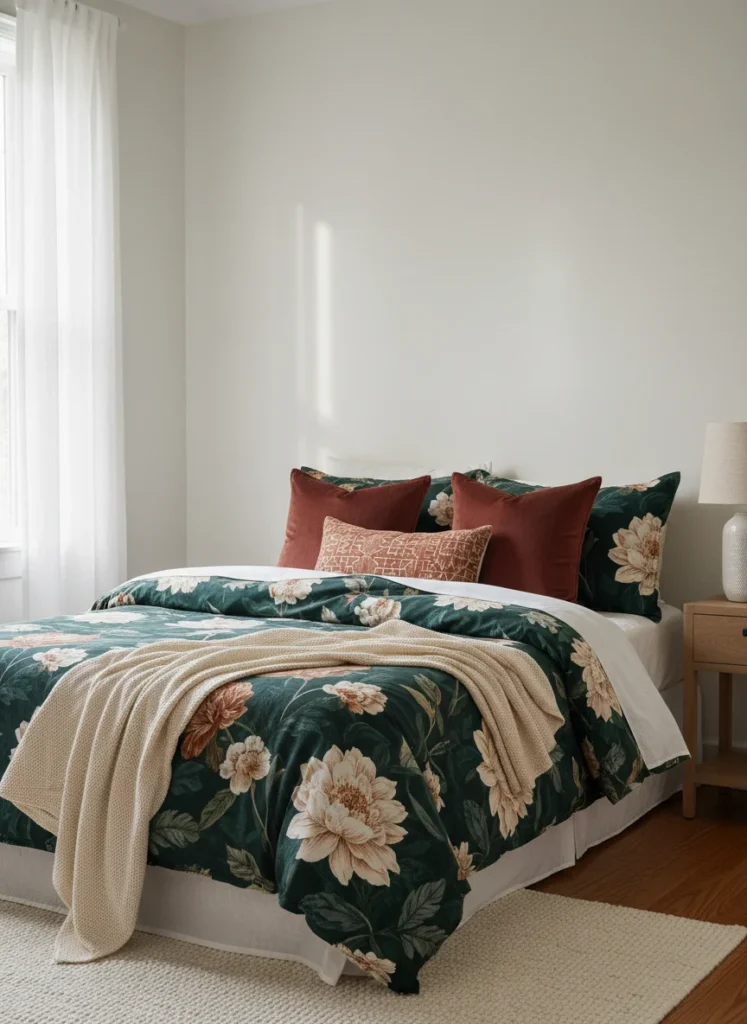
In a maximalist small bedroom where the floor needs to stay relatively clear, the bed is where the abundance lives. Bold bedding with a large-scale pattern, rich color, or complex textile combination becomes the room’s focal point and personality anchor. Every other decision in the room, the wall color, the rug, the art, refers back to the bedding palette. This means the bedding investment is the one that matters most in this aesthetic.
The most effective maximalist bedding approach: a bold patterned duvet cover as the main event, solid-colored pillow cases in the darkest color from the duvet pattern, and two to three throw pillows in patterns and textures that support but do not compete with the duvet. The throw at the foot in a complementary solid. A bold floral or botanical print duvet cover set in a small bedroom does more for the maximalist look than any single furniture piece and runs $45 to $85.
9. Add a Maximalist Ceiling With a Removable Statement
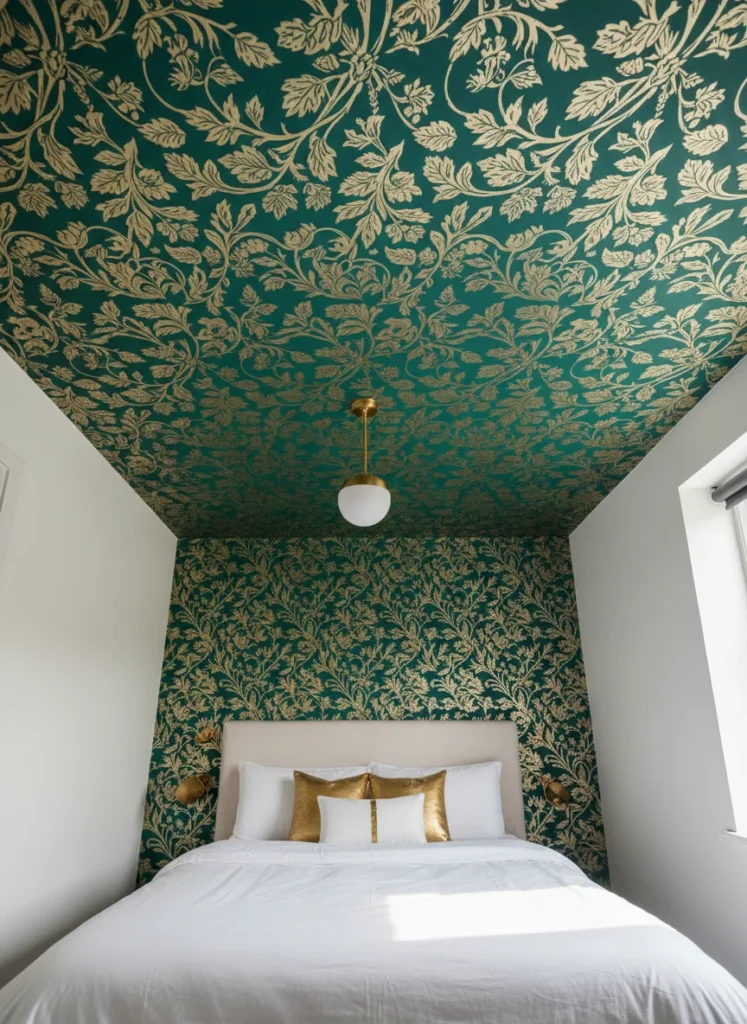
The ceiling is the most underused surface in any bedroom and in a maximalist small bedroom it represents significant untapped potential. A bold peel-and-stick wallpaper on the ceiling creates a jewel-box effect: the room looks up into color and pattern rather than a plain white expanse, which dramatically increases the sense of richness and deliberate design without touching any wall space or floor space. The effect is proportionally more dramatic in small rooms than large ones because the ceiling is physically closer and more present in the visual field.
Apply the ceiling wallpaper in the color from your established palette that is richest and deepest. A deep navy botanical, a jewel-tone geometric, a maximalist floral in burgundy and gold. Pull it out at least 12 to 18 inches down the walls at the top to create a cocooning border effect, which is the full color-drench ceiling technique used by many professional maximalist designers. The peel-and-stick version is renter-safe and removes without damage when the time comes.
10. Use Plants at Multiple Heights for Living Abundance
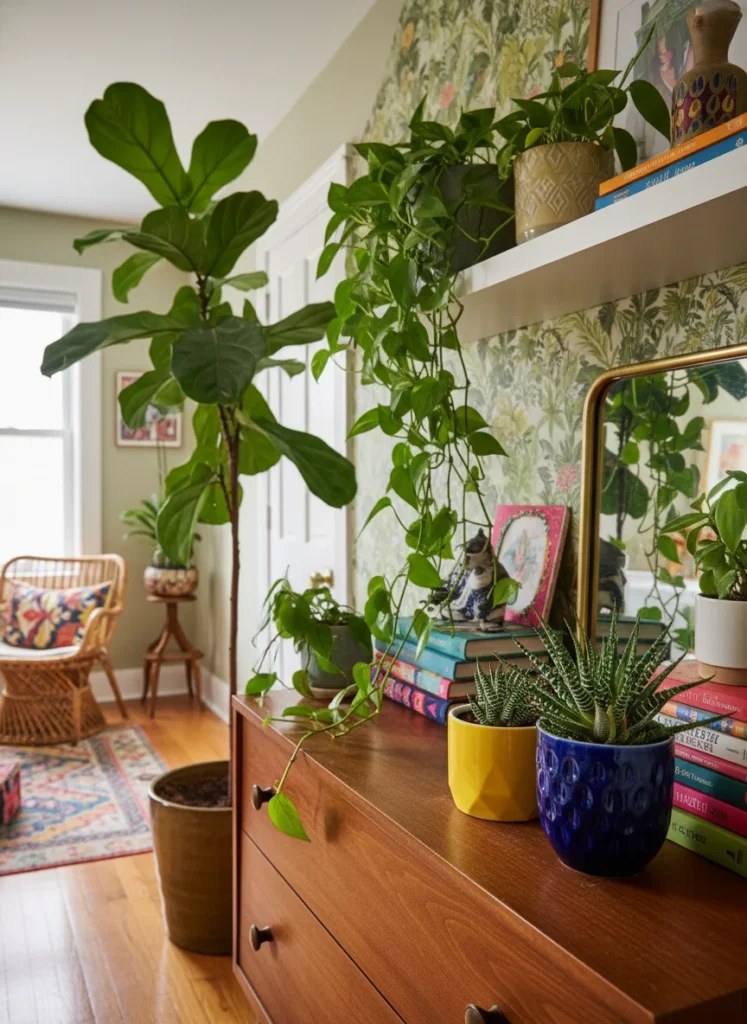
Plants are the maximalist element that adds visual abundance without adding visual clutter, because greenery reads as alive and intentional rather than accumulated. A small bedroom with plants at three different heights, a tall plant on the floor, a trailing plant on a shelf, and a small potted specimen on a surface, has a layered sense of life that makes the room feel rich without feeling busy. The eye reads plants differently from objects: they are organic, they move in air currents, and they signal that someone cares about the space they live in.
In a maximalist small bedroom, choose plants with strong architectural forms that hold their own visually against bold patterns: a fiddle leaf fig, a monstera, a snake plant, or a large trailing pothos. Small succulents in maximalist ceramic pots get lost in a bold room and read as an afterthought. One large plant in a bold ceramic pot makes more visual impact than ten small ones scattered around the room. The ceramic pot should be in the room’s palette: a terracotta pot in a terracotta-tone room, a deep blue glaze in a cobalt and white palette.
11. Edit One Layer at a Time Rather Than All at Once
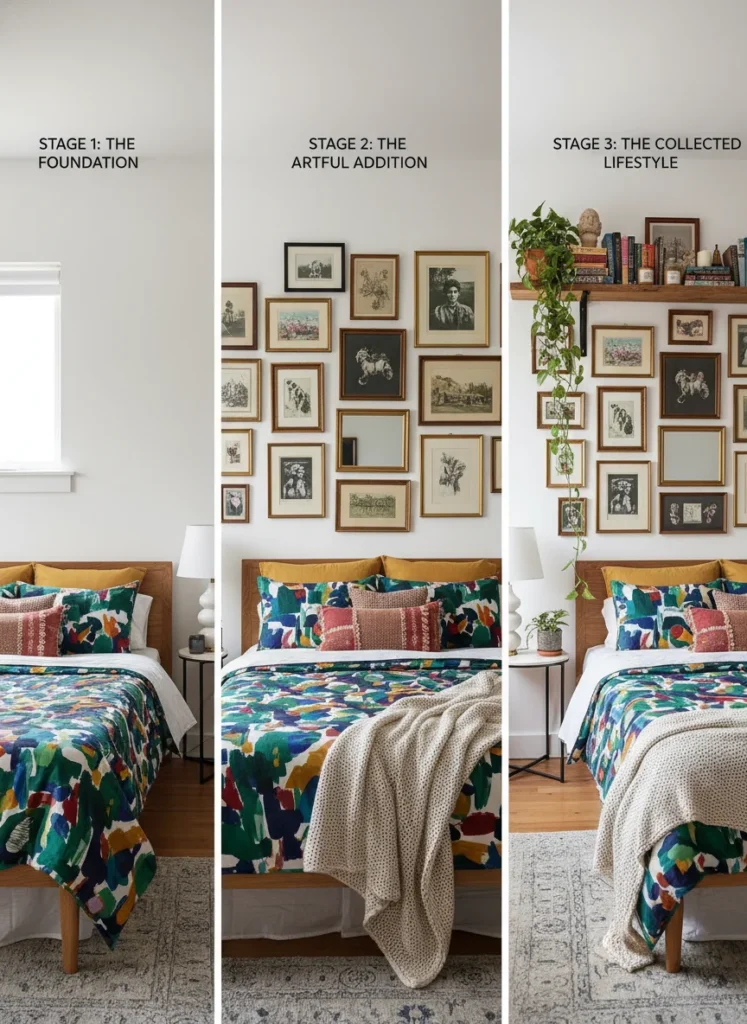
The reason maximalist small bedrooms tip into chaos is almost always that everything was added at once, which means nothing was edited for how the layers interact. The maximalist rooms that read as curated were built incrementally: start with the bedding, live with it for a week, then add the gallery wall, then the shelf styling, then the plants. Each addition was made in response to what the room actually needed rather than what the decorator planned in advance. That responsiveness is what creates the “organized chaos” that maximalism aspires to.
The budget approach to building a maximalist small bedroom this way: spend the first $60 to $80 on the bedding statement, the piece that anchors the color story. Then build from there as budget allows, with each addition evaluated against the room’s current state rather than against the original plan. The thrift store approach to maximalism pairs well with this incremental method because each find is evaluated for how it fits the existing palette and collection, rather than purchased because it is bold in isolation. More on thrift store sourcing for bedroom decor in the post on thrift store bedroom finds that look like Anthropologie, which covers the specific patterns and materials to look for that translate well into a maximalist context.
Before we continue, if you’re tired of buying decor that doesn’t look right together, I created something specifically for this…
The Maximalist Small Bedroom That Works
The maximalist small bedroom on a budget is built on three non-negotiable principles: a committed color palette, visual abundance that lives on the walls and bed rather than the floor, and the editorial discipline to remove something when the room starts feeling overwhelming rather than adding more. Maximalism is not the absence of editing. It is editing toward abundance rather than toward restraint, and that is a completely different skill from minimalism but an equally demanding one.
If the aesthetic you are working toward sits somewhere between maximalist abundance and intentional calm, the post on coquette bedroom ideas for small rooms covers the middle ground between romantic fullness and the kind of restraint that makes a small bedroom feel considered. Maximalism and coquette share the commitment to personality and softness, and many of the layering techniques transfer directly between the two aesthetics.