
This post contains affiliate links. If you buy something through my links, I may earn a small commission at no extra cost to you. I only recommend things I genuinely use or believe in.
My first apartment had no closet. Not a small closet. Not a weird closet tucked behind a door. No closet. Just a bedroom with four walls and a window and an expectation that I would figure it out. What I figured out, after a few frustrating months and a lot of trial and error, is that a bedroom with no closet forces you to make storage decisions that a regular bedroom never demands. And when you make those decisions well, the result actually looks more interesting than a room with a closet that you never have to think about.
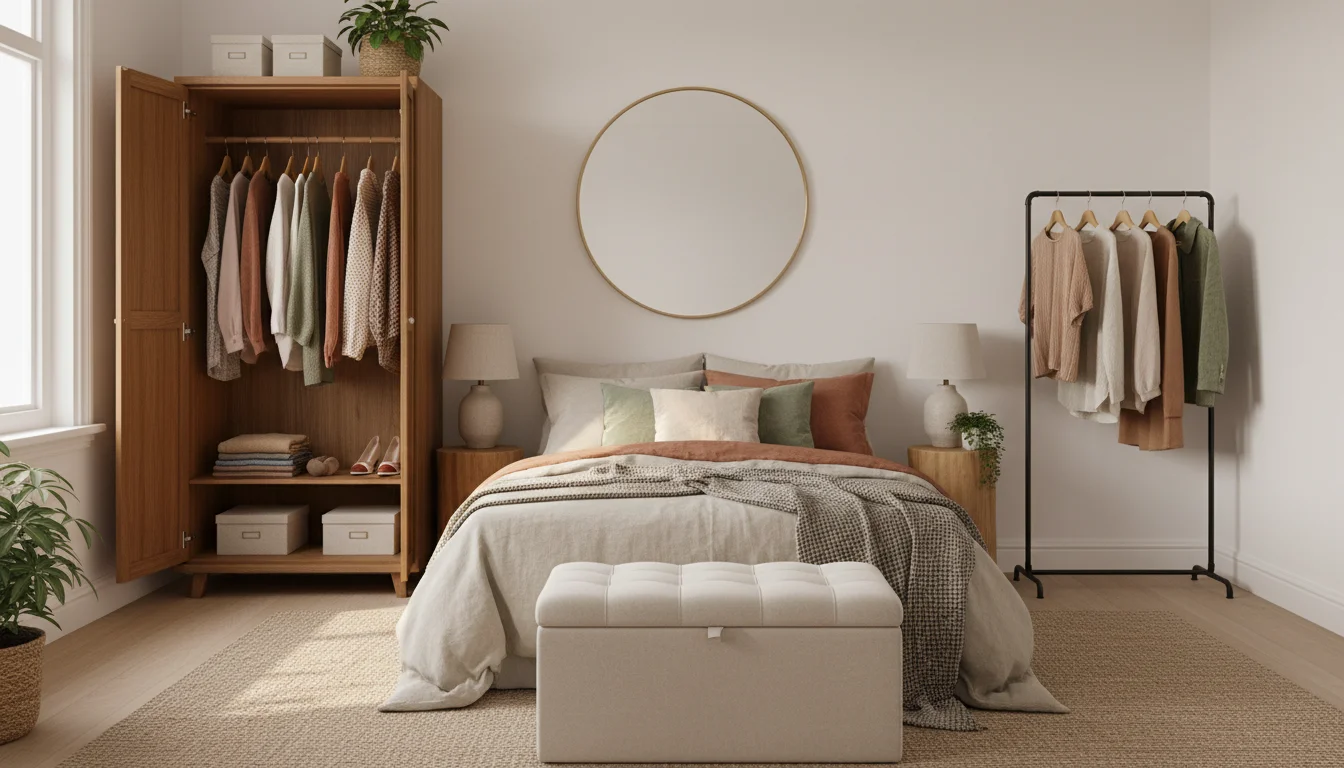
Small bedroom ideas with no closet are not about hiding the fact that you have no storage. They are about making the storage itself look like it belongs. That distinction matters. A freestanding wardrobe shoved into a corner and overflowing looks like a problem. The same wardrobe styled with intention, in the right finish, in the right spot, looks like a design decision. Here are 13 ways to get to the second version.
💡 Before you start decorating, see how your room could look with AI.
🏡 See Your Room Before You Spend a Dollar
Still wondering if that new furniture, paint color, or decor style will actually look good in your space?
- Upload a photo of your room and let AI instantly generate beautiful design ideas.
- Explore different interior styles, furniture layouts, and color combinations before you spend a single dollar.
1. A Freestanding Wardrobe Styled Like Furniture
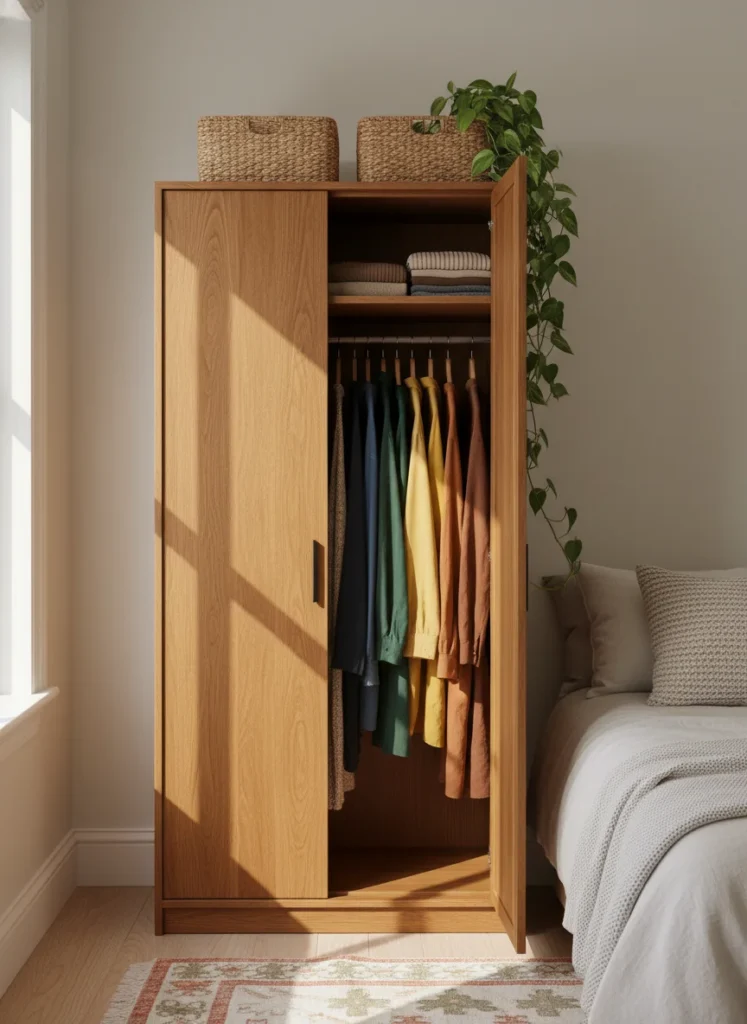
A freestanding wardrobe is the most direct solution for a bedroom with no closet, and when you choose the right one, it reads as a furniture piece rather than a storage fix. The difference is entirely in the finish and the proportions. A wardrobe in warm oak, a rich dark walnut, or even a clean matte white that coordinates with the rest of the room looks like it was always supposed to be there.
Look for one with a combination of hanging space and shelves rather than just one or the other. The hanging rod handles the clothes that wrinkle. The shelves handle folded items, accessories, and anything that does not need to hang. Style the top of the wardrobe with two or three objects, a woven basket, a plant, and something with height, so it reads as finished rather than forgotten.
A freestanding wardrobe with a hanging rod and shelves in a warm wood or clean white finish typically runs $150 to $350. It is the most significant investment on this list, but it is also the one that does the most work and changes the room the most.
2. An Open Clothing Rack as a Focal Point
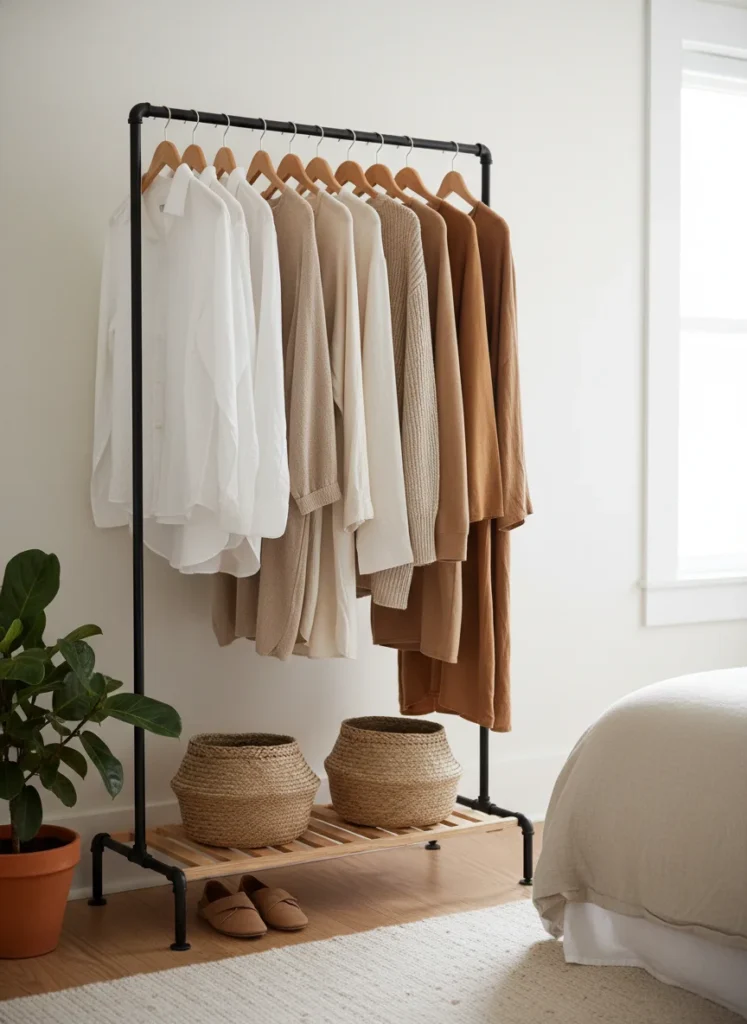
An open clothing rack sounds like it would look chaotic, but a curated, color-organized rack is one of the most visually satisfying storage solutions in a small bedroom with no closet. The key word is curated. The rack is not for all your clothes. It is for the clothes you actually wear most and are not embarrassed to display.
Organize by color gradient, lightest to darkest, and the rack immediately becomes something that looks deliberate. Add a woven basket on the lower shelf for shoes or folded items and a small plant nearby to soften the structure. The off-season and bulkier items live elsewhere. The rack gets your everyday essentials and makes them feel boutique.
A freestanding clothing rack with a lower wood shelf and metal frame costs $40 to $90 and can be moved to any wall without committing to a spot. It is one of the most flexible small bedroom ideas with no closet available at any budget.
3. A Curtained Closet Alcove
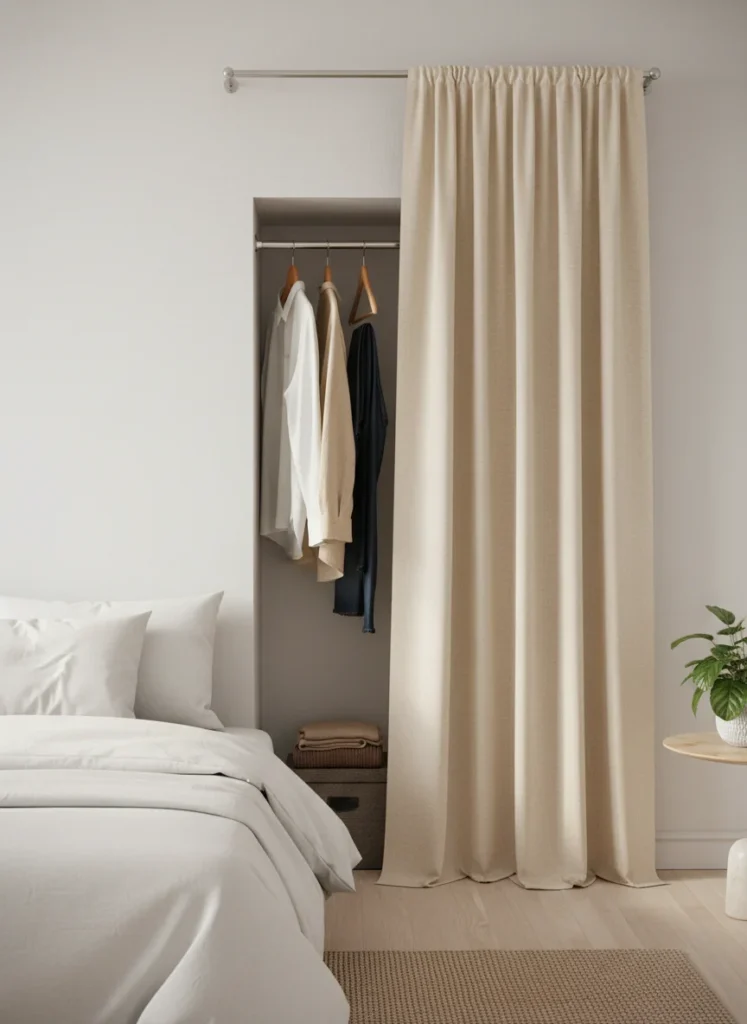
If you have a corner or a section of wall that is not doing anything, a curtained alcove turns it into a functional wardrobe space without a single piece of furniture. You need a tension rod mounted between two walls or a ceiling-mounted track, a length of fabric long enough to fall from ceiling to floor, and a basic hanging rod behind it.
The curtain hides everything and unifies the look of the room. When you choose a fabric that coordinates with your bedding or your overall palette, the alcove looks like it was designed that way rather than improvised. Linen, velvet, and even simple cotton canvas work well. Floor-to-ceiling linen curtain panels in cream or warm white cost $20 to $40 per panel and are one of the most underrated renter-friendly storage solutions available.
4. Under-Bed Storage With Bed Risers
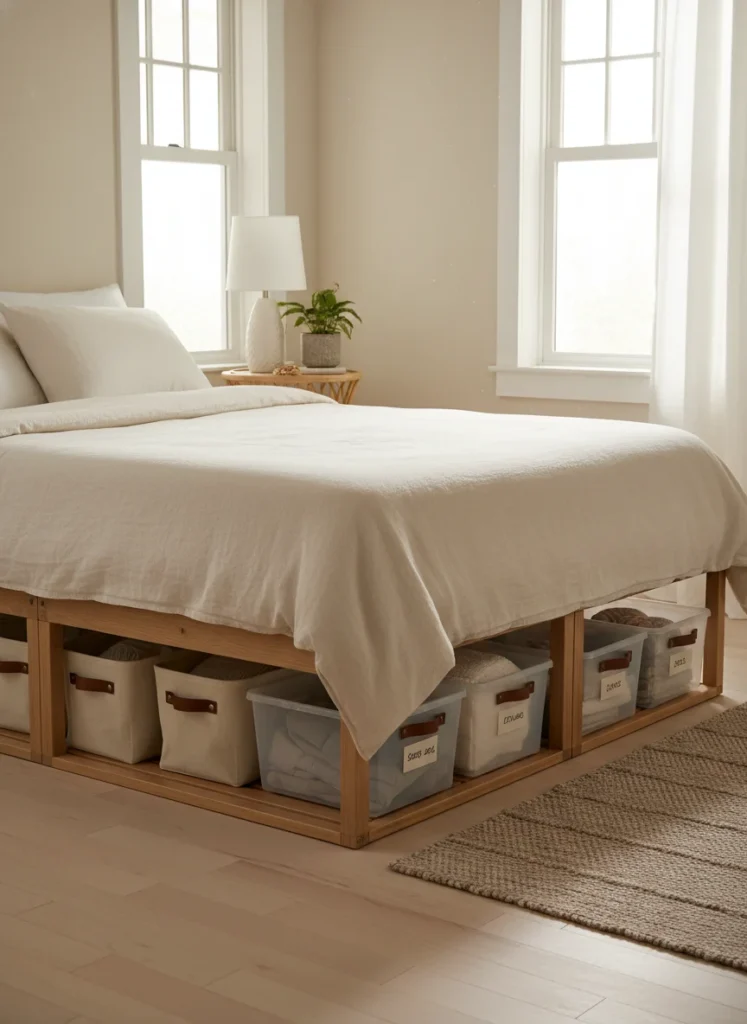
The space under your bed is the most underused storage zone in any small bedroom, and raising the bed with risers turns that dead space into the equivalent of a small chest of drawers. In a no-closet bedroom, this square footage is not optional. It is essential.
Low-profile rolling bins in natural canvas or clear plastic slide in and out without moving the bed. Use them for seasonal clothes, extra bedding, shoes, and anything that you do not need daily. Adjustable bed risers cost around $15 and create 4 to 6 inches of clearance. Pair them with flat rolling under-bed storage containers that slide in and out easily and you have a genuinely functional storage system that stays completely invisible.
5. A Storage Ottoman at the Foot of the Bed
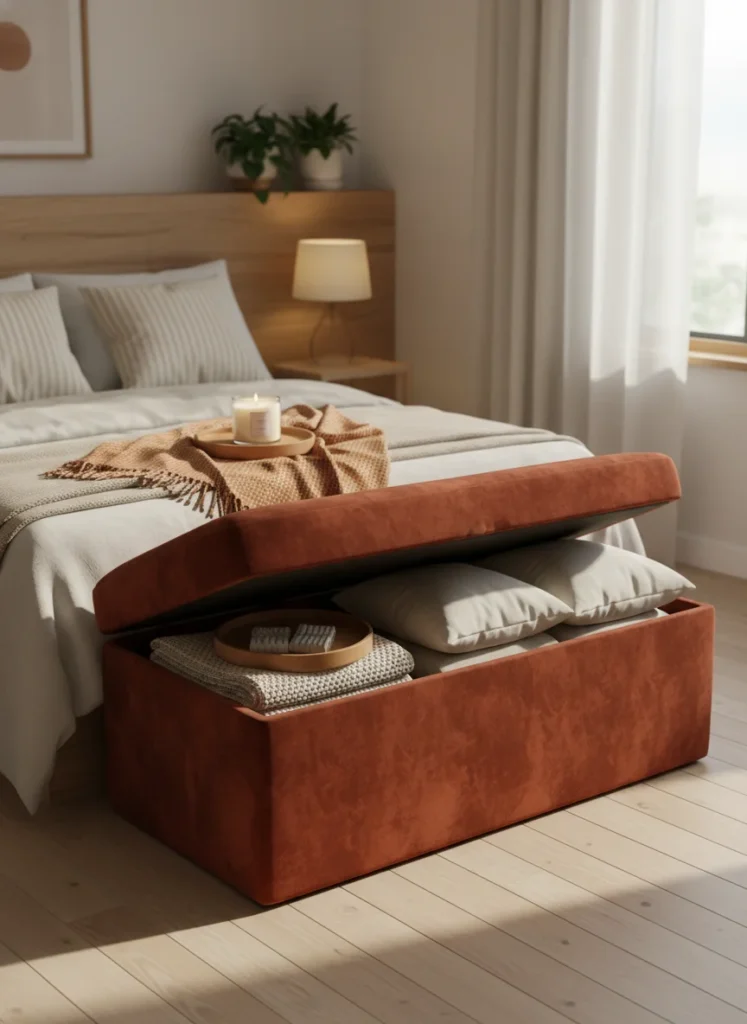
A storage ottoman at the foot of the bed solves three problems at once: it gives you a place to sit while getting dressed, it provides hidden storage for bulky items like extra blankets and pillows, and it looks like a considered furniture choice that finishes the bedroom layout.
The size matters here. A small bench-style ottoman in a 20 by 40-inch footprint works in tight bedrooms. A larger cube-style in a 24-inch square gives you more storage but takes up more floor space. Choose the right size for your room and upholster it in something that ties to your color palette. A velvet upholstered storage ottoman in a rich tone like rust, forest green, or navy does double duty as storage and as the single most interesting furniture piece in the room.
6. Floating Shelves for Folded Clothes and Accessories
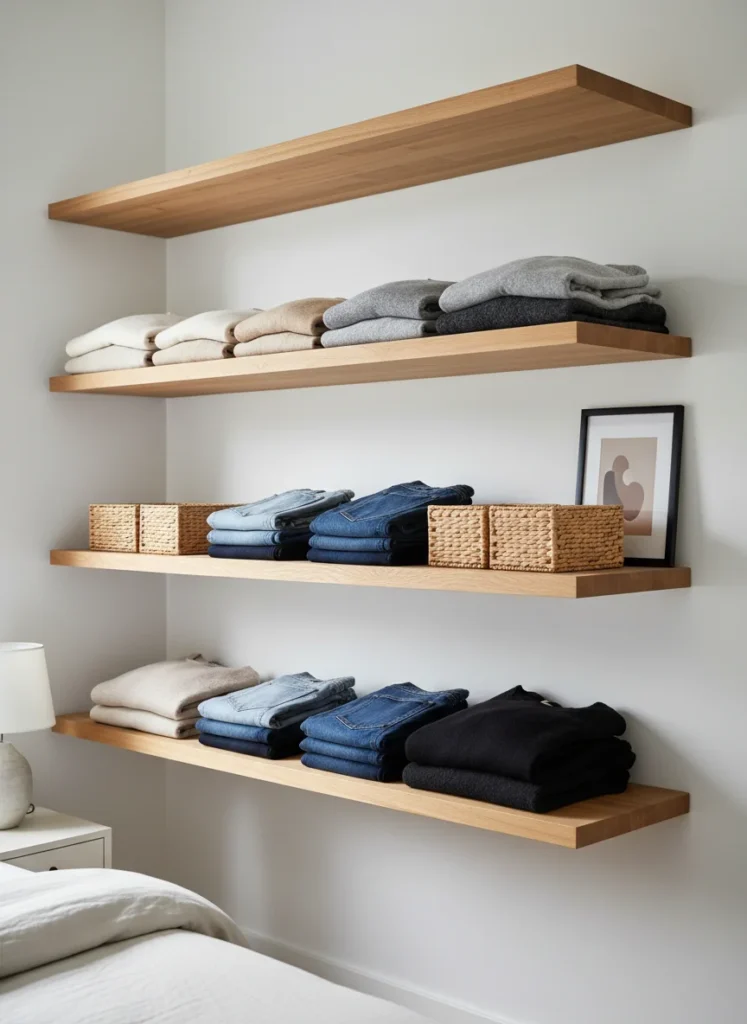
Floating shelves used for folded clothing storage look far more intentional than a dresser in many small bedrooms, particularly when the folding is clean and the organization is by color. The clothes become part of the decor rather than something to be hidden.
Wide, deep shelves work best here. You want at least 10 to 12 inches of depth to fold sweaters, jeans, and t-shirts without things falling forward. Space shelves 14 to 16 inches apart vertically for comfortable folded stacks. Contain smaller items like socks and accessories in woven baskets on one shelf so they stay organized. Deep floating wood shelves rated for heavier loads cost $30 to $60 for a set of two to three.
For more ideas on how to use shelves as both storage and style in a small bedroom, the post on making a 10×10 bedroom feel twice as big covers shelf placement and styling in detail.
7. Over-the-Door Organization
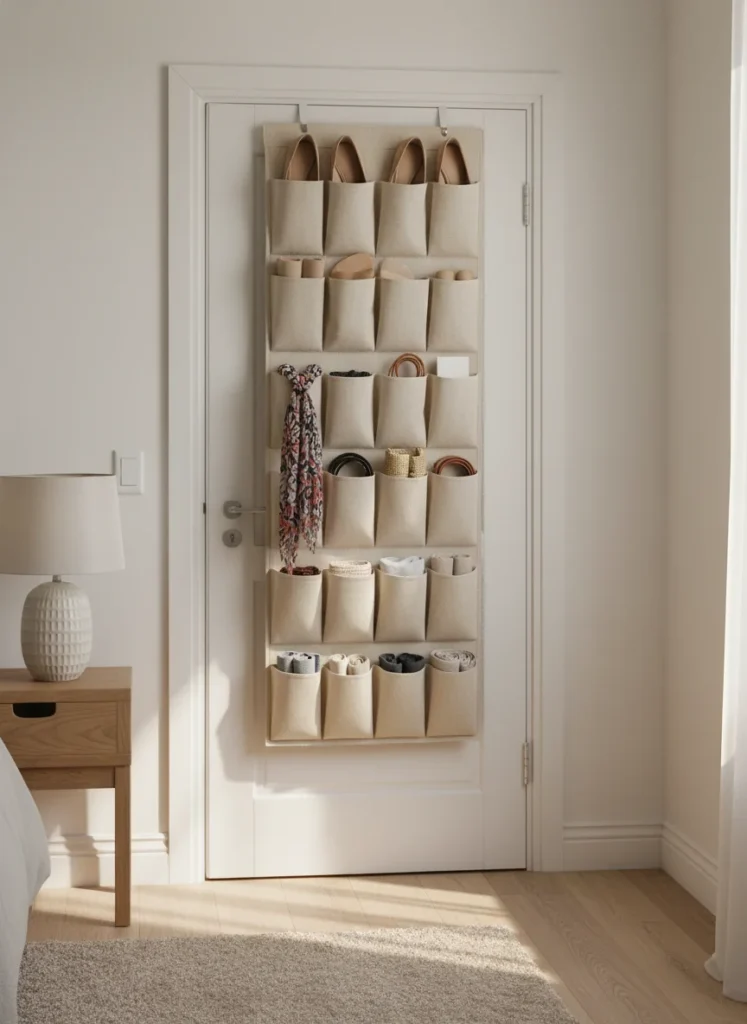
The back of the bedroom door is one of the most consistently wasted surfaces in a no-closet bedroom. An over-the-door organizer turns it into functional storage for shoes, accessories, small folded items, bags, or anything else that usually ends up on the floor or on the bed.
Choose an organizer with a canvas or linen exterior rather than clear plastic if it will be visible when the door is open. The natural material reads as decor rather than storage. Over-the-door canvas organizers with deep pockets cost $15 to $30 and can hold a surprising amount without any drilling or wall damage. That is completely okay to lean on hard in a bedroom with no other storage options.
8. A Styled Dresser That Doubles as a Nightstand
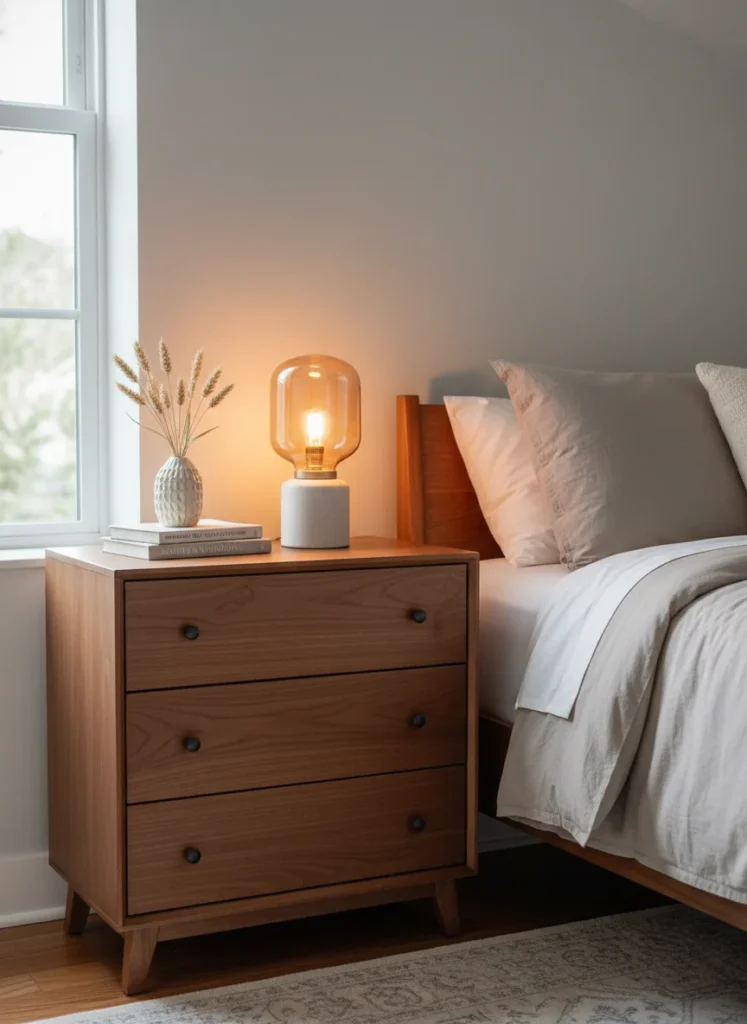
In a small bedroom with no closet, a traditional nightstand is a luxury you may not be able to afford in terms of floor space. A three-drawer dresser placed at the bedside solves the nightstand problem and adds significant drawer storage for clothes simultaneously. You get one piece of furniture doing the work of two.
The dresser top becomes your nightstand surface: lamp, a small vase, and one or two books. The drawers become your clothing storage. The key is choosing a dresser that is narrow enough to fit the space and styled well enough to look intentional. A slim, tall dresser in a warm finish works better than a wide, low one in most small bedrooms. If you are navigating a truly small room, the guide on why a small bedroom feels cramped and how to fix it covers furniture proportions in useful depth.
9. Modular Cube Shelving
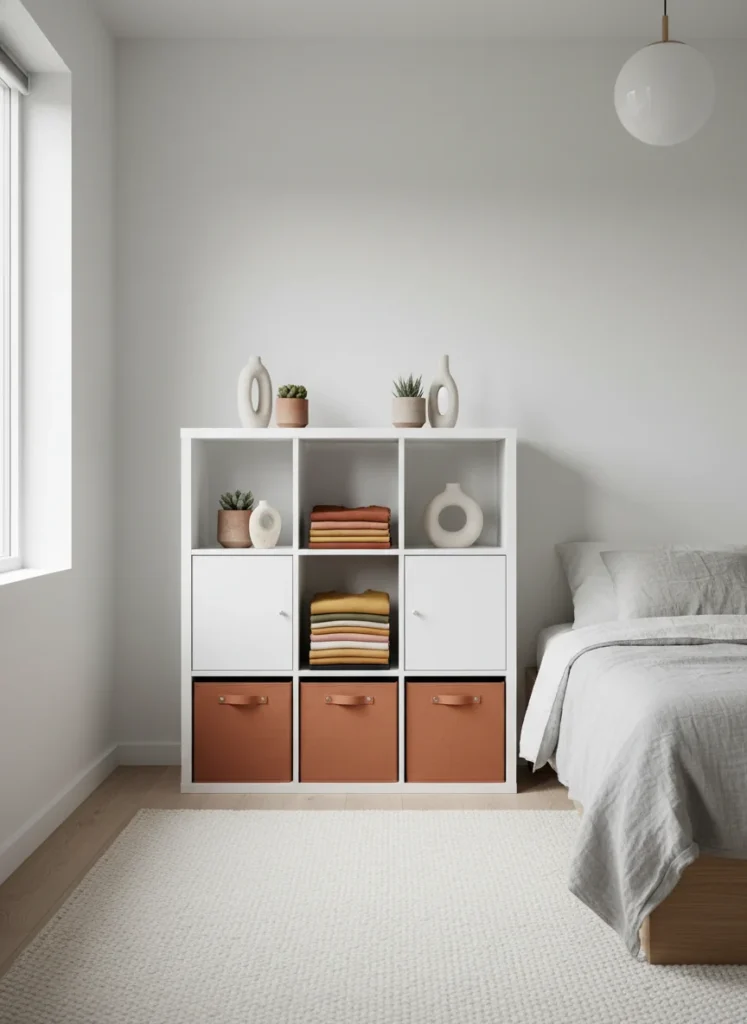
Modular cube shelving is one of the most efficient storage systems available for a small bedroom with no closet because it is endlessly configurable. A four-by-two or four-by-four grid of cubes gives you a mix of open display space and hidden storage through fabric drawer inserts, all in one clean footprint against the wall.
Use the open cubes for things that look good on display: folded sweaters by color, a plant, a few ceramics, books. Use the cubed drawers for anything you want hidden: underwear, socks, accessories, and off-season items. The combination of open and closed storage is what makes the unit look like decor rather than just shelving. A four-cube or six-cube modular shelving unit costs $40 to $80 and is one of the workhorses of the no-closet bedroom.
10. A Pegboard Wall for Accessories
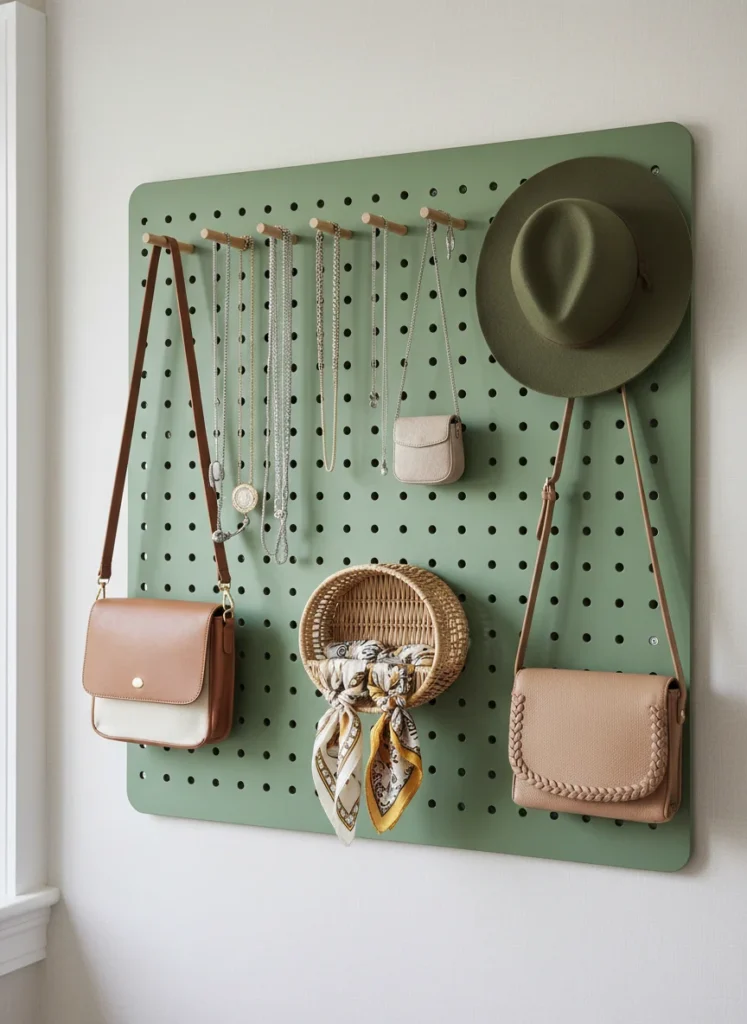
A pegboard dedicated to accessories, jewelry, bags, hats, and scarves takes all the items that would otherwise end up on chairs, door handles, and the floor and gives them a designated, visible, and visually organized home on the wall. When it is well-styled, it looks like a boutique fitting room rather than a storage solution.
Paint the pegboard before mounting it. A color that contrasts your wall, like sage green, warm terracotta, or a dark moody tone, makes it feel like a design feature. Add wooden pegs rather than metal ones for a warmer look. A pegboard organizer kit with pegs, hooks, and ledges runs $25 to $45 and is one of the most personally expressive storage solutions available in a small bedroom.
11. A Dedicated Dressing Corner
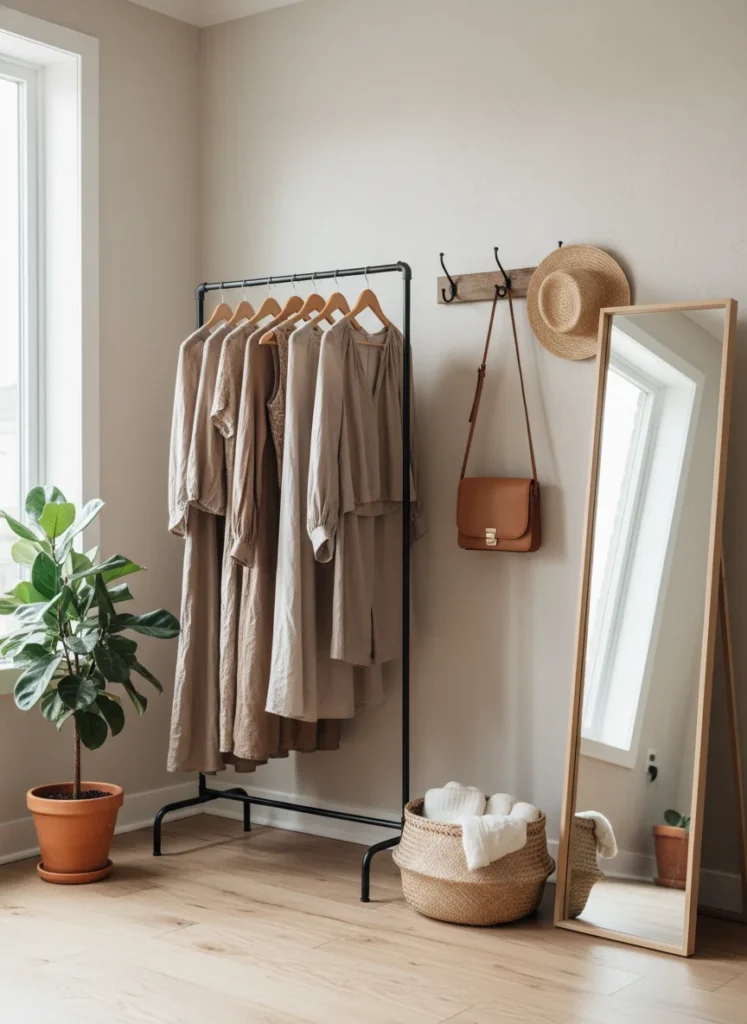
Instead of spreading storage around the room, concentrating it in one corner creates a dedicated dressing zone that reads as an intentional design choice. A corner rack, a leaning mirror, two or three wall hooks, and a small surface for accessories turns an unused corner into the most functional part of the room.
The visual clarity of having all your getting-dressed items in one place also makes the rest of the bedroom feel more restful, because nothing else is co-opted for storage duty. A full-length leaning mirror combined with a simple freestanding clothing rack is all it takes to establish the zone. Everything else follows naturally from there.
12. A Storage Bench Along the Wall
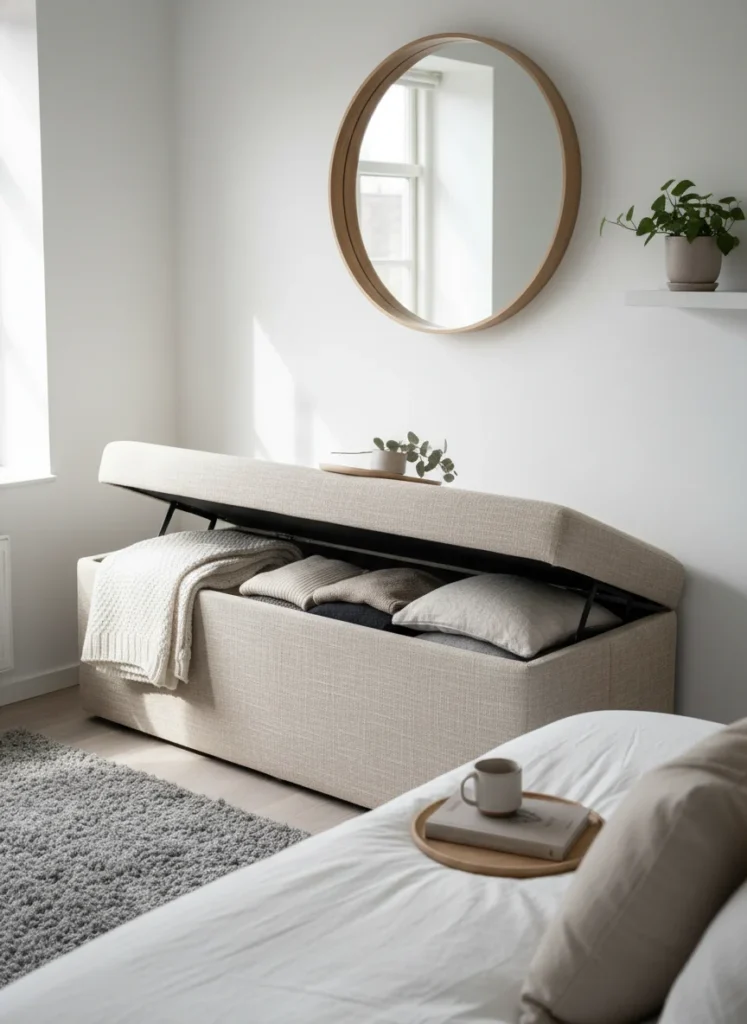
A storage bench along the wall in a small bedroom with no closet does exactly what it sounds like but looks much better than it sounds. It provides seating for getting dressed, concealed storage for bulky items, and a surface that can be styled like any other piece of furniture in the room.
In a bedroom where floor space is tight, a wall-placed bench uses a linear stretch of wall that would otherwise be dead space. Size it to about half the length of the wall where you place it for the best proportions. Upholstered storage benches with hinged lids in linen or velvet start at around $80 and add both seating and significant hidden storage capacity to any bedroom without a closet.
13. A Wall-Mounted Hooks and Rail System
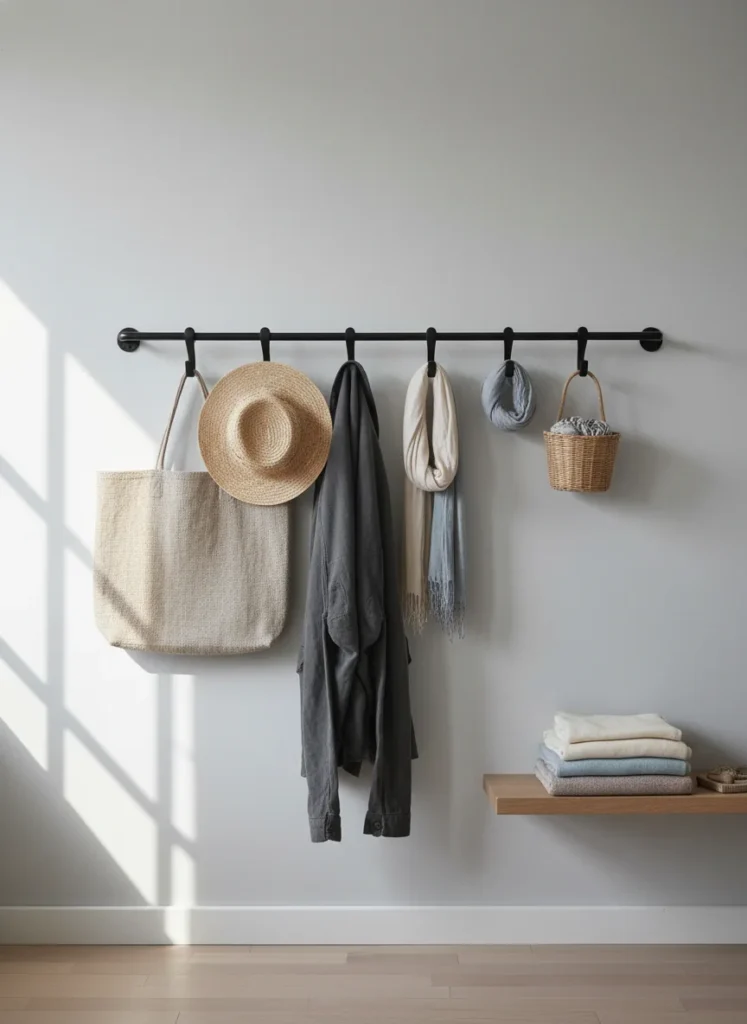
A wall-mounted rail and hooks system borrowed from Scandinavian and Japanese design traditions gives you flexible, adjustable hanging storage that looks considered on a bedroom wall. The hooks slide along the rail and can be repositioned any time, and the whole system mounts with just a few screws into studs.
Use it for daily-wear items: a jacket, a bag, tomorrow’s outfit, a hat, a scarf. These are the things that end up on the floor or on a chair in most bedrooms because there is no obvious home for them. A wall-mounted rail hook system in matte black or brass costs $25 to $50 and eliminates the daily pile-on-the-chair problem permanently. It is a small thing that makes a big daily difference.
For more ideas on making a small rented bedroom work harder without permission from a landlord, the full post on renter-friendly bedroom ideas that require zero landlord permission is worth bookmarking alongside this one. And if you are working with an especially tiny space, the post on studio apartment ideas under 400 square feet covers zone separation and multifunctional furniture that translates directly to the no-closet bedroom challenge.
Before we continue, if you’re tired of buying decor that doesn’t look right together, I created something specifically for this…
The Real Goal of Small Bedroom Ideas With No Closet
A bedroom with no closet is not a problem to solve. It is a design constraint to work with. And the best constraints produce the most intentional results, because you cannot default to hiding everything behind a door. You have to think about where things live and make those living places look good.
Pick two or three of these ideas based on what your specific bedroom needs most and what your budget allows. Start with the biggest storage gap, whether that is hanging clothes, folded clothes, or accessories, and address that one first. The rest gets easier once the main challenge has a solution.
A no-closet bedroom that is well-organized and intentionally styled is genuinely more interesting to be in than one with a perfectly adequate closet and no thought put into the rest of the space. That is completely okay to feel proud of.