
This post contains affiliate links. If you buy something through my links, I may earn a small commission at no extra cost to you. I only recommend things I genuinely use or believe in.
Everything you have been told about dark colors in a small bedroom is probably wrong. The rule that says small rooms need light colors to feel bigger is real in some contexts and completely misleading in others. The truth is more interesting, and for people who love moody, dramatic spaces, it is also genuinely reassuring.
So, should you use dark colors in a small bedroom? The short answer is yes, under specific conditions that are easier to meet than you think. Here are nine dark bedroom looks that make small rooms feel bigger, not smaller, and exactly why each one works.
💡 Before you start decorating, see how your room could look with AI.
🏡 See Your Room Before You Spend a Dollar
Still wondering if that new furniture, paint color, or decor style will actually look good in your space?
- Upload a photo of your room and let AI instantly generate beautiful design ideas.
- Explore different interior styles, furniture layouts, and color combinations before you spend a single dollar.
Why Dark Colors Can Make a Small Bedroom Feel Bigger
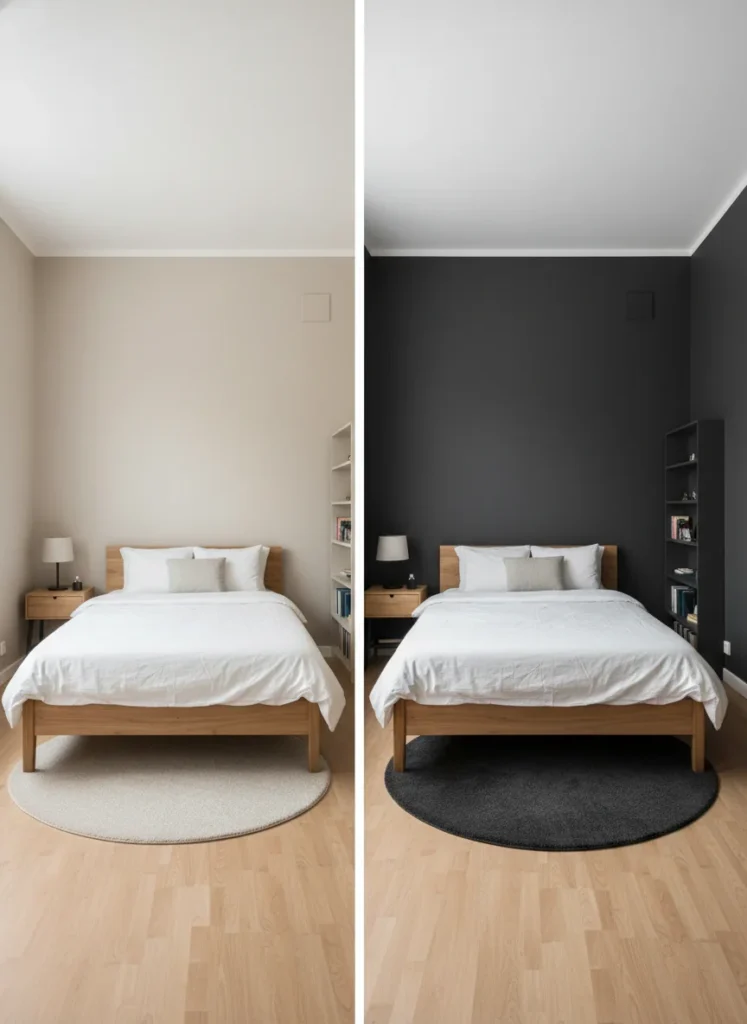
Here is the counterintuitive truth about dark colors in a small bedroom: when a wall is dark, it recedes. Your eye cannot find the boundary between the wall and the shadow, so the wall appears to be further away than it actually is. Light walls, by contrast, are highly visible; you can see exactly where they are, which means you are always aware of how close they are to you.
Interior designers have understood this for decades. A room painted in a single deep tone from floor to ceiling, walls, ceiling, trim loses its edges. The corners disappear. The room stops feeling like a box and starts feeling like an atmosphere. That is why the answer to “should you use dark colors in a small bedroom” is almost always yes, as long as you do it correctly.
The conditions that make dark colors work in small bedrooms are straightforward: adequate light sources, light bedding to provide contrast, and a commitment to the full approach rather than a half-hearted single dark wall in an otherwise beige room.
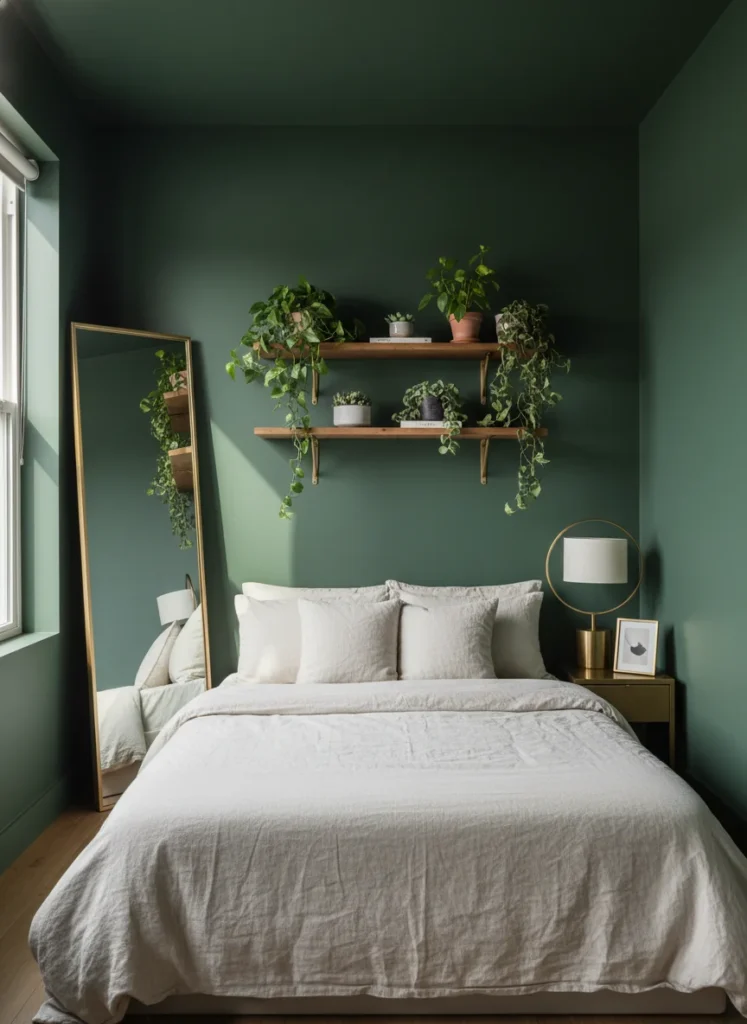
1. Deep Forest Green With Cream Bedding
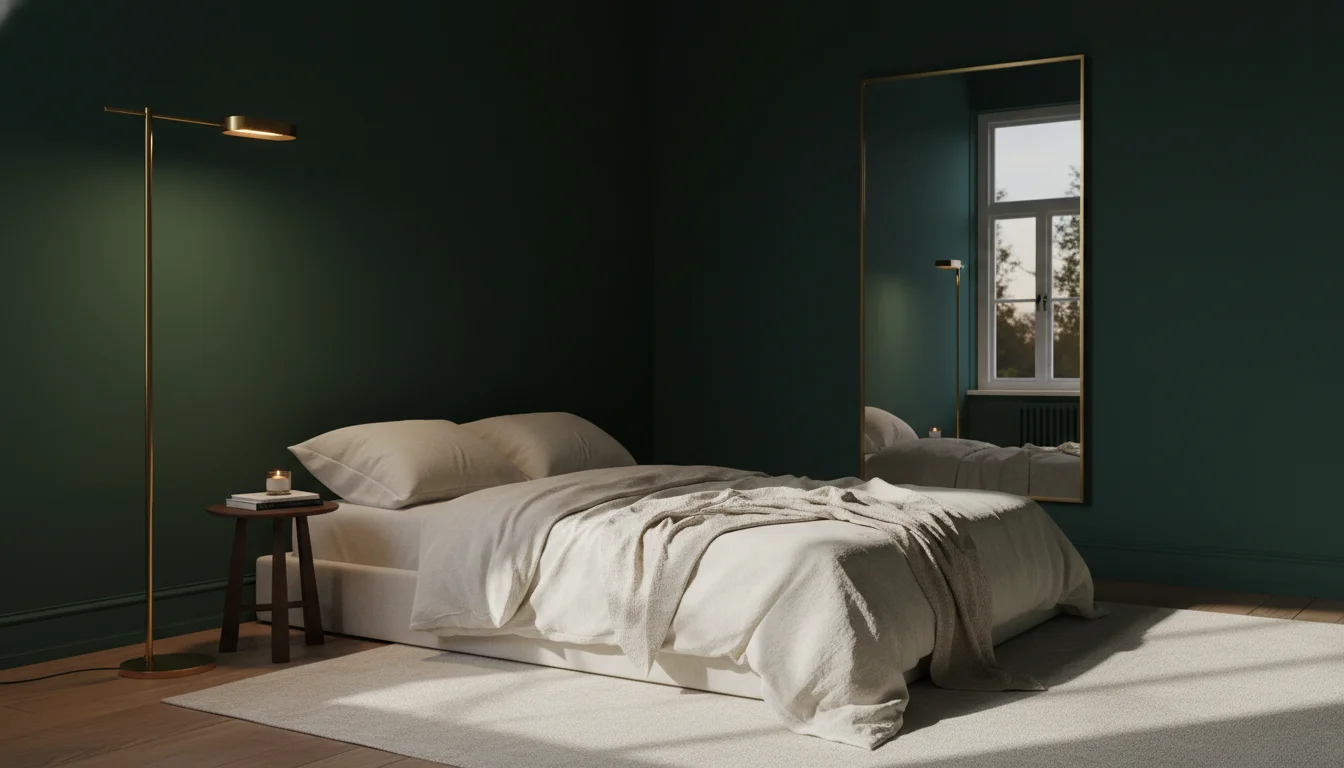
Forest green is one of the most consistent dark colors used successfully in small bedrooms. It reads as organic and grounding rather than heavy, which means even in a compact room, it does not feel oppressive. The key pairing is light bedding, cream, oatmeal, or warm white; that provides enough contrast for the eye to read the bed as a separate, bright focal point within the dark room.
The contrast is what makes this work. A dark green room with dark green or patterned bedding merges into itself and loses the spatial clarity that makes the room feel larger. Light bedding against dark walls creates a clear visual hierarchy: the walls recede and the bed advances. Deep green peel-and-stick wallpaper or a forest green duvet as the accent element works beautifully against lighter walls if going full dark is a step too far right now.
For renters asking whether you can achieve this without painting, the answer is yes. The renter-friendly apartment makeover guide covers peel-and-stick wallpaper as a full dark-wall solution that removes cleanly.
2. Charcoal Gray Floor to Ceiling
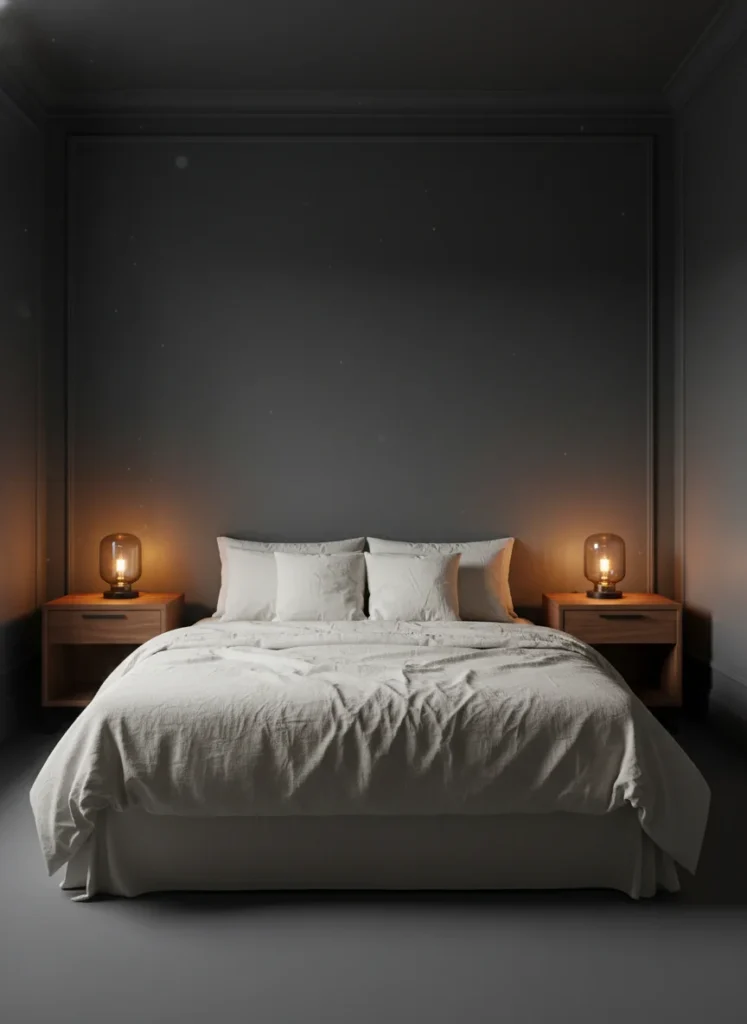
The single most powerful application of dark color in a small bedroom is painting everything the same shade: walls, ceiling, trim, and all. This approach eliminates every visible edge and corner. The room stops being a defined box and becomes an immersive environment. Your eye cannot measure what it cannot find the edges of.
Charcoal gray is the most forgiving dark color for this treatment because it reads as neutral. It does not compete with bedding, art, or furniture the way a strongly tinted dark (like deep plum or navy) might. A single-tone charcoal room with warm wood furniture and cream bedding is one of the most sophisticated looks achievable in a small bedroom, and it costs exactly the same as painting the walls beige.
This is also the look where lighting matters most. A charcoal room with only overhead lighting feels like a cave. A charcoal room with layered warm lighting, a bedside lamp, a floor lamp, LED strip lights; feels like a boutique hotel. The dark color amplifies whatever light you give it.
3. Navy Blue With Natural Wood Accents
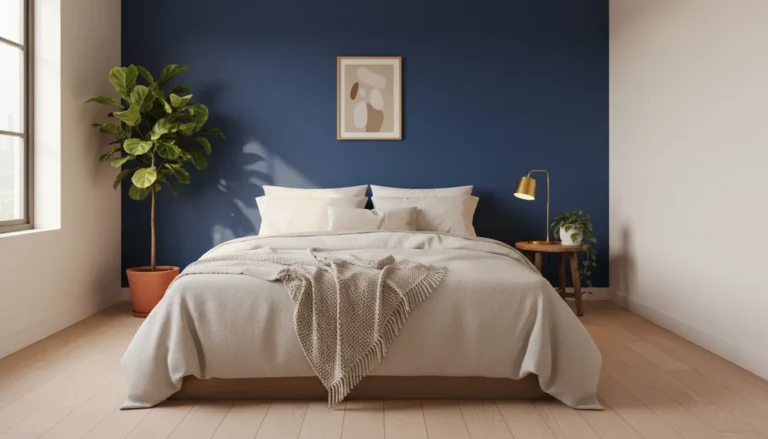
Navy blue bedrooms photograph beautifully and feel expansive in person for the same reason as charcoal: the walls recede and create depth. The challenge with navy in a small room is that it can skew cold if not balanced with warmth. Natural wood furniture, linen bedding in warm cream or oatmeal, and warm-toned lighting bulbs solve this completely.
A navy bedroom with light oak or warm walnut furniture has the contrast and warmth balance that keeps the room feeling cozy rather than cold. A navy bedding set against lighter walls is the lower-commitment version for those not ready to paint, and it delivers much of the same visual richness with far less permanence.
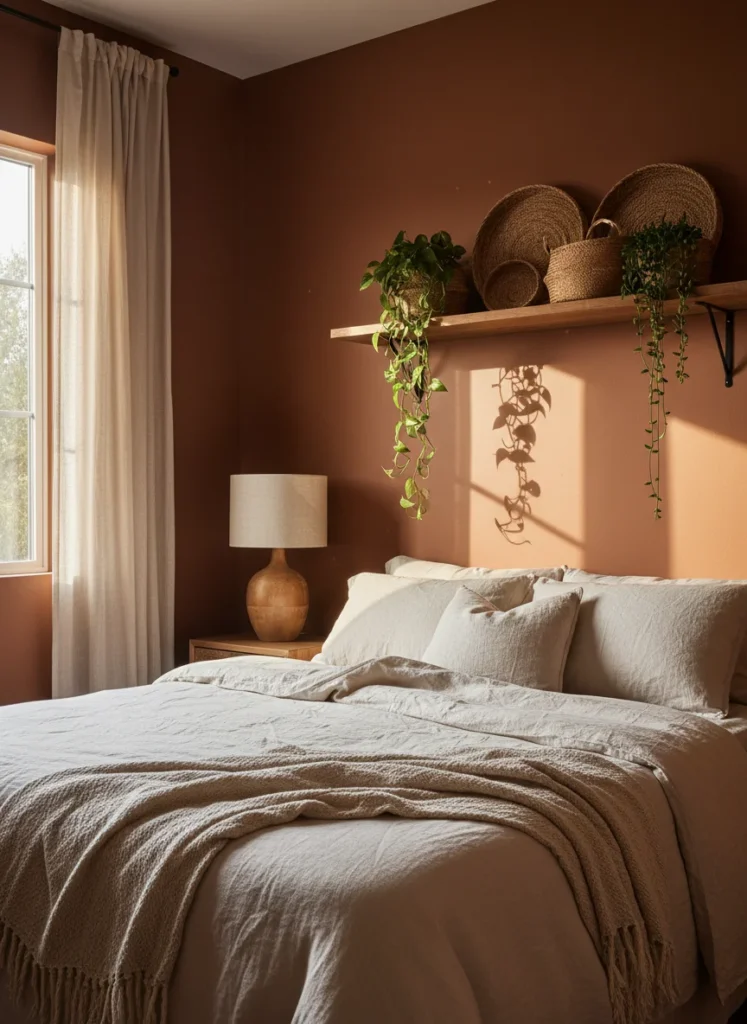
4. Deep Terracotta for Warmth That Expands
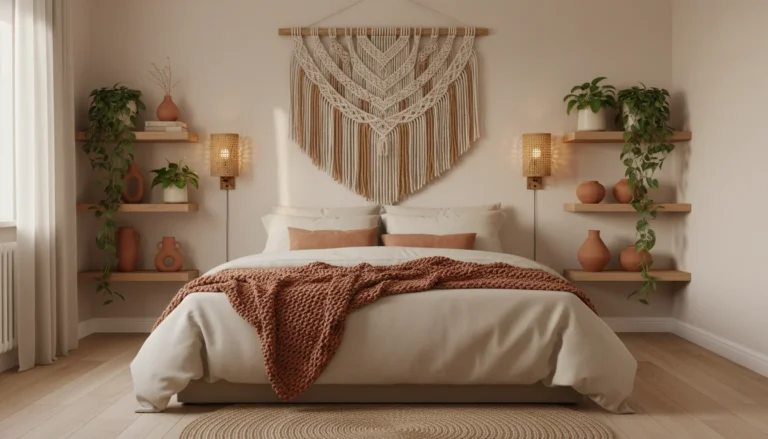
Terracotta sits in a unique position among dark colors for small bedrooms. It is warm-toned rather than cool, which means it does not create the cold, contracting feeling that some dark blues or grays can in rooms without good natural light. Deep terracotta reads as earthy and rich. The room feels like it has been wrapped in warmth rather than painted into a corner.
For small bedrooms with limited natural light especially, terracotta is one of the best answers to the question of should you use dark colors in a small bedroom. The warmth it generates compensates for what the room lacks in sunlight. Pair it with cream bedding, woven textures, and plants for the full warm maximalist effect that makes small rooms feel like a considered retreat rather than a compromise.
Terracotta is also the signature color thread running through most of the looks on this site. It is one of the most versatile warm tones in small-space decorating, and the full color palette guide in the 2026 dopamine decorating color palette breakdown explains exactly how to use it alongside other tones without overwhelming a small room.
5. Moody Sage Green That Feels Bigger Than It Is
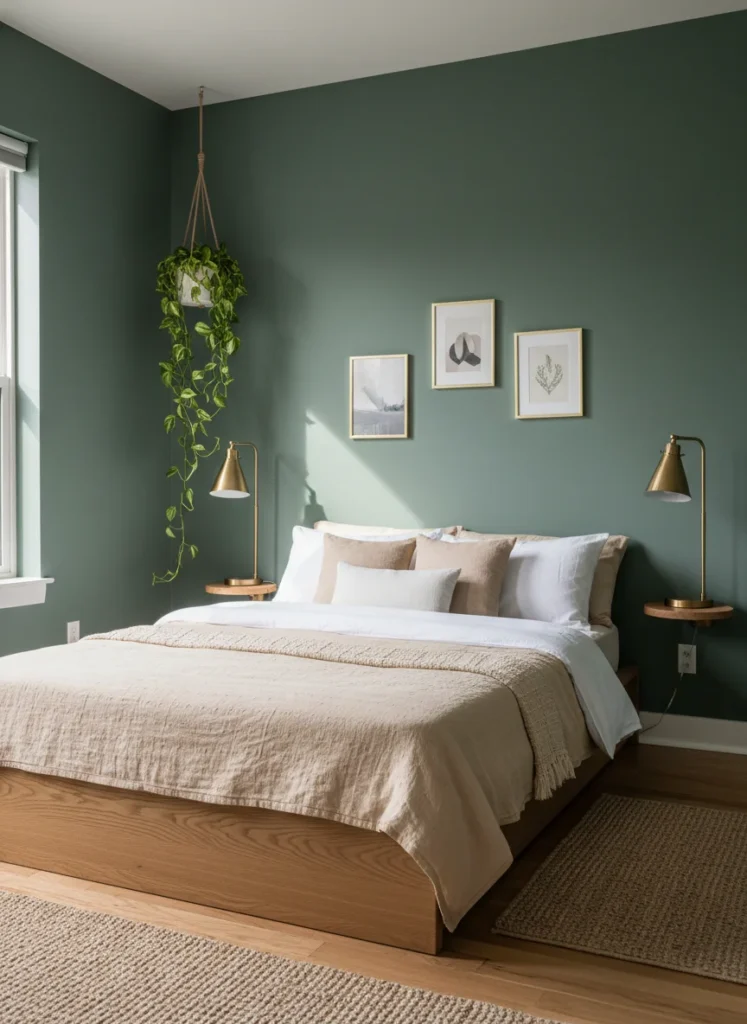
Sage green occupies the middle ground between a true dark and a muted neutral, and in a small bedroom it often works better than either extreme. Deep sage is dark enough to make the walls recede and create the spatial illusion of a larger room, but warm and organic enough to feel soft rather than dramatic. It is the dark color for people who are not sure they want a dark color.
A deep sage bedroom with cream and natural linen bedding, wooden furniture, and brass hardware reads as effortlessly sophisticated. It also photographs extremely well, which matters if you are styling a space you want to document and share. Deep sage peel-and-stick wallpaper on a single feature wall behind the bed delivers the spatial and aesthetic effect without committing to a full paint job.
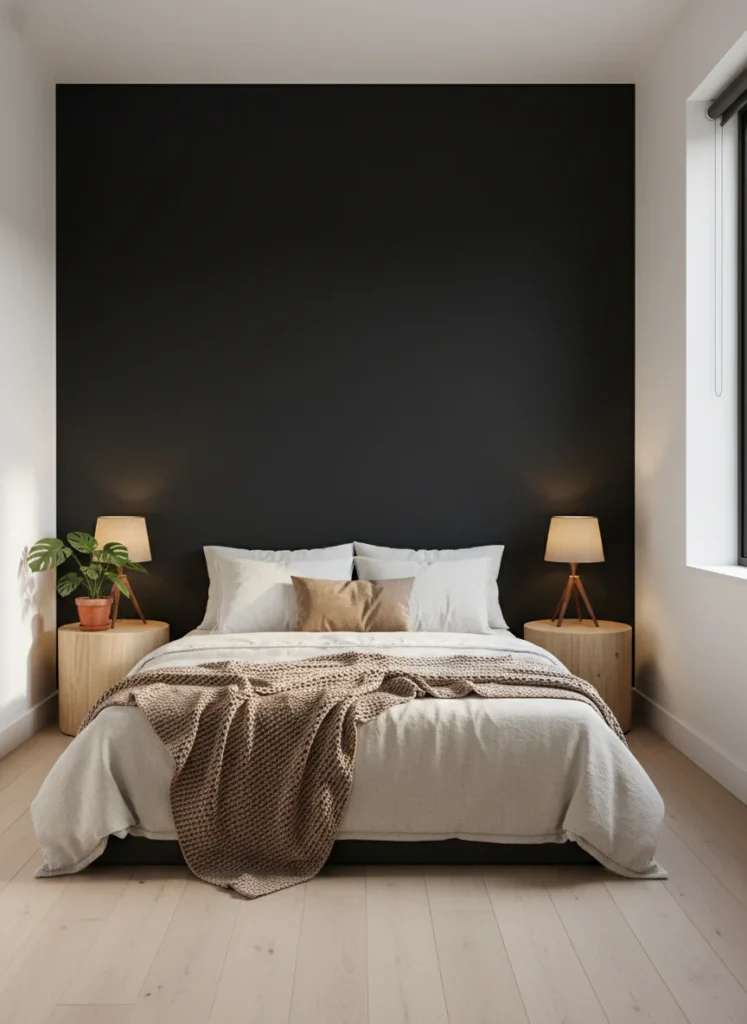
6. Black as an Accent Wall Behind the Bed
Black as a full bedroom color is a bold move that works in small rooms under the right conditions. Black as an accent wall behind the bed is a slightly more approachable version and one that delivers most of the same visual impact. The black wall recedes dramatically, pushing the headboard and the bed forward visually and creating the illusion of significant depth behind the sleeping area.
The wall behind the bed is already the room’s natural focal point. Painting it black amplifies that focal point and makes everything in front of it, light bedding, warm lamps, a plant on the nightstand, pop with contrast. It also makes the room feel designed, not decorated. Black removable wallpaper works for renters who cannot paint and creates the same striking contrast without any permanent commitment.
7. Deep Plum for the Bedroom Nobody Expects
Deep plum or aubergine is an underused dark bedroom color that sits in a compelling middle zone between warm and cool. It reads as rich and romantic without the coldness of deep blue or the starkness of black. In a small bedroom, it creates an intensely cozy atmosphere that makes the room feel deliberately intimate rather than accidentally small.
The bedding pairing that works here is dusty pink, blush, or warm cream rather than stark white. Cool white against plum reads as high-contrast and a little clinical. Warm blush tones against plum read as considered and cohesive. One blush or dusty rose duvet against deep plum walls is the combination that stops people in the doorway.
8. Dark Wallpaper Instead of Paint for Renters
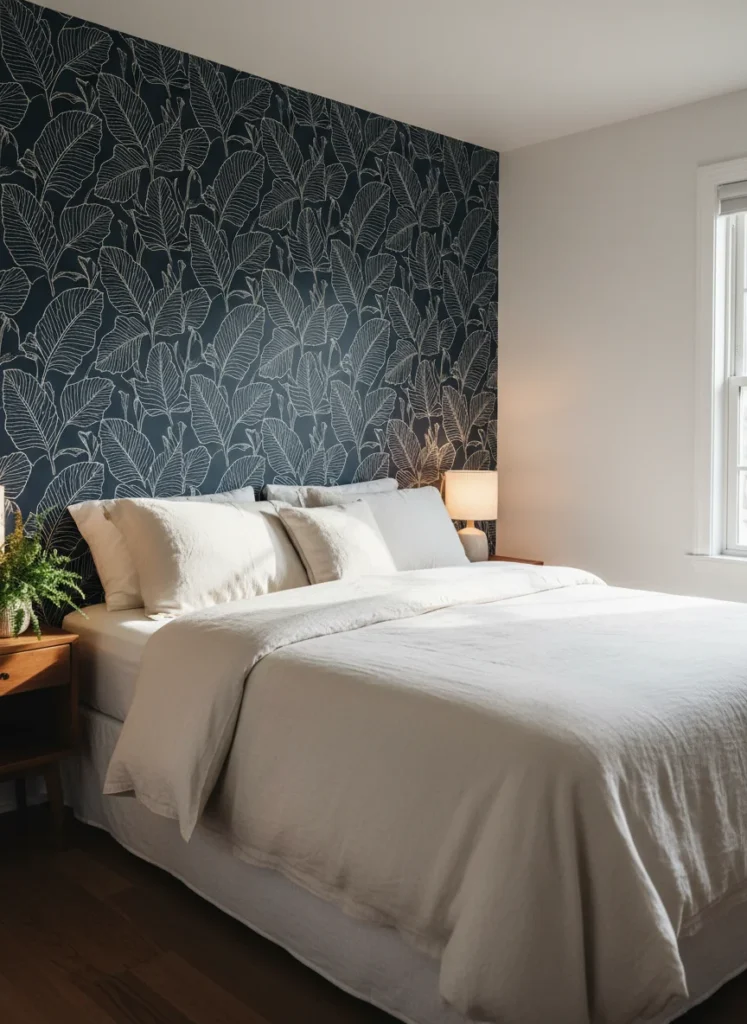
The most practical answer for renters asking should you use dark colors in a small bedroom is: yes, and here is how to do it without your landlord ever finding out. Peel-and-stick wallpaper in dark botanical, geometric, or textural prints delivers the full visual impact of a dark bedroom without a single drop of paint.
Applied to the wall behind the bed, removable dark wallpaper creates a focal point and a sense of depth that transforms the entire room’s character. The best prints for small rooms are those with an all-over pattern in dark tones with light details, a dark navy botanical with cream flowers, a deep forest print with warm leaf outlines, because the light details within the pattern reflect a little light back into the room. Dark botanical removable wallpaper is one of the most searched-for renter-friendly bedroom upgrades for exactly this reason.
The full approach to renter-friendly dark aesthetics, including peel-and-stick application tips and what to avoid, is covered in how to try bold color and dark aesthetics without painting.
9. Dark Ceiling Only for Maximum Drama
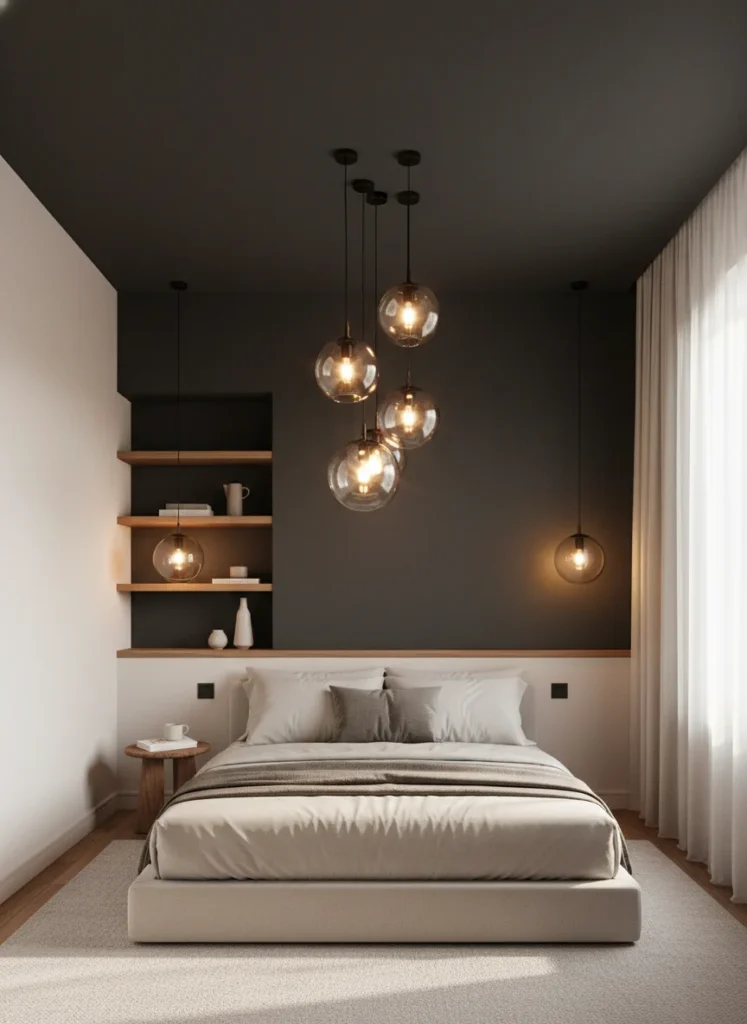
One of the most visually impactful and least expected applications of dark color in a small bedroom is painting only the ceiling. A dark ceiling, deep charcoal, navy, or forest green, while keeping the walls light, creates a canopy effect that makes the room feel enclosed in the best way, like sleeping under a night sky.
The spatial effect is the opposite of what most people expect. Rather than making the ceiling feel lower, a dark ceiling reads as receding upward, particularly when the walls below are light. The contrast between the light walls and the dark ceiling draws the eye upward and creates a sense of height rather than compression. It is one of the most sophisticated moves in small bedroom design and it is almost never discussed.
For renters, a dark ceiling canopy using fabric panels or a draped ceiling treatment achieves a very similar effect without paint. Four ceiling hooks and a length of deep-toned sheer fabric creates the same cocooning, sky-like overhead visual that a painted dark ceiling does. The effect on a small bedroom’s atmosphere is immediate and significant.
Before we continue, if you’re tired of buying decor that doesn’t look right together, I created something specifically for this…
Should You Use Dark Colors in a Small Bedroom? Yes, With One Condition.
The condition is lighting. A dark small bedroom without intentional layered lighting will feel like a cave. A dark small bedroom with warm, multi-source lighting, bedside lamps, a floor lamp, and strip lights will feel like the most beautiful room in your home.
Every one of the nine looks in this list works because the dark color was paired with enough warm light to make it glow rather than absorb. Get the lighting right and the dark color will do exactly what it promises: make your walls disappear and your room feel twice as large as it actually is.
If your bedroom currently feels cramped regardless of color, the specific culprits are almost always fixable. The full diagnostic guide covering every reason a small bedroom feels cramped, from curtain height to furniture legs to rug sizing, is in this complete breakdown of how to make a small bedroom feel bigger.