
This post contains affiliate links. If you buy something through my links, I may earn a small commission at no extra cost to you. I only recommend things I genuinely use or believe in.
There is a specific kind of tired that comes from living in a room with no natural light. It is not just that the room looks dim. It is that you walk in at noon and your body does not know what time it is. Your brain registers something is missing. Your mood takes a quiet hit before you have even sat down. I know this feeling well because I spent two years in an apartment with one small north-facing window that was half-blocked by the building next door. On bright days it let in a thin gray stripe. On cloudy days it did nothing at all. I tried every generic tip I found online and most of them missed the point entirely. So I want to give you what actually worked, with real specifics, because small living room no natural light ideas deserve more than “use light colors and add a mirror.”
The problem is not only aesthetic. Chronic low light affects circadian rhythms, raises cortisol, and genuinely flattens mood over time. Solving it well means thinking about your nervous system as much as your decor. The good news is that every single idea below makes a measurable difference, and most of them cost less than a dinner out.
💡 Before you start decorating, see how your room could look with AI.
🏡 See Your Room Before You Spend a Dollar
Still wondering if that new furniture, paint color, or decor style will actually look good in your space?
- Upload a photo of your room and let AI instantly generate beautiful design ideas.
- Explore different interior styles, furniture layouts, and color combinations before you spend a single dollar.
Lighting: The Foundation of Every Dark Room
1. Switch Every Bulb to 2700K Warm White LEDs
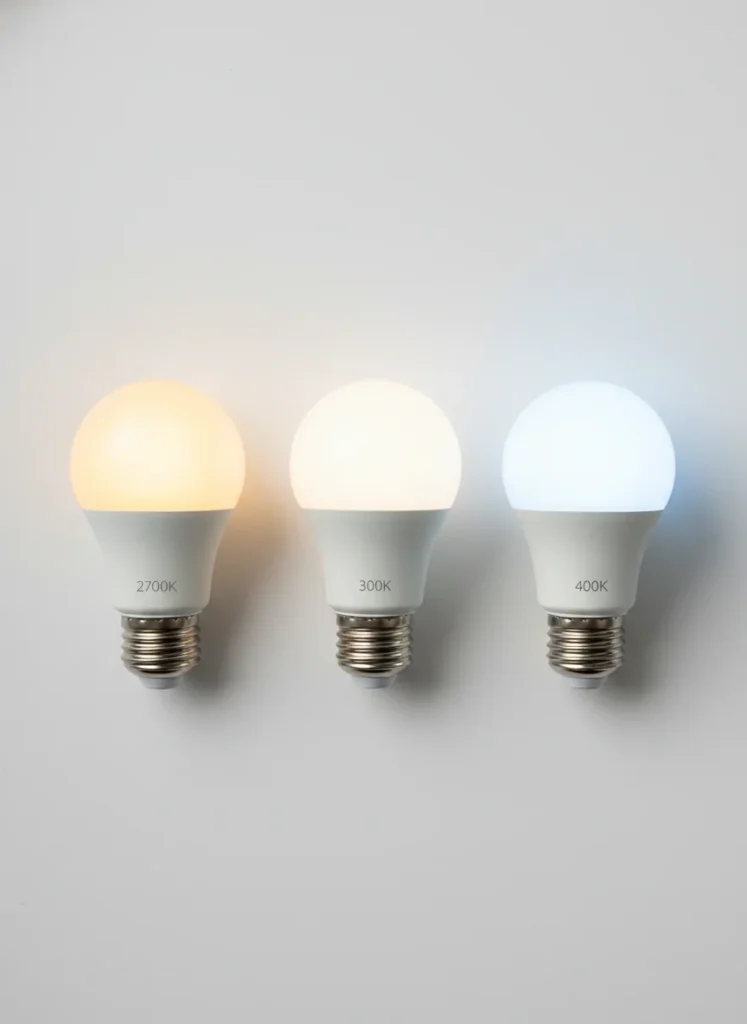
Color temperature is the single most important variable in a dark room, and almost no one talks about it with enough precision. The number on a bulb box — measured in Kelvin — tells you how warm or cool the light appears. Most apartments come pre-fitted with whatever the landlord bought cheaply, which is often 4000K (a cool, bluish-white) or 5000K (daylight). In a room with no natural light, those tones look harsh and clinical. They do not compensate for the missing sun. They just make the absence feel more obvious.
2700K is the sweet spot. It is the color of an incandescent bulb, amber and golden, close to candlelight but still functional. When you pair 2700K bulbs with warm white walls, the room glows instead of just being lit. 3000K is acceptable and works well in task-heavy areas like a reading nook, but in a living room with no windows, the extra warmth of 2700K reads as comfort rather than compromise. Swap every single bulb in the room, including floor lamps, table lamps, and any overhead fixture. Mixing temperatures in one room creates a visual choppiness that makes the space feel unsettled. Go all in on 2700K LEDs throughout and the whole room becomes cohesive.
2. Layer Three Types of Light (Ambient, Task, and Accent)
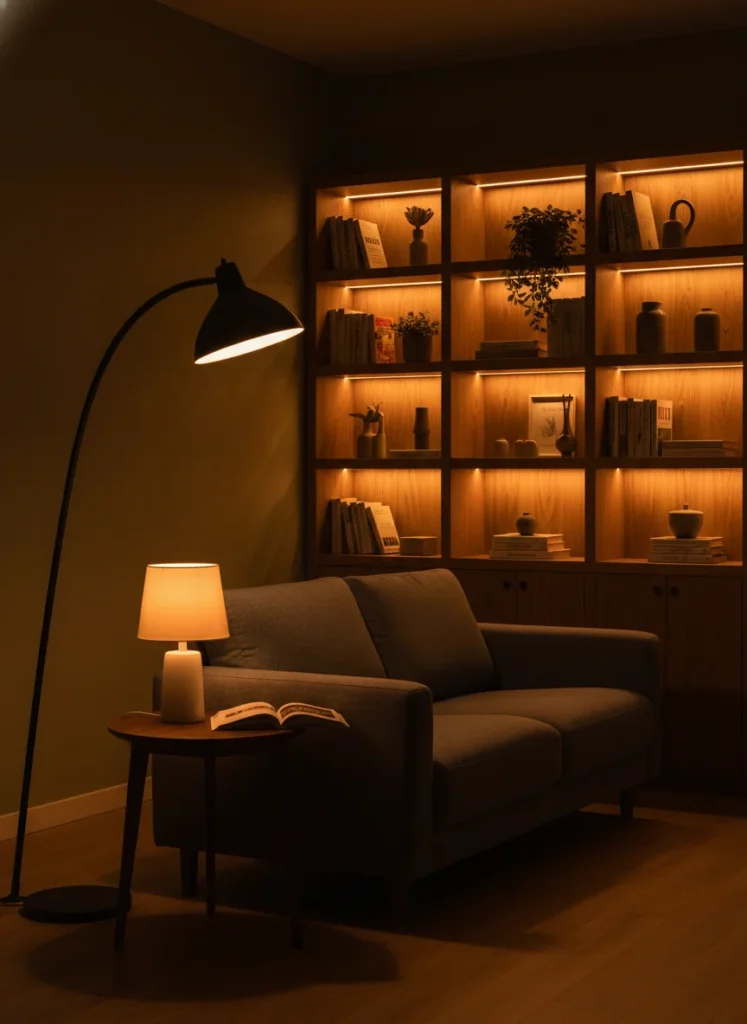
Most no-light rooms have one overhead fixture and nothing else. That single source casts everything below it in shadow and gives the room a flat, institutional quality no amount of throw pillows can fix. Lighting designers work with three layers: ambient (the room’s base illumination), task (focused light for reading or working), and accent (light that creates depth and draws the eye to specific areas). In a room without windows, you need all three actively working.
Ambient light comes from your floor lamp or a ceiling fixture on a dimmer. Task light is your table lamp next to the sofa or a reading lamp behind a chair. Accent light is a strip of warm LEDs tucked behind a TV unit, a small spotlight aimed at a piece of art, or a candle cluster on a coffee table. When all three are on simultaneously, the room reads as layered and dimensional rather than artificially lit. This is one of the most impactful small living room ideas designers use in spaces without natural light, and it costs less than most people expect to implement.
3. Place a Large Mirror Directly Across From Your Brightest Artificial Light Source
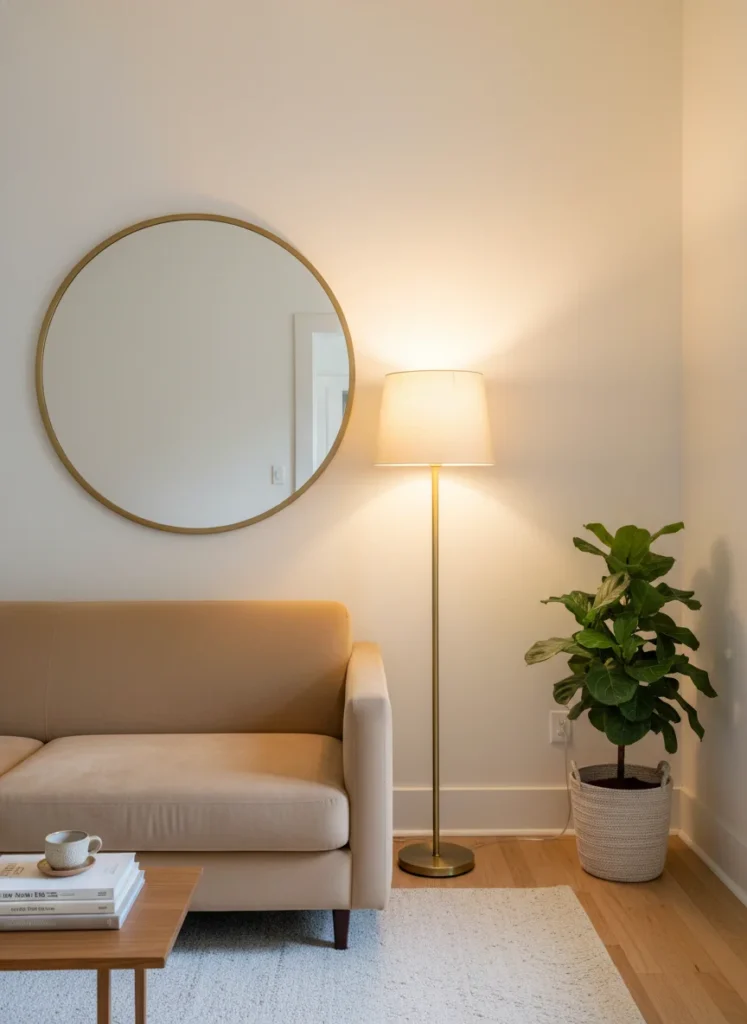
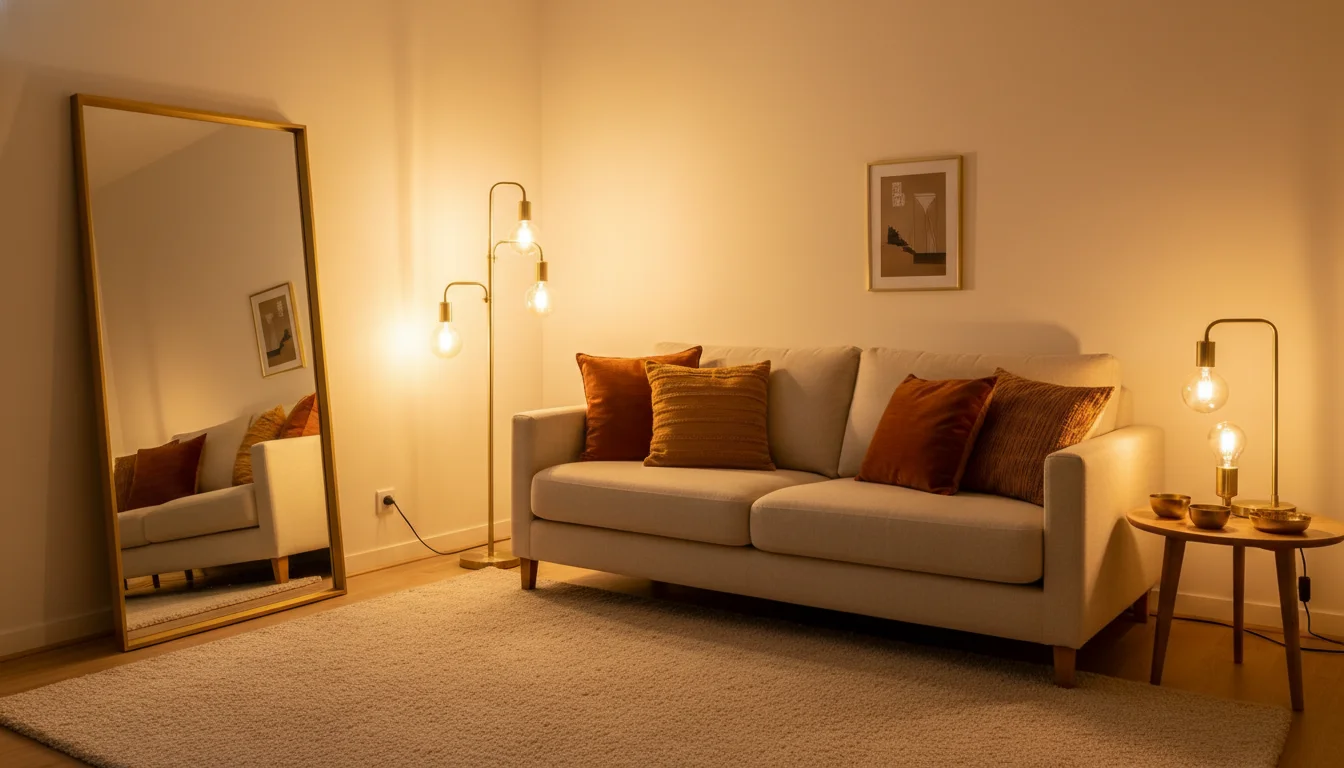
Every guide on mirrors says the same thing: hang it across from a window. That advice is useless if you do not have a window. Here is the reframe for dark rooms: a mirror multiplies whatever light source you give it. Place your largest mirror directly across from your brightest lamp, not across from a wall, and it doubles the perceived luminosity of the room. The mirror reflects the light source itself, which means the lamp appears to have a twin and the room suddenly has two sources of warm glow instead of one.
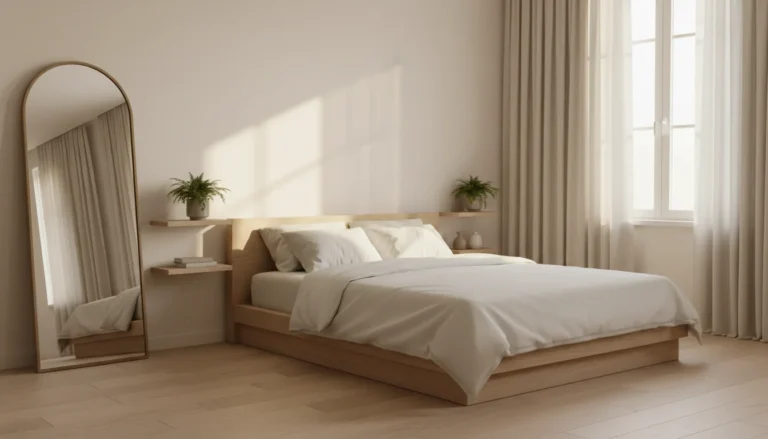
Size and placement both matter more than frame style. A large round or rectangular mirror at least 24 inches wide works far better than a cluster of small mirrors, which scatter light unpredictably. Lean it against the wall at floor level for a casual look, or hang it at eye level if you want the reflection to land squarely on the lamp’s light. Avoid mirrors placed on the same wall as the lamp or at a perpendicular angle — they reflect shadow rather than light and can actually make the room feel darker.
4. Choose a Light-Colored Rug With Low Pile
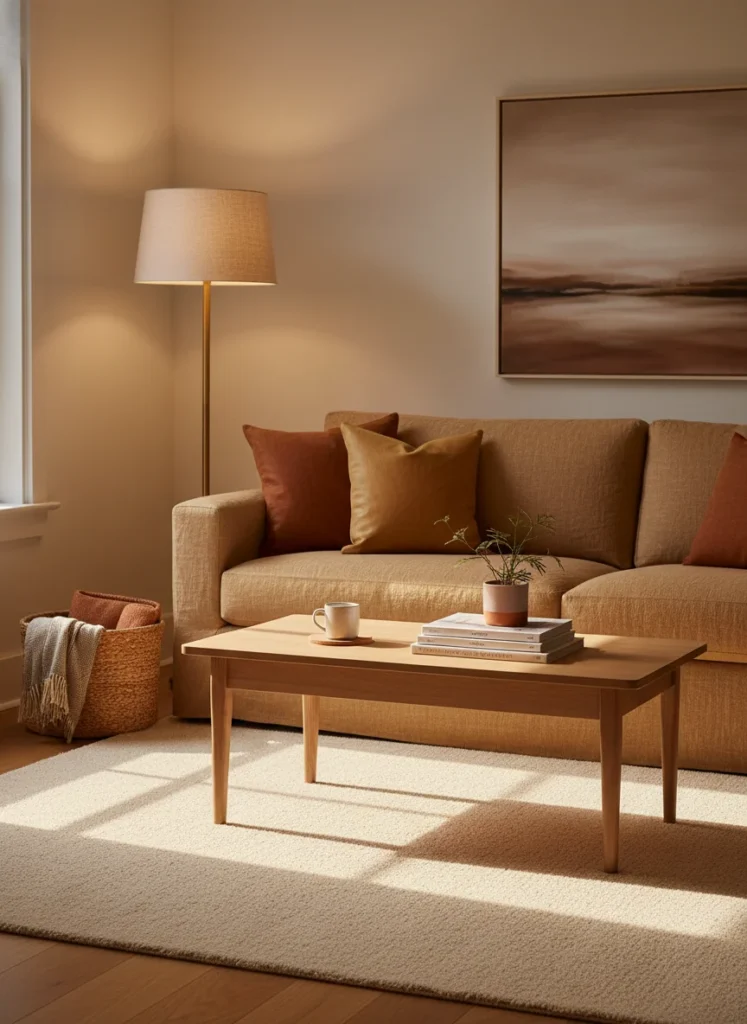
The floor is a huge reflective surface that most people treat as purely decorative. In a dark room, your rug choice is actually a lighting decision. A dark, high-pile rug — think charcoal shag or navy wool boucle — absorbs the light your lamps produce and turns the floor into a light-eating void. A light-colored, low-pile rug in cream, warm ivory, or pale warm beige does the opposite: it bounces light upward, subtly illuminating the lower half of the room and making it feel more open.
The fiber type matters too. Synthetic low-pile rugs and flat-weave cotton rugs have a slight sheen that reflects light. Natural high-pile fibers like thick wool or shaggy jute absorb more light due to the shadow created between fibers. For a dark room, a cream or warm ivory low-pile rug is not just an aesthetic choice — it is a functional one. It quietly amplifies every bulb you have.
5. Use a Floor Lamp That Is at Least 5.5 Feet Tall
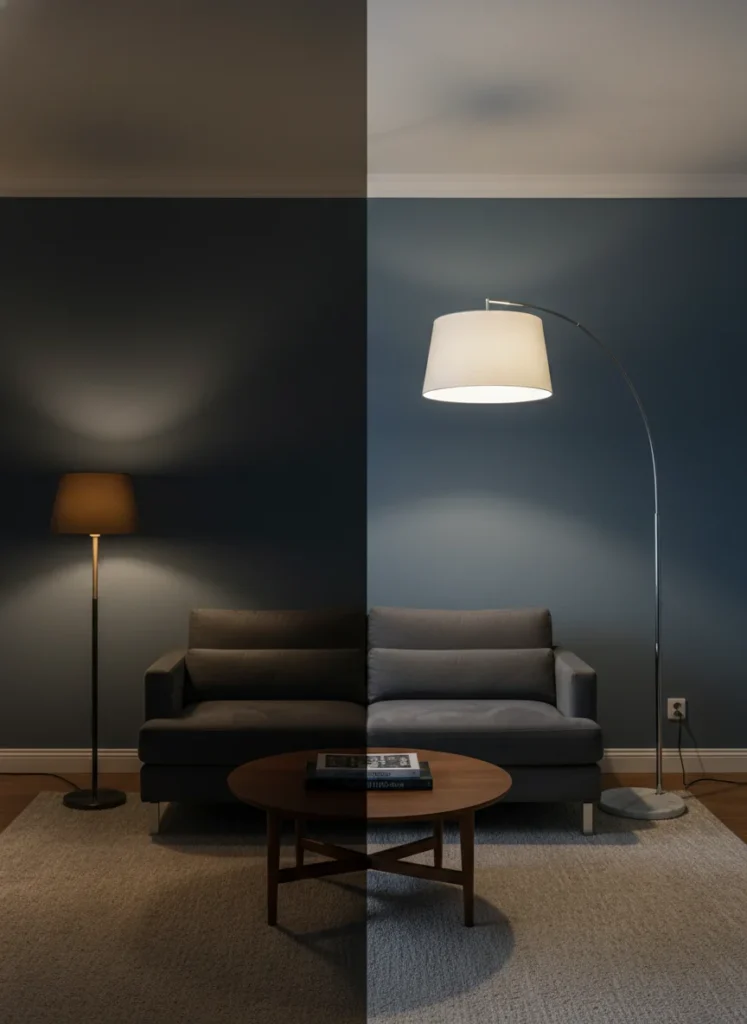
Lamp height is something I learned the hard way. I bought a compact floor lamp because it fit neatly beside the sofa. It made my apartment feel like a cave. The pool of light sat exactly at seated eye level, which meant my vision stopped there; the ceiling above was dim and irrelevant, and the room felt low and compressed. A tall lamp, ideally 5.5 to 6 feet or more, throws light upward into the upper half of the room and illuminates the ceiling plane. That ceiling brightness makes the room feel taller and more airy even if it is small.
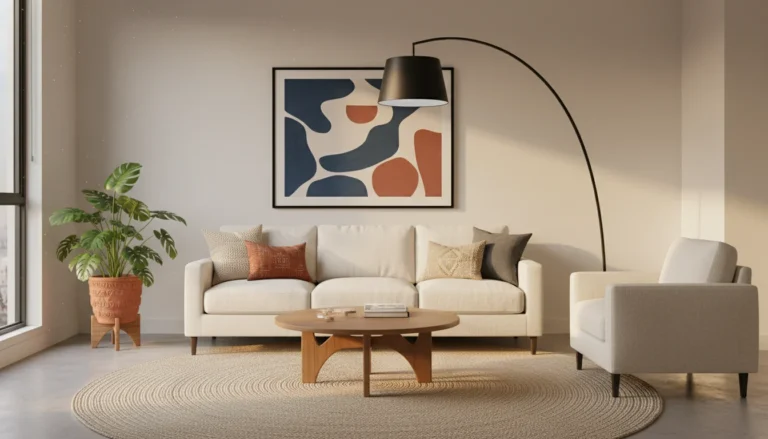
An arc floor lamp that reaches over the sofa is even better because it positions the light source above your head, mimicking the angle of natural overhead light far more convincingly than a lamp that sits beside you at chest height. In a no-light room, this single change makes more difference than any amount of throw pillows or decorative objects.
6. Add Plug-In Under-Shelf LED Strip Lights
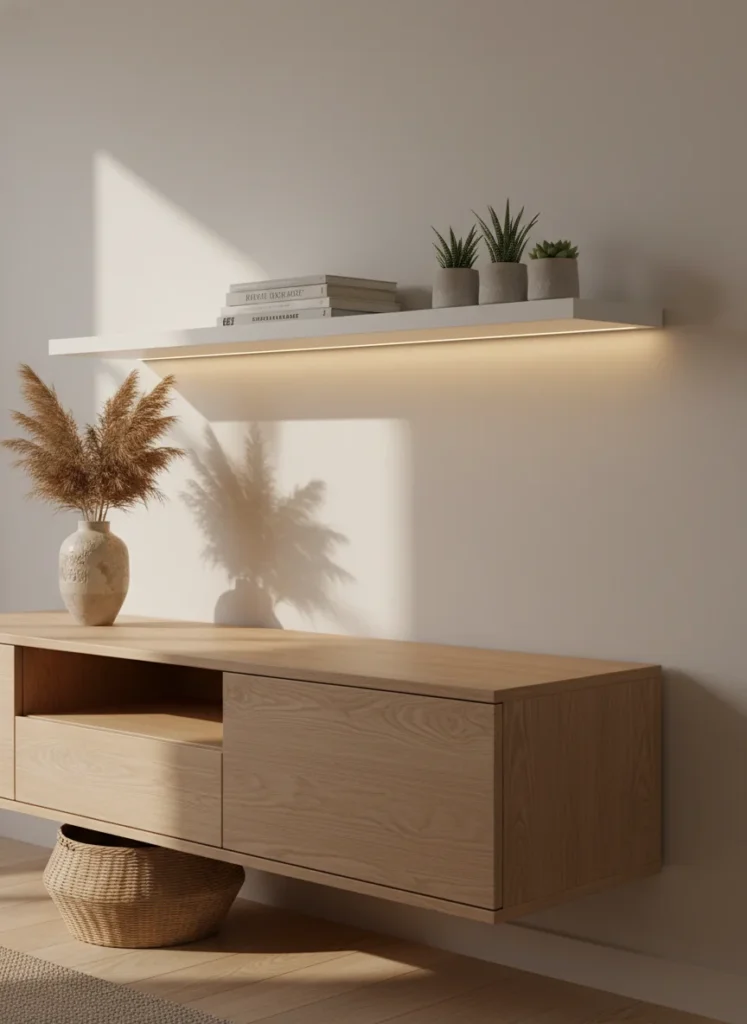
Under-shelf LED strips are one of those small investments that look ten times more expensive than they are. Tucked underneath a console, a TV unit, a bookshelf, or a floating wall shelf, warm white strip lights create a glow that appears to lift the furniture off the floor. That floating effect adds visual depth to a dark room and breaks up the monotony of a single overhead or floor lamp source.
The key is to use warm white strips only, never cool white or multi-color RGB. A plug-in warm white LED strip around 2700K to 3000K creates that honeyed glow that reads as intentional rather than functional. Run them under your lowest piece of furniture too — the thin line of light at floor level creates an illusion of a raised floor and makes the room feel grounded and designed.
Walls, Paint, and Visual Expansion
7. Paint the Walls a Warm White (Not Cool White, Not Gray)
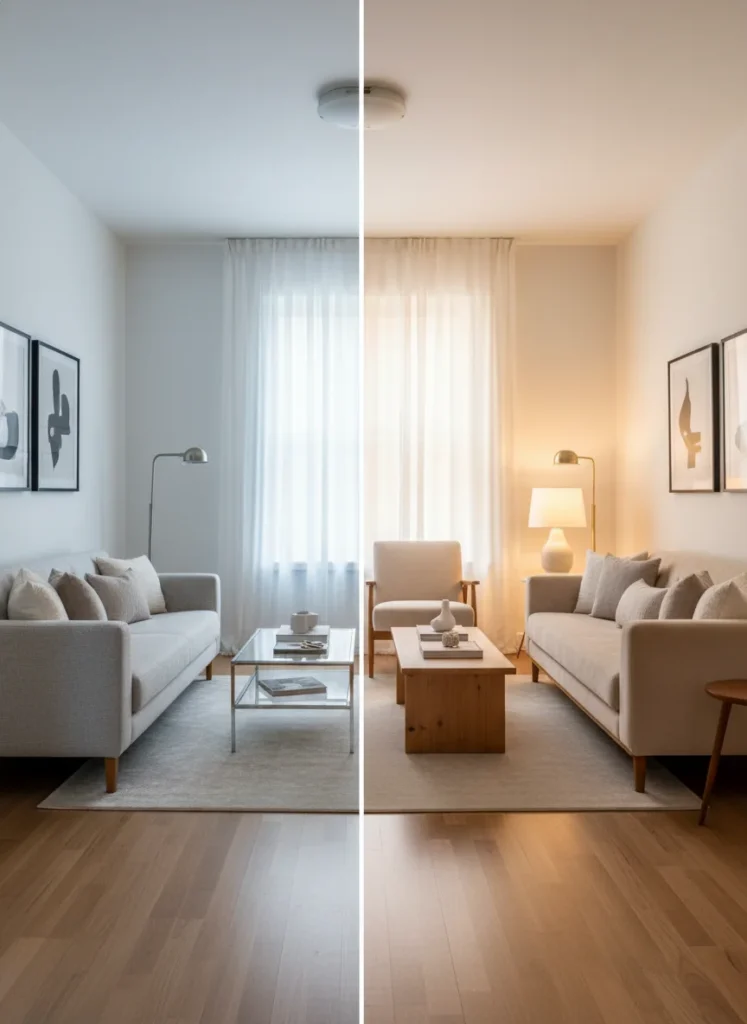
Not all whites are equal under artificial light. Cool whites — those with blue or gray undertones — react badly with 2700K warm bulbs. The result is a greenish or grayish cast that makes a dark room feel not just dim but also slightly ill-looking. Warm whites with yellow, cream, or pink undertones absorb the warmth of your bulbs and radiate it back. The room glows instead of just looking lit.
Some warm whites worth knowing by name: Benjamin Moore White Dove (OC-17) is a reliable warm white that many designers use in north-facing or windowless rooms. Sherwin-Williams Alabaster (SW 7008) reads as a soft off-white with creamy warmth. Behr Antique White is a budget-accessible option with good warm undertones. In my no-window apartment I used a warm white and the difference compared to the previous tenant’s cool gray was dramatic — the room felt like it had a fireplace going even in the middle of an overcast afternoon.
8. Use Furniture With Visible Legs
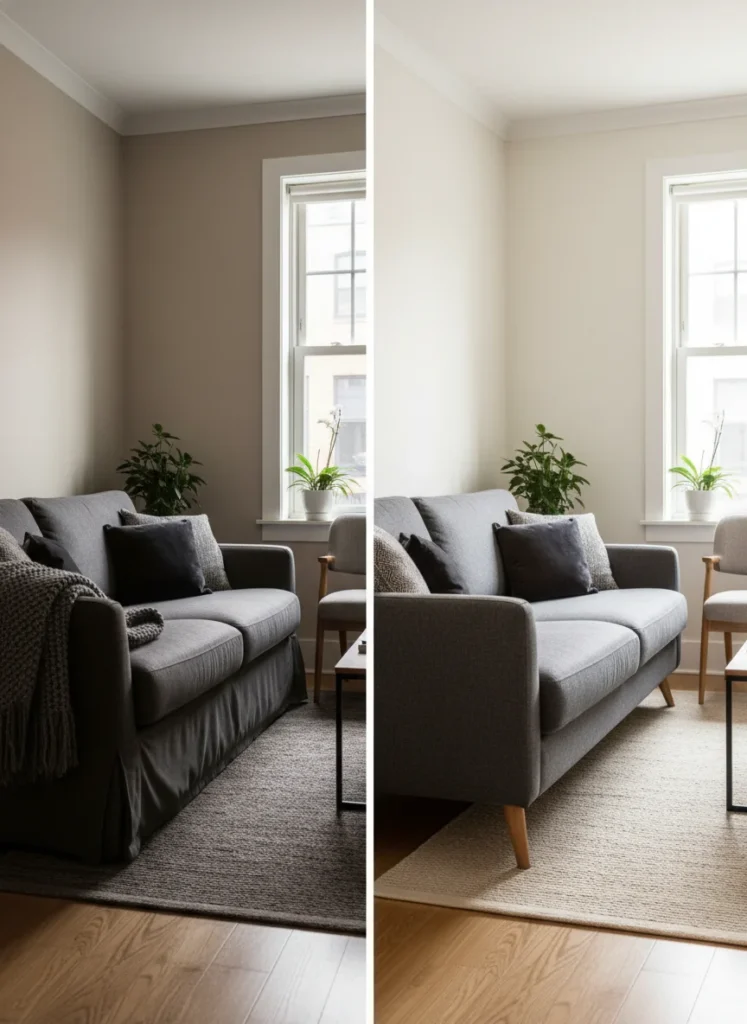
Furniture that touches the floor blocks the light your rug is reflecting and creates visual anchors that weigh a room down. In a dark room this is especially damaging. Chunky skirted sofas, low platform beds pushed against walls, and console tables that reach all the way to the floor make the room feel smaller and darker than it actually is. Furniture on legs does the opposite.
A sofa with legs that show 4 to 6 inches of floor clearance lets light travel across the rug surface unobstructed and gives the eye a sense of continuation rather than a full stop. When shopping for a small living room sofa, prioritize pieces with visible tapered or turned legs over platform or skirted options. The same rule applies to accent chairs, side tables, and TV consoles. The more floor you can see, the bigger and lighter the room reads.
9. Hang Curtains Even If There Is No Window
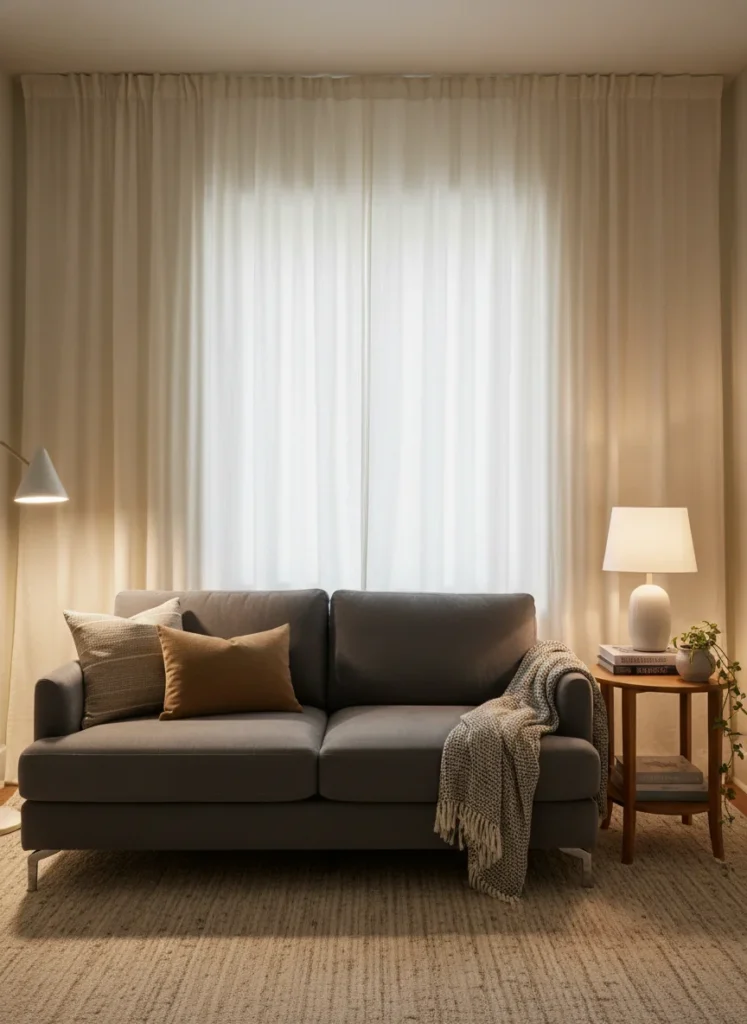
This one gets a lot of raised eyebrows but it works surprisingly well. Long curtains hung from a rod close to the ceiling on a blank wall simulate the visual architecture of a window wall. They add height immediately because the eye reads a tall panel of fabric as a vertical element that pulls the ceiling upward. They also add texture and softness that bare walls cannot provide.
The trick to making it look intentional rather than strange is the mounting height and the fabric weight. Mount the rod as high as possible, ideally within 4 to 6 inches of the ceiling, and let the curtains pool slightly on the floor. Use sheer ivory or warm linen fabric rather than blackout panels, since the goal is to soften the wall not add darkness. Pair them with a warm lamp positioned to the side so the light catches the fabric and you have something that reads as a lit window even though it is entirely faux.
10. Use Reflective Metallic Accents Intentionally
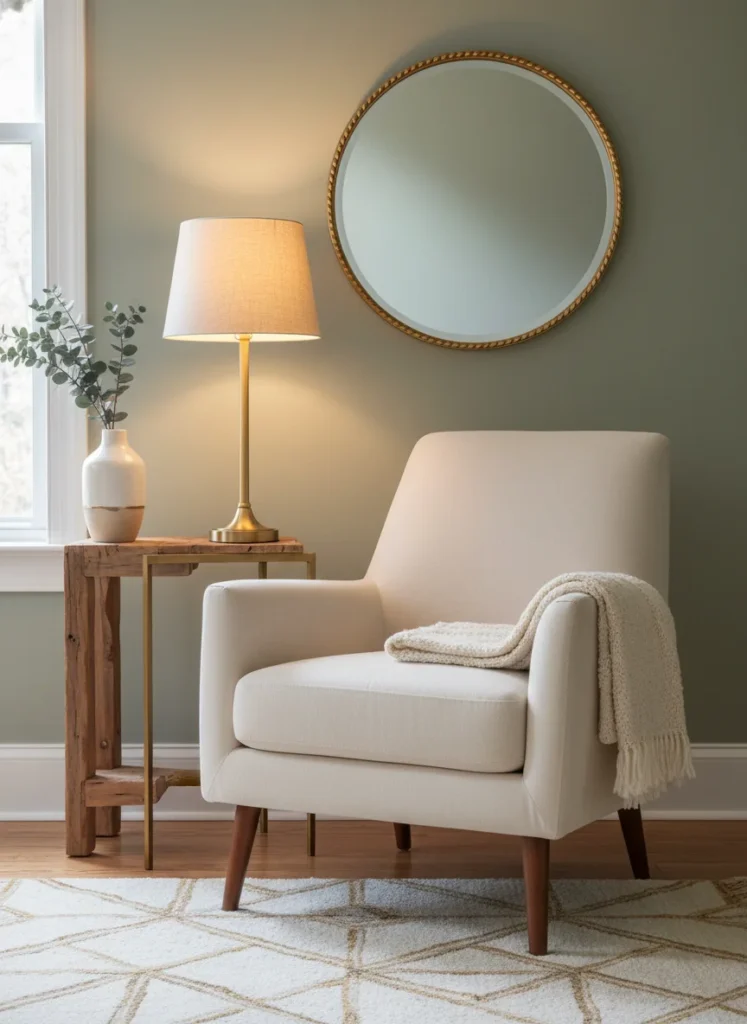
Metallic surfaces do not just look decorative; they actively participate in distributing light. Brass, gold, and warm bronze finishes catch your 2700K bulb light and scatter small warm reflections across the room. A brass lamp base near a lamp source essentially becomes a secondary light reflector. A gold-framed mirror at the side wall catches light from an angle and throws it into a shadow corner. These are micro-effects individually, but layered across a whole room they add up.
Chrome and silver work too but reflect cooler tones, which can counteract the warmth you have worked to build. Stick to warm-toned metals like brass, gold, and champagne in a dark room. Place them near your light sources specifically: on the table next to your lamp, on shelving that catches your floor lamp’s arc, on the frames of art that sits under accent lighting. Strategic placement turns decorative objects into quiet light amplifiers.
Furniture, Art, and Color Strategy
11. Add a Gallery of Warm-Toned Art (Not Cool-Toned Prints)
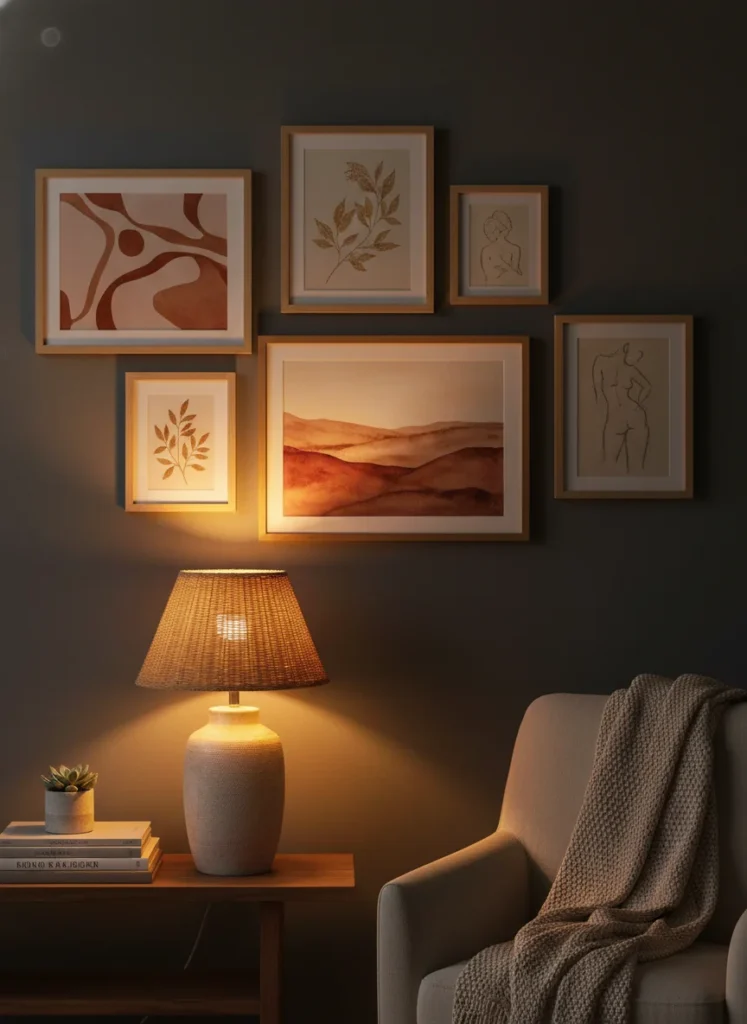
Art selection in a no-light room is a color temperature decision as much as an aesthetic one. Prints with cool color palettes, icy blues, slate grays, stark black and white, reinforce the coldness that your room is already struggling against. They read as flat and lifeless under warm artificial light because warm bulbs shift cool tones toward gray and muted green. The artwork looks dull and the room looks duller for having it.
Warm-toned art does the opposite. Terracotta, ochre, sienna, cream, warm rust, dusty rose, and muted gold all respond well to 2700K light; they deepen and glow rather than flatten. A gallery wall of warm-toned prints in simple frames becomes a visual heat source in the room. Search for abstract art in earthy tones, botanical prints in warm green and cream, or landscape prints in golden hour palettes. These pieces reinforce the warmth you have built through your lighting and paint choices instead of working against it.
12. Choose a Sofa in a Light or Medium Neutral
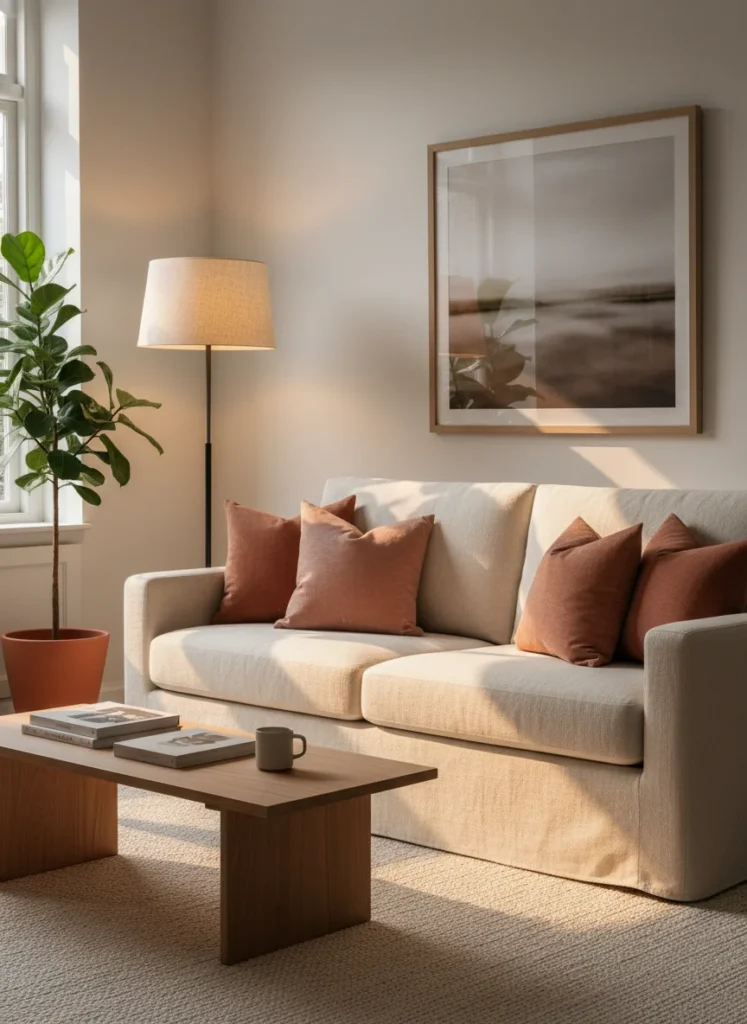
A very dark sofa in a no-light room is one of the most common mistakes I see repeated across apartment after apartment. A charcoal, black, or deep navy sofa becomes a visual black hole that absorbs every lumen your lamps produce. It dominates the room not because it is stylish but because the eye is drawn to darkness in an already-dark space, and all it sees is more dark. The room shrinks around it.
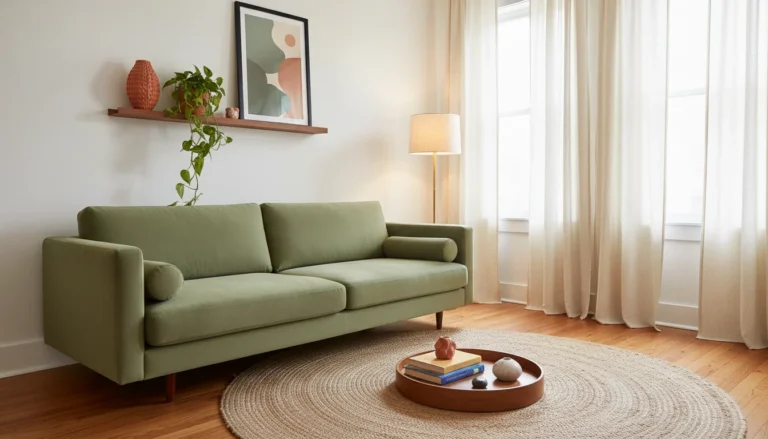
Cream, warm linen, camel, sand, light warm gray, and taupe all reflect light back into the room. A cream or warm-toned sofa becomes the brightest surface in the room after the walls, which means it actively participates in the room’s perceived brightness. If you already own a dark sofa, a set of light-colored slipcovers or a large warm-toned throw draped across the back and seat cushions can achieve a similar effect at a fraction of the cost. For more small apartment living room ideas on a budget, think of the sofa as your largest reflective surface and choose accordingly.
13. Use Glass and Acrylic Furniture Pieces Where Possible
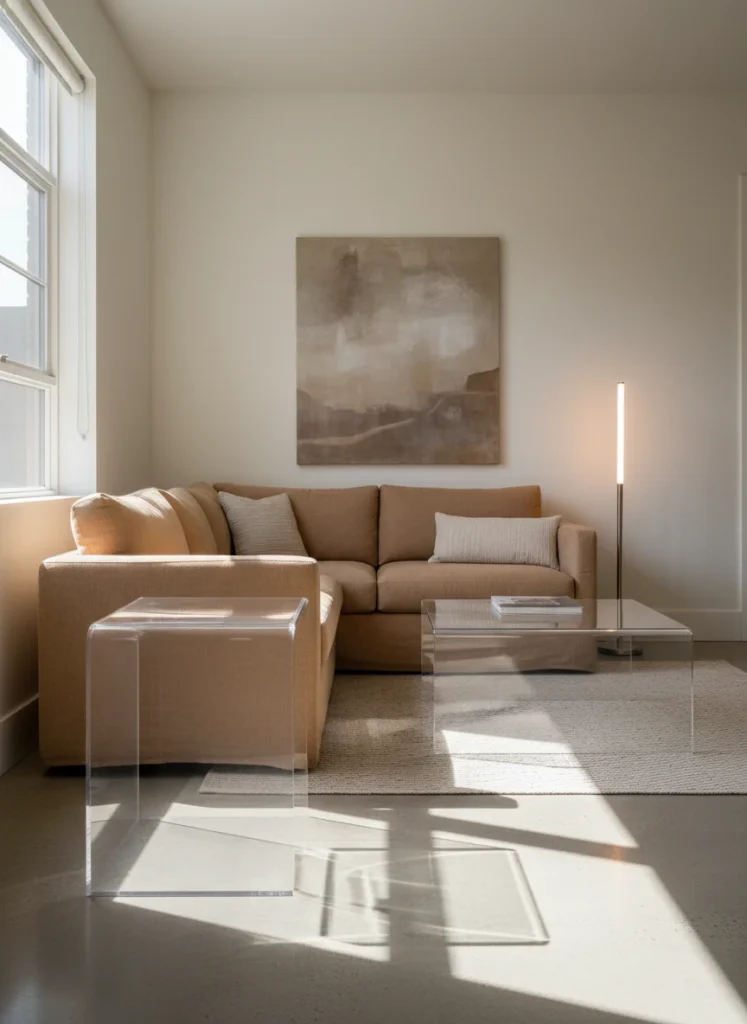
Every solid piece of furniture you place in a dark room blocks a path that light could travel. A dark wood coffee table sits in the center of the room and stops the floor lamp’s light from reaching the sofa area. An upholstered ottoman swallows the glow from your under-shelf strips. Glass and acrylic pieces let light pass through them entirely, which means the room feels more open and the light sources you have installed actually do their full job.
A glass coffee table or an acrylic side table takes up physical space but almost no visual space. The rug beneath it remains fully visible, the floor lamp’s glow reaches the sofa unobstructed, and the room looks larger because there is less visual mass interrupting the space. This is especially useful in very small rooms where a traditional coffee table would dominate the entire floor plan.
14. Add a Table Lamp to Every Seating Area
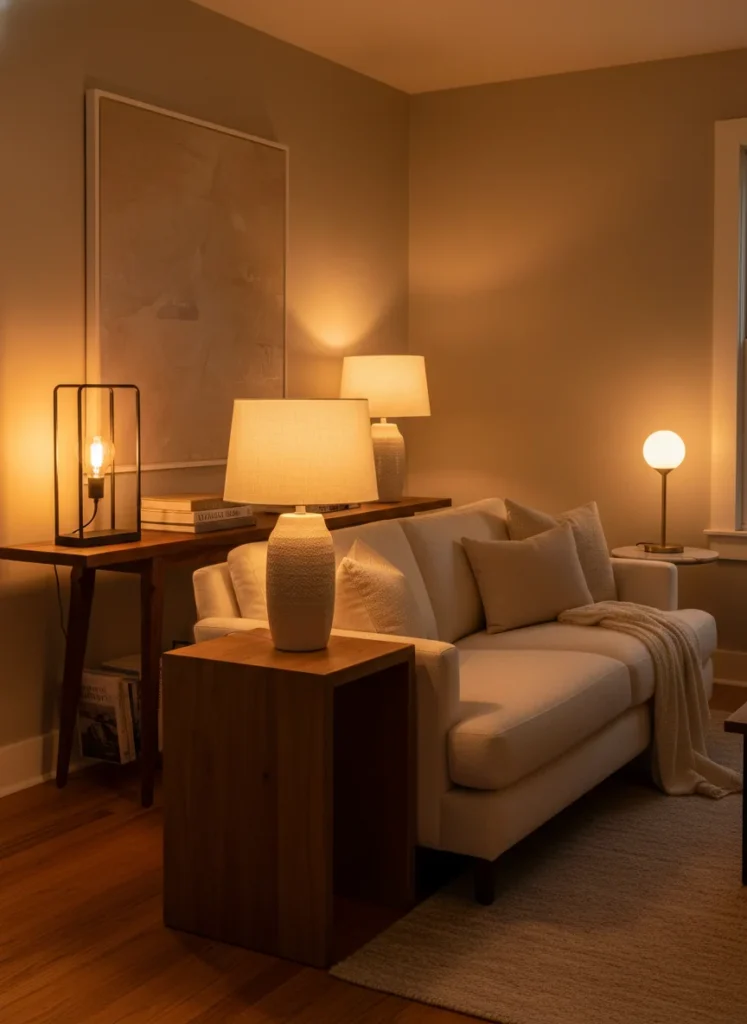
Shadow pockets, the dark zones that appear between and behind furniture when you only have one or two light sources, are what make a no-light room feel oppressive rather than cozy. They are avoidable. The fix is straightforward: every seating zone needs its own lamp. If your sofa has two ends, it needs a lamp accessible from each side. If you have an accent chair across the room, it needs a lamp too.
This does not require expensive fixtures. A collection of simple table lamps in warm finishes, all fitted with matching 2700K bulbs, creates an even wash of warmth throughout the room. When every seating area has its own light, the room stops feeling like it has a bright zone and a dark zone and starts feeling consistently lived-in and welcoming. This also solves the visual problem of a room that looks great on Instagram but feels dim when you are actually sitting in it.
Advanced Strategies: Mood, Plants, and Focal Points
15. Lean Into the Dark Side With Intentional Moody Decor
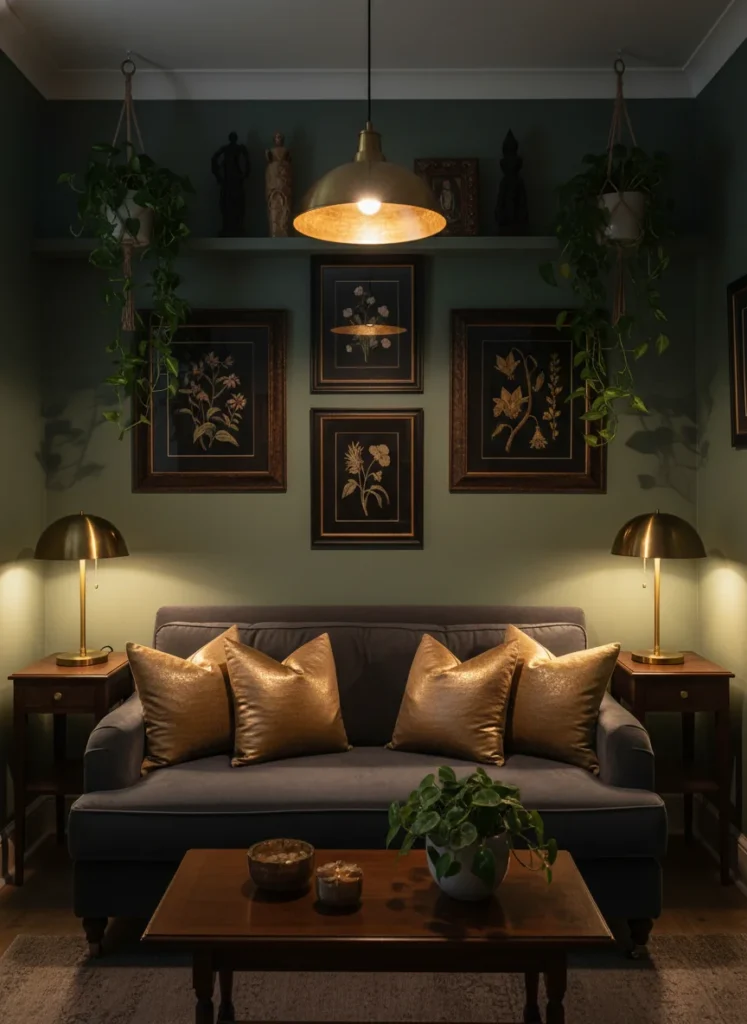
Here is the thing most guides will not tell you: if your room will never be bright, stop fighting it. Trying to make a fundamentally dark room look like a sun-drenched loft is an exhausting, expensive battle you are unlikely to win. Some rooms are better served by embracing what they are and making it intentional. The moody approach, done well, looks sophisticated and cocooning rather than gloomy.
This means choosing a deeper wall color, deep sage, dusty charcoal, muted navy and pairing it with warm brass lighting, rich textured fabrics, and warm-toned art. The room leans into its natural dimness instead of apologizing for it. The result is the kind of space that feels like a private retreat rather than a room that failed to be something brighter. If you are renting and cannot paint, you can achieve a similar effect through textiles and art alone. This approach works especially well in studio apartments under 400 sq ft where the single main room doubles as a living and sleeping space and a cocoon-like quality is genuinely desirable.
16. Use Plants That Thrive in Low Light
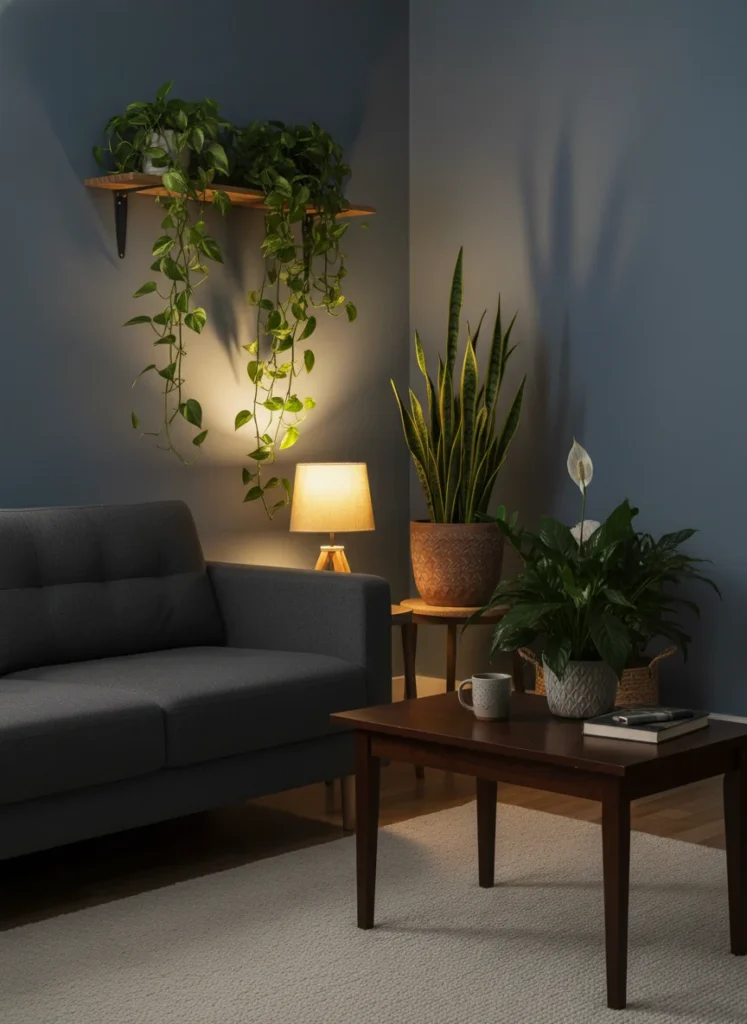
Plants do something in a no-light room that no amount of furniture arrangement can replicate: they signal life. A room without greenery and without natural light can feel sterile, like a waiting area rather than a home. The right plants add color, texture, and a biological softness that genuinely changes how a space feels. The catch is that most plants need light you do not have.
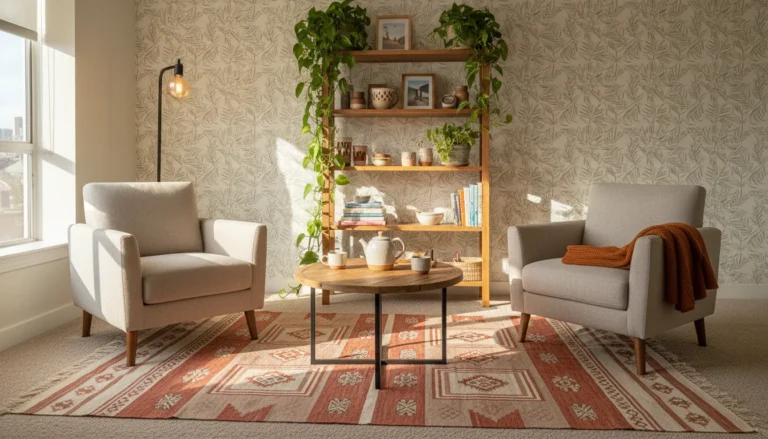
The four most reliable low-light performers are pothos, snake plant, ZZ plant, and peace lily. Pothos trails beautifully from shelves and tolerates near-complete shade. Snake plant is nearly indestructible, grows vertically to add height in corners, and its sculptural form works well in styled spaces. ZZ plant has a waxy leaf that catches lamplight and reflects it back with a subtle sheen. Peace lily will flower even in low light and actively purifies indoor air. All four are available at most grocery stores and garden centers for under $20. If you want to learn more about making a rented dark room feel genuinely livable, these plants are covered in detail in my post on how to make a rental apartment feel like home.
17. Create a Focal Point With Lighting Itself
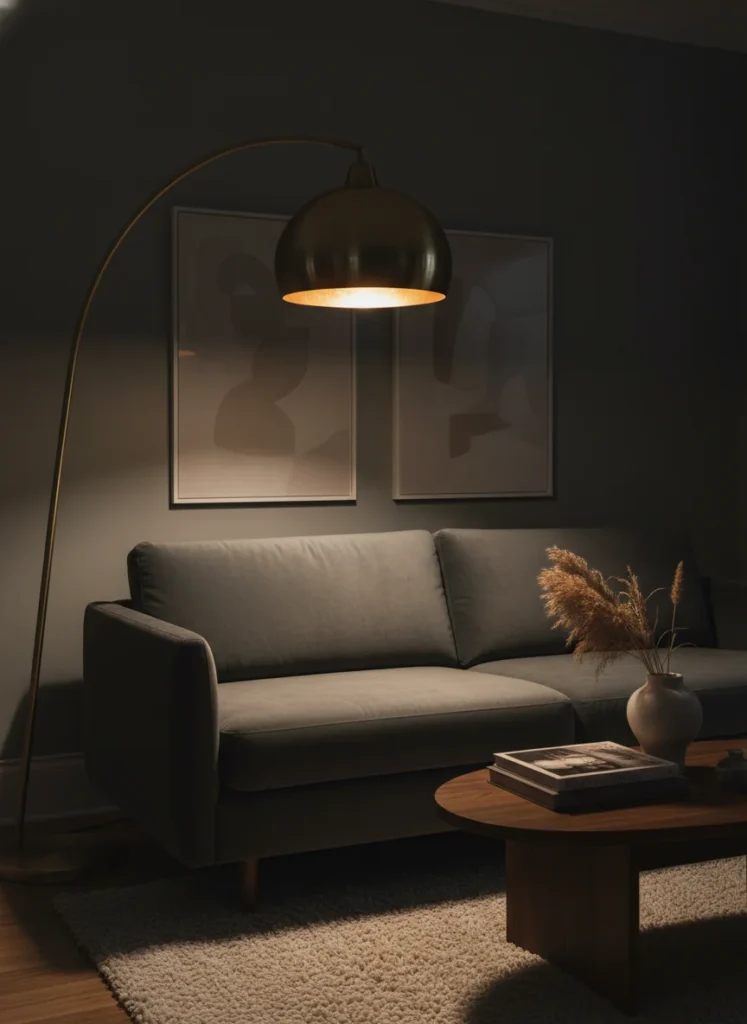
Every well-designed room has a focal point, the thing your eye travels to first when you walk through the door. In a room with windows, natural light creates that focal point automatically. Without windows, you need to build one deliberately. The most powerful option in a no-light room is to make a statement lamp the visual anchor of the entire space.
An oversized arc floor lamp with a warm gold or linen shade, a sculptural plug-in pendant lamp hung in a corner, or a dramatic rattan or paper shade floor lamp positioned behind the sofa all serve this function. The lamp is not just providing illumination; it is the design statement that gives the room a reason to exist. When guests walk in, their eye goes to the lamp first, which means the first impression of the room is warm, intentional, and lit rather than dark and lacking. In a no-light room, your lamp is your window. Treat it with the same consideration you would give a beautiful view.
Before we continue, if you’re tired of buying decor that doesn’t look right together, I created something specifically for this…
Putting It All Together
Living without natural light is genuinely harder than anyone who has never done it will understand. But it is not an unsolvable problem. The apartment I lived in for two years, one small north-facing window, gray light on good days, became one of my favorite spaces I have ever created once I stopped trying to make it bright and started making it warm. 2700K bulbs throughout, a large leaning mirror across from the tallest lamp, a cream low-pile rug, a statement arc floor lamp, pothos trailing from every shelf. The room did not become a sun-soaked studio. It became something cozier than that.
You do not have to implement all 17 ideas at once. Start with the bulbs, that is a $15 to $30 investment that transforms the quality of every single hour you spend in the room. Add the floor lamp next if you only have overhead lighting. Then the rug, then the mirror. Build in layers the same way you build layered lighting, and the room gets better with each addition rather than feeling like a rushed renovation. These small living room no natural light ideas work individually and compound when combined.
Drop a comment below if you have tried any of these in your own space. I would genuinely love to know which one made the biggest difference for you.