
This post contains affiliate links. If you buy something through my links, I may earn a small commission at no extra cost to you. I only recommend things I genuinely use or believe in.
Quiet luxury is not a color palette. It is not a mood board full of creamy linen and gold hardware. It is a philosophy. The idea is that real elegance does not announce itself. It lives in the quality of the fabric, the intentionality of the edit, the deliberate removal of anything that does not belong. And here is what nobody tells you: that kind of restraint is actually easier and cheaper to achieve than the maximalist alternative, because you are buying less and choosing better.
I spent a long time trying to make my bedroom feel like a hotel. I bought all-white bedding once, thinking that sterile crispness was the answer. It looked like a hospital and felt like nothing. The sheets were polyester, the duvet was flat, and the room read as “bedroom” and nothing more. That failure taught me more about quiet luxury than any Pinterest board ever did.
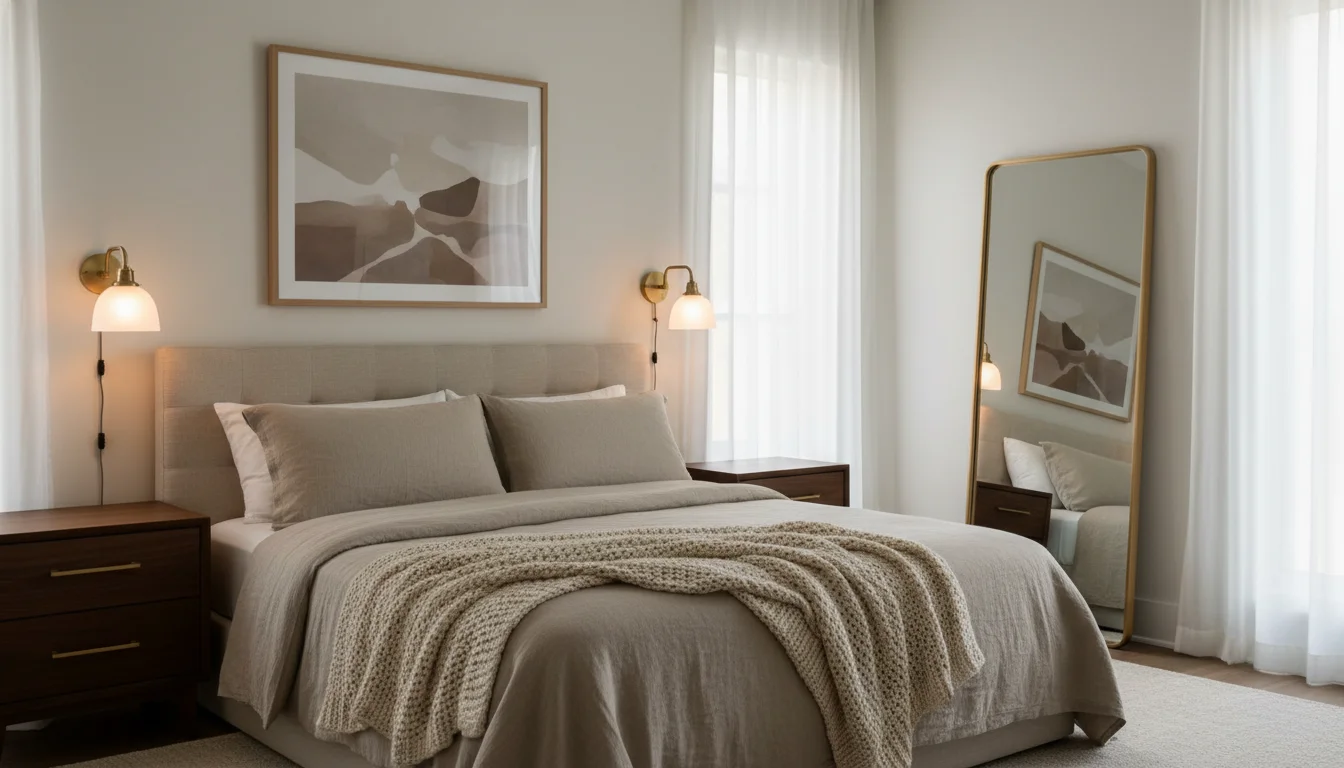
These nine ideas are what I actually use. The total comes to around $300 if you are starting from scratch, and you can spread it across several paychecks and still get the effect. Every single item has a real price range and a real reason why it works.
💡 Before you start decorating, see how your room could look with AI.
🏡 See Your Room Before You Spend a Dollar
Still wondering if that new furniture, paint color, or decor style will actually look good in your space?
- Upload a photo of your room and let AI instantly generate beautiful design ideas.
- Explore different interior styles, furniture layouts, and color combinations before you spend a single dollar.
What “Quiet” Actually Means in Quiet Luxury
Minimalism is about subtraction. Quiet luxury is about intention. The difference sounds small but it changes everything about how you shop and how you style a room. A minimalist bedroom might be spare to the point of feeling cold. A quiet luxury bedroom is spare and also warm, sensory, and deeply considered. Every object that stays earned its place.
The psychology behind it is straightforward. Clutter competes for your attention and raises cortisol. A bedroom without visual noise signals to your brain that it is safe to stop, to rest, to exhale. That is what a good hotel room does when you walk in. It removes the decision fatigue of your day and replaces it with calm. You can engineer that exact feeling at home. You just have to be willing to take things away as much as you add them.
Now, the nine ideas. Each one is a lever. Pull a few and you will notice the shift immediately. Pull all nine and your bedroom will genuinely confuse people about how much you spent.
9 Quiet Luxury Bedroom Ideas on a Budget
1. Linen Bedding in Warm Neutrals (Not White)
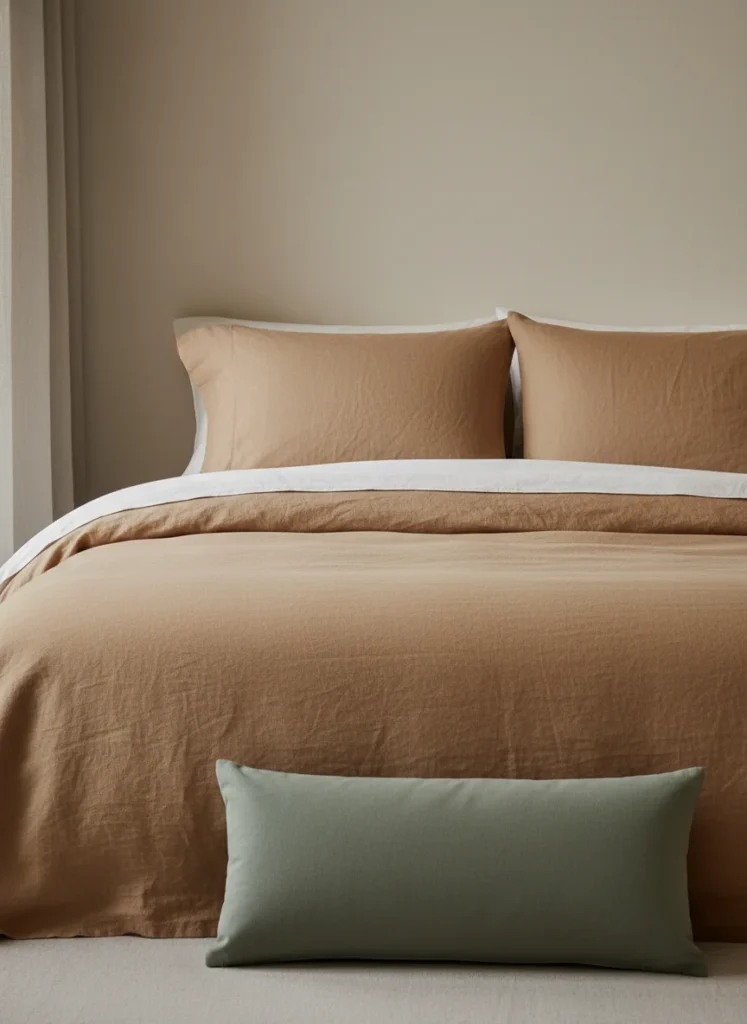
Linen looks different from cotton the moment you walk into the room. You can tell before you even touch it. The weight of how it drapes, the subtle natural wrinkle that settles into the weave, the way the color reads slightly warm no matter what the thread shade actually is. Cotton bedding, even expensive cotton, reads as functional. Linen reads as chosen.
The all-white experiment I mentioned at the top of this post failed partly because of the color but mostly because of the fabric. White linen would have been a completely different story. The natural variation in linen fiber means you get depth and warmth even in a neutral palette. The wrinkle is not a flaw. It is the texture. Do not iron it.
Skip the bright white entirely. Go for warm neutrals: flax, oat, warm stone, or muted sage. These colors hold the room in a way that pure white cannot. Pure white reads as effort. Warm neutral reads as ease. There is a significant difference at a glance, and ease is what quiet luxury is selling.
You do not need a brand name. Look for linen or linen-blend duvet covers in the $60 to $80 range. That gets you a duvet cover and two pillowcases, which is all you need to start. Wash it before you use it. Linen softens considerably after the first wash and keeps getting better over time. That is another thing cotton cannot honestly say.
Budget: $60-80
2. Plug-In Wall Sconces as Bedside Lighting
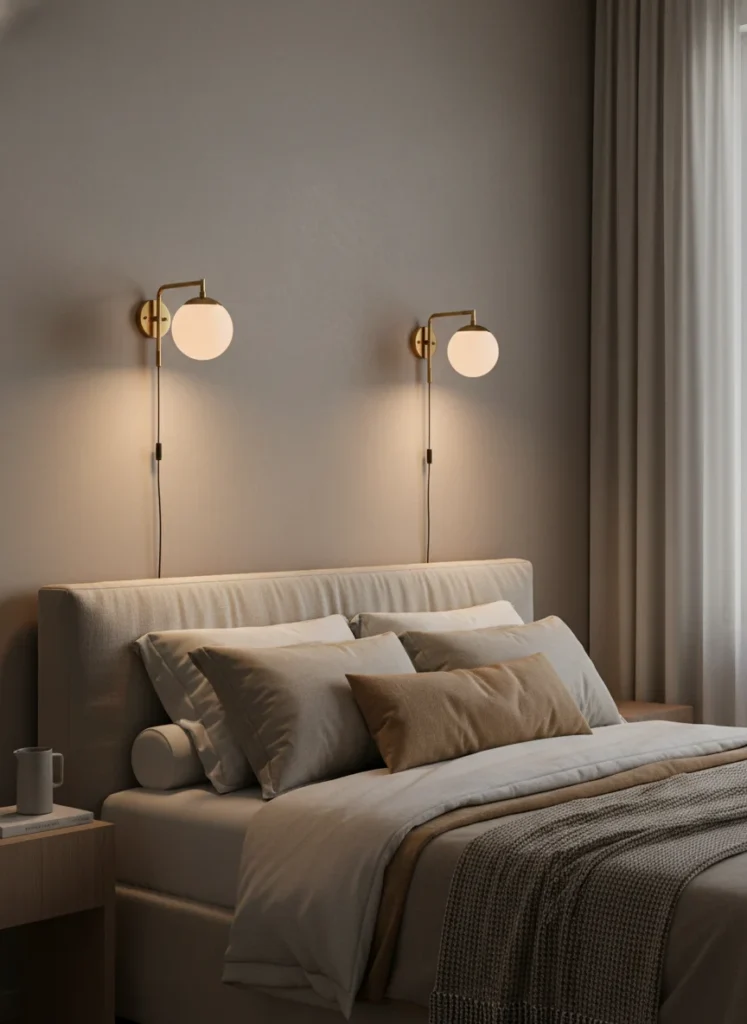
Overhead lighting is the enemy of luxury. Every hotel room that has ever made you feel pampered had ambient, layered, low light. It was not the single flush-mount ceiling fixture set to full blast. The moment you switch from overhead to wall-mounted sconces at bed level, your bedroom transforms into something that feels like it costs three times as much.
The reason plug-in sconces exist is for exactly this situation: you want the look without hiring an electrician. A good set of plug-in sconces has a cord that runs along the wall or tucks behind a headboard. In practice, once the lights are on and the ambiance is right, nobody is looking for the cord. The visual read is entirely about the light quality and placement.
Mount them at the same height on either side of the bed. The cord goes straight down the wall and plugs into the standard outlet behind or beside your nightstand. Use warm-white bulbs, no cooler than 2700K. The color temperature matters enormously. Cool white light is what operating rooms use. Warm light is what bedrooms that feel like retreats use.
A decent pair of plug-in bedroom wall sconces runs $40 to $60 for a set. Look for simple shapes: a linen shade, a clean metal arm, or a minimal globe. Ornate is not the goal. Architectural simplicity is.
Budget: $40-60
3. A Single Oversized Mirror in a Simple Frame
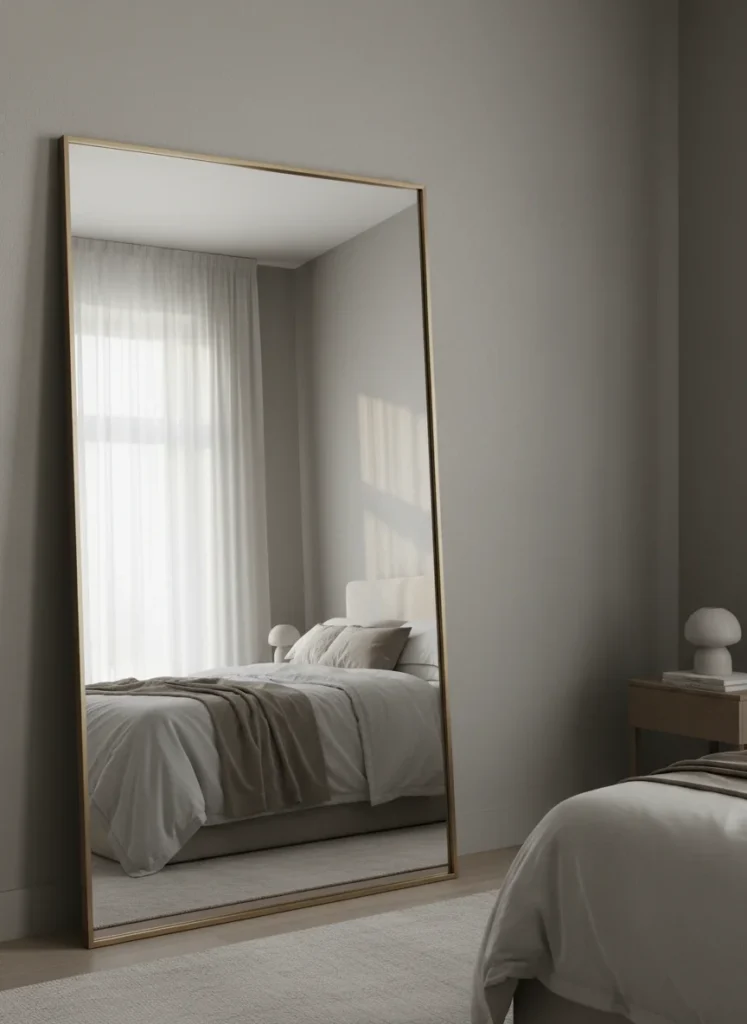
Not a gallery of small mirrors. Not a sunburst. Not a cluster of three different sizes hung in a triangle. One large mirror in a simple frame, leaning against the wall or centered above a dresser. This is one of those ideas that sounds obvious until you do it and realize that the room has fundamentally changed its proportions.
A large mirror does two things simultaneously. It doubles the amount of light in the room by reflecting whatever natural or ambient light is already there, and it creates the illusion of a second space beyond the wall, which makes the room feel larger without moving a single piece of furniture. If you have a small bedroom, this is one of the highest-leverage moves you can make. I wrote more about this kind of spatial trickery in this post on how to make a small bedroom feel bigger.
The frame matters. Go thin and simple. A flat, thin gold or brass frame, a black metal frame, or a frameless mirror with beveled edges all read as intentional and clean. Chunky ornate frames pull you toward a maximalist direction, which is the opposite of where we are going. Simple frame, large scale, single piece. That is the formula.
A large floor or leaner mirror in the 48 to 65 inch range with a simple frame typically runs $50 to $80. Search for leaner mirrors for bedroom and sort by size. Leaning is better than mounting because it creates a more relaxed, lived-in luxury feel and requires no installation.
Budget: $50-80
4. Neutral Throw Pillow Layering (The Hotel Formula)
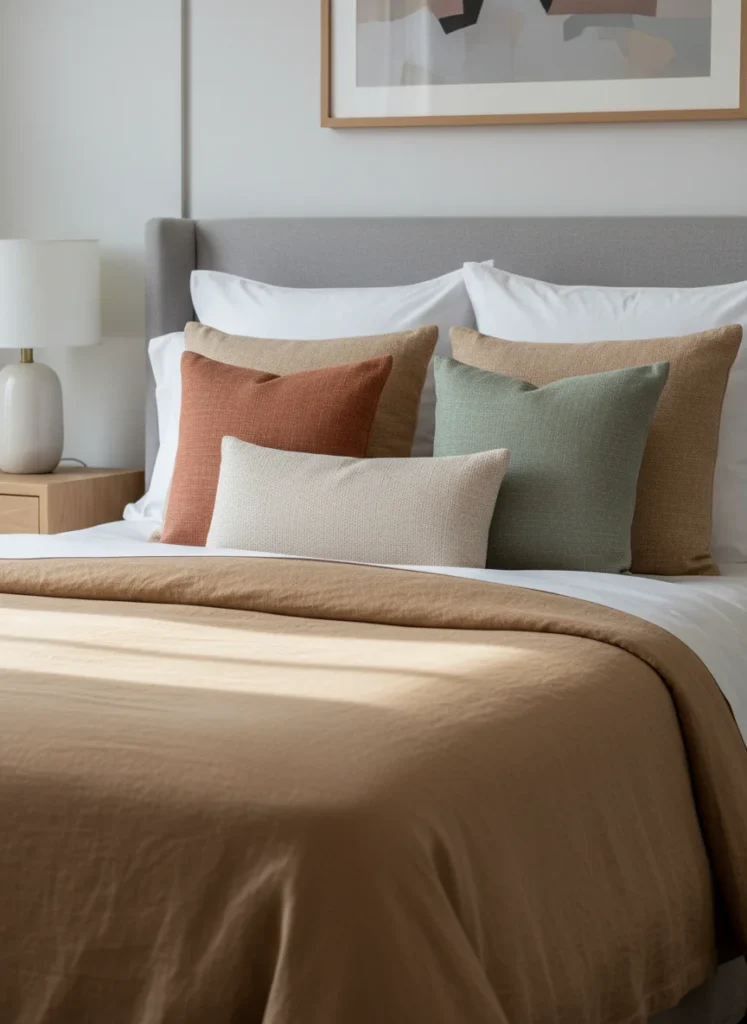
Hotels have a pillow formula. Once you see it you cannot unsee it, and once you know it you can replicate the look for about $30 to $50 without buying every pillow at once. The full hotel stack goes like this: two sleeping pillows in their cases at the very back, two large euro shams in front of those, two standard decorative pillows in front of those, and one lumbar pillow centered at the front. Seven pillows total.
Here is the thing: you do not need all seven. You need the layered, graduated effect. Start with your sleeping pillows in simple neutral cases. Add two euro shams if you have them, or add two slightly oversized decorative pillows as a substitute. Put one lumbar pillow at the front in a texture that contrasts quietly with the rest: a waffle weave against linen, a subtle ribbed fabric against a smooth duvet cover. That is five pillows and it reads exactly like the formula.
The colors should not match perfectly. They should belong to the same family. Warm whites, oats, warm grays, and muted sage or terracotta all live together without fighting. The variety in texture is what creates the visual interest. Color contrast is not required when texture contrast is doing the work.
Start with a set of euro sham pillow covers and a textured lumbar pillow cover. The covers are where the money goes. You can stuff them with cheap poly-fill pillow inserts and they still look completely polished. Budget for the look, not the interior.
Budget: $30-50
5. Simple Brass or Matte Black Hardware Swaps
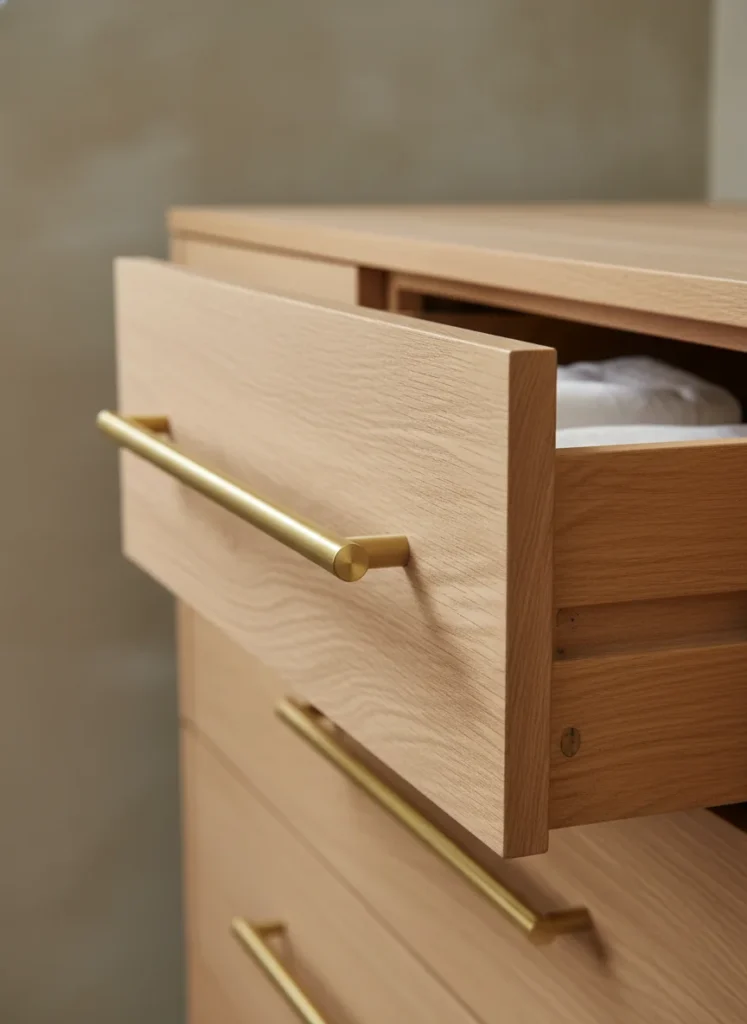
The single thing that makes a bedroom look the most cheap is mismatched, builder-grade hardware. The hollow-feeling silver pulls, the cheap chrome knobs, the slightly-off finish that shows fingerprints immediately. Most people do not think about hardware because it is small. But your eye registers it every time you use a drawer, and it sets the tone for whether the room reads as thoughtful or as generic.
Swapping hardware is a fifteen-minute project per piece of furniture. You need a screwdriver. That is it. A set of solid brass bar pulls or matte black round knobs costs between $15 and $25 for a pack that covers a full dresser or nightstand. The cost-per-visual-impact ratio of this swap is higher than almost anything else on this list.
Choose one finish and commit to it throughout the room. Brass or matte black are the two quiet luxury standards. Brass is warmer and works beautifully with linen and wood tones. Matte black is cooler and more graphic, and pairs especially well with white or pale gray walls. Do not mix the two in the same room. Consistency of metal finish is one of those details that reads as intentional without anyone being able to articulate exactly why the room looks so pulled together.
Search for brass dresser drawer pulls or matte black cabinet hardware. Measure your existing hole spacing before buying: 3 inches and 3.75 inches center-to-center are the most common standard sizes for bar pulls.
If you are renting and cannot swap hardware, consider this a tip for when you eventually have furniture you own. In the meantime, the other ideas on this list will carry most of the visual weight. There are plenty of renter-friendly bedroom ideas that skip any modifications entirely.
Budget: $15-25
6. A Linen or Cotton-Blend Duvet Cover in a Tone-on-Tone Pattern
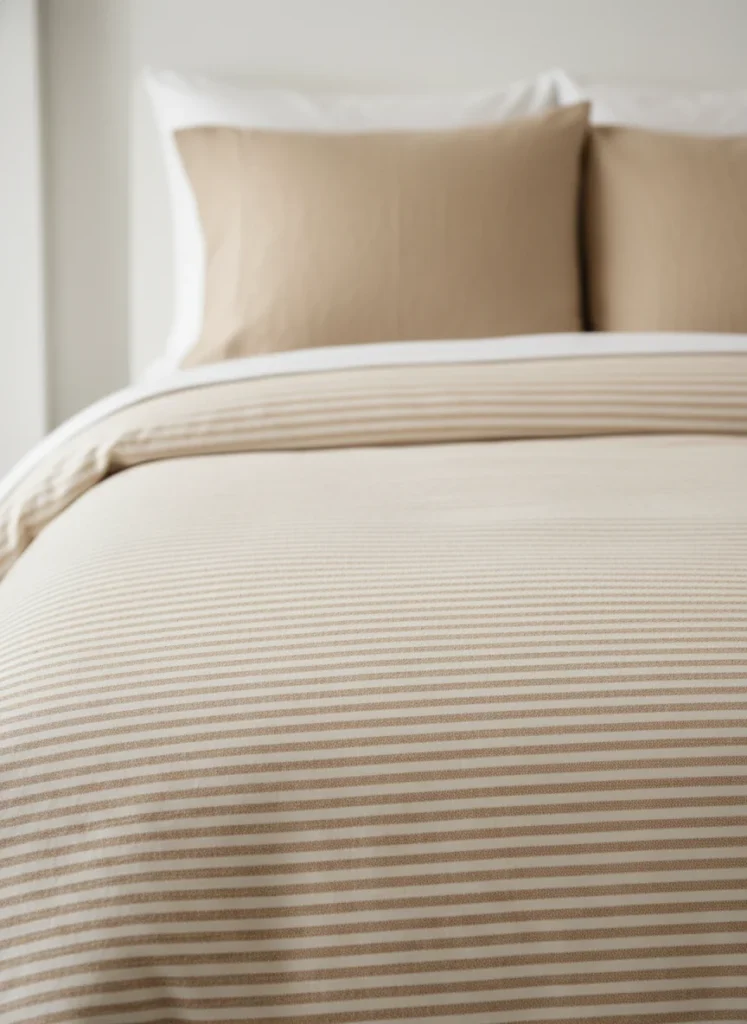
Tone-on-tone means a pattern in the same color family as the base fabric. A cream-on-cream woven stripe. A warm oat jacquard with a subtle diamond repeat. A muted sage with a barely-there organic texture woven into it. The pattern is there if you look, but it does not shout. This is the secret to a bed that looks designed rather than just decorated.
A completely flat, solid duvet cover is fine. But tone-on-tone gives the bed visual texture without requiring any more objects. The bed becomes interesting on its own, which means you need fewer accessories around it to make the room feel complete. That is a quiet luxury principle in action: let one thing do more work so everything else can breathe.
This is distinct from the linen bedding in idea one because it is specifically about the pattern language of the fabric. You can find linen-blend duvet covers with a tone-on-tone weave, or you can find cotton percale in this style. Both work. The texture of the weave itself is what creates the interest. Avoid high-contrast patterns. If you can see the pattern from across the room, it is too loud for this aesthetic.
Search for tone-on-tone duvet covers or look for terms like “jacquard duvet cover” or “waffle weave duvet” in warm neutral shades. These typically run $35 to $55 for a full or queen set.
Budget: $35-55
7. One Large Piece of Framed Art (Not a Gallery Wall)
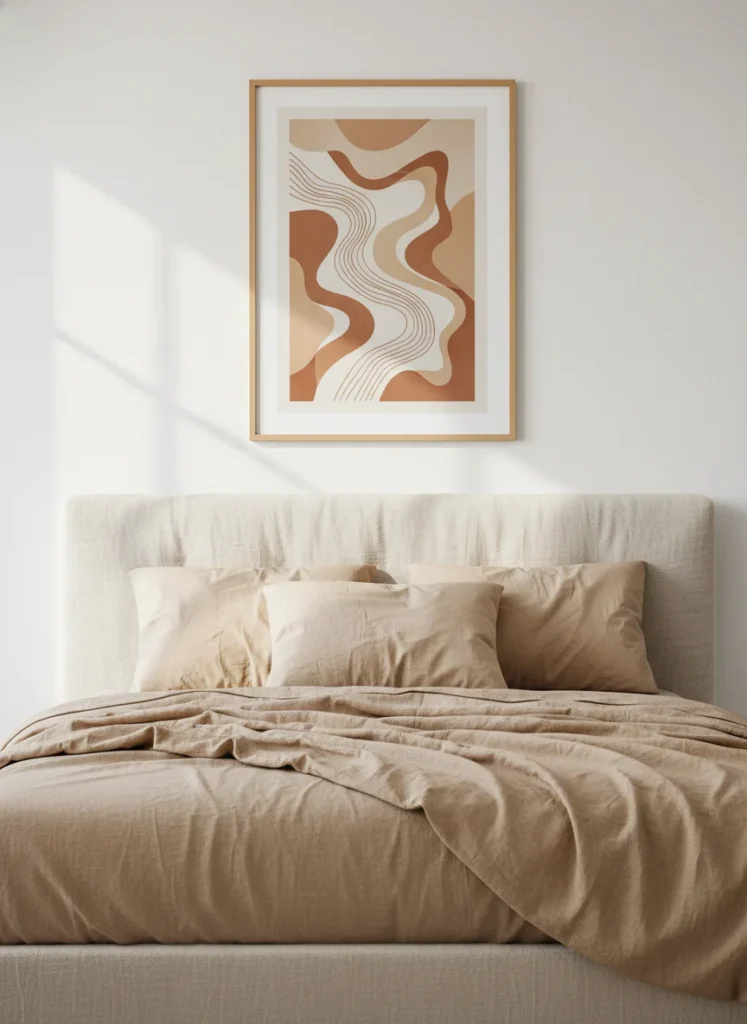
Quiet luxury does not do gallery walls. A gallery wall, regardless of how carefully curated, is a louder choice. It tells the room: look at all of these things I have collected. A single oversized piece of art above the headboard says something different. It says: this is the one thing worth looking at here. That restraint reads as confidence.
The art itself does not have to be expensive or original. A large-format print from a digital marketplace, printed at a local print shop or through an online service, can look just as compelling as something in a gallery. What matters is the size, the framing, and the subject matter. Go big. A print that feels almost too large for the space is usually exactly right for this aesthetic. Anything that looks like it belongs on a greeting card is too small.
Subject matter for quiet luxury leans abstract or organic: a large gestural brushstroke in neutral tones, a simple botanical line drawing, a minimal landscape in muted colors. It should have enough presence to anchor the wall without having enough detail to demand analysis. You want to feel it more than decode it.
You can lean the art against the wall instead of hanging it, which is a particularly casual and effortless look that suits this aesthetic well. Or hang it centered, with equal space on both sides. Either way, center it horizontally above the headboard and position it so the bottom edge sits about four to six inches above the top of the headboard. Search for large abstract bedroom art prints in the $20 to $40 range, then frame them locally.
Budget: $20-40
8. A Chunky Knit or Waffle Weave Throw at the Foot of the Bed
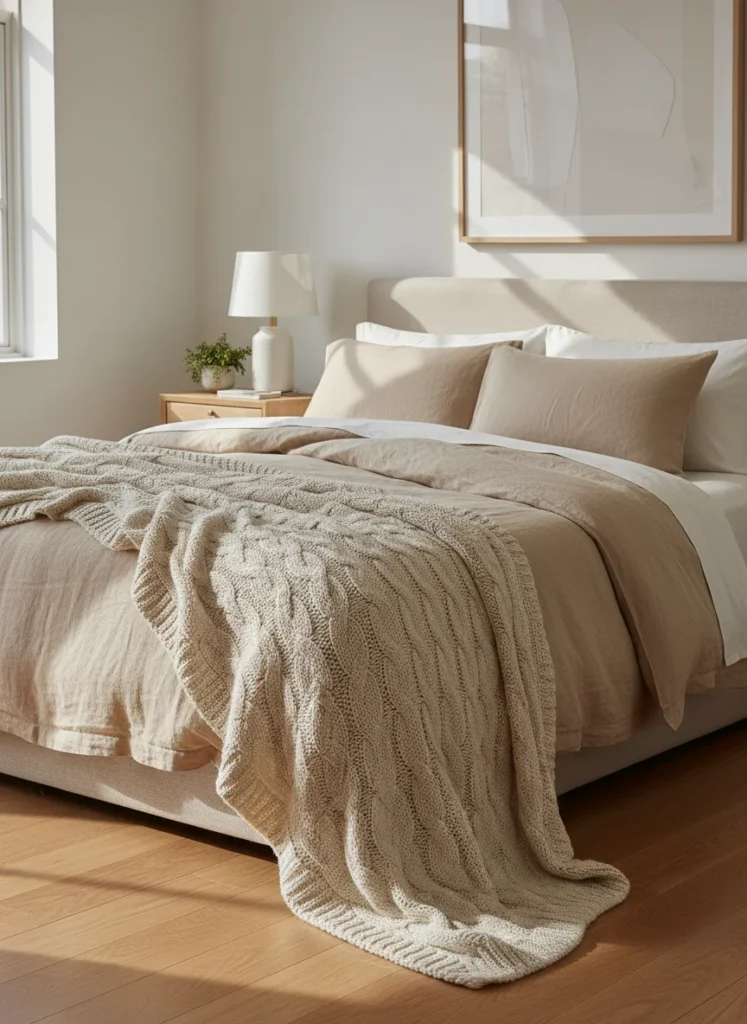
A throw at the foot of the bed is not decoration. It is a styling technique. The difference between a bed that looks made and a bed that looks styled is almost always this throw, and almost always the way it is placed. The drape is everything.
Do not fold it into a neat rectangle and set it at the center of the bed. That looks like a folded towel. Instead, fold it roughly in thirds the long way, then lay it across the lower third of the bed at a slight angle, letting one end fall slightly over the edge. The imperfect drape, the slight cascade over the corner, the visible weight of the fabric: that is what makes it look intentional without looking try-hard. This is the exact technique that hotel turndown service uses and it took me an embarrassingly long time to notice it.
Chunky knit throws have a tactile richness that reads as luxury at a glance because of the sheer visible texture and apparent weight. Waffle weave throws are more subtle and drape more fluidly, which can actually make them look more expensive in a minimalist room. Both work for this style. Choose based on how much visual texture the rest of the bed already has.
Color should stay within the tonal family of the bedding: warm cream, warm oat, muted stone, soft sage. Not white. Not charcoal. Something warm and quiet. A good chunky knit throw or waffle weave cotton throw runs $20 to $35 and changes the look of the entire bed.
Budget: $20-35
9. Nightstand Styling: Less Is More (The 1-2-3 Rule)
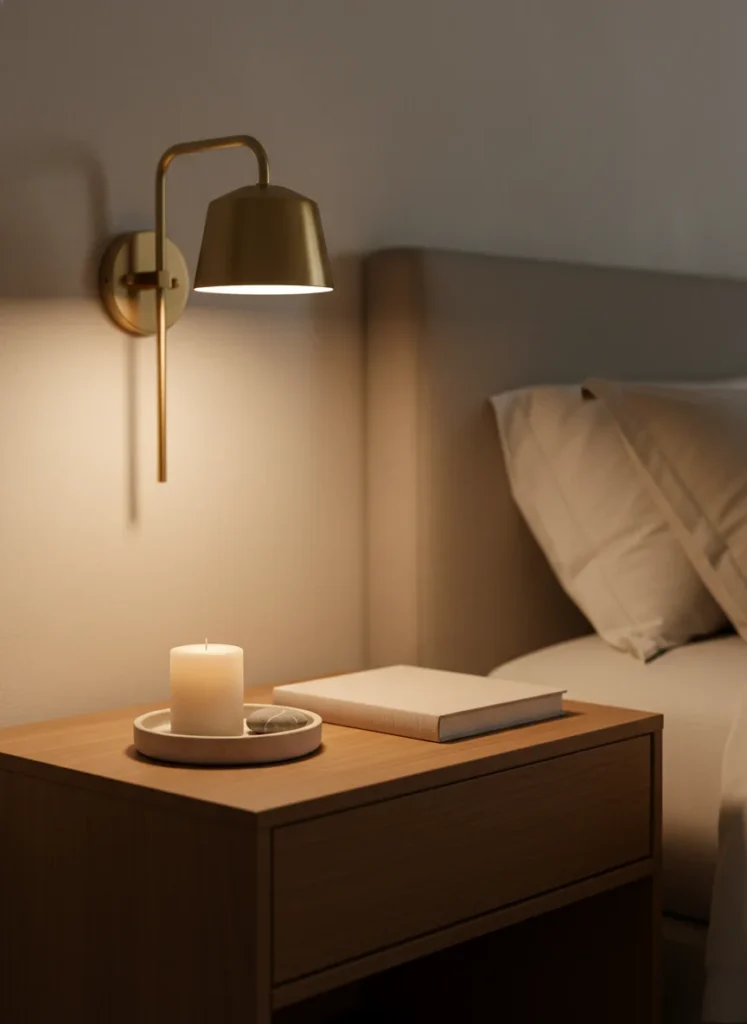
Hotel nightstands have three things on them. At most. A lamp or light source, one object that is decorative or functional, and one object that is personal or purposeful. That is it. The rest of the surface is empty. That empty surface is not wasted space. It is a luxury signal. It says that the person who set this room up was not scrambling to fill gaps. They were comfortable leaving space.
The formula I use: a small tray, a candle, and one object. The tray corrals the other two items and makes them look like a composition rather than things that were set down and forgotten. The candle should be unscented or lightly scented and in a simple vessel: a white pillar, a matte ceramic container, a clear glass votive. The one object can be a small plant, a smooth stone, a stack of two books, or a tiny sculptural piece. Nothing else. The phone goes face-down or in the drawer.
This is the hardest idea on the list to maintain because nightstands attract clutter the way kitchen counters do. Charging cables, water glasses, lip balm, old receipts, the book you are trying to read, the book you gave up on, the other charging cable. Set a rule: if it does not belong to the tray composition, it goes inside the drawer. The top of the nightstand is a public surface. The drawer is private storage. Treat them accordingly.
The investment here is minimal. A small ceramic or marble tray runs $10 to $15. A simple pillar candle is $5. One meaningful object from around your home costs nothing. The total is $10 to $20 and the effect is disproportionate to the investment. Negative space on a nightstand reads as a deliberate choice when everything else in the room is also deliberate.
If you want to keep building on this idea, this post on free bedroom refresh ideas covers several more ways to style what you already own without spending anything.
Budget: $10-20
The Full $300 Budget Breakdown
Here is every idea with its real price range, so you can see how the total shakes out and decide which to prioritize first.
| Idea | Item | Budget Range |
|---|---|---|
| 1. Linen Bedding in Warm Neutrals | Linen-blend duvet cover + pillowcases | $60 – $80 |
| 2. Plug-In Wall Sconces | Set of 2 plug-in sconces + warm bulbs | $40 – $60 |
| 3. Oversized Floor Mirror | Large leaner mirror, simple frame | $50 – $80 |
| 4. Throw Pillow Layering | Euro sham covers + lumbar pillow cover | $30 – $50 |
| 5. Hardware Swaps | Brass or matte black pulls/knobs | $15 – $25 |
| 6. Tone-on-Tone Duvet Cover | Woven or jacquard duvet cover | $35 – $55 |
| 7. One Large Framed Art Print | Large print + simple frame | $20 – $40 |
| 8. Throw at Foot of Bed | Chunky knit or waffle weave throw | $20 – $35 |
| 9. Nightstand Styling Tray + Candle | Ceramic tray + pillar candle | $10 – $20 |
| Total | $280 – $445 |
The range is wide because some of these categories have dramatic price variation. You can hit the lower end of almost every item if you shop on Amazon, check IKEA, or wait for a sale. You absolutely do not need to buy all nine at once. The three highest-impact items for the lowest combined spend are the linen bedding, the wall sconces, and the nightstand tray styling. Start there and the room will already read differently.
Ideas 5 and 6 overlap slightly if you are replacing an existing duvet cover, so factor that in. If your bedding situation is already decent, skip to the sconces and the mirror first. Those two changes alone shift the entire energy of the room because they address light, which is the most underrated variable in any interior.
If you are working with a smaller bedroom, the mirror and the sconces are especially important. The mirror tricks the eye into reading more space, and the sconces pull attention away from the ceiling (which is often where the eye goes in a small room with a single overhead light). I went deeper on the paint and space-expansion side of this in the post about which paint colors make a small bedroom look bigger, which pairs well with the ideas here.
Before we continue, if you’re tired of buying decor that doesn’t look right together, I created something specifically for this…
The Real Secret Behind Quiet Luxury on a Budget
Quiet luxury looks expensive because it is edited, not because it is costly. Every expensive-looking bedroom you have ever admired in a hotel or a magazine has something in common with every other one: there is less stuff than you expect, and everything that remains belongs exactly where it is. You can recreate that at any price point if you are willing to subtract before you add.
The most important move you can make right now costs nothing. Walk into your bedroom, look at every surface, and remove one thing from each one. Not because it is ugly. Just because it is extra. What remains will already feel more intentional. That is the real first step, and it is free.
Then, when you are ready to add back, add with deliberateness. One material. One texture. One piece of art. The restraint is not deprivation. It is confidence. And it is exactly what separates a bedroom that looks decorated from a bedroom that looks designed.
If you are renting and some of these swaps feel off-limits, the post on IKEA small bedroom ideas on a budget has a lot of overlap with this style and stays entirely within renter territory. The quiet luxury aesthetic translates beautifully to IKEA basics paired with the right fabric and lighting choices.
This is a bedroom worth coming home to. That is the whole point.