
This post contains affiliate links. If you buy something through my links, I may earn a small commission at no extra cost to you. I only recommend things I genuinely use or believe in.
Limewash paint does something that no other wall finish can replicate: it creates a sense of age, texture, and history in a room that was painted last weekend. The finish is naturally cloudy and uneven, with soft variations in tone across the same wall that shift as natural light moves through the day. In a small bedroom, where the walls are the dominant visual surface, a limewash wall makes the room feel layered and lived-in rather than freshly constructed. This is the specific quality that makes small limewash wall bedrooms read like Italian farmhouses or Santorini guesthouses rather than apartments.
The limewash trend has been building since 2022 and shows no sign of losing momentum because it solves a problem that regular paint cannot: how to add visual depth and character to a wall without pattern, art, or structural changes. Here are the specific ideas, techniques, and product choices that make it work in a small bedroom.
💡 Before you start decorating, see how your room could look with AI.
🏡 See Your Room Before You Spend a Dollar
Still wondering if that new furniture, paint color, or decor style will actually look good in your space?
- Upload a photo of your room and let AI instantly generate beautiful design ideas.
- Explore different interior styles, furniture layouts, and color combinations before you spend a single dollar.
What Limewash Actually Is and Why It Behaves Differently From Paint
Traditional limewash is calcium hydroxide, slaked lime mixed with water and natural pigments, applied in thin washes to a mineral surface. In historic European buildings, it was applied to stone and plaster walls that naturally absorbed and bonded with the mineral formula. On modern drywall, the mineral chemistry does not bond the same way, which is why most modern limewash products labeled as limewash paint are actually mineral-based latex formulations that mimic the finish of true limewash without requiring bare plaster or masonry.
The visual result of these modern formulations is largely the same: a matte, slightly translucent finish with natural variation in tone and texture. The finish breathes differently from standard latex paint, which is why limewash walls can develop subtle color shifts over time and why they respond to humidity and temperature in ways that make them feel organic rather than applied. In a small bedroom, this living quality is an asset rather than a concern.
9 Limewash Wall Bedroom Ideas for Small Rooms
1. The Classic Italian White: Warm White Limewash on All Four Walls
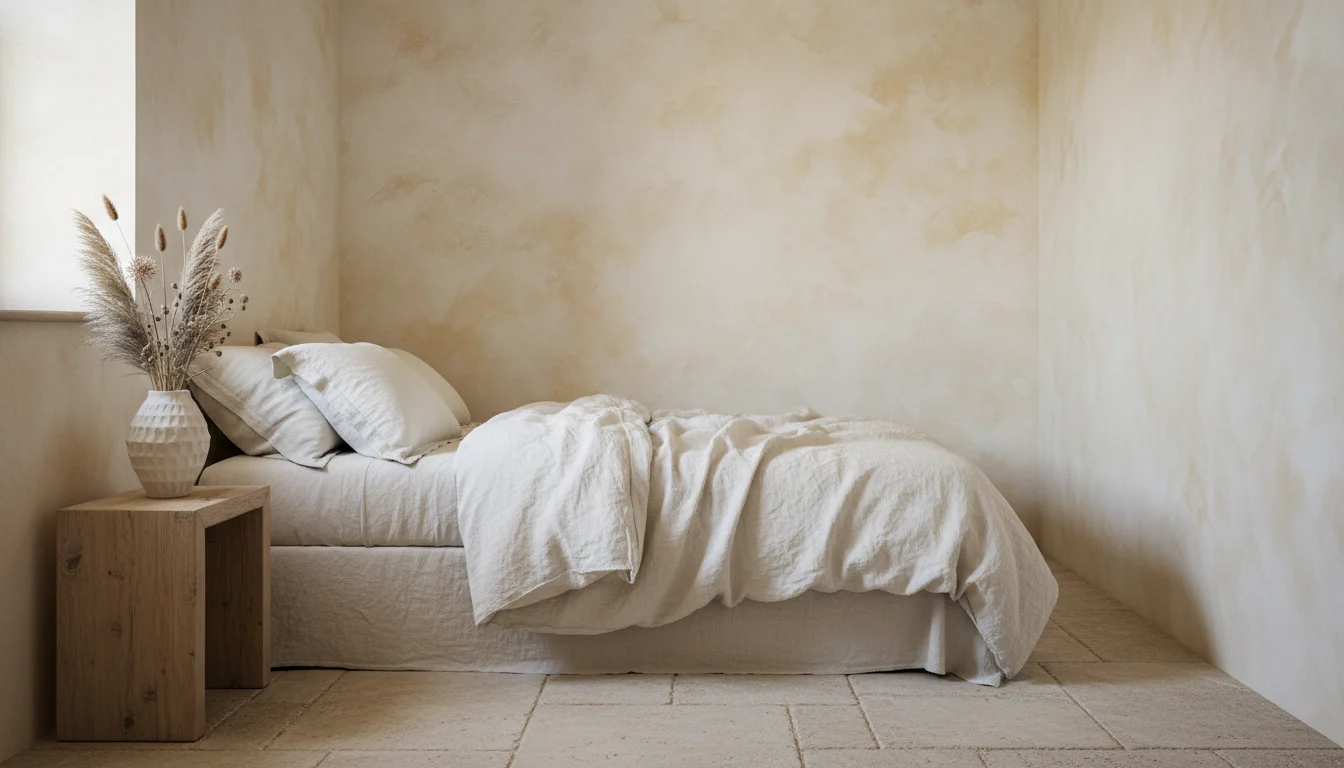
Warm white limewash on all four walls is the foundational limewash wall bedroom idea for small rooms and the one that most effectively creates the Italian villa quality the trend promises. The warmth in the white is essential. Cool whites or pure white limewash reads as modern minimalist. Warm white, which carries a slight ivory or cream undertone, reads as ancient and sun-warmed.
In a small bedroom, applying limewash to all four walls is more effective than a single accent wall because the texture wraps the entire room in depth. The variations in the finish mean that each wall reads slightly differently depending on its light exposure, which creates the impression that the room has been there for a long time and developed character organically. The best warm white limewash formulations for this look: Portola Paints Limewash in Roman White, Behr Limewash in Alabaster White, or a DIY mix using flat white paint with a small addition of raw umber pigment to warm the tone. An interior limewash paint kit in warm white runs $35 to $60 per gallon and covers approximately 200 to 250 square feet in a single coat.
2. Limewash in Muted Sage: The Color That Makes a Small Room Feel Like a Garden
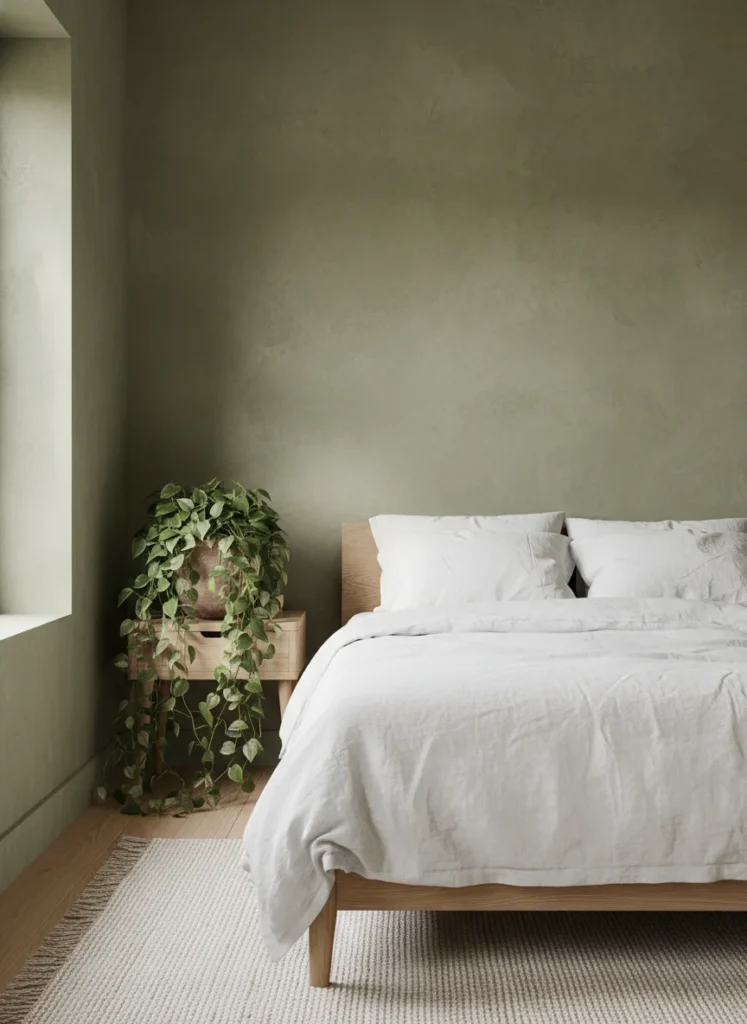
Muted sage green limewash in a small bedroom creates an effect that is difficult to achieve with any other wall treatment: the color reads simultaneously as warm and cool, as earthy and fresh. The limewash texture means the sage is never uniform, shifting between deeper olive tones in shadows and a lighter, more silvery green in direct light. In a small bedroom, this movement in the color makes the walls feel alive rather than flat.
The complementary palette for sage limewash in a small bedroom: natural linen in warm white or oat, terracotta and warm wood accents, dried botanical arrangements, and simple iron or brass hardware. Avoid anything too saturated alongside sage limewash; the appeal is in the muted, earthy quality and saturated colors compete with it. Specific paint options: Portola Paints Limewash in Olive Branch, or a custom mix using a flat sage base with a limewash medium. If you want to understand how sage green works as a small bedroom palette anchor beyond just the wall treatment, the post on japandi bedroom ideas for small rooms covers sage as a primary color in the japandi palette with specific pairing recommendations.
3. Single Limewash Accent Wall Behind the Bed
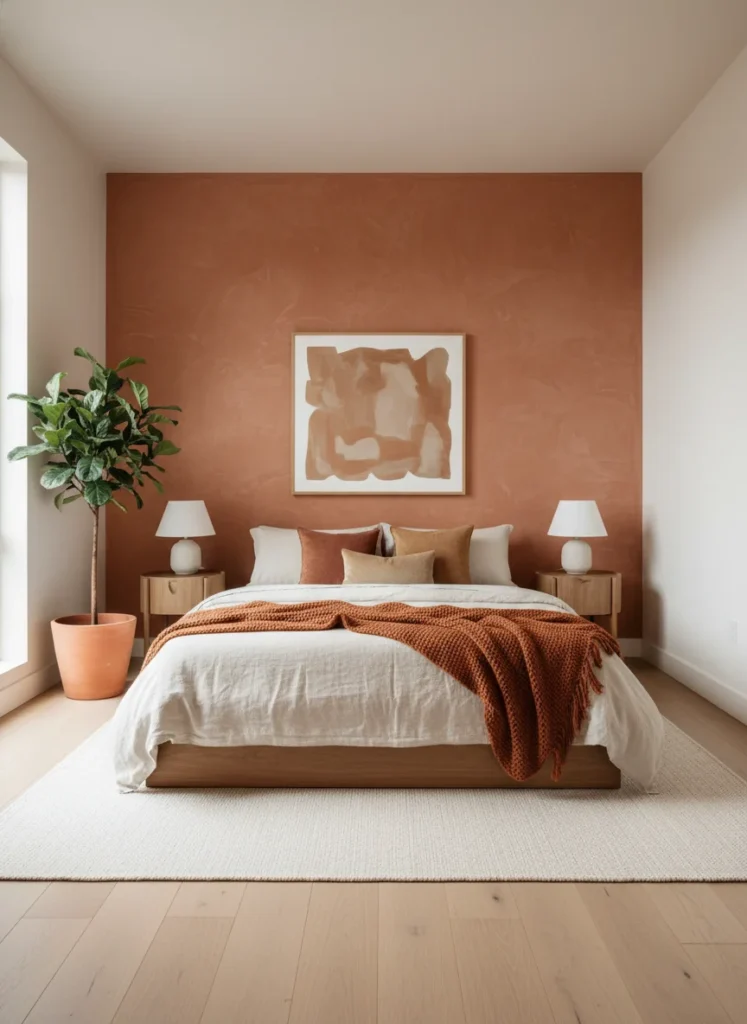
A single limewash accent wall behind the bed is the entry-level approach to limewash wall bedroom ideas for small rooms, and it is the right choice when you want to test the technique before committing to all four walls, when you rent and need to minimize the work required at move-out, or when your room’s other walls have features, windows, or architectural elements that would not suit the limewash technique.
The accent wall behind the bed functions as a textural headboard for the entire wall surface, which makes the bed zone feel deliberately designed even without a physical headboard. The limewash tone on the accent wall should be one or two shades deeper than the adjacent smooth walls so that the contrast between limewash texture and smooth paint reads clearly. A warm terracotta limewash accent against warm white smooth walls, or a deep sage limewash accent against a lighter sage smooth wall, are the two color combinations that read most cohesively in a small bedroom context.
4. Dusty Terracotta Limewash for the Warmest Small Bedroom Possible
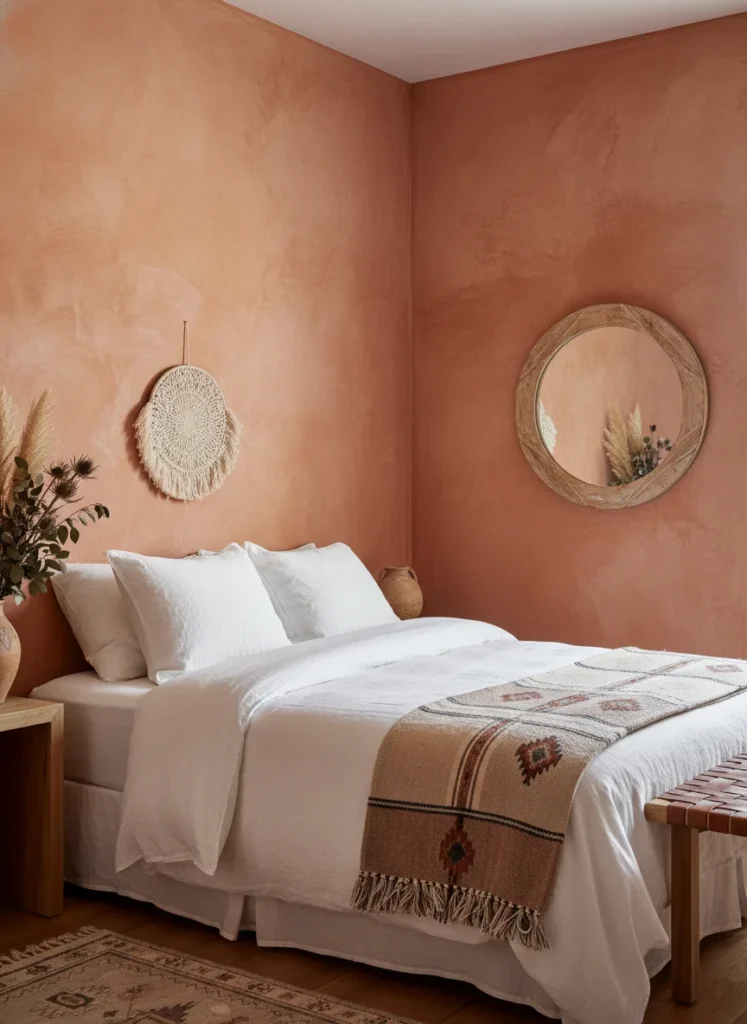
Terracotta limewash is the warmest and most dramatic of the limewash options for a small bedroom, and it is also the one with the most polarizing visual impact. Done well, a small bedroom with terracotta limewash walls feels like a boutique hotel room in Marrakech or the bedroom of an Italian villa in Umbria: warm, ancient, deeply personal. Done wrong, it reads as an accent wall from 2005. The limewash technique is what makes the difference. The cloudiness and variation of the limewash finish prevents the terracotta from reading as flat painted orange and gives it the layered, mineral quality that evokes Mediterranean architecture.
The complementary palette for terracotta limewash: creamy white linen bedding, natural rattan and wood accents, deep rust and ivory throw pillows, dried grasses and botanicals, and warm amber lighting from 2700K bulbs. Avoid cool-toned accents, including anything with blue, gray, or chrome undertones, which fight the warmth of the terracotta rather than supporting it. The mocha mousse home decor palette covered in the post on mocha mousse home decor ideas pairs naturally with terracotta limewash because both belong to the warm, earthy brown family.
5. Limewash in Soft Blush for a Feminine and Timeless Small Bedroom
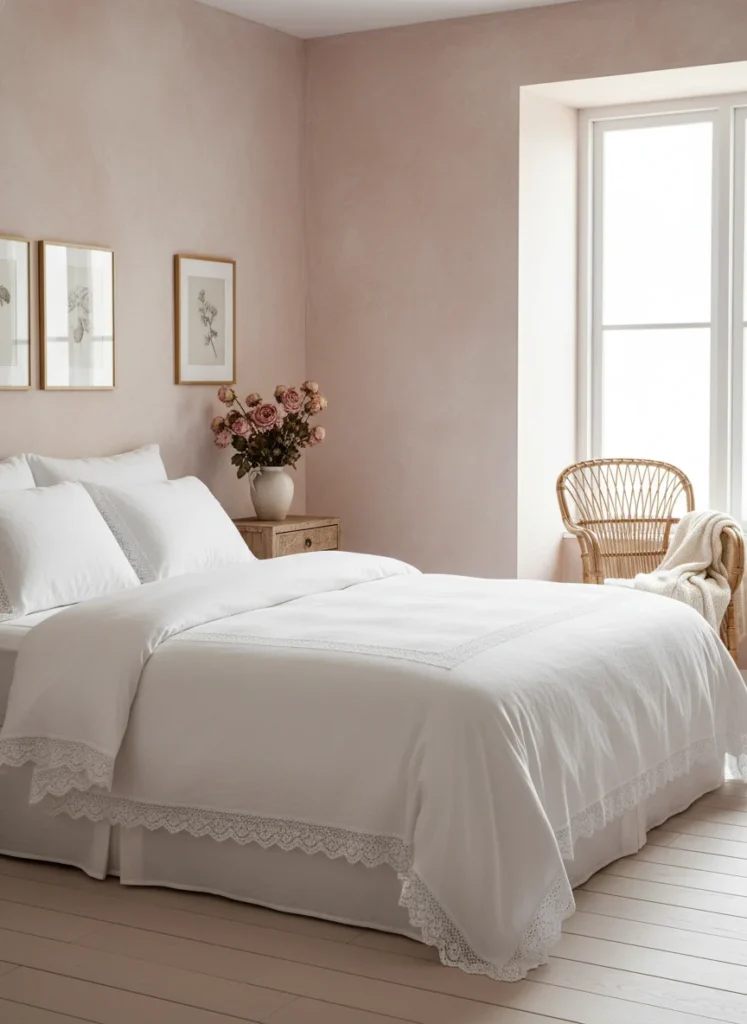
Soft blush limewash is the coquette and romantic bedroom version of the limewash trend, and it is also the most forgiving color choice for small rooms because dusty blush reads as a warm neutral at most light levels rather than a committed pink. The limewash technique is what prevents the blush from reading as a paint-by-numbers pink bedroom: the cloudiness and variation mean the color is never uniform, and the matte, chalky finish reads as sophisticated rather than sweet.
The palette that works around soft blush limewash: ivory and cream linen, natural rattan, dried roses and pampas grass in natural tones, simple brass or gold hardware. This is the bedroom wall that makes the coquette aesthetic feel genuinely elevated rather than trend-following. The post on coquette bedroom ideas for small rooms covers the full styling approach for the coquette aesthetic, including bow accessories, floral prints, and pink bedding that coordinate beautifully with a blush limewash backdrop.
6. Limewash on the Ceiling Only for a Cocoon Effect
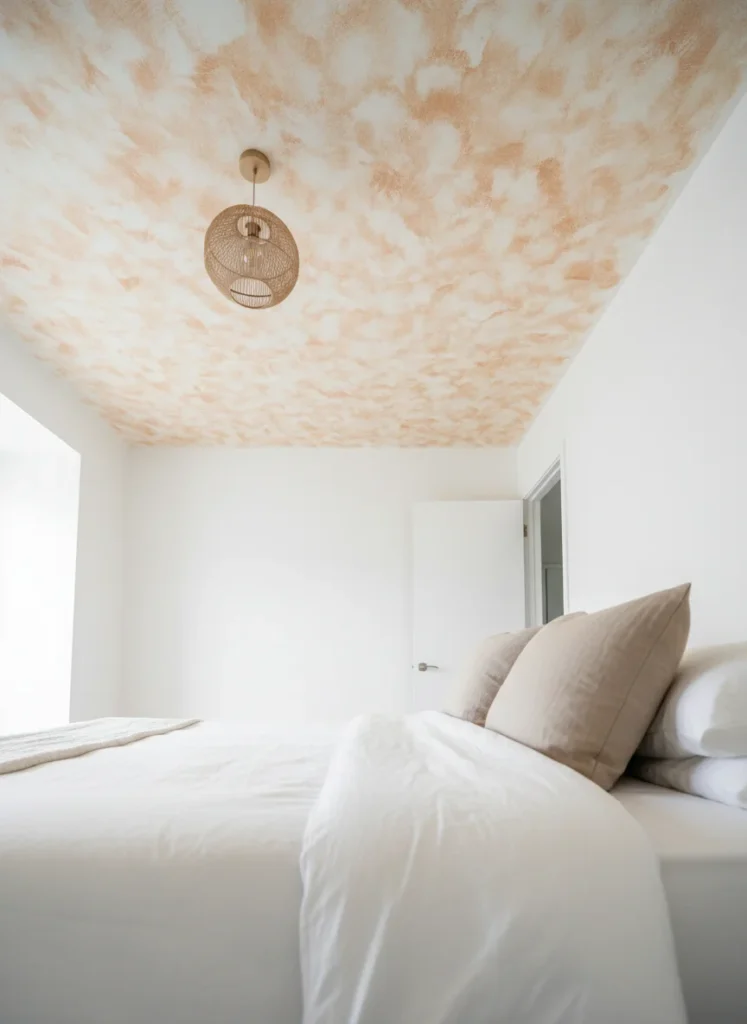
Limewashing the ceiling rather than the walls is the unexpected application of this technique that creates a cocoon effect in a small bedroom without touching any of the walls. A smooth white ceiling reads as a void, a flat expanse with no depth. A limewash ceiling in warm ivory, soft blush, or a barely-there sage creates a textured, slightly colored overhead surface that makes the ceiling feel like part of the room rather than a lid on it. In a small bedroom where the ceiling is already close, this makes the room feel more intimate and enveloping in the best possible way.
Applying limewash to a ceiling is slightly more physically demanding than applying it to walls because of the overhead posture, but the technique is identical: brush in a crisscross X pattern in thin washes with a large block brush, allowing each coat to dry before adding depth. A single gallon covers a small bedroom ceiling twice over. The ceiling limewash can match the wall limewash in the same color for a full enveloping effect, or be a lighter version of the wall color for a subtle gradient from ceiling to floor.
7. How to DIY Limewash Paint on Modern Drywall
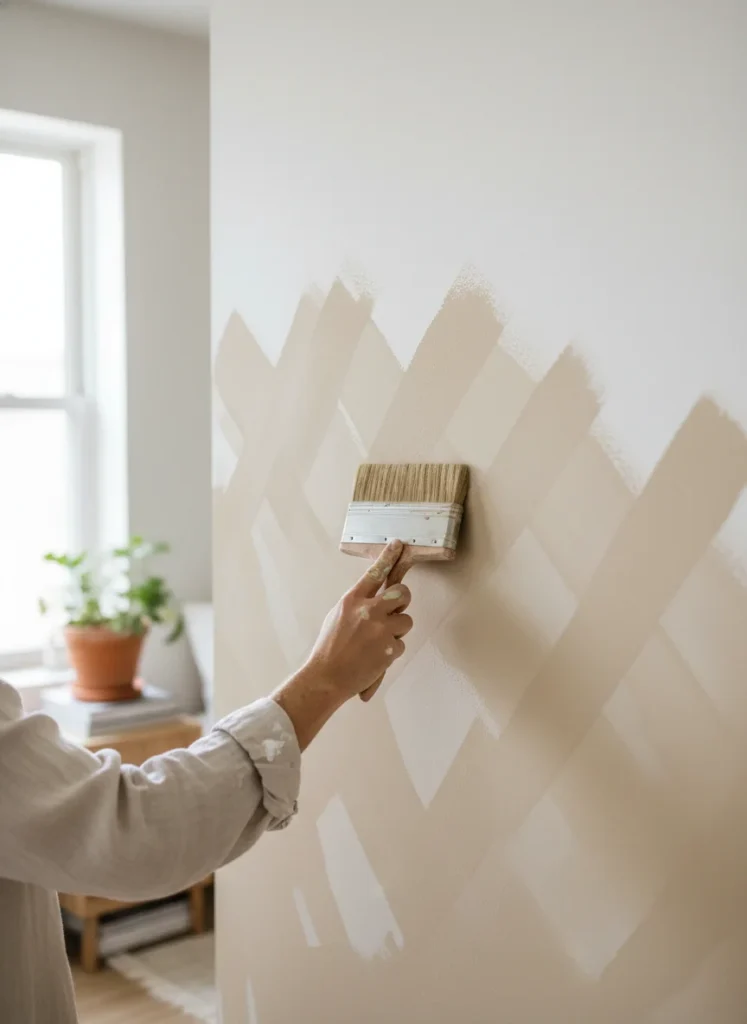
The DIY limewash process on modern drywall is straightforward but requires the right materials and technique to avoid a result that looks like smeared paint rather than a genuine limewash finish. The critical steps are: a breathable primer first, the correct brush, and the X-pattern application method.
Start with a breathable mineral primer, not a standard latex primer, so the limewash can bond properly with the wall surface. Apply it the day before you limewash. For the limewash itself, use a large rectangular block brush with natural or mixed-fiber bristles, not a standard paint roller or a fine-bristle brush. The block brush creates the irregular, directional strokes that give limewash its characteristic texture. Dip the brush approximately one-quarter of the way into the paint and apply in a crisscross X pattern, working in 2-foot sections. The first coat will look thin and patchy. This is correct. Let it dry for two to four hours and apply a second coat in the same pattern. The layering of two thin coats creates depth that a single heavy coat does not achieve.
Practice on a piece of drywall scrap or on the wall area behind a dresser before starting the main surface. The technique is intuitive but the pressure and brush loading take two to three passes to calibrate correctly. A complete DIY limewash paint kit with block brush runs $45 to $80 and includes the paint and application tools needed for a standard small bedroom.
8. Pairing Limewash Walls With Natural Linen Bedding for the Full Italian Villa Effect
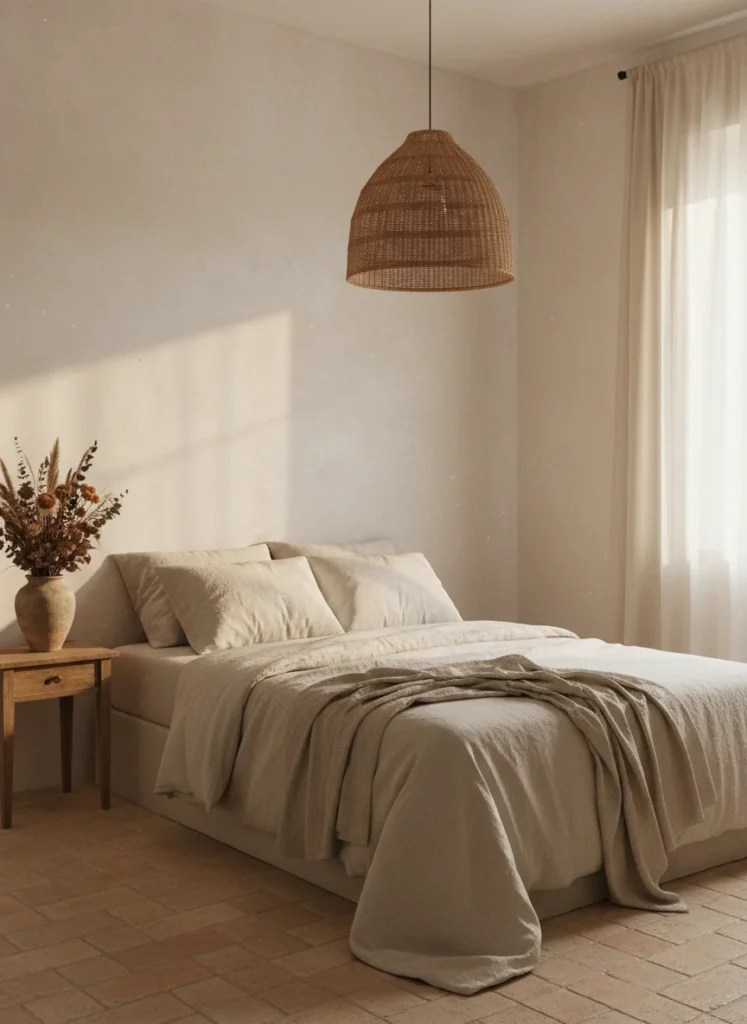
The limewash wall bedroom ideas for small rooms that read as genuinely Italian villa rather than trend-followed bedroom are the ones that layer multiple natural, textural elements alongside the limewash finish. A single limewash wall in an otherwise standard bedroom looks like a limewash wall. Limewash walls combined with natural linen bedding, a rattan light fixture, dried botanicals, and warm amber lighting creates the full multi-sensory effect of a room that belongs in another country and another century.
The elements that work best alongside limewash in a small bedroom: natural linen in warm white or oat (the woven texture of linen echoes the texture of the limewash), terracotta ceramics, rattan or wicker pendant lights, weathered wood furniture, dried grasses and flowers rather than fresh cut flowers, and warm 2700K lighting that deepens the wall tone in the evening. A washed linen duvet cover set in warm ivory or oat is the most important complementary purchase because it is the largest textile surface in the room and the one most visible against the limewash wall. Budget $55 to $80 for the linen bedding.
9. Limewash in Deep Charcoal or Navy for a Moody, Dramatic Small Bedroom
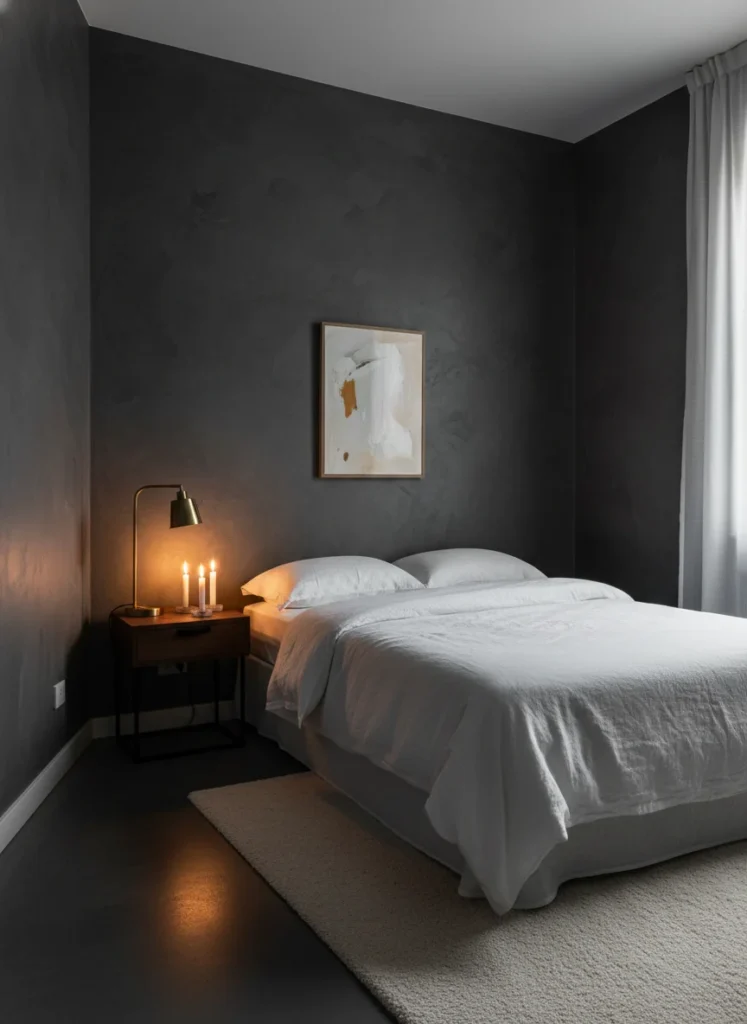
Dark limewash, whether deep charcoal, slate navy, or near-black with a blue undertone, is the most dramatically sophisticated application of the technique in a small bedroom and the one that most surprises people who expect limewash to be light and airy. Dark limewash in a small bedroom creates a cocooning, intimate atmosphere that is the opposite of light-filled and is equally beautiful for entirely different reasons. The texture of the limewash in dark tones creates depth that flat dark paint cannot: the variations in the finish make the dark walls feel three-dimensional rather than flat and absorbing.
The palette that works against dark limewash: white or ivory linen bedding in bright contrast, warm brass hardware and lighting, natural wood at medium tone, and warm amber lighting from multiple sources. The contrast between the dark textured walls and the white bedding is the room’s primary visual relationship and it is a genuinely striking one. Dark limewash is also among the most forgiving of small room techniques because it creates the cocooning effect that makes small spaces feel intimate and intentional rather than cramped. The same principle behind color drenching in the maximalist bedroom post on maximalist small bedroom ideas on a budget applies here, but with the restraint of a single material finish instead of multiple bold elements.
Before we continue, if you’re tired of buying decor that doesn’t look right together, I created something specifically for this…
What to Know Before You Start a Limewash Wall Bedroom Project
A few practical notes before committing to limewash in a small bedroom. First, test your chosen color on at least a 2×2 foot area and observe it at different times of day and under artificial evening light before applying to the full room. Limewash colors shift significantly between morning natural light, afternoon direct sun, and warm lamp light in the evening, and the evening version is the one you live with the most in a bedroom.
Second, limewash is not a reversible finish the way peel-and-stick wallpaper is. It requires painting over to remove. For renters, this means a conversation with the landlord before starting, or using the single accent wall approach where the square footage to restore is smaller. For owners, the permanence is an asset: limewash walls age gracefully and become more characterful over time rather than degrading in the way that standard latex does.
Third, limewash in the bedroom is significantly easier to maintain than limewash in a kitchen or bathroom because it is not exposed to the grease, steam, and high-humidity cycles that challenge the finish in other rooms. A bedroom limewash wall will look essentially the same in five years as it does the day after application, which makes it one of the most durable aesthetic investments in the room.