

This post contains affiliate links. If you buy something through my links, I may earn a small commission at no extra cost to you. I only recommend things I genuinely use or believe in.
Figuring out how to decorate a small bedroom with low ceilings can make you feel like the walls and overhead drywall are actively pressing down on you. When a ceiling sits at seven or eight feet, standard decorating advice often backfires. Traditional bulky bed frames eat up half the room’s vertical height, ornate ceiling light fixtures hang directly into your line of sight, and curtain rods mounted at window level cut the room in half visually. You end up with a cramped box that feels more like a storage basement than a restful bedroom.
The secret to fixing a low ceiling is not tearing down drywall or wishing for taller architecture. The secret is manipulating vertical sightlines, lowering your furniture baseline, and eliminating the visual breaks that tell your brain where the wall stops and the ceiling starts. With the right optical shifts, you can make an eight-foot room feel ten feet tall. Below are thirteen tested methods that stretch low ceilings and add vertical airiness to tight bedrooms.
How to Decorate a Small Bedroom With Low Ceilings: The Vertical Rule
Before buying any new decor, you need to understand how human perception registers ceiling height. When you walk into a bedroom, your eyes naturally scan horizontal lines first: the top edge of your headboard, the horizontal curtain rod, the tops of your dressers, and the hanging light fixture. Every horizontal line creates a visual stop sign that reminds you exactly where vertical space runs out.
To make a low ceiling feel taller, you have to invert that equation. Every piece of furniture, lighting choice, and textile should either hug the floor to maximize open vertical volume, or create a continuous, unbroken vertical line that draws the eye upward toward the ceiling line. If your bedroom also deals with angular architectural quirks, my guide on small bedroom ideas with a slanted ceiling breaks down similar low-clearance rules that keep tight alcoves feeling open.
1. The 6-Inch Low-Profile Platform Bed Foundation
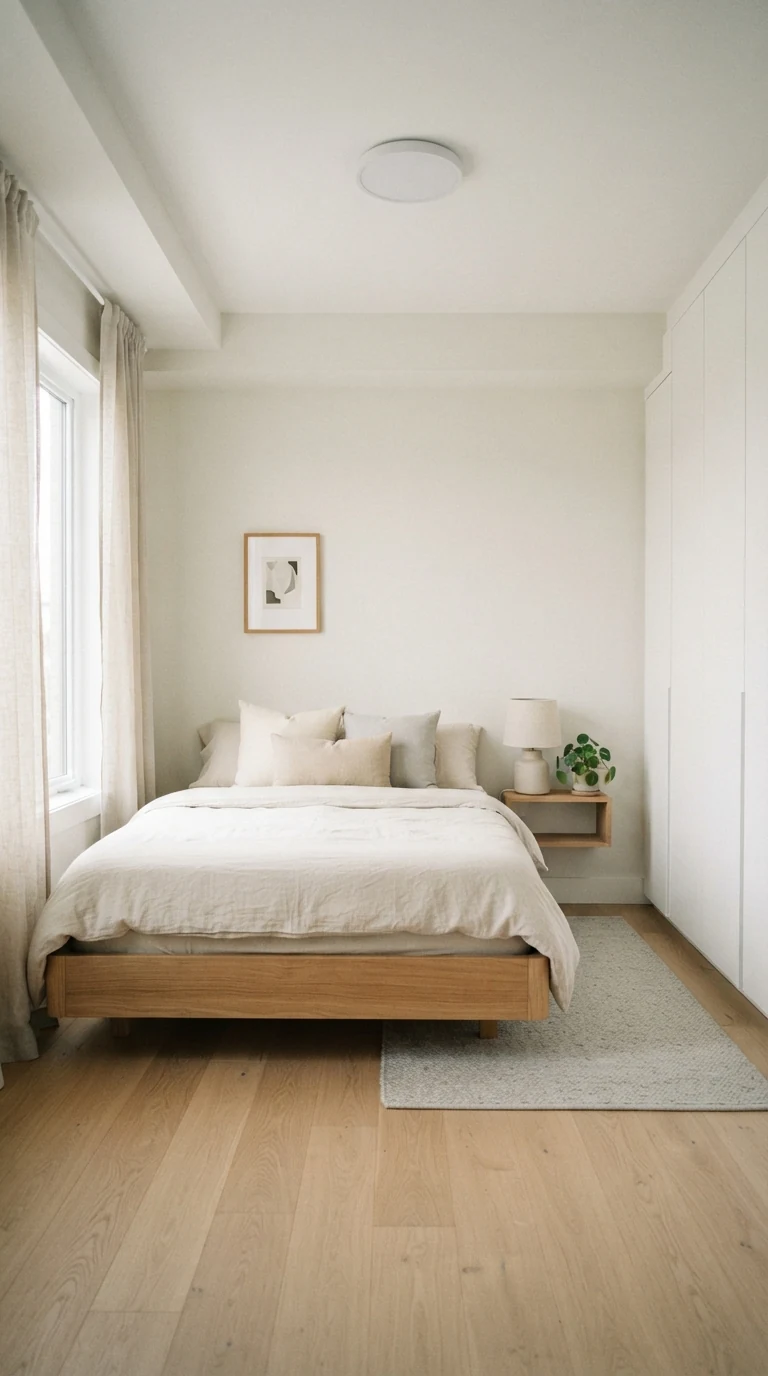
A standard bed setup with a box spring, a tall frame, and a thick mattress easily stands twenty-eight to thirty inches off the floor. In a room with an eight-foot ceiling, that means your bed consumes nearly a third of the total vertical height between carpet and ceiling. Sitting up in bed feels claustrophobic because the ceiling is only four feet above your head.
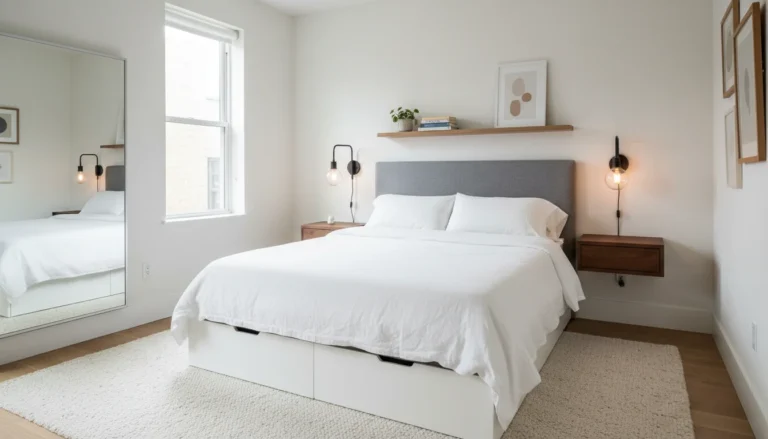
Switch your foundation to this minimalist 6-inch low-profile solid platform bed frame. Dropping your mattress down to eighteen or twenty inches total height immediately opens up an extra foot of empty vertical space above the bed.
That extra foot of vertical clearance makes an enormous psychological difference. The room instantly feels taller, more grounded, and airier from the second you step through the doorway.
2. Ceiling-Mounted Curtain Tracks Flush to Drywall
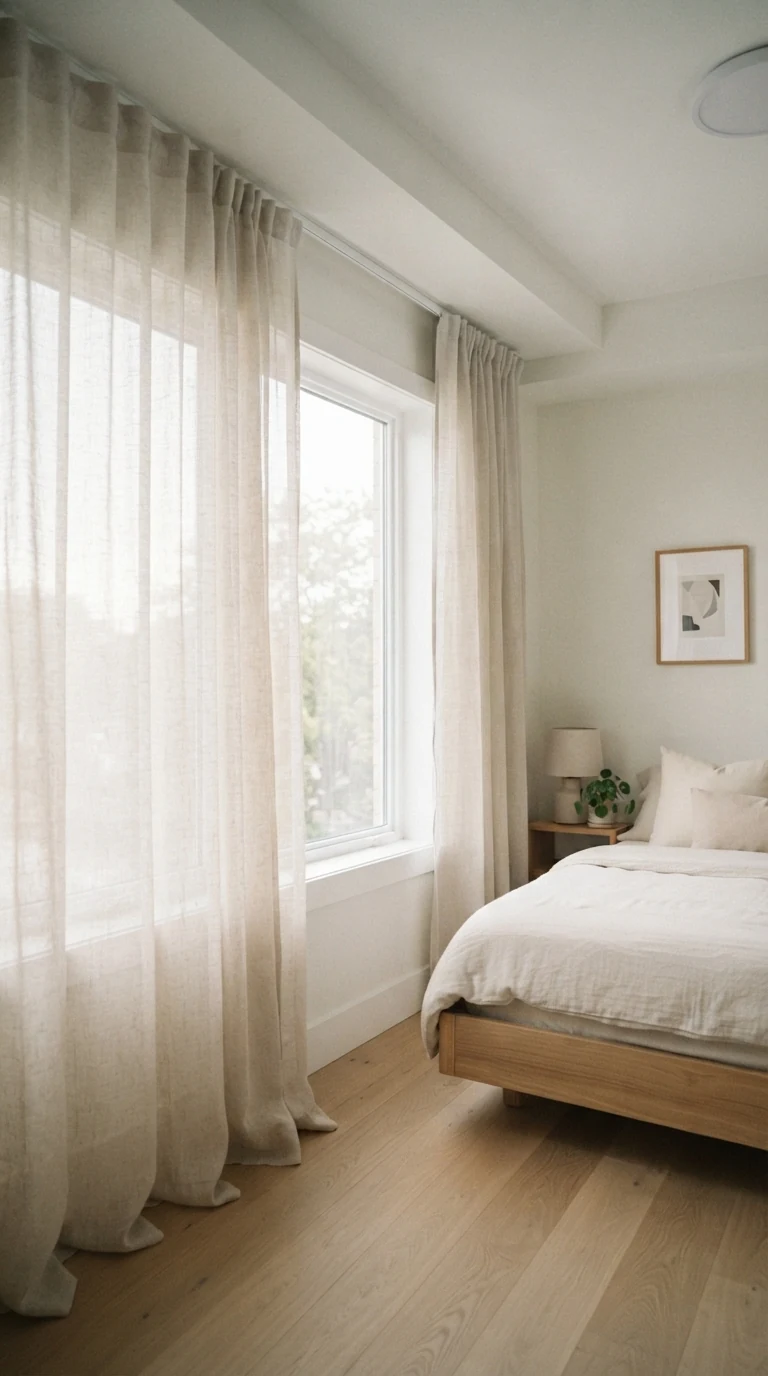
The single most common mistake in rooms with low ceilings is mounting a standard curtain rod two inches above the window frame. Doing this cuts the wall into awkward horizontal segments, highlighting the tiny strip of drywall trapped between the window and the ceiling.
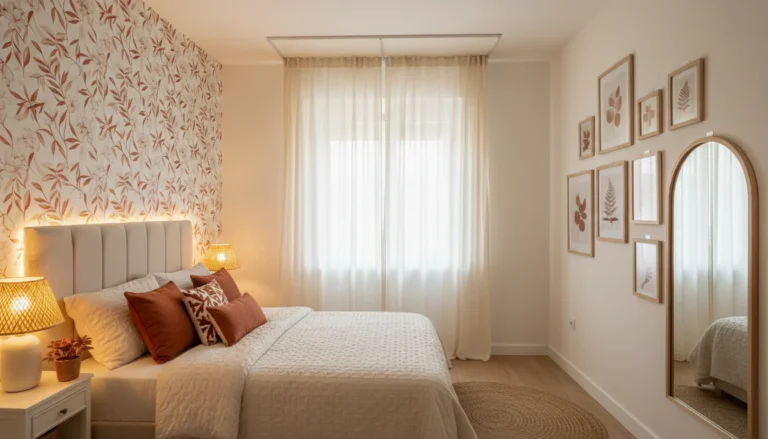
Mount your drapery directly to the ceiling using this slim ceiling-mounted curtain track system that mounts flush to drywall. Because the track screws flat into the ceiling plane, the fabric starts at the absolute highest point in the room and runs completely down to the floor without interruption.
Your eyes perceive the entire wall as a continuous vertical window expanse. It creates the illusion that the window is floor-to-ceiling, which tricks your brain into believing the room has grand architectural height.
3. Subtle Vertical Ticking Stripe Peel-and-Stick Wallpaper
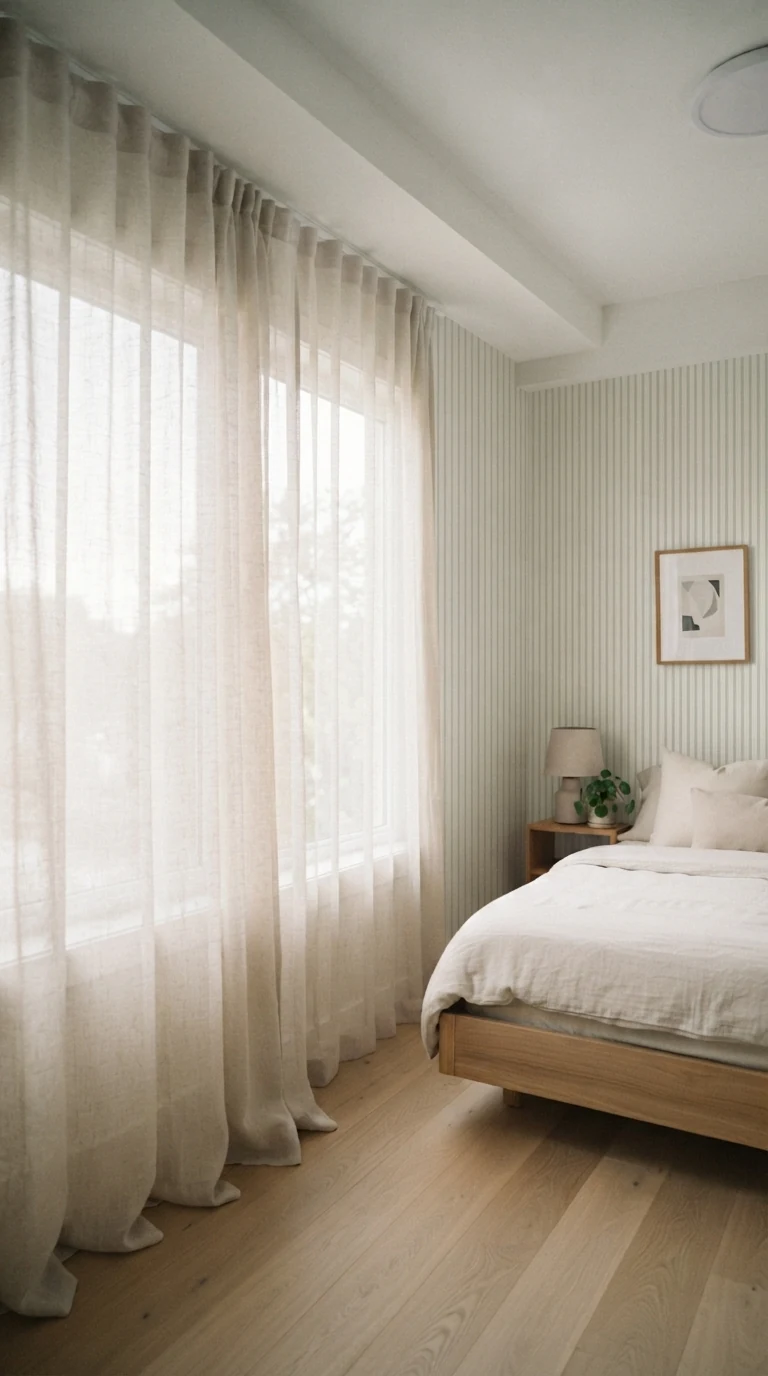
Fashion stylists have used vertical stripes for decades to make people look taller, and the exact same geometric principle applies to interior walls. Horizontal patterns broaden a space, while vertical stripes lead the human eye upward in a steady, unbroken motion.
Install this peel-and-stick neutral vertical ticking stripe wallpaper that removes without residue on the wall behind your bed. Choose a subtle pinstripe or soft ticking pattern in warm beige, soft cream, or muted sage rather than high-contrast circus stripes.
The delicate vertical lines act like visual ladders, pulling the gaze straight up to the ceiling without overpowering a small footprint.
4. The Ultra-Slim 0.6-Inch LED Flush Mount Swap
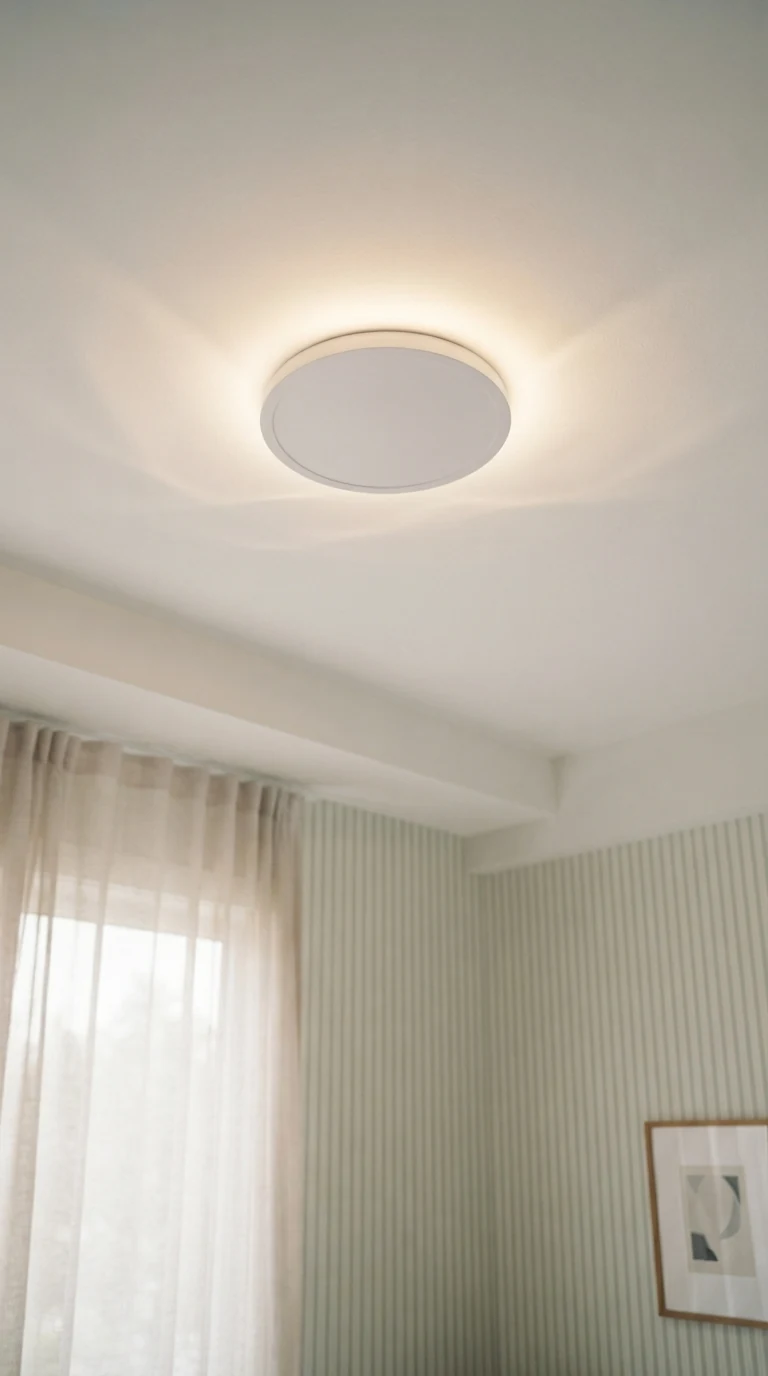
If your bedroom still has a builder-grade glass bowl light fixture hanging ten inches down into the center of the room, that fixture is actively shrinking your ceiling. Every time you walk past it, your peripheral vision registers an obstacle hanging dangerously close to your head.
Replace it with this ultra-thin 0.6-inch flat disc LED ceiling light that hugs the ceiling plane. It mounts almost completely flat against the drywall, eliminating the visual drop entirely.
By clearing that ten-inch drop from the center of the ceiling, the overhead plane feels clean and continuous. For more ways to eliminate harsh ceiling glare, my breakdown on small bedroom lighting ideas explains how to layer warm ambient lamps around the room perimeter.
5. Tall, Slender Full-Length Floor Mirror Leaned Vertically
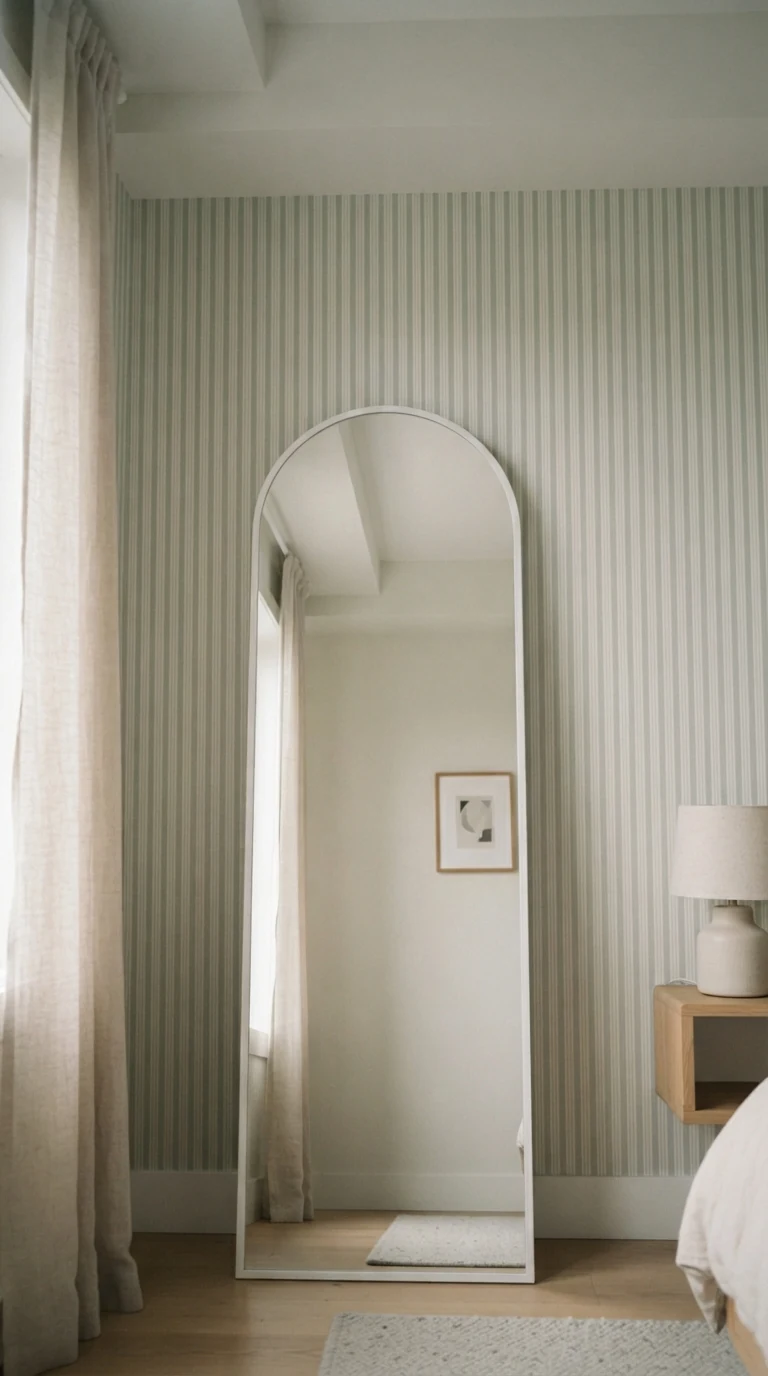
Mirrors reflect light and expand horizontal space, but a tall, narrow mirror acts as a vertical window that pulls ceiling reflections down to eye level. Wide squat mirrors broaden a room, while tall slender proportions draw the eye up.
Lean this 65-inch tall narrow arched metal frame full-length mirror against a corner wall opposite a window. The slender frame takes up less than eighteen inches of horizontal wall space while reaching high toward the ceiling.
The slight backward tilt of a leaning floor mirror reflects the upper ceiling corner and bounces light upward. If you are comparing mirror dimensions, my guide on full-length mirrors for a small bedroom covers exact placement clearances for tight walkways.
6. Low-Profile Headboard Kept Under 36 Inches
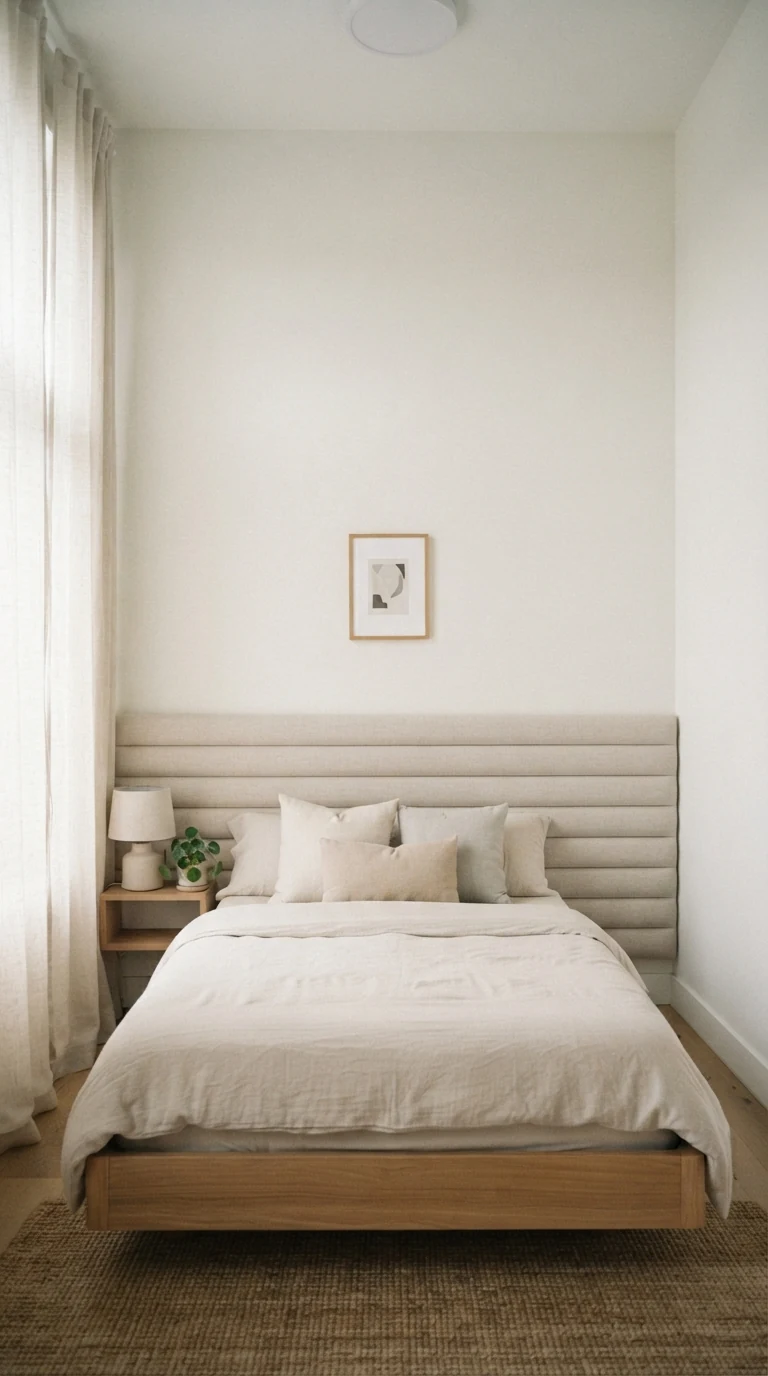
A towering tufted headboard that rises five feet up the wall might look grand in a luxury hotel with eleven-foot ceilings, but in an eight-foot rental bedroom, it chokes the wall. It leaves only two or three feet of drywall above the headboard, making the ceiling look comically low.
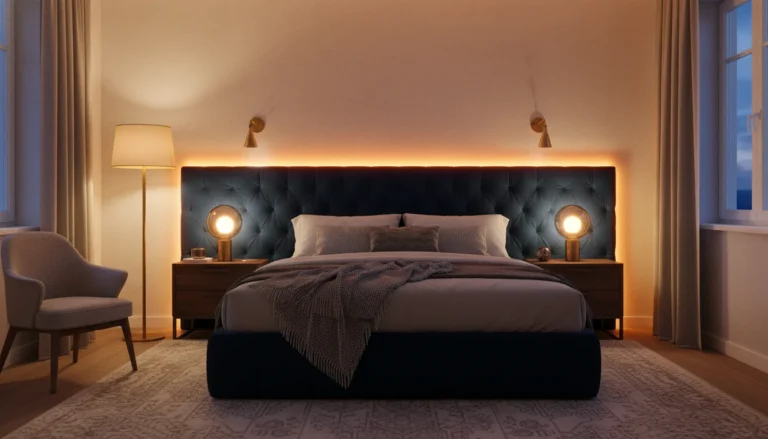
Keep your headboard height strictly under thirty-four to thirty-six inches from the floor, or skip a traditional wooden headboard entirely in favor of wall-hung leather-strap cushions. Keeping the headboard low preserves a large, uninterrupted block of wall space above your pillows.
That large expanse of open wall above the bed creates negative space that lets the room breathe. Your eyes register the height of the wall rather than being stopped short by a tall headboard panel.
7. The Color-Drenched Ceiling Blend Technique
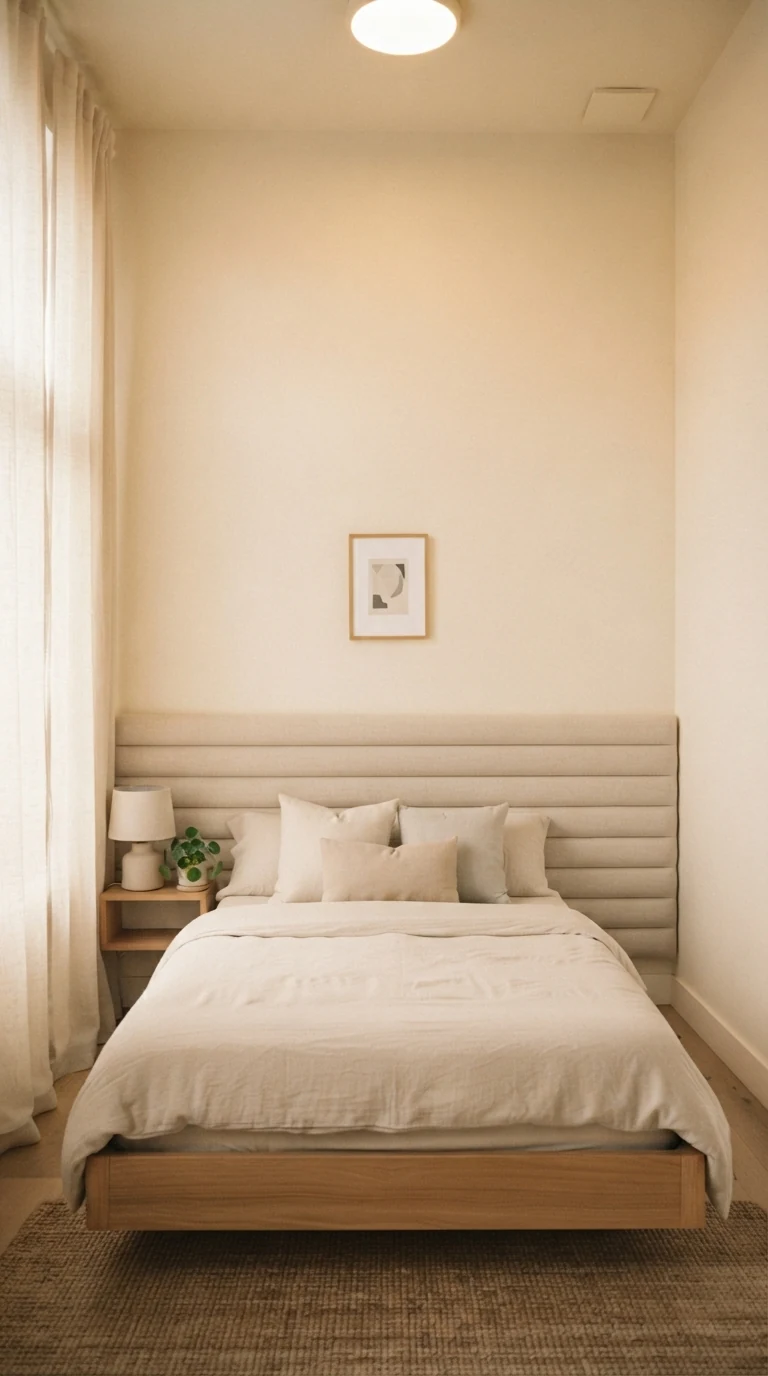
Traditional decorating rules dictate painting ceilings stark brilliant white while painting walls a color. But in a room with a low ceiling, a bright white ceiling against colored walls creates a sharp, high-contrast line right at eight feet, shouting to your brain exactly where the wall stops.
Paint your ceiling the exact same paint color as your walls, using a matte or flat finish. If your walls are a warm linen cream, soft taupe, or light muted sage, carry that same color seamlessly across the ceiling plane.
Without a stark contrasting boundary line, the corner seams between wall and ceiling soften and blur. The eye cannot pinpoint where the wall ends, making the room feel continuous and infinite.
8. Slender Spine Bookshelf Tower With Minimal Footprint

Wide horizontal bookcases chop up a room horizontally and take up precious floor area. In a low-ceiling space, you want vertical elements that encourage the gaze to travel straight from the floorboard to the upper wall.
Incorporate this tall vertical spine bookshelf tower that stacks books into a slender column. It stands six feet tall but only occupies a tiny eleven-inch square of floor space in a forgotten corner.
Because the books stack horizontally on hidden metal shelves, the unit looks like a floating vertical column of literature. It introduces an architectural vertical line that emphasizes the full height of your corner.
9. Wall-Mounted Uplight Sconces Instead of Downlights
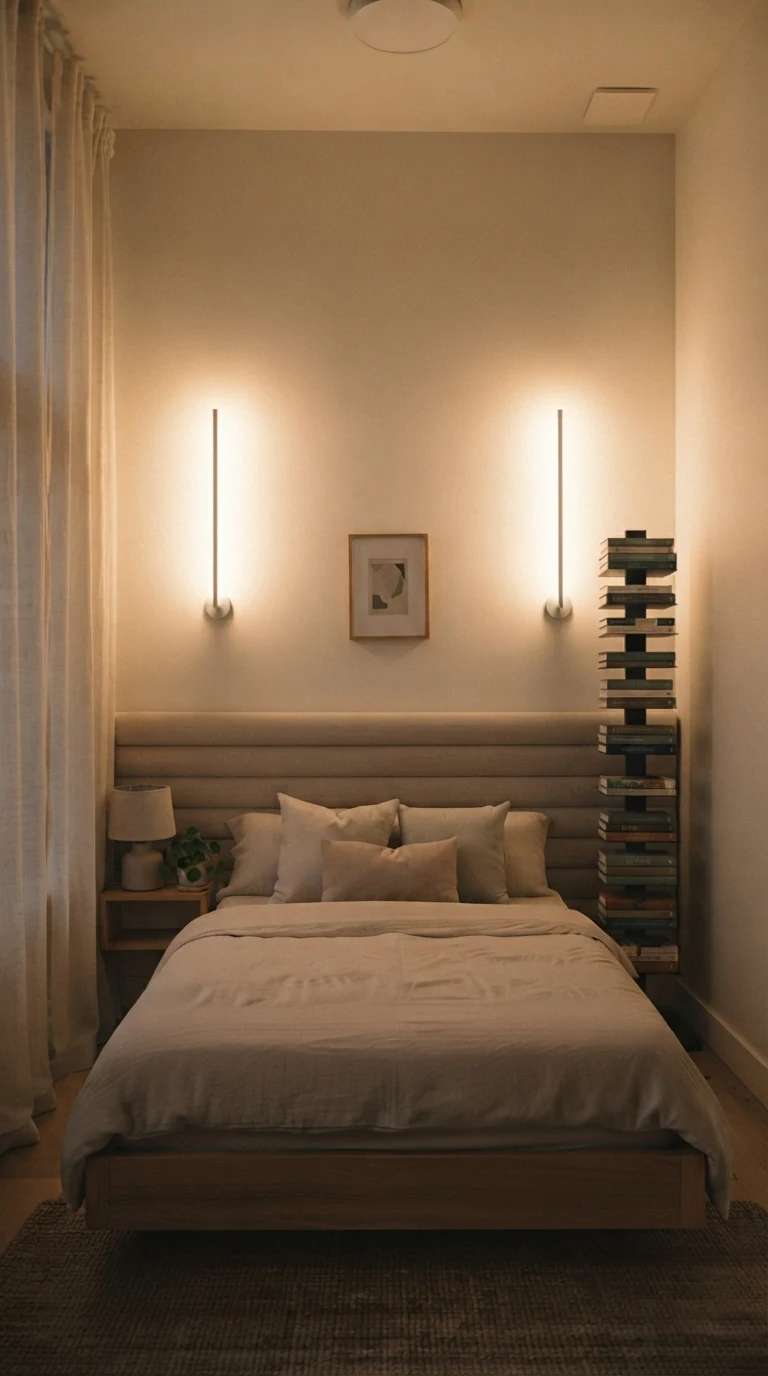
Most bedside lamps and ceiling downlights push illumination downward toward the carpet, leaving the upper corners of the room in dark shadow. Shadows on an overhead surface make a low ceiling feel like a heavy lid sitting on the room.
Install plug-in wall sconces with open upward-facing shades or dedicated uplight fixtures. When light washes upward across the ceiling, the illuminated surface reflects diffused ambient light back down into the room.
Lighting the ceiling directly makes the drywall plane look brighter and visually pushes it away from you, instantly lifting the heavy feeling of low overhead space.
10. Low Bedside Tables Kept Under 18 Inches

If you pair a low-profile platform bed with a standard tall twenty-six-inch nightstand, the visual balance is completely thrown off. A tall nightstand looms awkwardly over the low mattress and introduces another tall horizontal break that crowds the wall.
Choose compact nightstands or floating wooden ledges that stand between fourteen and eighteen inches high, matching the exact surface height of your low mattress. Keeping all furniture surfaces low creates a consistent horizontal baseline close to the floor.
When all furniture stays anchored near the bottom of the room, the remaining vertical space above feels expansive and uncluttered. If you are decorating a room with exceptionally tall architecture, the opposite rules apply, as detailed in my guide on decorating a small bedroom with high ceilings.
11. Vertical Wood Slat Wall Accent Panels
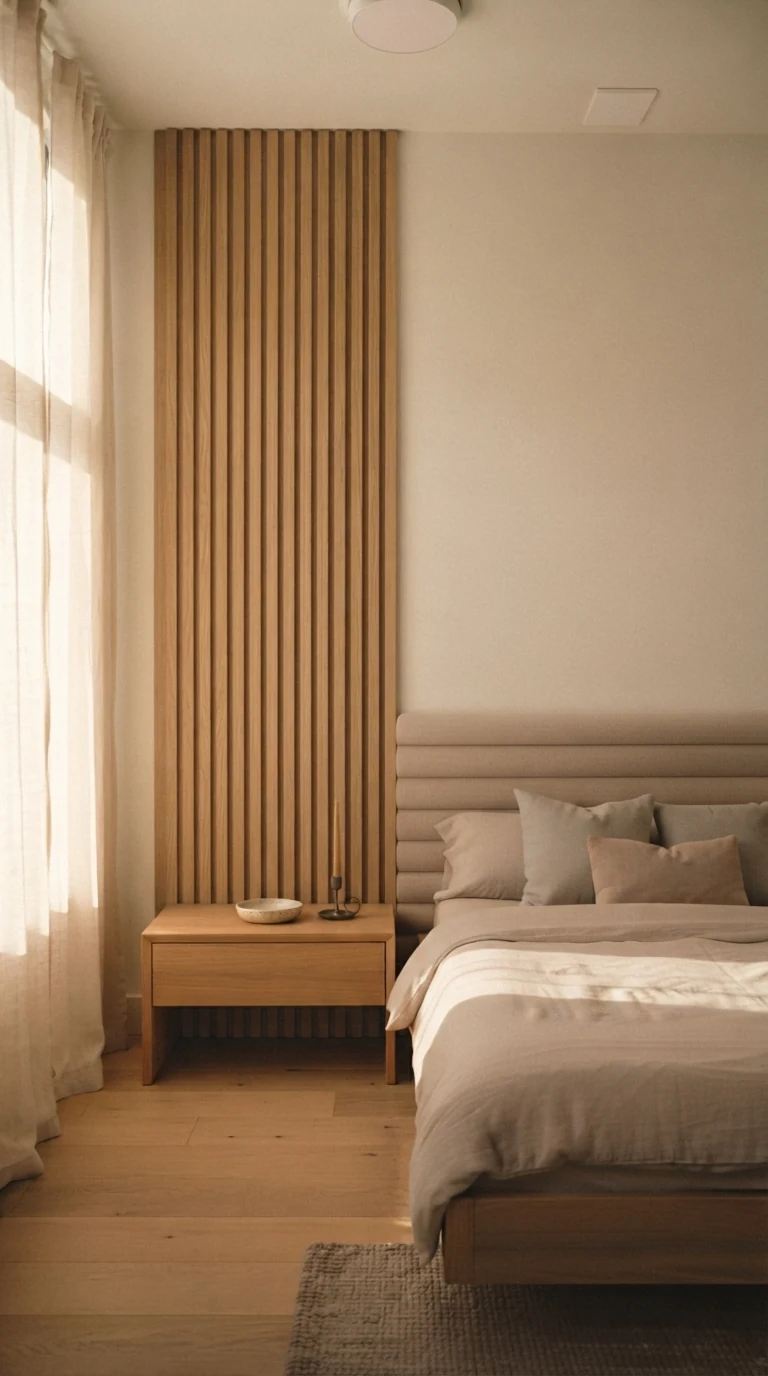
If you want architectural texture in a plain apartment bedroom, vertical acoustic wood slat panels deliver intense vertical rhythm. The alternating wood strips and deep black felt gaps create repeating vertical shadow lines that make any wall look taller.
Install these natural oak vertical wood slat acoustic panels with sound dampening felt behind one side of your bed or behind a study desk. You do not need to cover the entire room; a single thirty-inch wide vertical section creates a sharp vertical feature.
The continuous vertical slats lead the eye straight up to the ceiling while dampening echo, making your bedroom feel quiet and solidly constructed.
12. Vertical Stacks of Framed Art Instead of Horizontal Rows
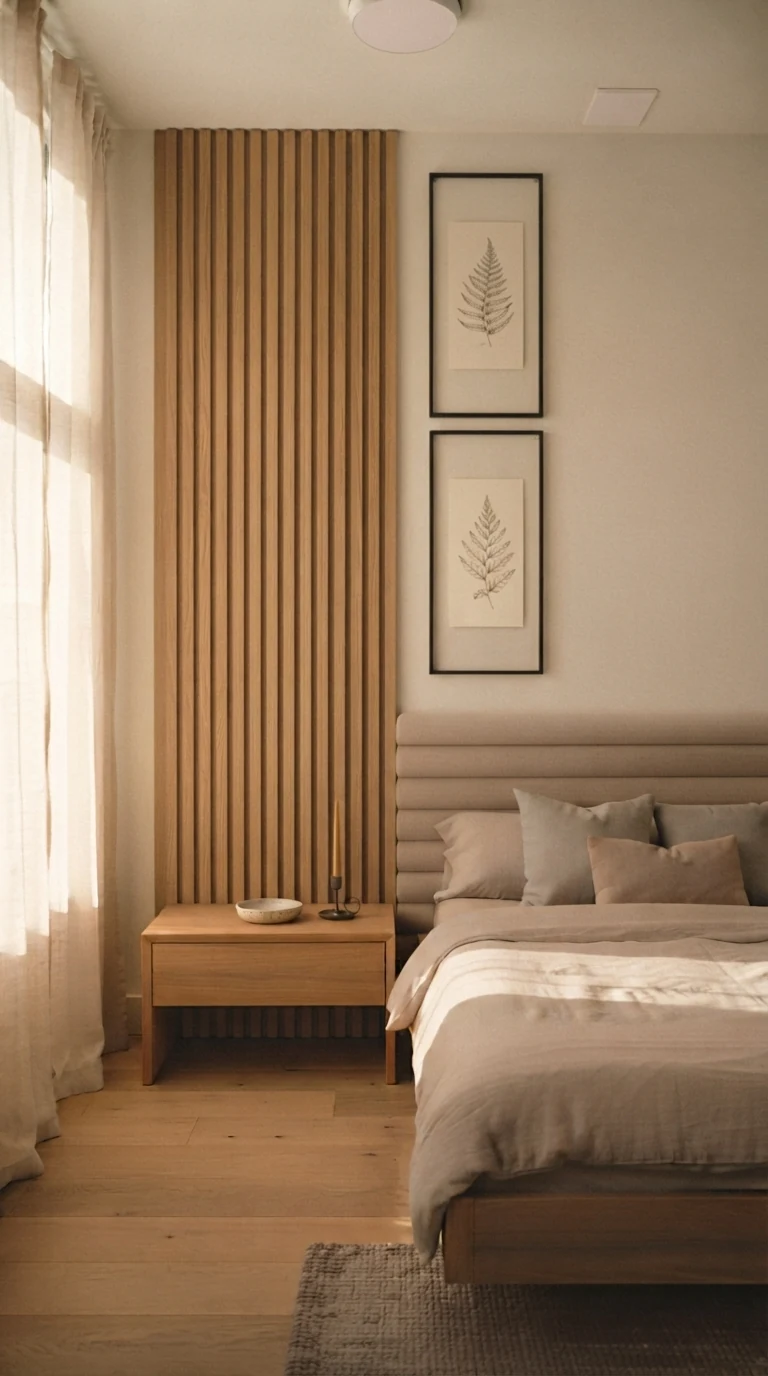
Hanging three pictures side-by-side in a horizontal row pulls the eye across the room, reinforcing the horizontal width and making a low ceiling feel more obvious. To change that perception, change the orientation of your gallery layout.
Take two or three smaller matching frames and hang them vertically, one directly above the other, with only two inches of spacing between frames. This vertical column acts as a directional arrow, guiding the eye straight upward toward the ceiling line.
The narrow vertical arrangement uses wall space efficiently while reinforcing the height of the room, turning empty drywall into an optical height tool.
13. Ombre Sheer Curtains That Fade Light Toward the Top
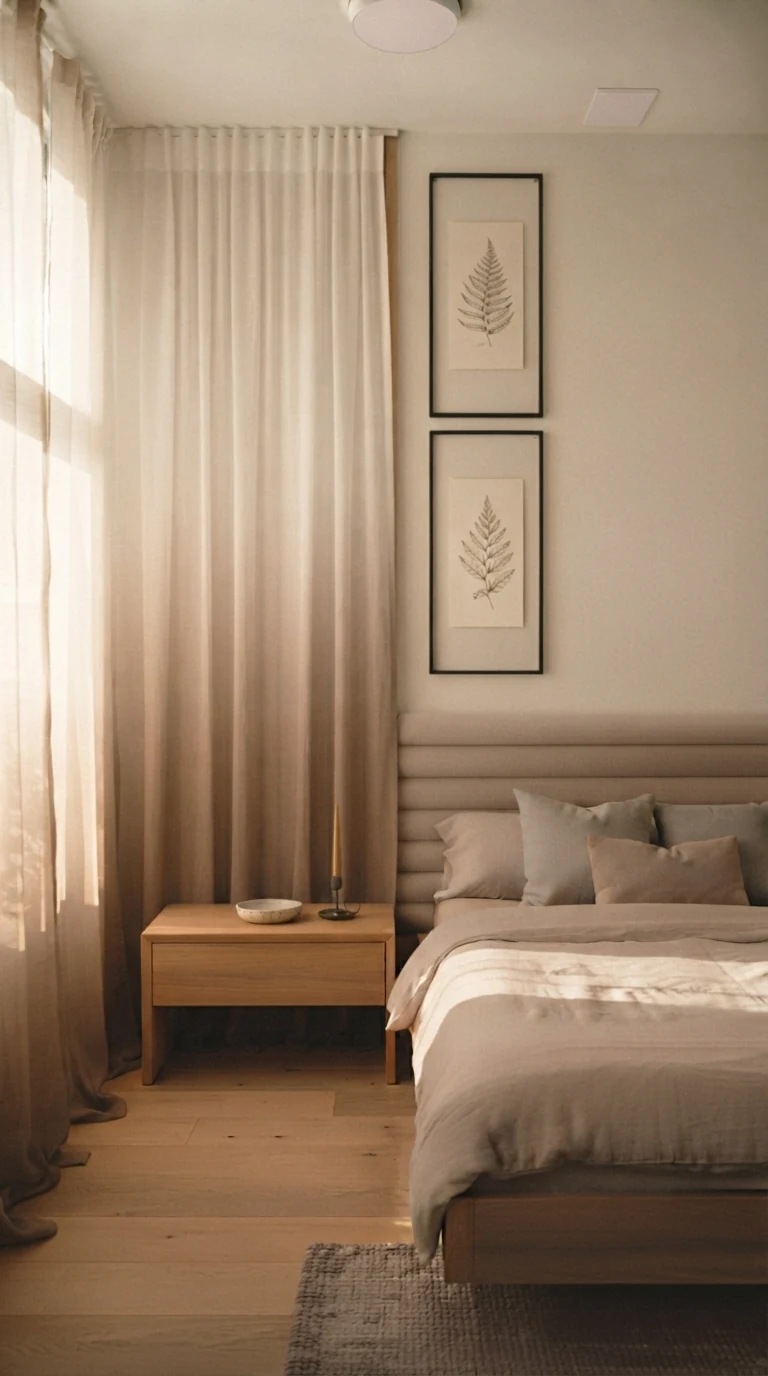
Color weight plays a major role in how heavy or light a room feels. When dark, heavy colors sit near the top of a wall, they visually weigh the ceiling down, making it feel lower than it actually is.
Hang sheer linen drapes that feature a subtle ombre gradient, or choose two-tone curtains where the darker neutral tone anchors the bottom hem and transitions into pure white at the ceiling track. The lighter fabric at the top dissolves into the ceiling line, letting natural daylight illuminate the upper corners.
Having a small bedroom with low ceilings does not mean settling for a dark, claustrophobic box. When you lower your furniture baseline, mount curtains to the ceiling, and introduce strong vertical lines, the ceiling naturally lifts, leaving you with a room that feels open, intentional, and deeply comfortable.