
This post contains affiliate links. If you buy something through my links, I may earn a small commission at no extra cost to you. I only recommend things I genuinely use or believe in.
Most small bedrooms are lit by a single glass dome fixture in the center of the ceiling. When you flip that switch at night, it floods the room with flat, glaring light while casting dark shadows into the corners where you actually spend time. If you have ever wondered what lighting is best for a small bedroom, the answer is not a brighter overhead bulb. It is a calculated balance of fixture types, color temperatures, and lumen distribution.
Lighting a compact room is a technical challenge before it is an aesthetic one. Too much direct light makes a small bedroom feel clinical, while too little light makes the perimeter disappear into gloom. If you are looking for visual styling ideas and decorative arrangements, start with our companion guide on 15 small bedroom lighting ideas to make a tiny room look bigger. This guide provides the practical buyer’s framework: the lumen math, bulb temperatures, and hardware selections that eliminate glare.
How Many Lumens Do You Need for a Small Bedroom?
Lighting designers calculate bedroom brightness using lumens per square foot. For a restful sleeping space, the recommended standard is twenty to thirty lumens per square foot of total floor area. In a typical ten-by-ten bedroom measuring one hundred square feet, you need between two thousand and three thousand total lumens distributed across the entire room.
The critical mistake is trying to deliver all three thousand lumens through one central ceiling socket. That creates an intense hotspot directly over the mattress. Instead, split your lumen budget into three functional layers: roughly one thousand lumens for general ambient illumination, eight hundred lumens split between bedside reading fixtures, and four hundred lumens of soft accent light along the floor or perimeter.
The Kelvin Scale Explained: Why 2700K Is Best for Bedrooms
Light bulb color temperature is measured in Kelvins, and it dictates how your brain perceives the room. Hardware store shelves are packed with 5000K daylight bulbs and 4000K cool white bulbs. While these crisp, blue-tinted tones work well in kitchens or workshops, they suppress melatonin production and make small bedroom walls feel stark and institutional.
The ideal color temperature for every standard bedroom fixture is 2700K warm white. At 2700K, the light carries a gentle golden hue that mimics sunset, softening wall textures and helping your eyes relax in the evening. If you prefer a slightly crisper reading light that still feels welcoming, 3000K soft white is the absolute upper limit to consider.
The 9 Essential Lighting Fixtures and Hardware Setups for Small Bedrooms
1. Switch Every Bulb to 2700K Warm White
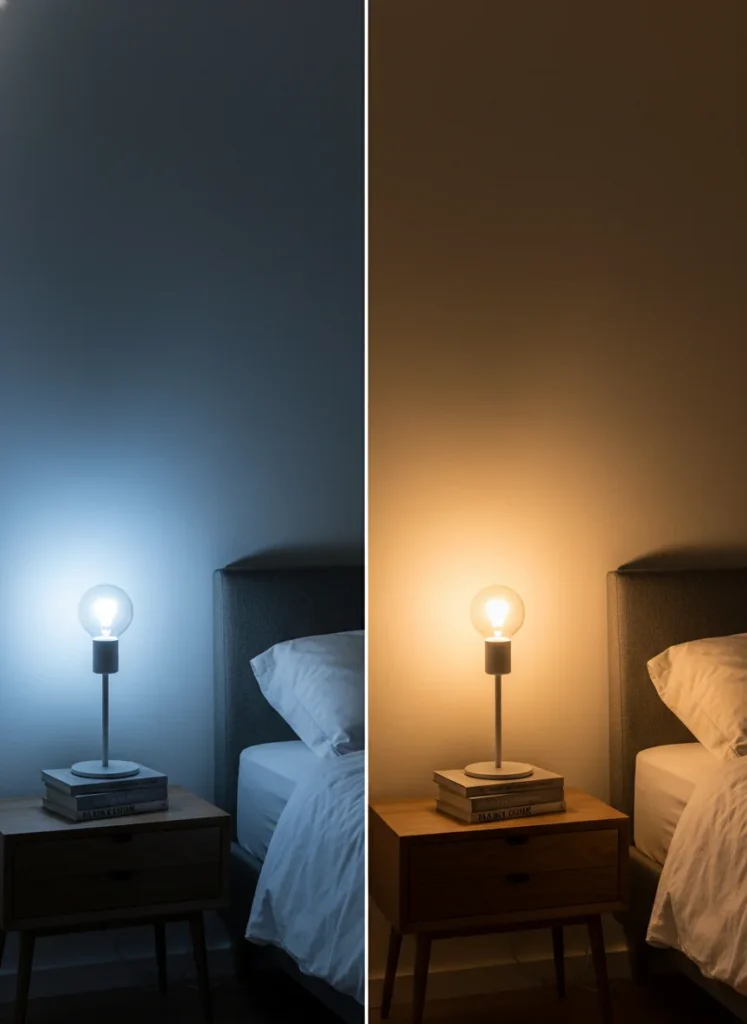
The single most effective fifty-dollar upgrade you can make to a bedroom is replacing every mismatched bulb with unified 2700K LED options. Look for bulbs with a Color Rendering Index of ninety or higher so fabric colors and wood grains appear natural rather than washed out.
Opt for fully dimmable A19 or E26 base bulbs rated between four hundred and eight hundred lumens. A standard pack of dimmable 2700K warm white LED bulbs ensures consistent warmth across every lamp in the room.
2. Add Bedside Wall Sconces to Replace Table Lamps
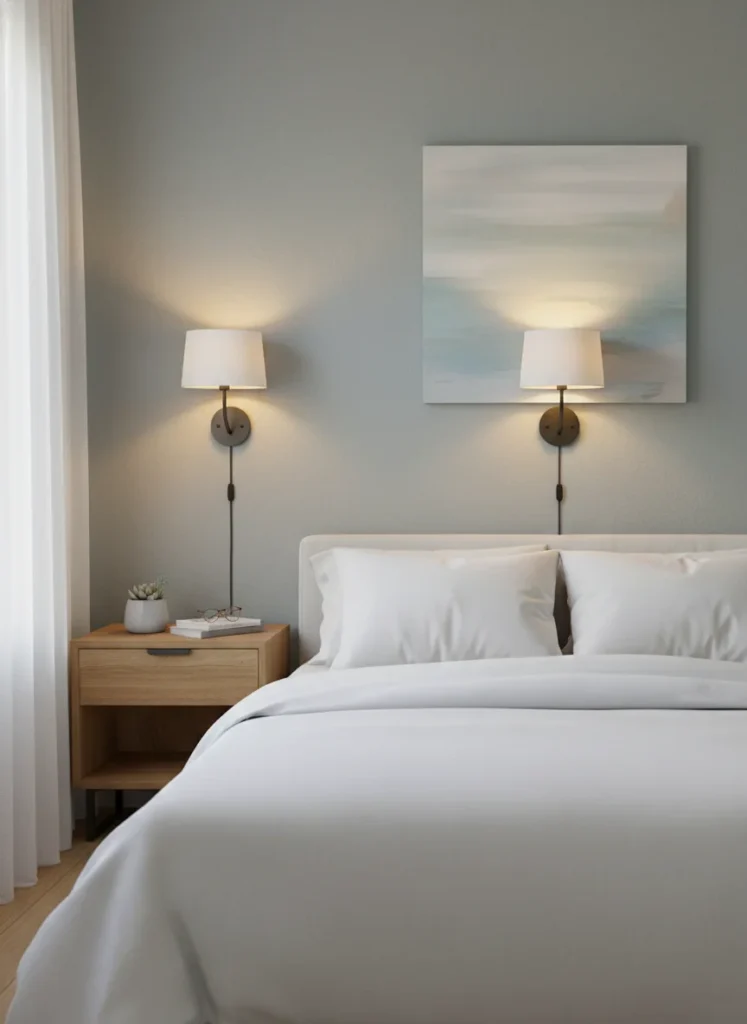
Bedside table lamps claim roughly eight inches of tabletop diameter, which can consume half your available nightstand surface. Wall-mounted plug-in sconces eliminate that footprint entirely, keeping reading light at eye level without requiring an electrician.
Choose swing-arm or articulating fixtures that allow you to direct beam angles toward your book. A set of plug-in swing arm wall sconces mounted twenty-six inches above the mattress provides focused task light without spilling harsh glare across the entire room.
3. Put a Floor Lamp in the Darkest Corner
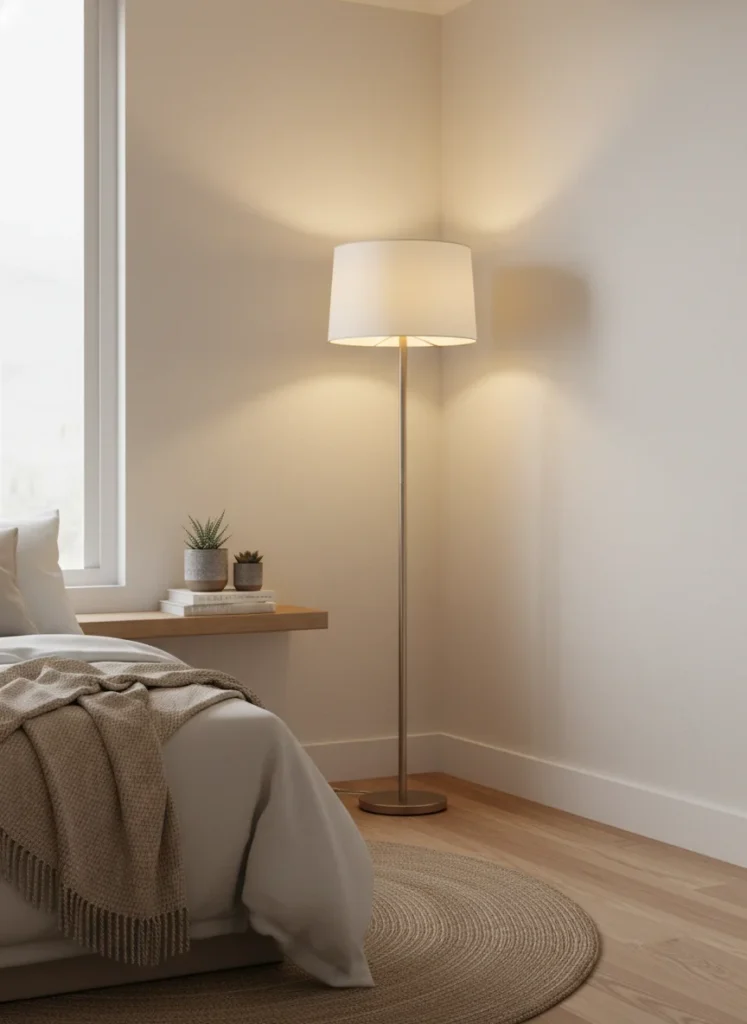
When corners fall into shadow, human vision registers the room boundary as ending prematurely. Placing a tall floor lamp in the corner farthest from your door pushes light upward and outward, restoring the true perimeter of your room.
Torchiere fixtures or paper-shade floor lamps that bounce illumination off the ceiling provide diffused ambient light that eliminates harsh ceiling glare. A slender corner floor lamp with a linen shade takes up less than ten square inches of floor area while dramatically softening the room.
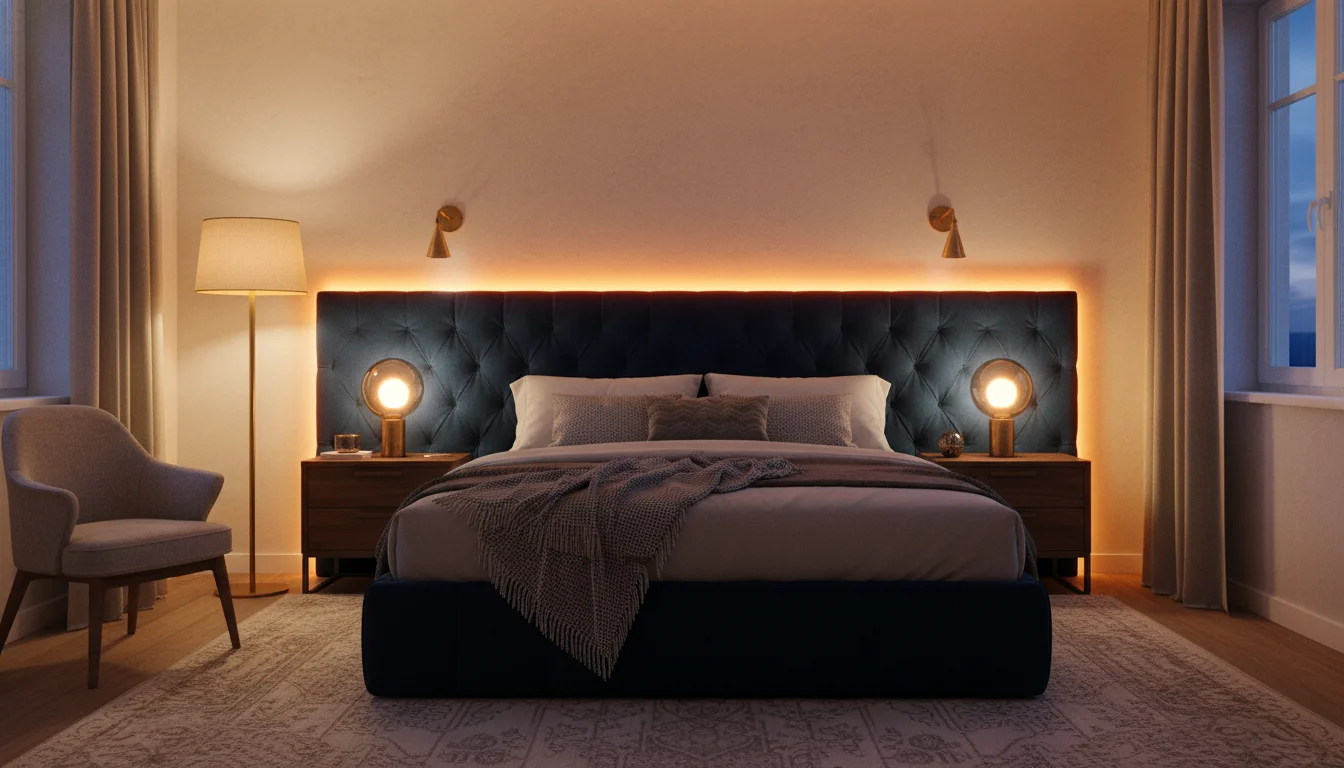
4. Install LED Strip Lights Behind the Headboard
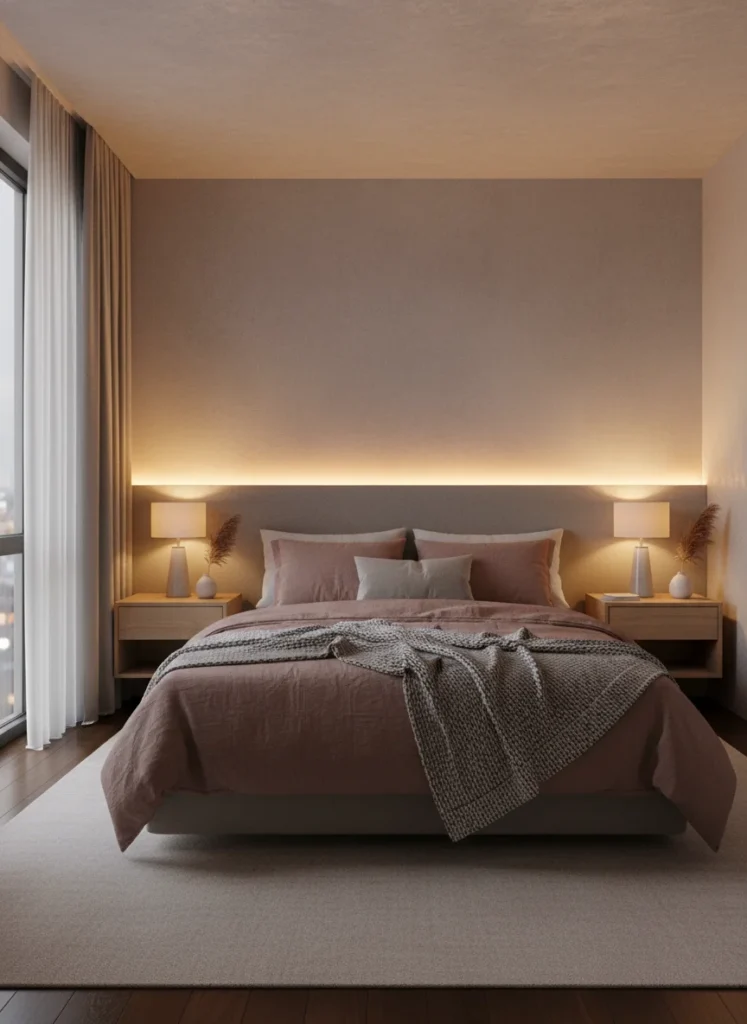
Backlighting your headboard introduces indirect illumination that bounces softly off the wall behind you. Because the actual light diodes remain hidden from view, your eyes register a gentle halo effect rather than direct beam glare.
Select continuous COB LED light strips rather than cheap dot-matrix tape. Continuous phosphor coating eliminates visible hotspots and delivers uniform ambient glow. Run a warm white dimmable COB LED strip along the rear perimeter of your headboard for evening relaxation.
5. Use Under-Shelf and Under-Furniture LED Strips for Floating Effects
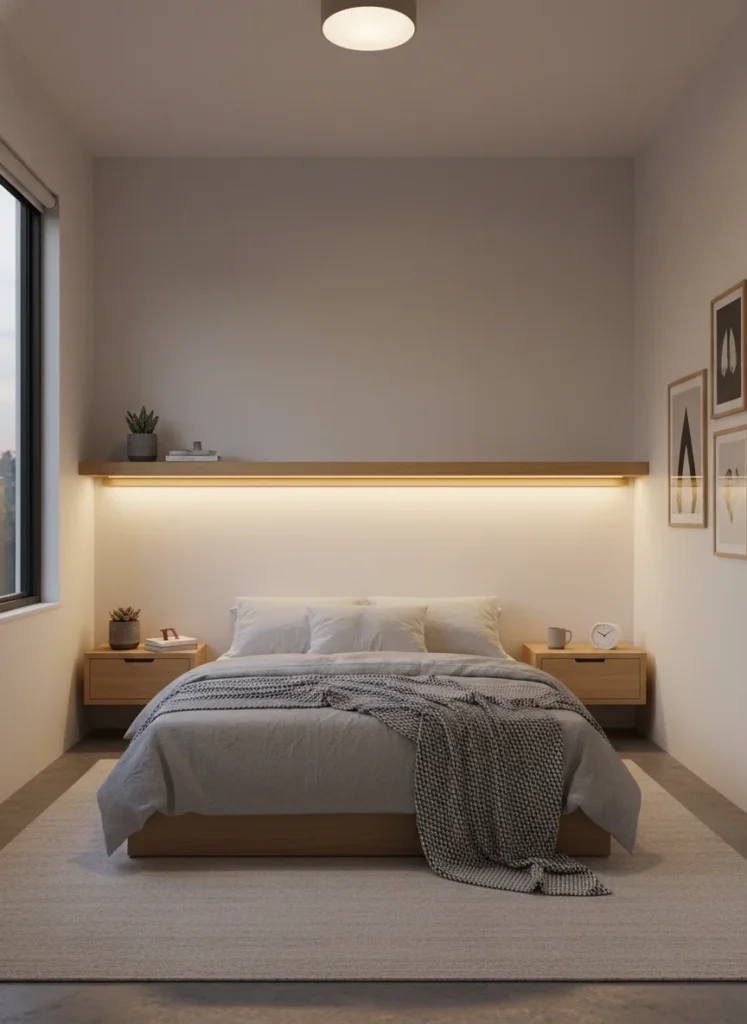
Lighting placed beneath floating nightstands, bookshelves, or bed frames casts gentle radiance across the baseboards. In addition to serving as a non-disruptive nightlight, low-level illumination makes heavy furniture feel lighter and detached from the floor plane.
Keep these low-level fixtures operating under three hundred lumens so they do not overpower your primary lamps. Motion-activated or USB-rechargeable strips work well under bed frames, providing immediate pathway guidance during nighttime trips.
6. Hang Curtains High and Wide, Then Backlight Them
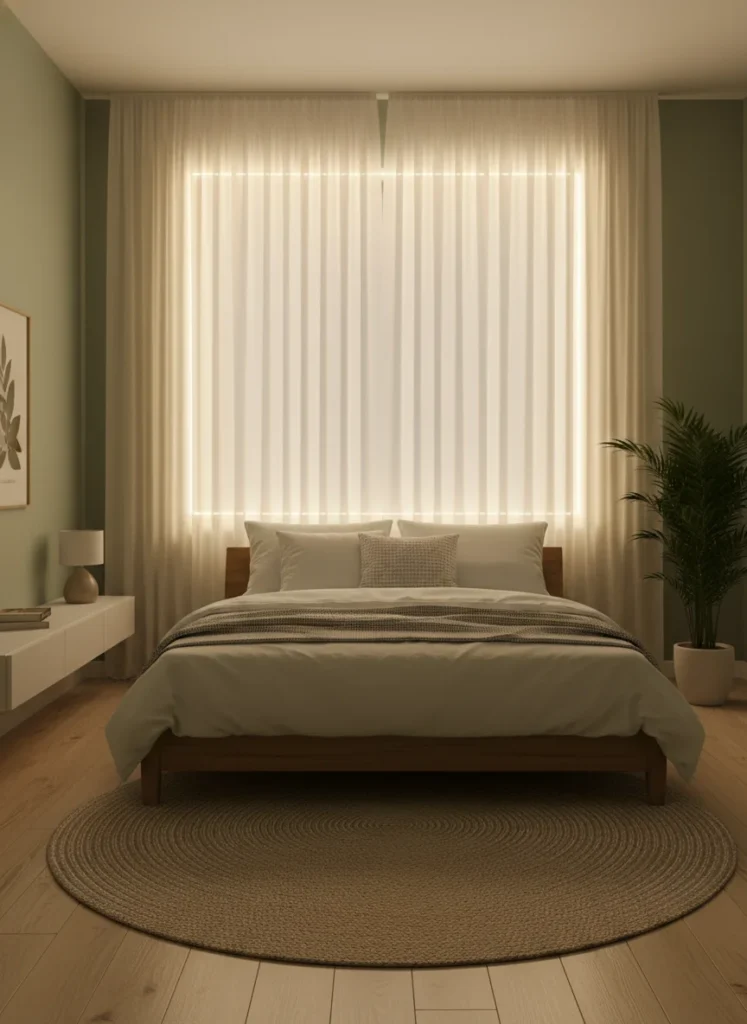
Drapery fabric is an excellent acoustic and visual diffuser. When you tuck a warm LED strip behind a ceiling-mounted curtain rod, the fabric catches the glow and turns an entire window wall into an architectural light box.
Pair this technique with semi-sheer linen panels in warm ivory or soft cream. The diffused light adds vertical texture to bare walls, softening the hard rectangular geometry of small bedrooms.
7. Add a Dimmer Switch to Every Controllable Light
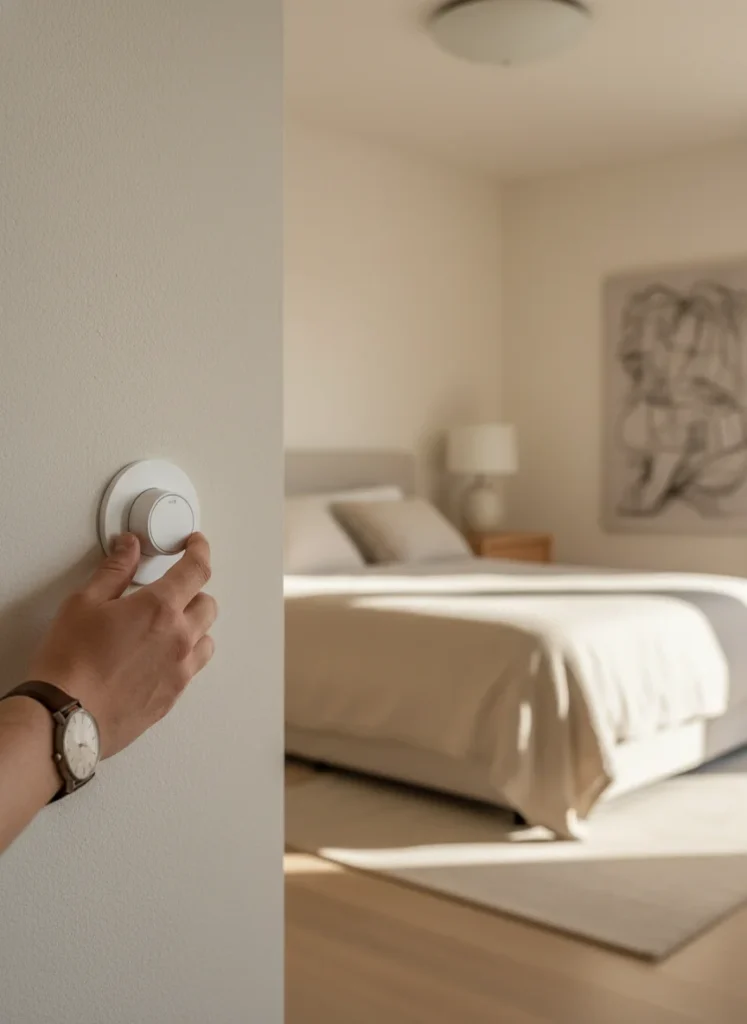
A light source without dimming capability locks you into a single intensity regardless of the hour. Morning dressing routines require brighter illumination, while late evening reading calls for subdued warmth.
For table and floor lamps, plug-in inline slide dimmers require no electrical wiring. Simply plug the module into the wall socket and connect your lamp cord. A simple plug-in LED lamp dimmer module gives you granular control over brightness levels from ten to one hundred percent.
8. Place a Mirror to Reflect Your Best Light Source
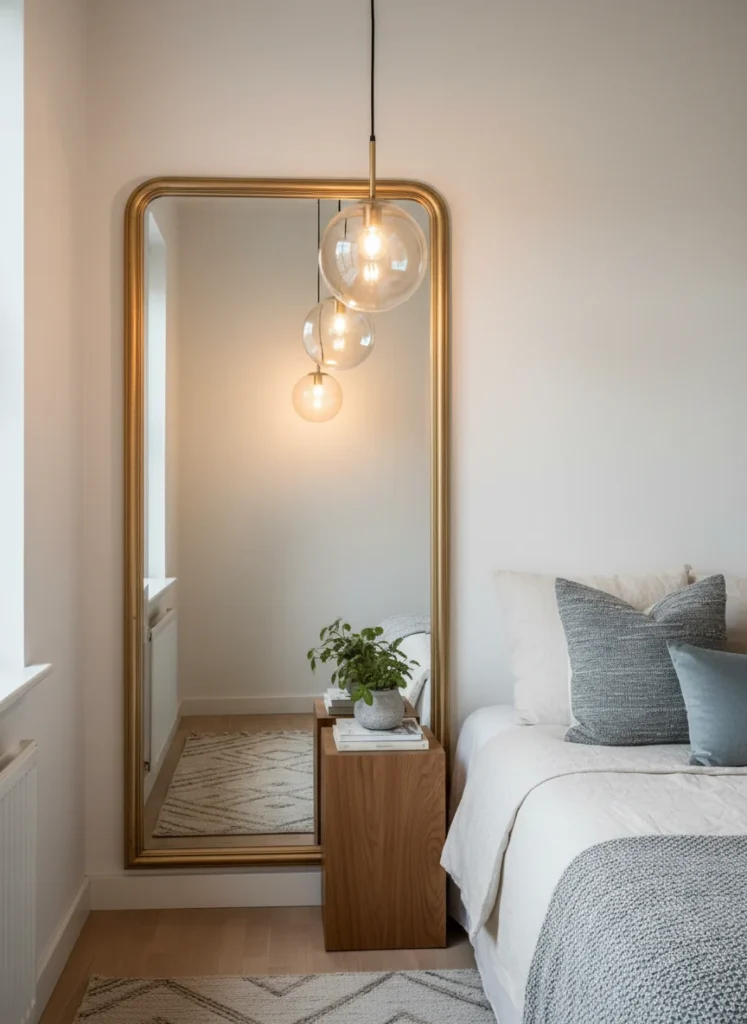
A mirror functions as an unpowered lighting amplifier. Positioning a wall or leaner mirror adjacent to your secondary light fixture catches the warm glow and reflects it back across the darker quadrants of the room.
Avoid positioning mirrors where they reflect bare bulb filaments directly into your eyes when lying in bed. Instead, angle the reflective glass toward a diffused shade or textured curtain to bounce soft, scattered lumens.
9. Use Fairy Lights or Accent Lighting to Define Zones
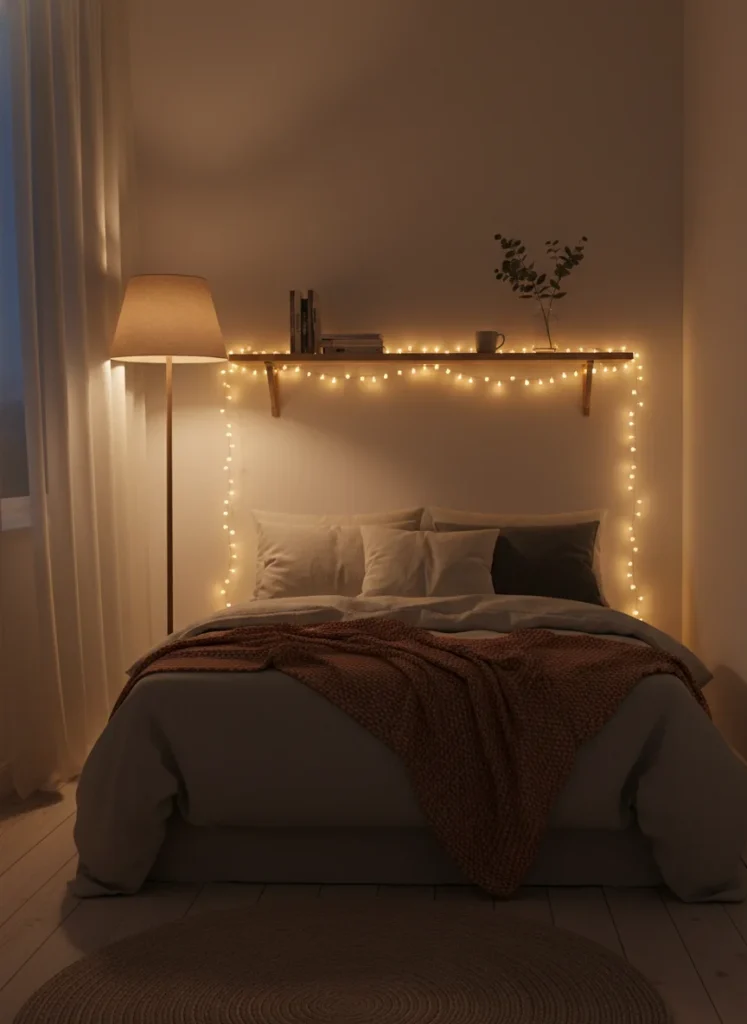
In compact rooms that combine sleeping, vanity, and reading areas, delicate micro-fixtures help establish spatial boundaries without physical dividers. Delicate copper-wire micro lights draped along a bookshelf or headboard corner introduce tiny points of warm warmth.
Keep these accent accents subtle and ensure they operate on warm 2700K diodes rather than cool blue-white wire. They serve as psychological signals that the working day is over and the bedroom is shifting into rest mode.
The Complete Small Bedroom Lighting Selection Checklist
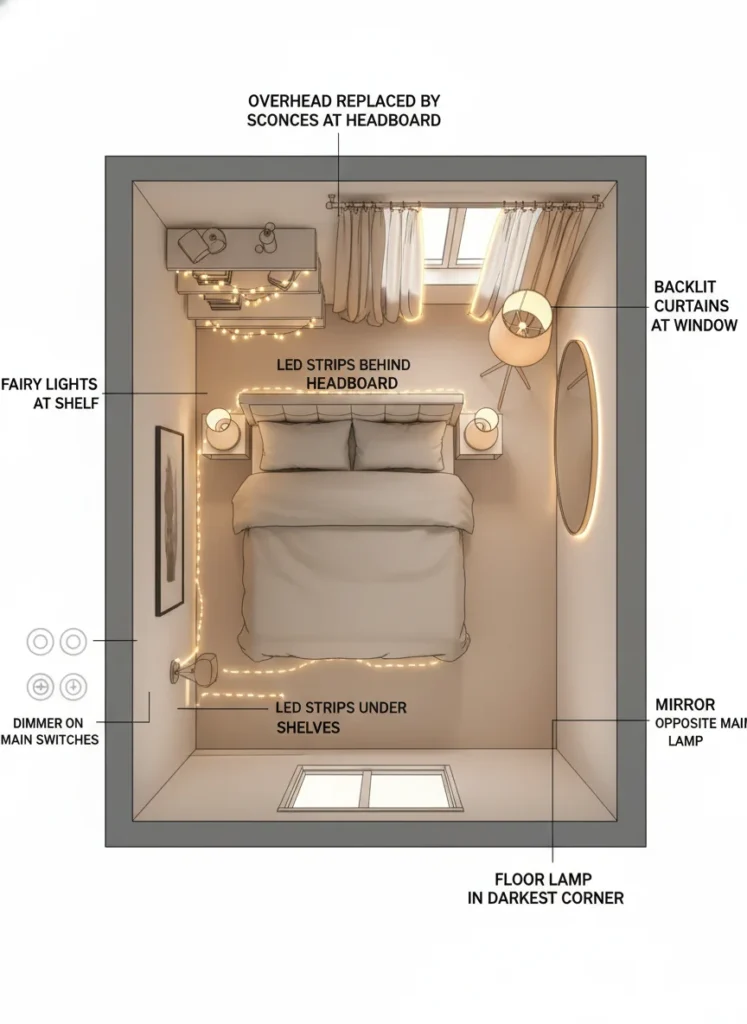
Before purchasing fixtures, evaluate your bedroom layout against these three essential criteria:
First, verify that your total cumulative lumens fall between twenty and thirty lumens per square foot, with no single fixture providing more than half that total. Second, confirm that every bulb operates strictly between 2700K and 3000K to prevent harsh blue glare. Third, ensure that bedside task fixtures feature independent dimming controls so you can adjust illumination without disturbing anyone else.
Once your hardware and specifications are in order, arranging those fixtures strategically around your furniture determines how spacious the room feels. For detailed layout formulas and visual placement examples, consult our full guide to 15 small bedroom lighting ideas to make a tiny room look bigger.