
This post contains affiliate links. If you buy something through my links, I may earn a small commission at no extra cost to you. I only recommend things I genuinely use or believe in.
The awkward small living room is not a design problem. It is a sequencing problem. The reason it feels wrong is almost never the shape of the room or the size of the furniture. It is the order in which the furniture was placed: sofa against the wall first, everything else arranged around that first decision, and now the room feels like a waiting room that someone tried to make cozy. Designers approach this in a completely different sequence. They identify the functional anchor first, then build the layout out from that point. Here are the 13 moves they use, explained specifically enough to apply to an awkward room you cannot quite figure out.
💡 Before you start decorating, see how your room could look with AI.
🏡 See Your Room Before You Spend a Dollar
Still wondering if that new furniture, paint color, or decor style will actually look good in your space?
- Upload a photo of your room and let AI instantly generate beautiful design ideas.
- Explore different interior styles, furniture layouts, and color combinations before you spend a single dollar.
Before Any Furniture Moves: Identify Your Anchors
Every room has one or two fixed anchors: the fireplace, the TV location, the window with the view, or the architectural feature that is not moving. In an awkward small living room, the layout problem is almost always that the furniture is arranged around the wrong anchor. Someone put the sofa against the longest wall because it is the longest wall, not because that placement serves the way people use the room.
Before moving anything, identify: what do people primarily do in this room? Watch TV? Have conversations? Work from home? Eat? The answer dictates which wall or feature becomes the primary anchor, and everything else flows from that decision. With the anchor identified, the 13 ideas below each address a specific layout challenge that comes up in small rooms with difficult shapes.
13 Designer-Used Ways to Arrange an Awkward Small Living Room
1. Float the Sofa Away From the Wall
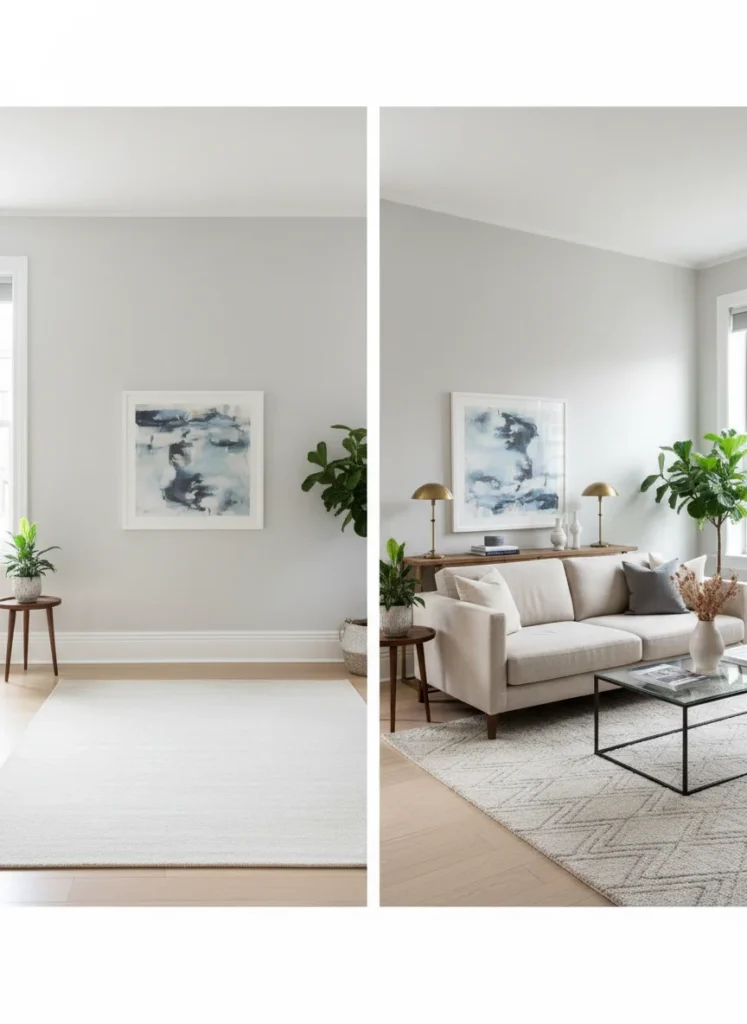
This is the single most counterintuitive move in small living room design and the one that makes the biggest difference. Pushing the sofa against the wall feels like it maximizes the floor space in the center of the room. What it actually does is create a dead zone in the center and makes the room feel like a corridor. Pulling the sofa 6 to 10 inches from the wall creates depth behind it, allows air and sightlines to flow around the piece, and makes the room feel deliberately designed rather than furniture-in-a-box.
The space behind a floated sofa is not wasted. A narrow console table, 12 to 14 inches deep, fits perfectly in that gap and adds a surface for lamps, books, or plants without blocking circulation. The combination of a floated sofa and a console table behind it is one of the foundational moves in professional living room layouts for exactly the size rooms being discussed in the post on small living room ideas that designers actually use.
2. Use a Rug to Define the Conversation Zone Before Placing Furniture
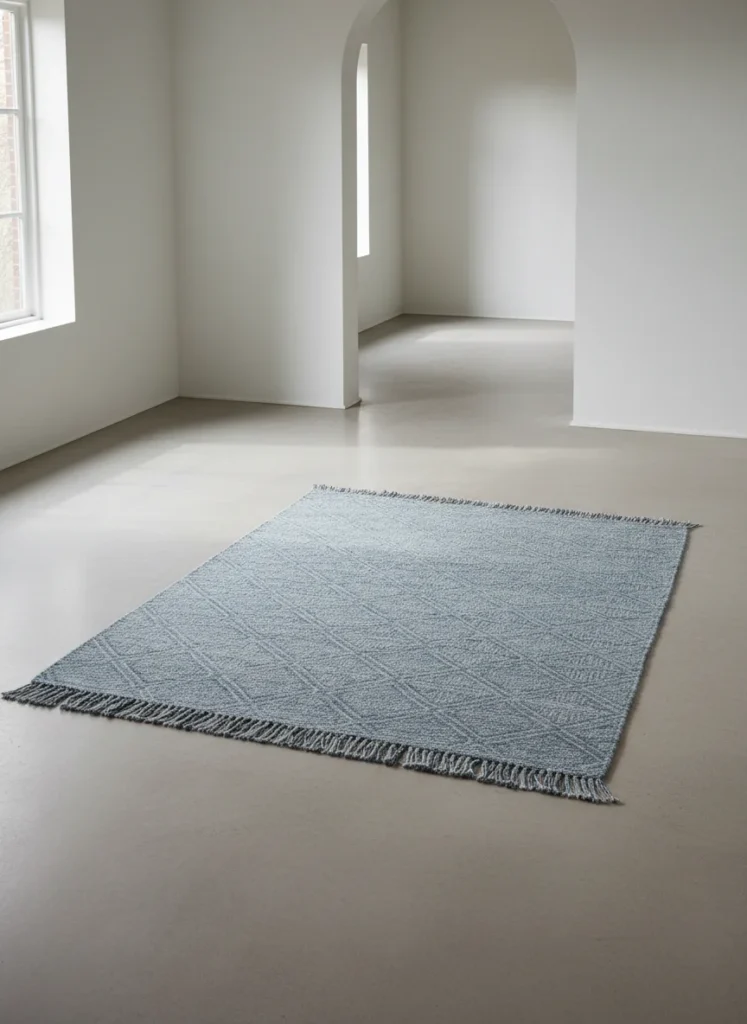
In a room with an awkward shape, the rug is not an accessory. It is a layout tool. Placing the rug first, before any furniture moves, defines the size and location of the conversation zone in a way that makes every subsequent furniture decision clearer. The rug draws a shape on the floor and says: this is where the living happens. Everything else in the room organizes around that shape.
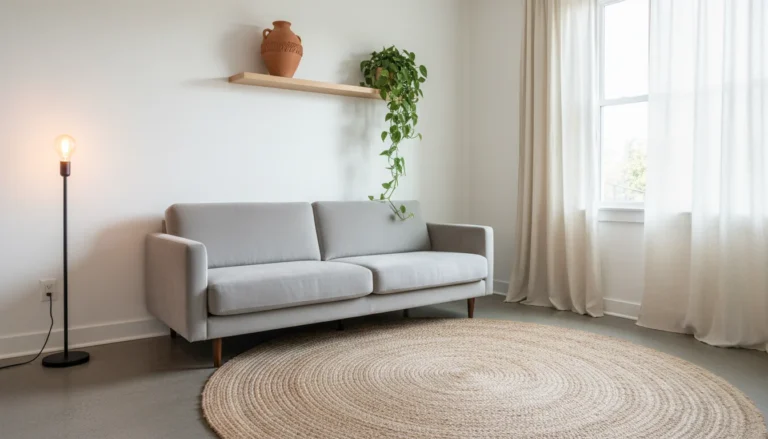
In a small living room, the rug should be large enough that the front legs of the sofa and chairs sit on it. This anchors the furniture to the rug and creates a unified zone rather than individual floating pieces. An 8×10 rug is the minimum for most standard living room seating arrangements. If the room is irregular, the rug placement may not be centered on the room but centered on the seating area, which is the correct approach. Look for a neutral flat-weave area rug in the 8×10 size at $60 to $150. Place it before moving any furniture.
3. In a Long Narrow Room, Create Two Zones Instead of One Long Row
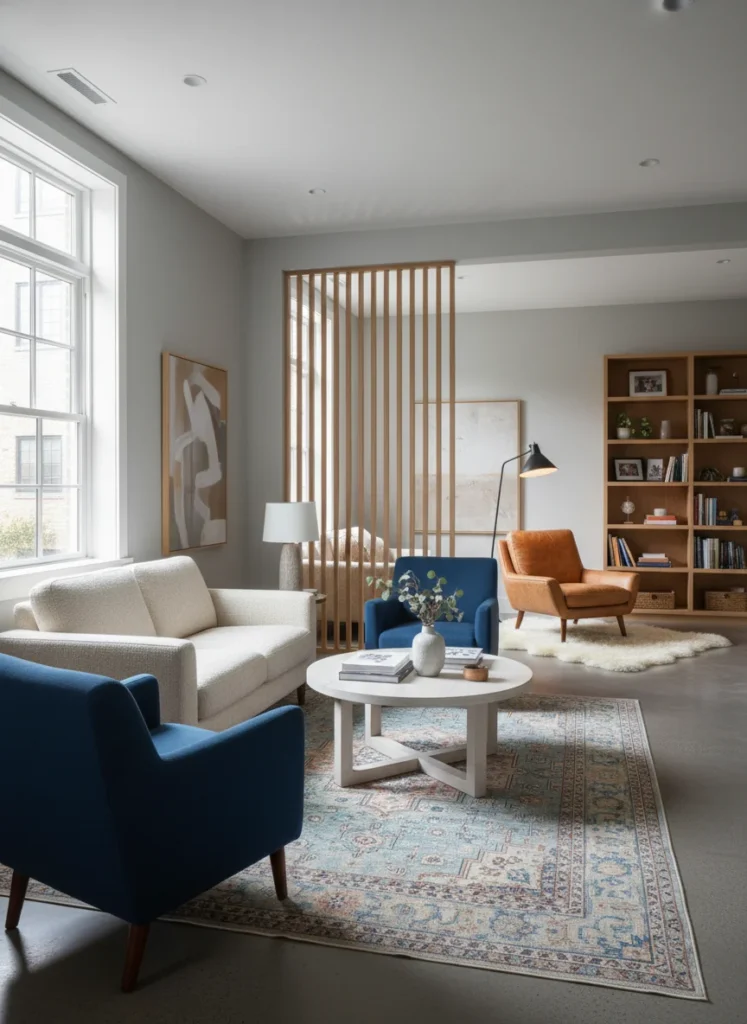
A long narrow living room arranged as one long layout, sofa on one wall facing chairs on the opposite, looks exactly like what it is: a narrow room with furniture on the sides. Dividing the room into two zones with a clear functional purpose for each transforms the same square footage from a corridor into two rooms that happen to share space. One end for TV and conversation. One end for reading or working. The division is made with a rug, not a wall, and the zones can be completely open to each other.
The divider between zones can be the back of the sofa (which faces the TV zone while its back defines the reading zone boundary), an open bookshelf, a console table, or simply the edge of the second rug. The key is that each zone has its own anchor, its own light source, and its own purpose. Neither feels like overflow from the other. For more on making a narrow room work without permanent changes, the post on small apartment living room ideas on a budget covers the zone approach specifically for rental-size rooms.
4. Angle Furniture to Address a Diagonal Wall or Odd Corner
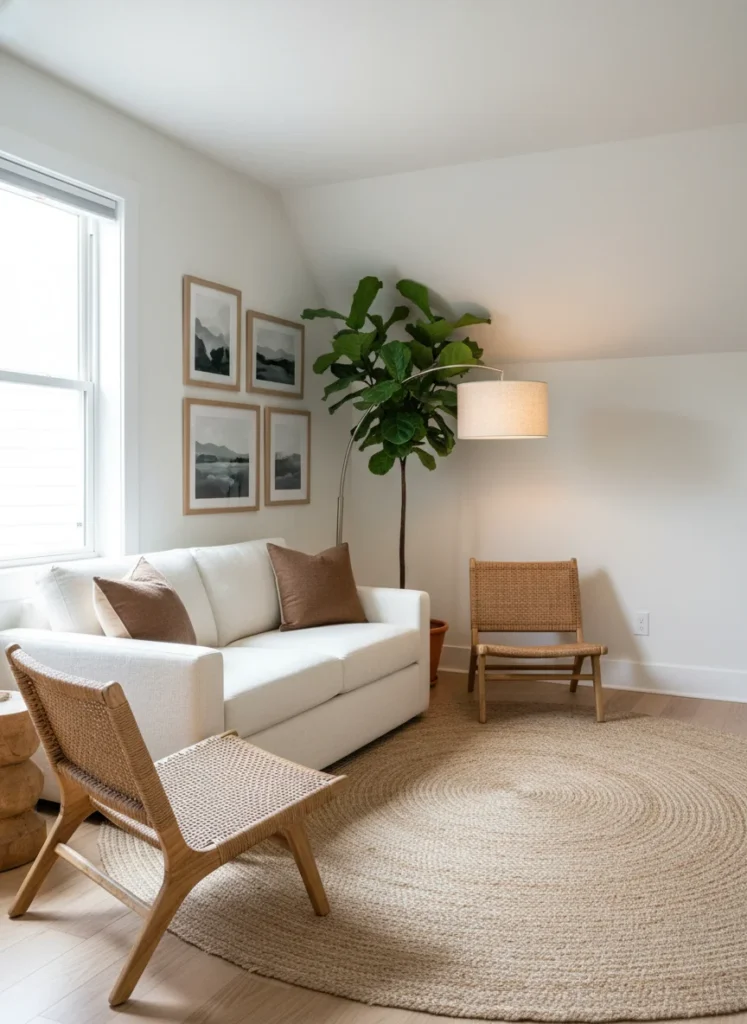
Rooms with a diagonal wall, an angled architectural feature, or a bay window corner create a genuine layout puzzle. The instinct is to angle the sofa to follow the diagonal, which almost never works because it puts the furniture at an angle that fights every other line in the room. The designer solution is to place the furniture parallel to the main straight walls and address the angled area separately as a zone of its own.
A diagonal corner addressed with a tall plant, a floor lamp, and a single accent chair becomes a reading nook. Left empty, it is dead space that makes the room feel unresolved. The furniture that faces the main conversation zone stays parallel to the straight walls. The awkward corner becomes a feature rather than a flaw by giving it a single clear purpose. This is exactly the kind of move that reads as designed without requiring any custom furniture or expensive architectural change.
5. Choose a Round or Oval Coffee Table Over a Rectangular One
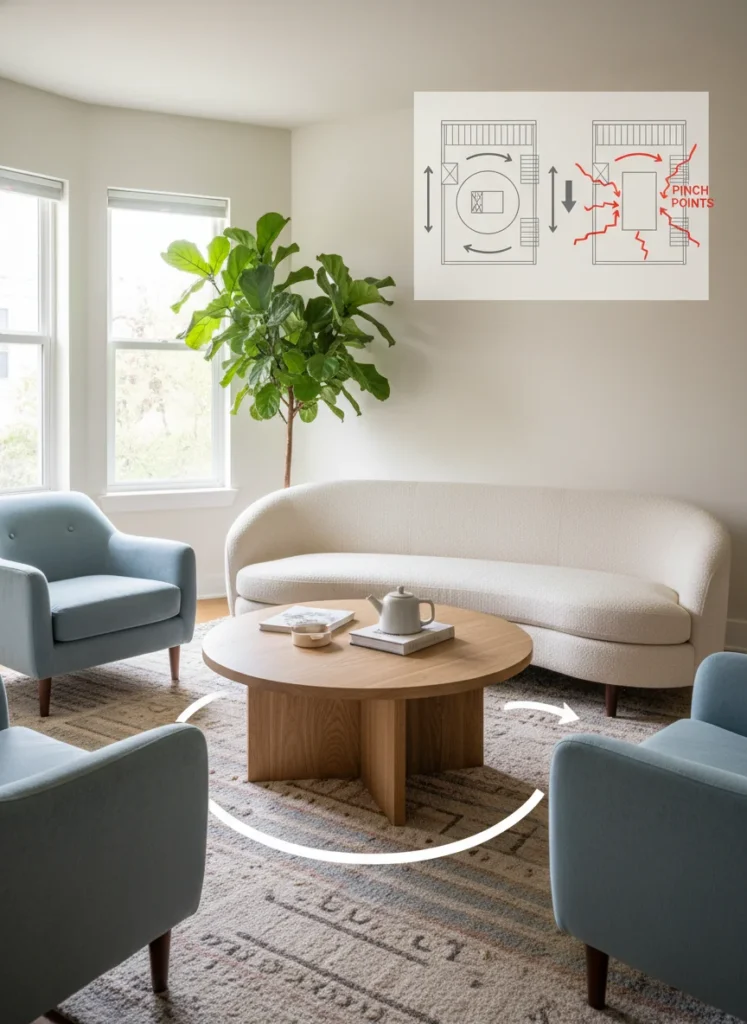
A rectangular coffee table in a small or awkward room adds four corners to the circulation path. Every person moving through the room has to navigate around those corners, which creates the specific kind of pinch-point frustration that makes a small living room feel cramped even when the square footage is theoretically sufficient. A round or oval coffee table has no corners. Circulation flows around it naturally from any direction.
In a room where the sofa is not perfectly parallel to the other walls, a round table also reads as neutral to every angle in the room, which a rectangular table does not. It does not need to align with anything. It simply centers in the seating zone. A round coffee table in wood or neutral tone for a small living room runs $60 to $150 depending on material. Go smaller than you think you need. A 30 to 36-inch diameter is right for most small seating zones.
6. Identify the Focal Point and Orient Everything Toward It
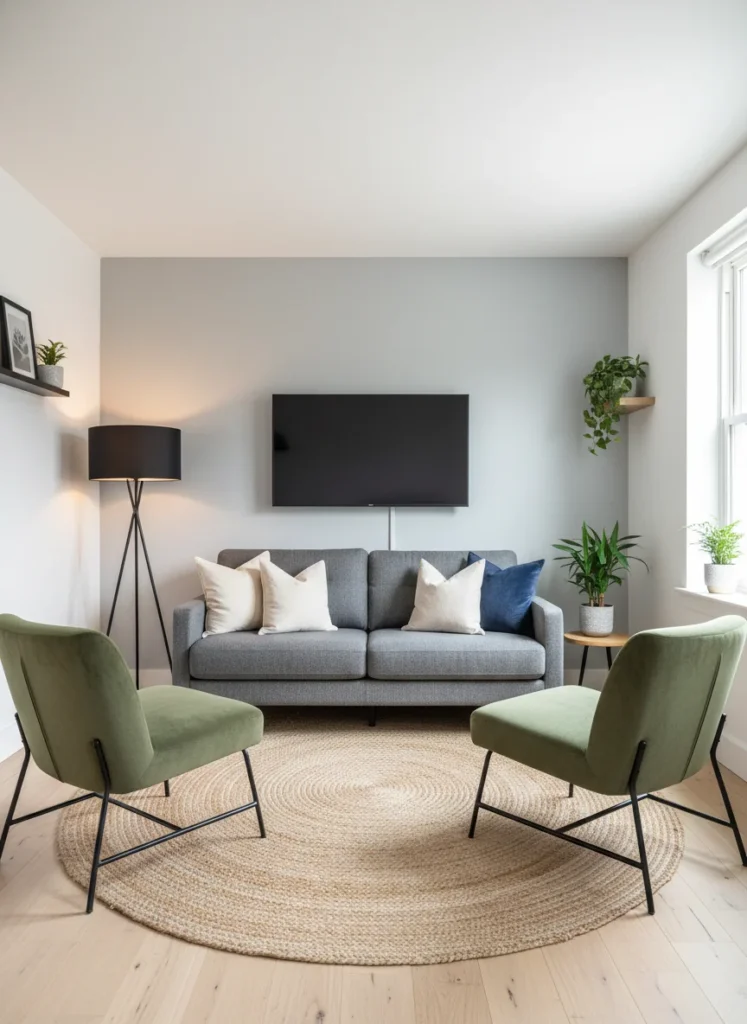
Every room works better when there is a clear primary focal point that the seating addresses. In a living room, this is usually the TV, the fireplace, or a significant window. In an awkward room where none of these is obvious or well-positioned, the focal point can be created: a large piece of art on the most visible wall, a gallery arrangement, a dramatic floor lamp, or even a bold rug pattern that draws the eye.
Once the focal point is identified, orient the primary seating directly toward it and the secondary seating at a slight angle that addresses both the focal point and the conversation area. This is why professionally designed rooms feel organized even when they are irregular in shape: every piece of furniture has a clear visual relationship to the focal point, and the room has a legible hierarchy. If you have two competing focal points, a TV and a fireplace on perpendicular walls, angle the sofa at 45 degrees to address the space between them rather than picking one and turning your back to the other.
7. Use Furniture With Visible Legs to Keep the Floor Reading as Open
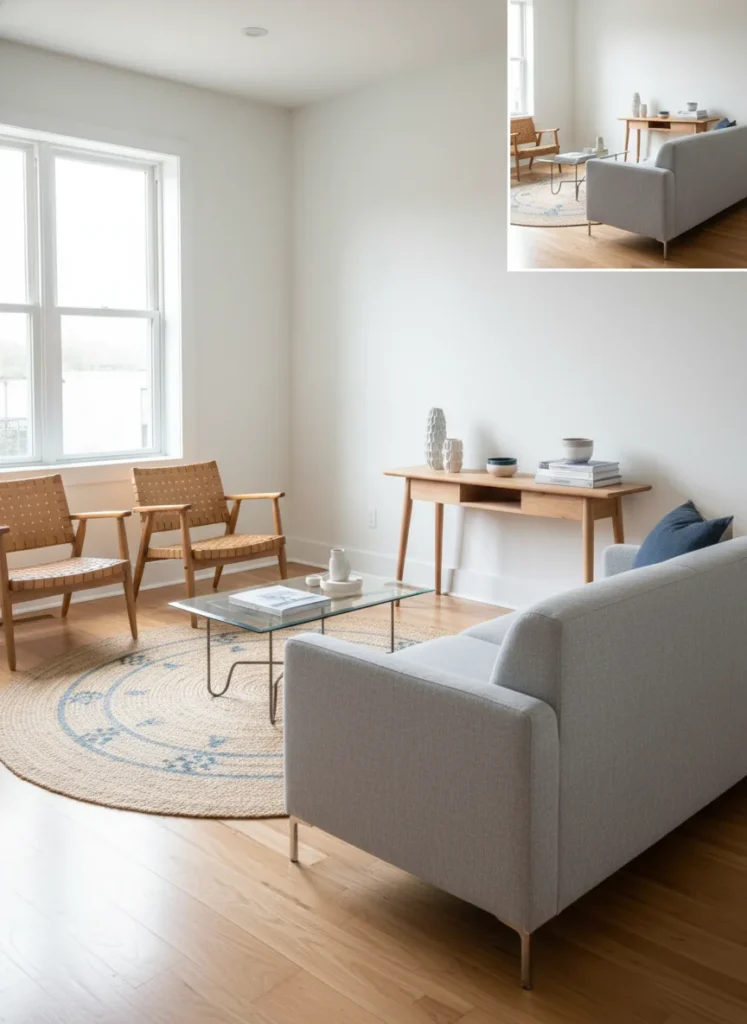
In a small living room, furniture with visible legs is not an aesthetic preference. It is a spatial strategy. When you can see the floor underneath the sofa and the chairs, the brain reads those gaps as floor space and the room feels larger. When a skirted sofa sits flat on the floor, the brain reads the furniture as a solid block and the room reads as more cramped. This is a consistent principle in interior design for small spaces, and it works regardless of the style direction of the room.
Look for sofas with legs at least 4 to 6 inches tall. Many standard sofas come with legs that are 3 to 4 inches tall, which is enough to see the floor but not enough to create meaningful visual clearance. If you already own a sofa with short legs, replacement legs are widely available for $15 to $40 for a set and can add 2 to 3 inches of height to most frames. The effect on the visual openness of a small room is immediate and significant.
8. Place the TV on the Wall, Not in a Bulky Entertainment Center
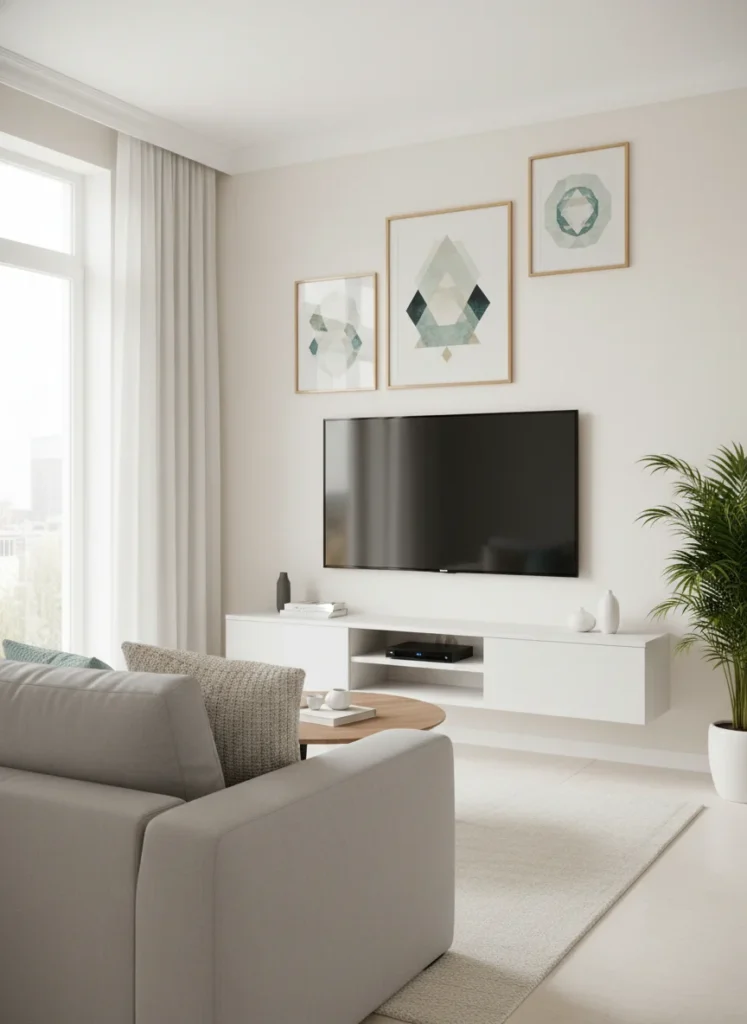
A large entertainment center in a small living room does two things wrong: it blocks wall space that could be used to expand visual openness, and it brings a significant amount of visual mass at eye level where it dominates every sightline in the room. A wall-mounted TV with a slim floating media console below it does both jobs in a fraction of the visual footprint. The wall behind the TV becomes available for art. The floor beneath the console is visible, which reads as open space.
Wall mounting a TV requires a stud-finder and a mount, total investment of $25 to $50 for the mount, and the ability to locate two studs at the right spacing. A slim floating media console at 12 to 14 inches deep holds media components and remotes without projecting far into the room. This is one of the moves that most dramatically changes the floor-to-ceiling proportion of a small awkward living room because it clears the visual field from floor to TV height.
9. Turn a Difficult Corner Into an Intentional Reading Nook
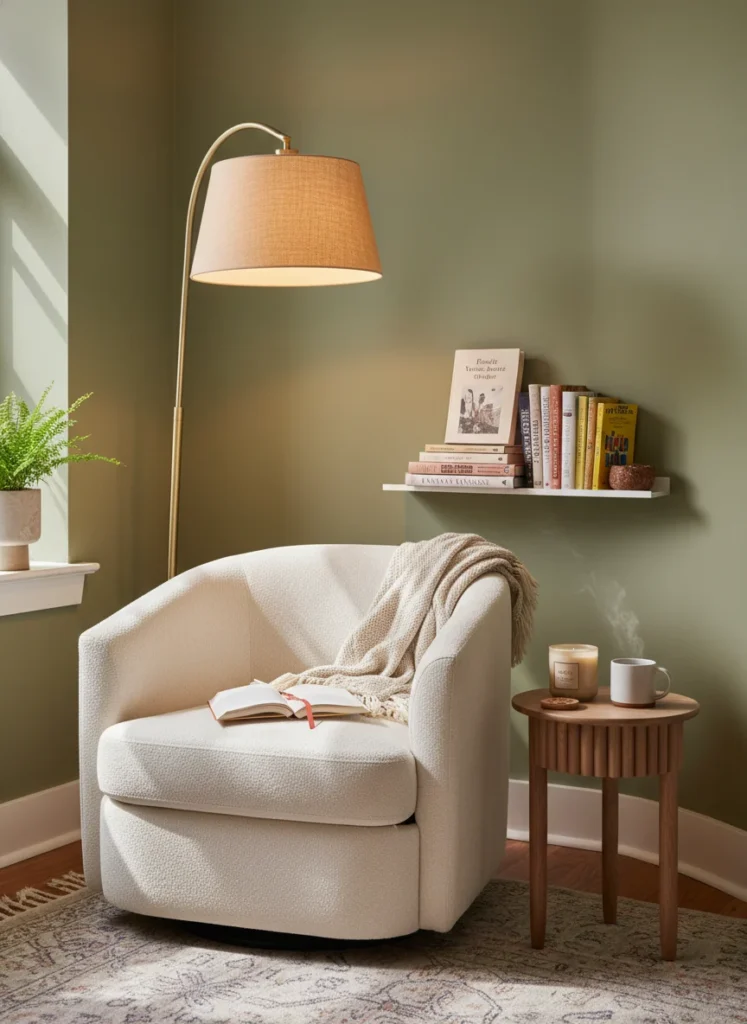
The dead corner in an awkward living room is the spot that every layout leaves empty because no furniture seems to fit it naturally. A sofa arm cannot reach it. A chair placed flat to one wall points sideways to the rest of the room. The designer solution is to treat the corner as a zone unto itself rather than an extension of the main seating area. A rounded accent chair positioned at 45 degrees in the corner with a floor lamp behind it and a small side table beside it becomes the reading nook, the best seat in the room, the one guests always gravitate toward.
A curved or rounded chair shape works better in this placement than a square-backed chair because the curved back fits more naturally against a corner. Look for barrel chairs or round accent chairs for reading nooks in the $80 to $200 range. Pair with a slim arc floor lamp at $40 to $70 to make the corner feel like a complete destination rather than an overflow placement.
10. Use an Open Bookshelf as a Room Divider in an Open-Plan Space
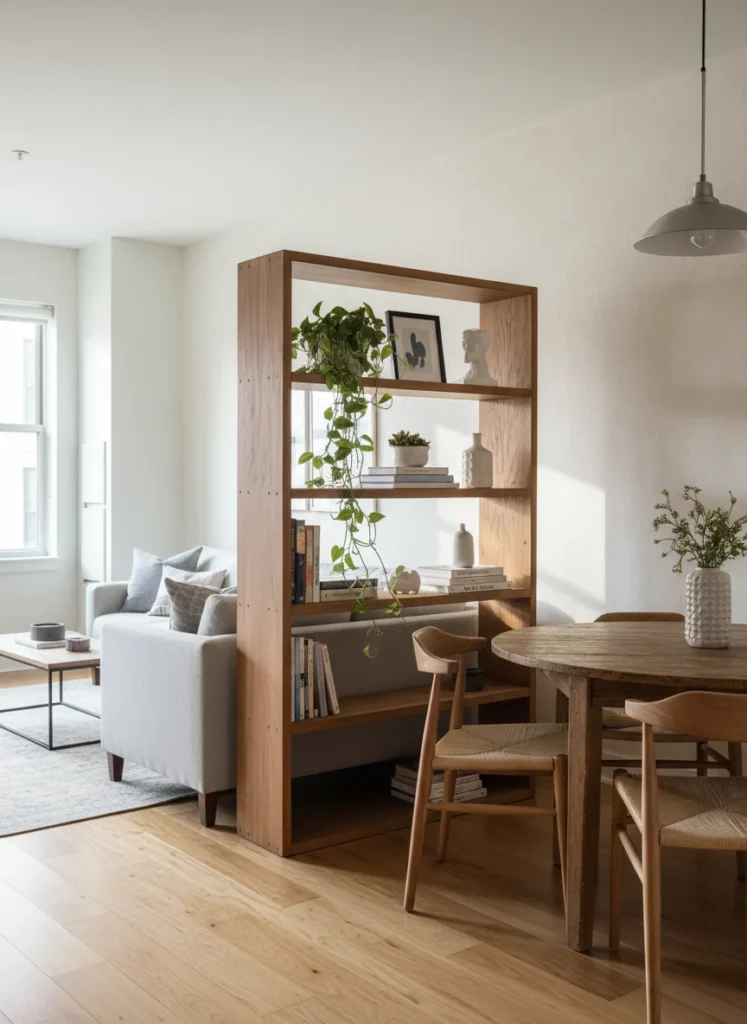
In a studio apartment or open-plan space, the living room often bleeds into the entry, the dining area, or the workspace with no clear boundary. This is one of the most common sources of the awkward layout problem, where the room feels like it does not quite know what it is. An open-backed bookshelf placed perpendicular to the wall, extending into the room, defines the living zone without blocking light or making the space feel smaller. It allows sightlines through while still creating a clear spatial boundary.
The shelf should be tall enough to read as a divider, 48 to 60 inches, but not so tall it becomes a wall. Style it on both sides if both sides are visible. The living room side gets books and plants. The entry side gets hooks and a small tray. For more ideas on studio apartment layouts where the living room, bedroom, and workspace overlap, the post on studio apartment ideas for rooms under 400 square feet covers zone creation in detail for the smallest spaces.
11. Hang Curtains on the Largest Bare Wall to Add Softness and Height
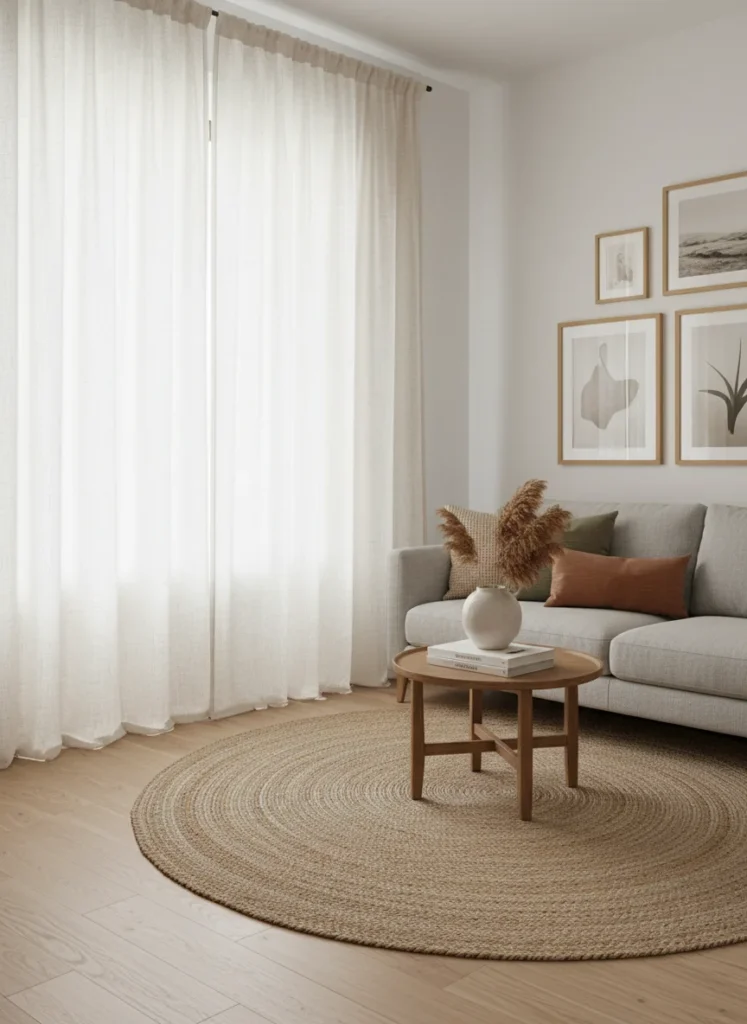
In a small living room with an awkward layout, a large bare wall often reads as an unresolved problem: too prominent to ignore, not large enough for a gallery wall, and too flat to leave empty. Floor-to-ceiling curtain panels on a bare wall add height, softness, and visual depth to a wall that was doing nothing. The panels create the impression of a window or a covered architectural feature, which adds interest without adding furniture or visual clutter.
Use a neutral linen or semi-sheer panel in a color that reads from the same family as the wall. The point is not a high-contrast curtain statement but a soft architectural addition that makes the room feel taller and more finished. This is also a strategic solution for renters who cannot paint a bold feature wall but want one of the walls to do more work visually than plain white allows.
12. Address Every Corner With Light, Not Just the Center of the Room
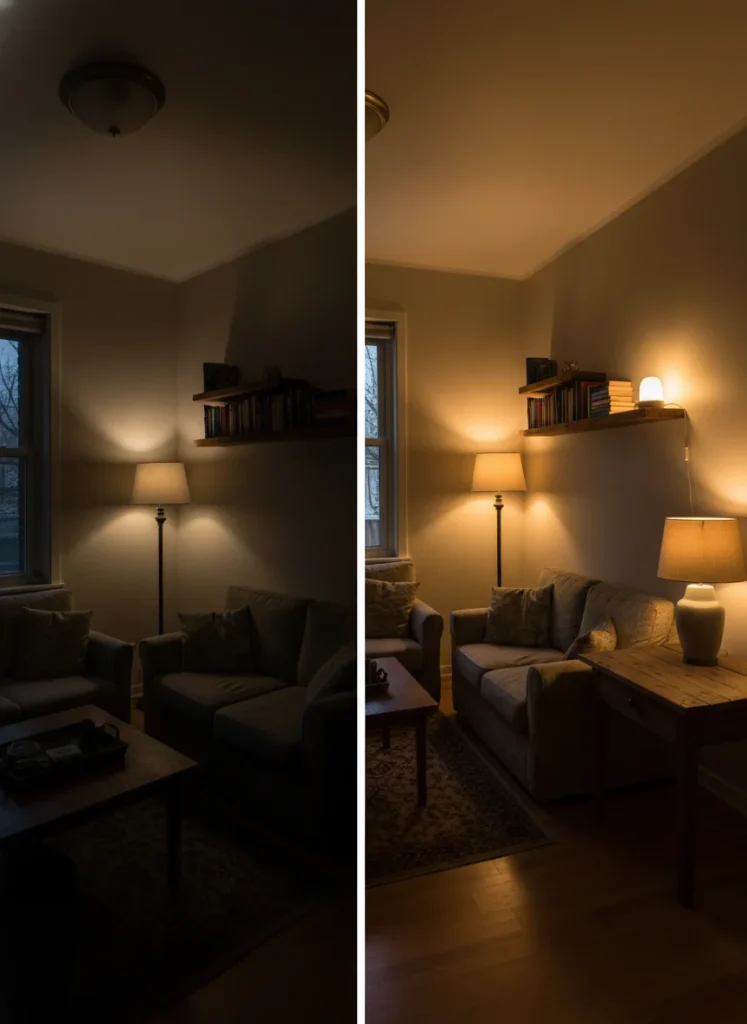
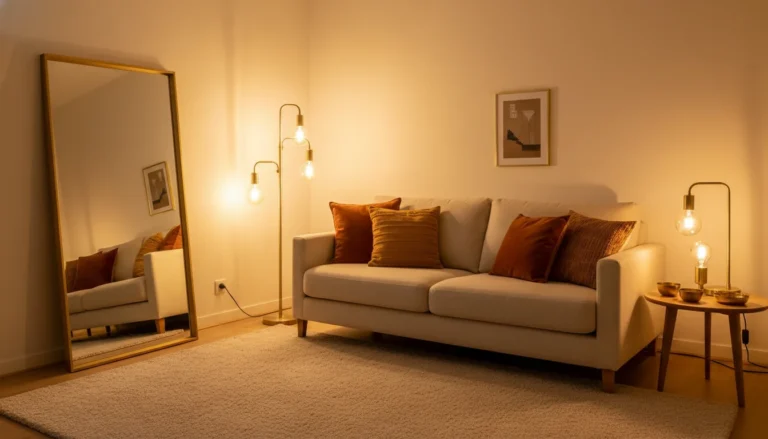
Dark corners make any room feel smaller because the brain reads dark space as absent space. In an awkward living room where the floor plan already creates undefined zones, a dark corner looks like the room ends there rather than continues. Addressing every corner with a light source, whether a floor lamp, a table lamp on a small accent table, or a battery-operated wall sconce, brings the full perimeter of the room into the visual field and makes the space read as larger and more resolved.
This is layered lighting applied to a layout problem rather than just an aesthetic one. A room with five lit points at different heights and positions reads as three-dimensional. A room with one overhead light reads as flat. Slim floor lamps for corners in the $35 to $65 range require only a nearby outlet and no installation. One lamp in each unaddressed corner of an awkward room can change the spatial reading of the entire layout. For more on this principle, the post on small living room ideas when there is no natural light covers layered lighting in exactly this kind of scenario.
13. Edit Ruthlessly: Remove One Piece of Furniture and See What Happens
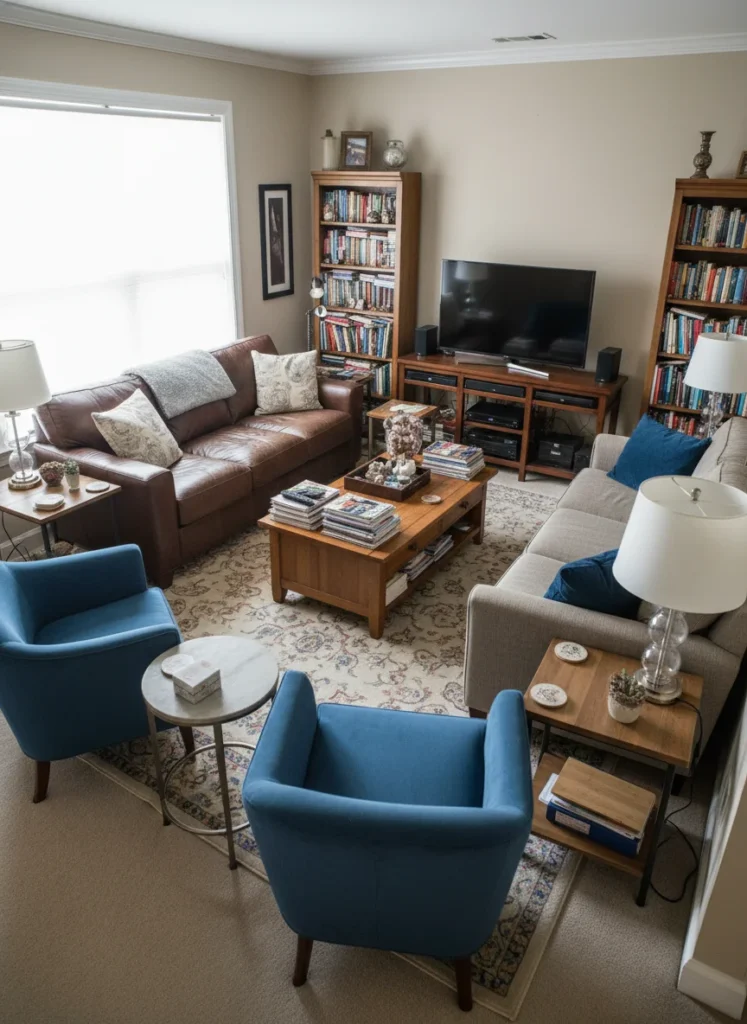
The most common reason a small living room with an awkward layout never feels right is not the layout. It is the number of furniture pieces. Most people try to fit everything they have into the room rather than deciding what the room actually needs. In a small awkward space, each additional piece of furniture reduces the clearance, muddies the zone definition, and competes with every other piece for visual and physical space.
The designer edit is to remove one piece of furniture and live with it for a week before deciding if it needs to go back. The piece that most often improves the room when removed: the second accent table, the oversized console, the decorative chair that nobody actually sits in, or the coffee table that is 6 inches too wide for the space. Removing one too-large or redundant piece frequently makes more difference than any rearrangement of everything else. The room can always hold less than you think it can, and it almost always looks better when it does.
Before we continue, if you’re tired of buying decor that doesn’t look right together, I created something specifically for this…
The Layout Logic That Applies to Every Awkward Room
Every awkward small living room is awkward for a specific reason: wrong anchor, wrong number of furniture pieces, dead corners, or a shape that the standard push-to-the-walls approach does not serve. The 13 ideas above address each of these root causes rather than offering generic arrangement tips that work in any room but solve the specific problem in none.
Start with the rug. Place it where the conversation zone should be, not where the furniture currently is. Then float the sofa. Then address the corners with light and purpose. The arrangement usually resolves itself from there because the fundamental structure of the zone is already established before any heavy lifting begins.
If you are working with a sectional in a small or awkward living room specifically, the post on small living room ideas with a sectional sofa covers the placement rules that apply to the most space-consuming single piece of living room furniture, which creates its own specific set of awkward layout challenges.