
This post contains affiliate links. If you buy something through my links, I may earn a small commission at no extra cost to you. I only recommend things I genuinely use or believe in.
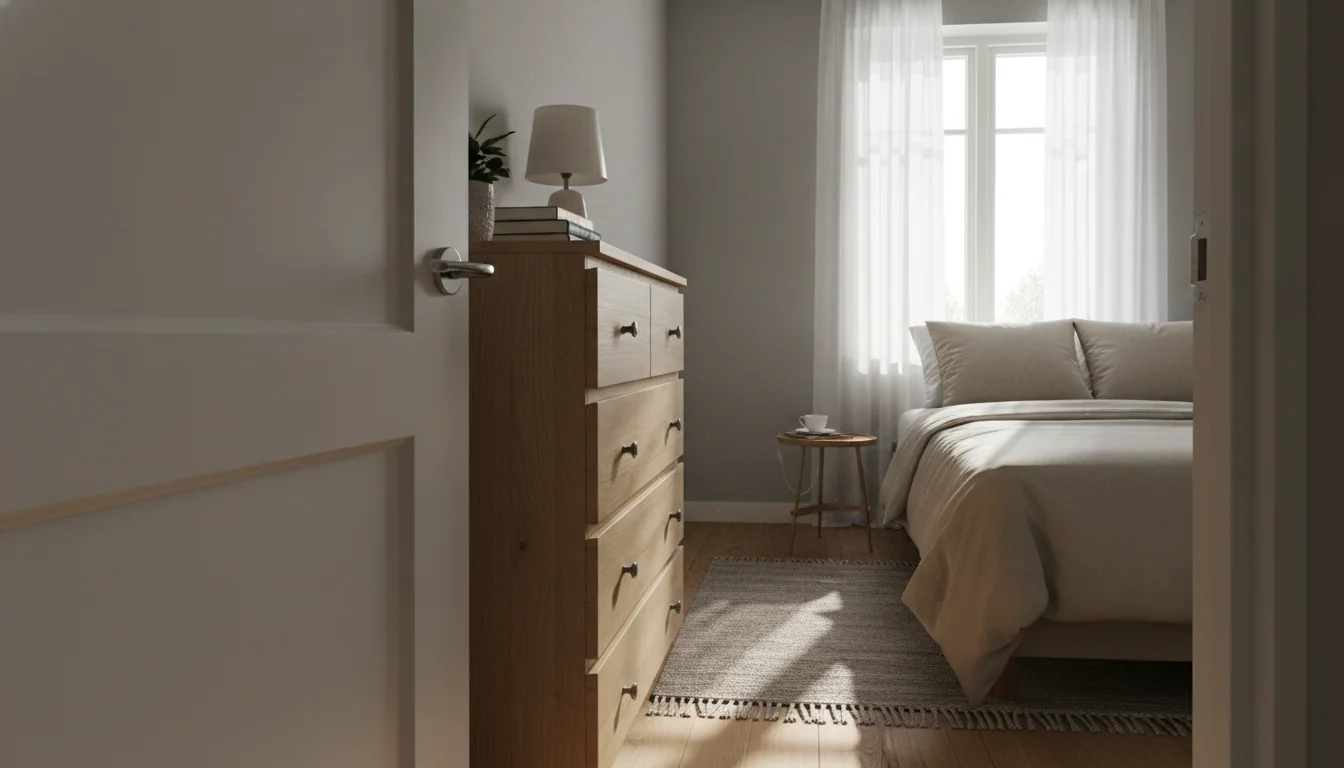
Nobody measures the door swing before they move in. You get excited about the closet size, the window light, the distance to the bathroom. Then you bring your furniture in and realize the bedroom door opens directly into the room and takes out a full corner every single time it swings. Suddenly your layout options shrink from four to one. And the one option left is never the one you wanted.
I have lived in two apartments with exactly this problem. The first time I just accepted it, pushed the dresser to an awkward angle, and lived with it for eighteen months. The second time I actually thought it through and the room worked significantly better. These nine solutions are everything I learned across both experiences, plus a few things I wish I had known from the start.
Before we continue, if you’re tired of buying decor that doesn’t look right together, I created something specifically for this…
Why the Inward-Swinging Door Is Such a Specific Problem
A standard interior door requires a 90-degree swing clearance to open fully. In a room that is already small, that arc eats between 7 and 10 square feet of functional floor space. That is roughly the size of a large nightstand plus a floor lamp. You cannot put furniture there. You cannot stand there comfortably. The space just becomes a travel path that you are forced to keep clear forever.
The other issue is psychological. Every time the door opens, something gets partially blocked. A dresser drawer you cannot pull all the way out. A chair you have to shift before you can get to the closet. These are small physical interruptions that compound into a constant low-grade frustration with the room. Solving the door situation often makes the entire space feel more livable, even if you change nothing else about the layout.
Before picking a solution, do one thing. Stand in your doorway and watch where the door actually stops when it is fully open. Some doors stop at 90 degrees. Some go to 120 or even 140 depending on the hinge style. The exact arc tells you which solutions are available to you and which ones would not buy you enough space to matter.
The 9 Solutions, From No-Cost to Structural
These are organized roughly from easiest and cheapest to most involved. Most people will find what they need in the first five. The last few are for situations where the door genuinely cannot function as is and something more permanent needs to happen.
1. Map the Dead Zone and Design Around It
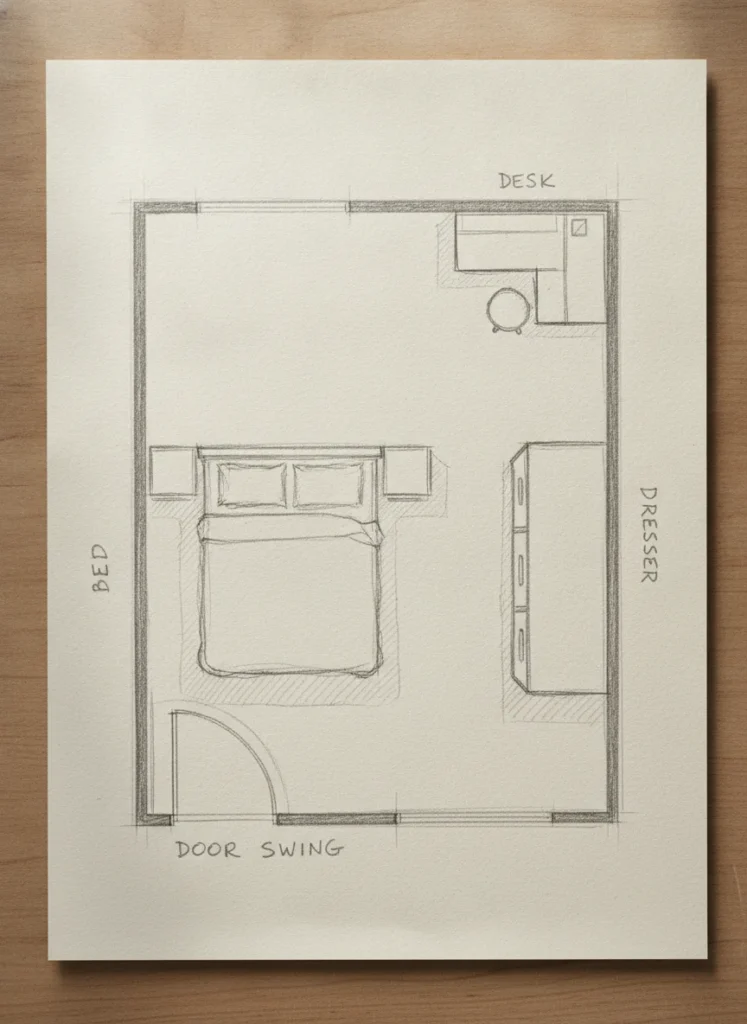
This is where every other solution starts. Before you move a single piece of furniture or spend a dollar, get a piece of paper and draw the room. Mark the door, draw the full arc of the swing, and shade that entire zone. That shaded area is what designers call the dead zone. Nothing permanent goes there.
Once you can see it visually, the room usually has more usable space than it felt like. The mistake most people make is trying to fight the dead zone by pushing furniture too close to it and then wondering why everything feels off. Stop fighting it. Design everything around it as a fixed constraint, the way you would design around a support column or a window.
The wall directly behind the door when it is open is often the most underused wall in a small bedroom. It cannot hold large furniture but it can hold a floating shelf, a hook rack, a mirror, or a slim wall-mounted organizer. More on that in solution 5.
2. Rehang the Door to Swing Outward
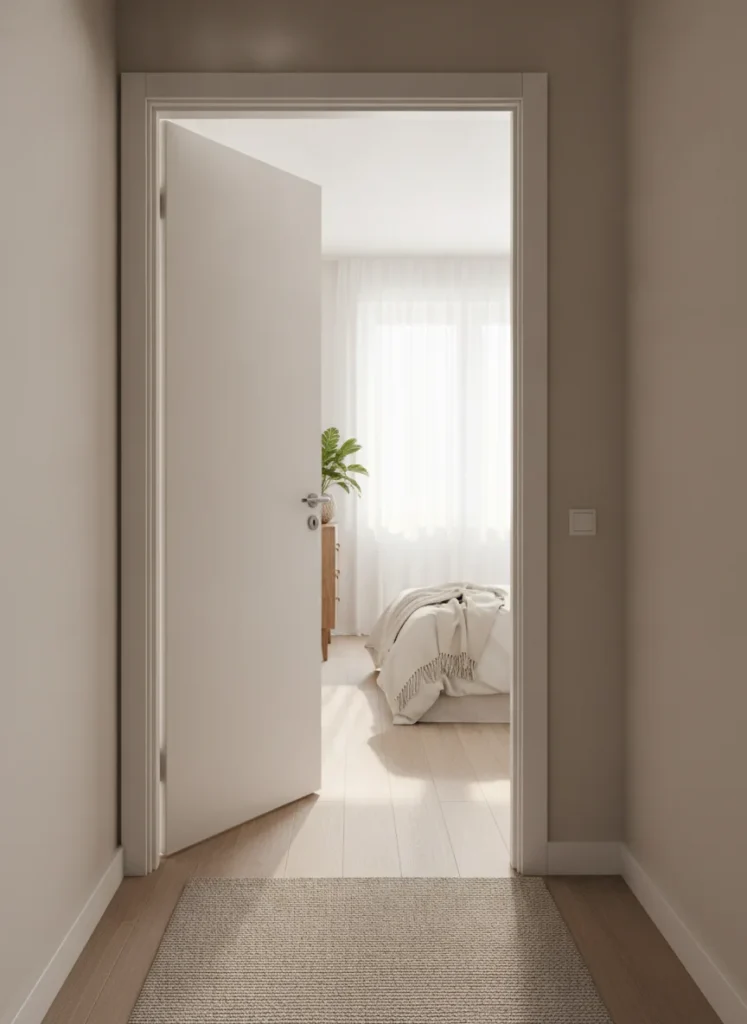
This is the most overlooked free solution on this entire list. If your hallway is wide enough to accommodate an outward-swinging door without becoming a hazard, you can simply rehang the door on the opposite side of the frame. The door still opens and closes the same way from inside the room. The difference is that the swing arc now happens in the hallway instead of eating your bedroom floor space.
Standard interior door rehanging is a DIY task that takes about two hours and requires a screwdriver, a chisel, and a drill. You are moving the hinges from one side of the frame to the other and relocating the latch strike plate. The door itself stays the same. Most hardware stores carry the replacement hardware for under $15 if your existing hinges are worn.
The check you must do first: stand in the hallway and swing an imaginary door outward. Does it hit anything? Another door? A wall? A staircase railing? Building codes in most places also require that doors opening into egress paths like staircases swing inward for safety reasons, so confirm with your building manager if you rent. But in most standard apartment hallways with at least 36 inches of width, rehanging outward is completely viable.
3. Switch to a Sliding Barn Door
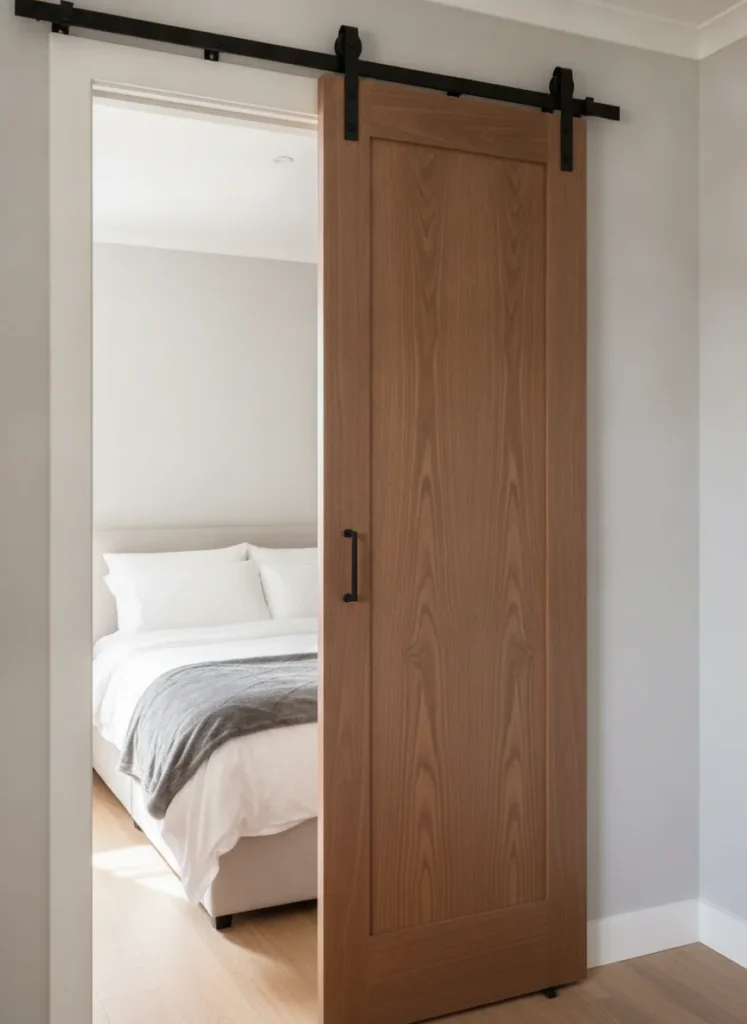
A barn door hangs from a track mounted above the door frame and slides along the wall instead of swinging into the room. Zero arc. Zero dead zone. The space the door used to occupy becomes fully usable the moment the track goes up.
The visual impact is also significant. Barn doors are a genuine design statement that makes a small bedroom feel considered and styled rather than just functional. A warm wood panel door on a matte black track reads as intentional. It pulls the room together in a way that a standard hollow-core door never could.
The limitation worth knowing: a sliding door needs clear wall space on one side of the door frame equal to the full width of the door panel, plus a few inches. If a dresser or bookshelf sits directly beside your door frame, the barn door cannot slide open fully. Measure before you commit. The hardware kits on Amazon start around $45 for the track and hardware alone, and a basic wood panel door runs $80 to $150 depending on the style.
Find barn door hardware on Amazon
4. Install a Pocket Door
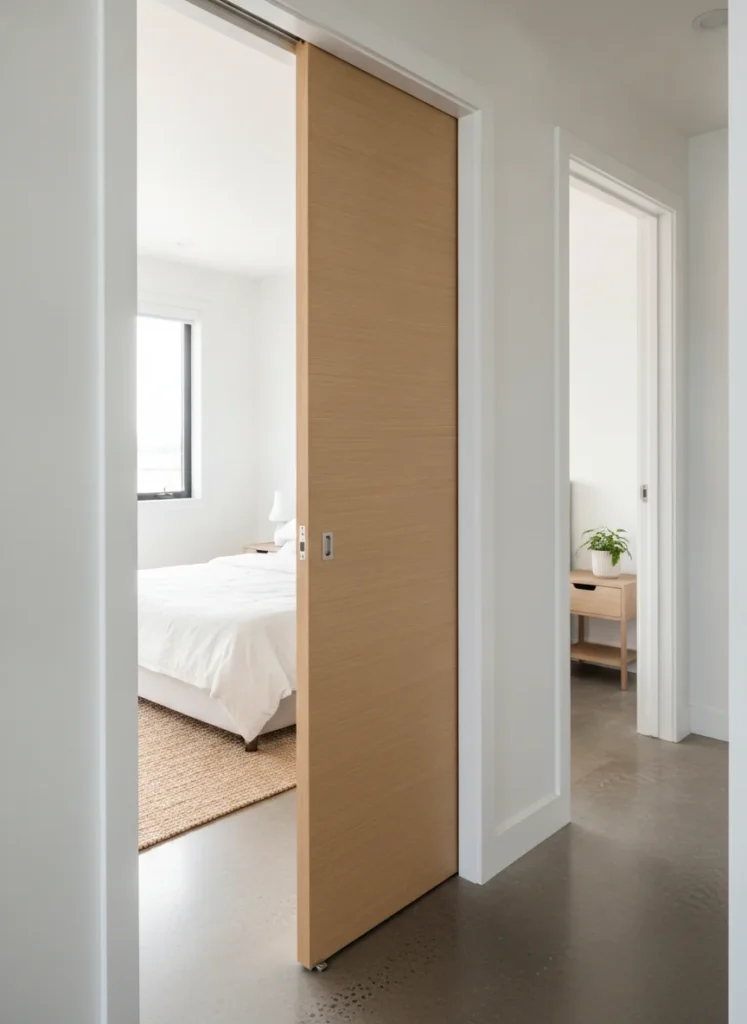
A pocket door disappears entirely into a cavity in the wall when open. When it is fully open, there is no door visible at all. The frame is clean. The floor space is completely free. It is the most space-efficient door option that exists.
It is also the most involved to install. Fitting a pocket door requires opening the wall to build the internal track and cavity structure, which means this is a landlord conversation if you rent. If you own your home or have a landlord who is open to improvements, this is worth doing properly. The structural work runs between $300 and $800 depending on whether you hire it out or do it yourself, but the result is permanent, clean, and adds real value to the room.
One thing competitors never mention: pocket doors on cheap hardware can be frustrating to use. The sliding mechanism matters enormously. Budget for good hardware even if you cut costs elsewhere on the installation. A pocket door that sticks or jumps the track daily is worse than no pocket door at all.
5. Use the Wall Behind the Door
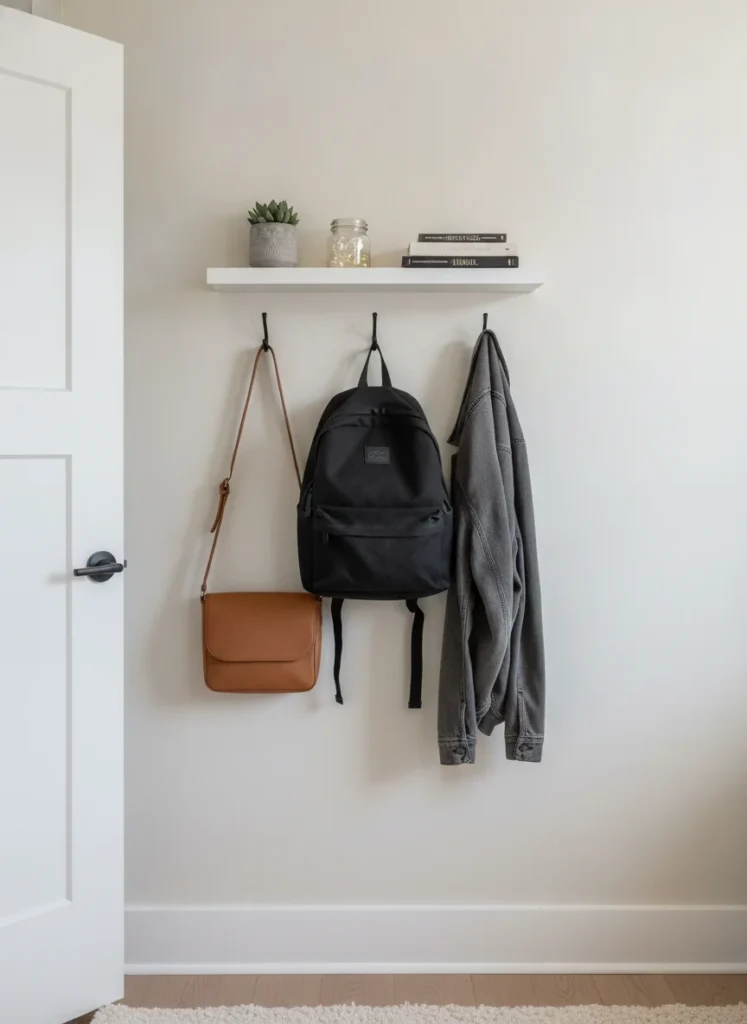
When your door is open and flat against the wall, the wall behind it becomes accessible real estate. Most people leave this space completely empty because it feels awkward and hidden. That is actually what makes it useful. The things you store here are out of sight when the door is open and invisible when you walk in. Hidden storage that does not compete visually with the rest of the room.
A set of over-the-door hooks handles bags, robes, and jackets without taking any floor space at all. A slim wall-mounted organizer can hold jewelry, accessories, or charging cables. A floating shelf at high height holds items you access occasionally, like extra bedding or seasonal accessories. None of these require drilling into the door itself, which matters in rentals.
The one constraint: whatever you mount here cannot protrude far enough to catch the door when it swings open. Keep everything flush to the wall and mounted above or below the door handle height so there is no contact risk. It is also the ideal hidden niche for ultra-slim reflective glass; in my guide to the best full length mirrors for small bedroom layouts, I highlight flush-mounted wall mirrors under two hundred dollars that slip behind open door swings with zero clearance issues.
Find over-door organizers on Amazon
6. Replace the Door With a Curtain
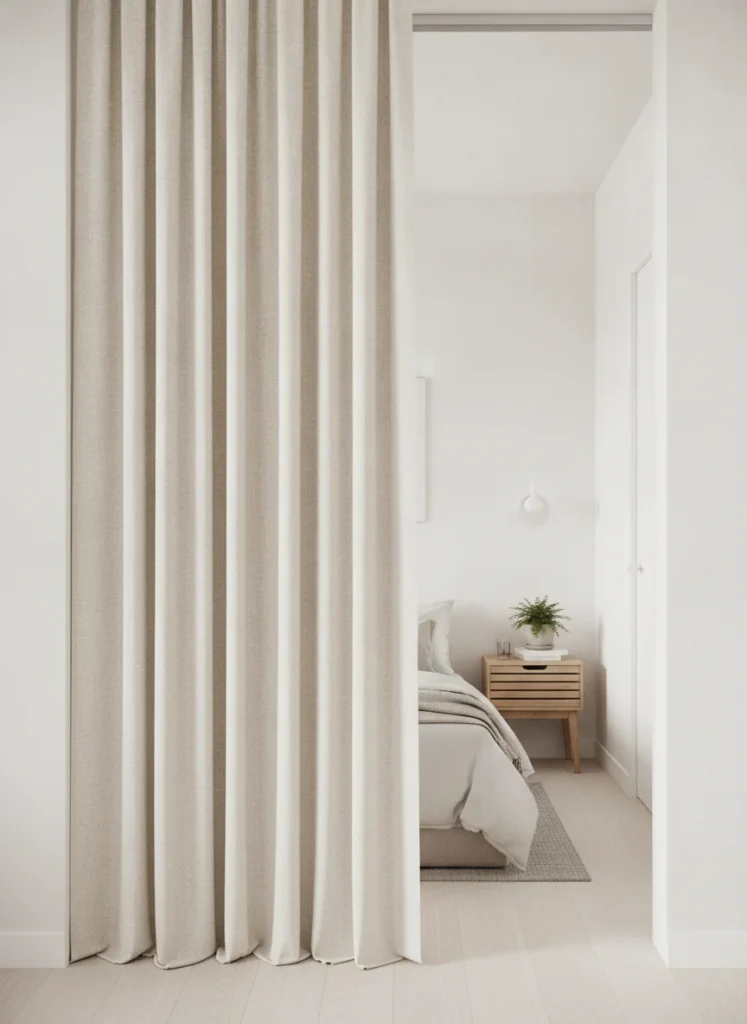
This gets overlooked because it sounds too simple. But removing the door entirely and replacing it with a ceiling-mounted curtain panel is a genuinely effective solution in the right situation. No swing. No arc. No dead zone. The curtain pulls completely to one side when you want the room open and hangs flat when you want privacy.
The right situation is one where sound privacy is not critical and where the visual softness of a curtain fits your aesthetic. It works especially well in studio apartments or ground-floor bedrooms where you are the only person using the space. A heavy linen or velvet panel feels intentional and designed rather than makeshift. Hung from a ceiling track rather than a standard rod, it falls cleanly from the top of the wall to the floor and looks like a deliberate design choice.
The ceiling track hardware costs about $30 to $50 and requires drilling into the ceiling, which most landlords allow since curtain tracks are considered temporary and the holes are small. A quality heavy linen curtain panel in a neutral color runs $25 to $45. Total cost: well under $100, installed in under an hour.
Find ceiling curtain tracks on Amazon
7. Switch to a Bifold Door
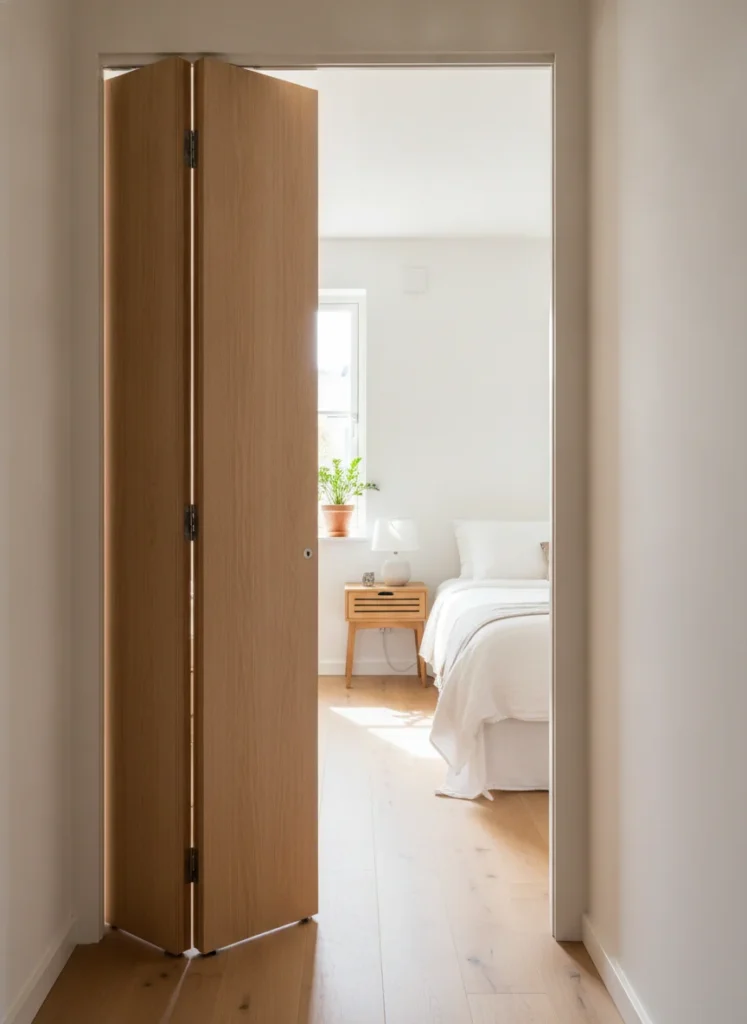
A bifold door folds in half rather than swinging in a full arc. Instead of requiring 7 to 10 square feet of clearance, it needs only the depth of two panels folded together, which is roughly 3 to 4 inches of floor space when fully open. That is almost nothing compared to a standard swing.
Bifold doors are significantly easier and cheaper to install than pocket doors. They use the existing door frame and require no wall modification. A standard bifold door with hardware typically runs $80 to $180 and can be installed in an afternoon with basic tools. Most landlords will allow this swap since the original door can be rehung when you leave.
The aesthetic trade-off is real. Bifold doors have a specific look that reads as 1990s closet door to a lot of people. Choosing the right panel style helps enormously. A solid wood panel in a shaker style looks completely different from a louvered closet bifold. Go with a clean, flat panel in a finish that matches your room’s existing woodwork and most people will not immediately clock it as a bifold at all.
8. Use a Doorstop to Hold It Flat and Reclaim the Space
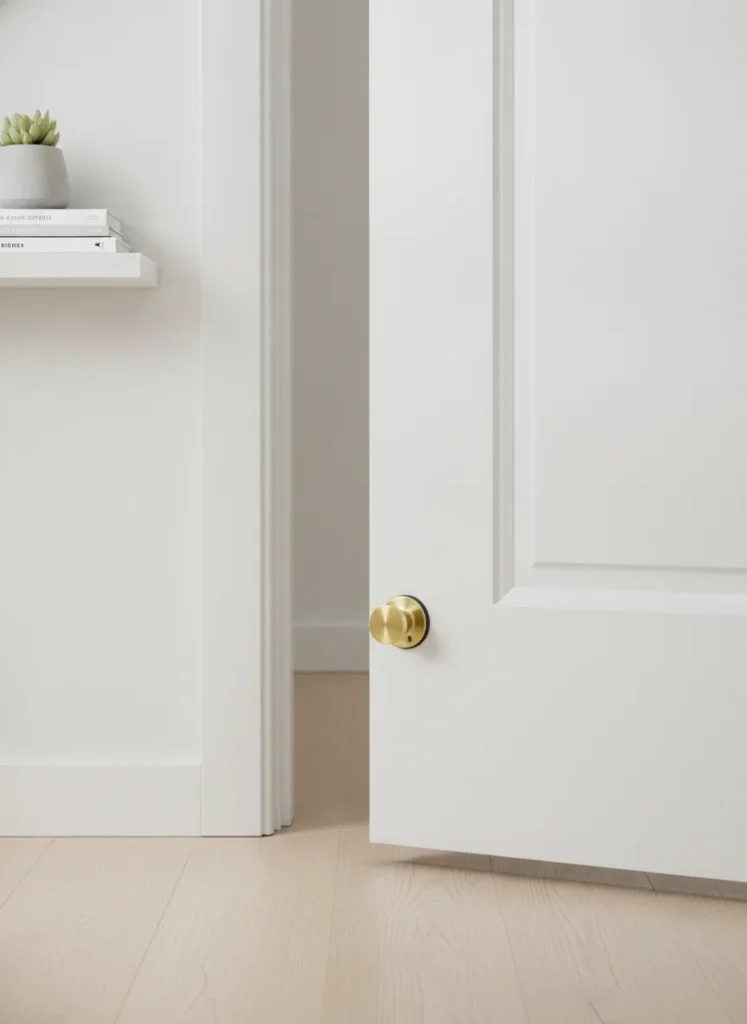
If you prefer to keep the existing door but you want the room to function better during the hours you are in it, a heavy-duty floor-mounted doorstop is underrated. You keep the door fully open and flat against the wall during the day, reclaiming the entire swing arc as usable floor space. The door only moves when you are sleeping or need privacy.
The key is choosing a doorstop that actually holds the door firmly in position rather than just catching it. Magnetic doorstops are ideal for this because the door snaps to the stop and stays there until you actively pull it free. A door that creeps closed on its own in the middle of the day defeats the entire point.
This solution works best when combined with solution 5: the wall behind the door becomes accessible storage while the door is open, and the dead zone floor space becomes usable for a floor lamp, a small plant, or even a compact chair that you pull out when needed and tuck back when the door needs to close.
Find magnetic doorstops on Amazon
9. Paint the Door the Same Color as the Wall
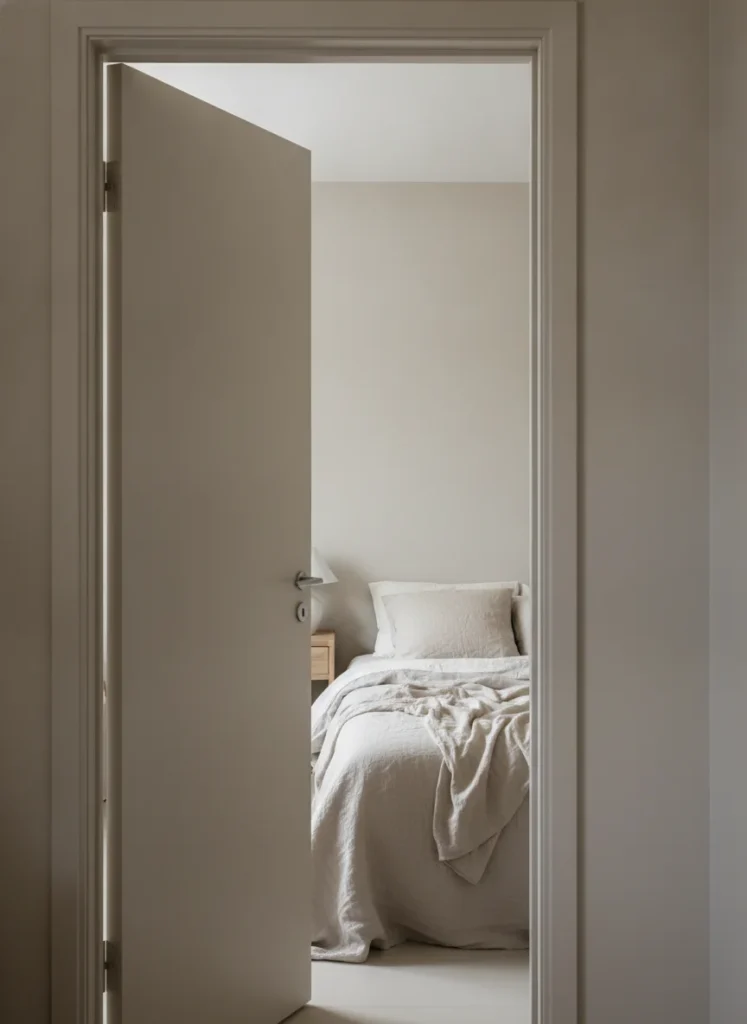
This one does not reclaim floor space. It does something different. It makes the problem visually disappear.
When a door is a contrasting color, typically white in a colored room or dark wood in a light room, the eye tracks it constantly. You notice where it is. You notice the arc it occupies. You think about it more than you should. When the door matches the wall color exactly, including the door frame and the trim around it, the eye stops reading it as a separate object. It becomes part of the wall. The room feels more unified and the door stops announcing itself every time you look at it.
In a rental where you cannot change the door mechanism, this is often the most powerful single change you can make. Renter-friendly paint on the door is usually allowed since you can repaint it white before moving out. The cost is one small can of wall paint and a few hours on a weekend. The effect lasts the entire time you live there.
If you are also thinking about how color choices affect the perception of room size in general, my guide on paint colors that make a small bedroom feel bigger covers the specific tones that work best and why, which complements this trick directly.
How to Decide Which Solution Is Right for Your Room
Every bedroom door situation is slightly different and the right fix depends on three things: whether you rent or own, how much wall space you have beside the door frame, and how often the door swing actually disrupts your daily routine.
If you rent and cannot make structural changes, solutions 1, 2, 5, 6, 8, and 9 are all either free or under $100 and reversible. Start with mapping the dead zone and designing around it. That alone often resolves 70% of the frustration without touching anything else. If you are looking for more damage-free styling strategies, my guide on interior design for renters covers color, lighting, and temporary fixes that completely protect your security deposit.
If you own or have a cooperative landlord, a barn door or bifold swap is worth doing properly. The barn door in particular gives you a functional improvement and a genuine visual upgrade at a price point that is hard to beat for what you get.
If the door swing is just one of several layout problems making the room feel cramped, there is usually a deeper spatial issue at play. The most common cause is furniture that is scaled wrong for the room or placed without accounting for the full circulation path. I went deep on all of this in my post about why small bedrooms feel cramped and exactly how to fix each cause, which pairs well with this one.
And if you are working with a 10×10 room specifically, where every inch genuinely matters, the tricks in my 10×10 bedroom guide go into furniture sizing, layout sequencing, and the specific dimensions that make tight rooms work rather than fight you.
One Last Thing Before You Do Anything
Live with the room for one full week before committing to any structural change. Open the door the way you normally do. Notice exactly where it stops. Notice which piece of furniture it nearly hits. Notice the moments when the swing actually bothers you versus the moments when you do not think about it at all.
Sometimes what feels like a door problem is actually a furniture placement problem. Sometimes moving the dresser six inches to the left and angling the nightstand resolves the whole thing without touching the door at all. I learned this the hard way in my first apartment where I spent two months annoyed at the door before realizing the actual issue was a chair I never sat in that was blocking the natural path through the room.
The door that swings into the room is a constraint. But constraints are just design problems with a specific shape. Once you know the shape of this one, it is actually one of the more solvable problems in a small bedroom.