
This post contains affiliate links. If you buy something through my links, I may earn a small commission at no extra cost to you. I only recommend things I genuinely use or believe in.
Mastering small bedroom organization with too much stuff challenges is not about forcing yourself to throw away things you actually love. Almost every home organizing article starts with the same lecture: get rid of half your clothes, donate your books, and live like a monk with twelve possessions. But what happens when you have college textbooks, winter parkas, craft supplies, photo albums, and work gear that you genuinely need to keep? Guilt-tripping yourself into extreme minimalism does not solve your storage reality.
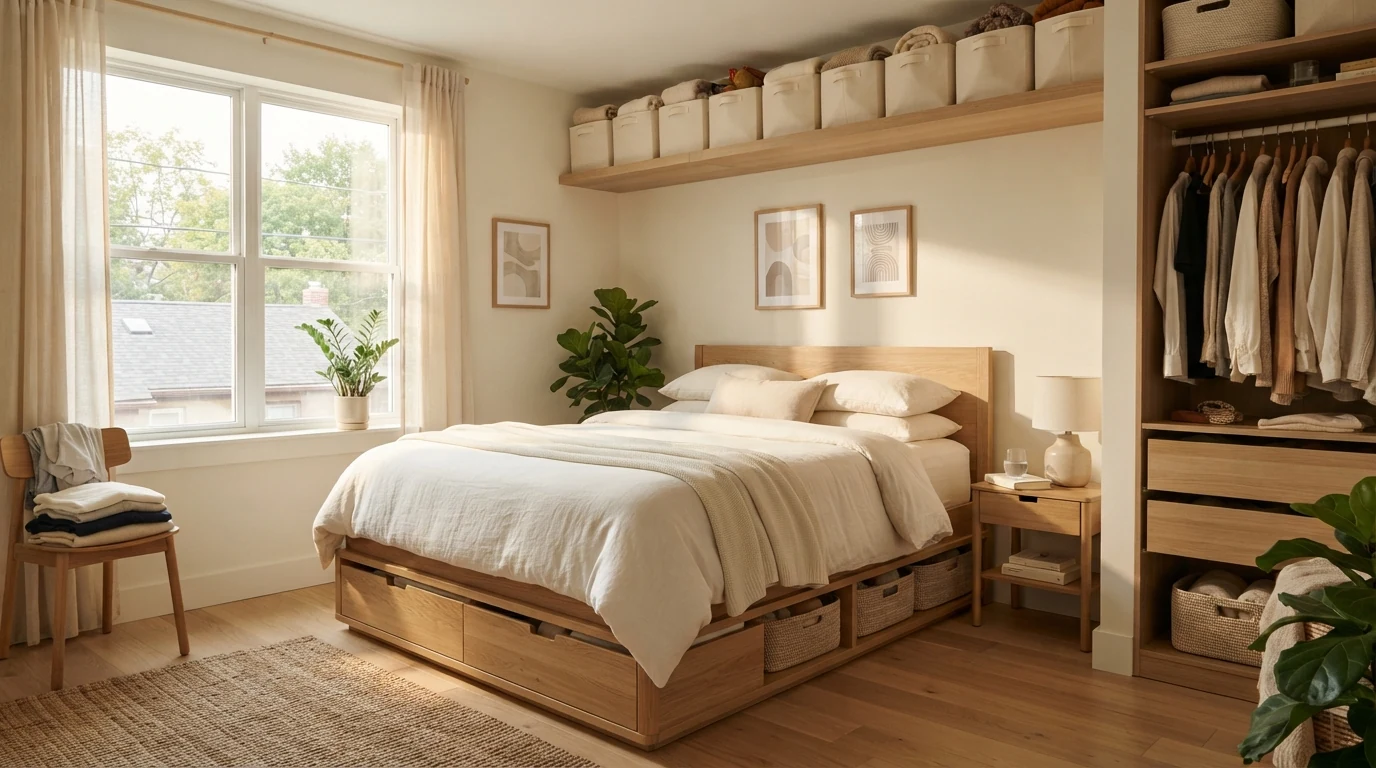
When you have a high volume of belongings in a compact room, the secret is not getting rid of your possessions. The secret is maximizing high-density storage zones and controlling visual noise so the room looks calm even when it holds hundreds of items. Below are seven practical storage methods that absorb massive amounts of physical belongings without turning your bedroom into a cluttered warehouse.
Small Bedroom Organization Too Much Stuff: The Visual Silence Formula
Before buying organizers, you need to understand why high-volume bedrooms feel stressful. The human brain interprets high contrast and busy patterns as visual noise. When you store fifty items in clear plastic tubs or wire baskets, your eyes register fifty separate shapes, logos, and colors all at once, creating sensory overload.
If you take those exact same fifty items and place them inside matching opaque fabric storage bins with clean lids, your eyes register only one calm, solid surface. To keep a packed room feeling peaceful, follow the ninety-ten rule: ninety percent of your storage should be completely opaque and visually uniform, leaving only ten percent of open space for your favorite decorative accents.
I organize my shelves with these stackable neutral linen storage bins with reinforced magnetic drop-front lids. The solid cream fabric hides whatever clutter is inside, and the drop-down front door lets you pull out sweaters or cords from the bottom bin without unstacking the entire tower.
1. The 14-Inch High-Clearance Bed Foundation
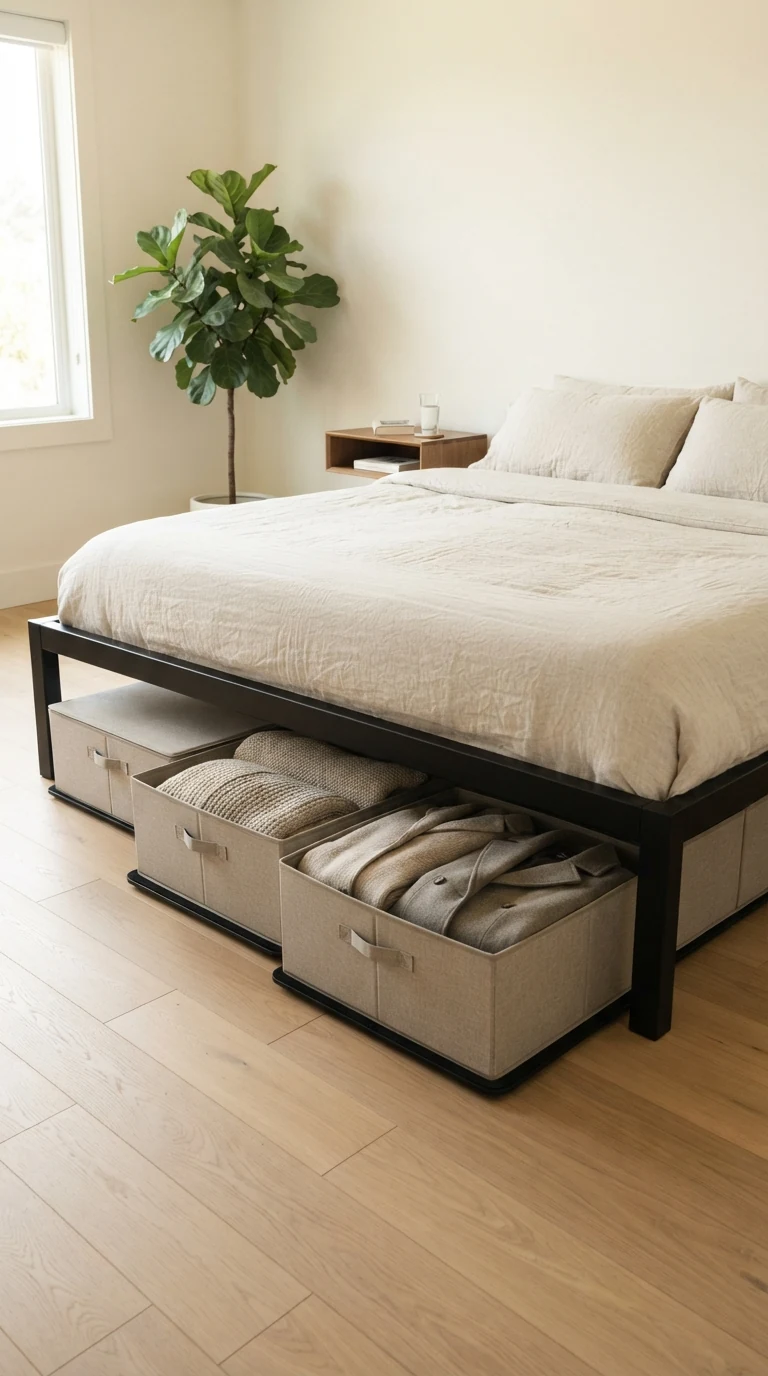
A standard low bed frame sits six to eight inches off the carpet, creating a shallow dust trap that only fits flat gift-wrap rolls. That is a massive waste of square footage. A queen-size mattress covers thirty-three square feet of floor area, which is equivalent to an entire walk-in closet lying flat.
Switch your bed foundation to this 14-inch high-clearance steel platform bed frame that fits large storage totes. That extra six inches of vertical height doubles your usable under-bed volume, allowing you to slide eight full-sized structured storage trunks directly beneath your mattress.
You can store off-season clothing, spare bedding, camping gear, and bulky winter boots completely out of sight. Because the steel base supports your mattress without needing a bulky box spring, your sleeping surface stays at a comfortable standard height.
2. The Ceiling Perimeter Eaves Shelf
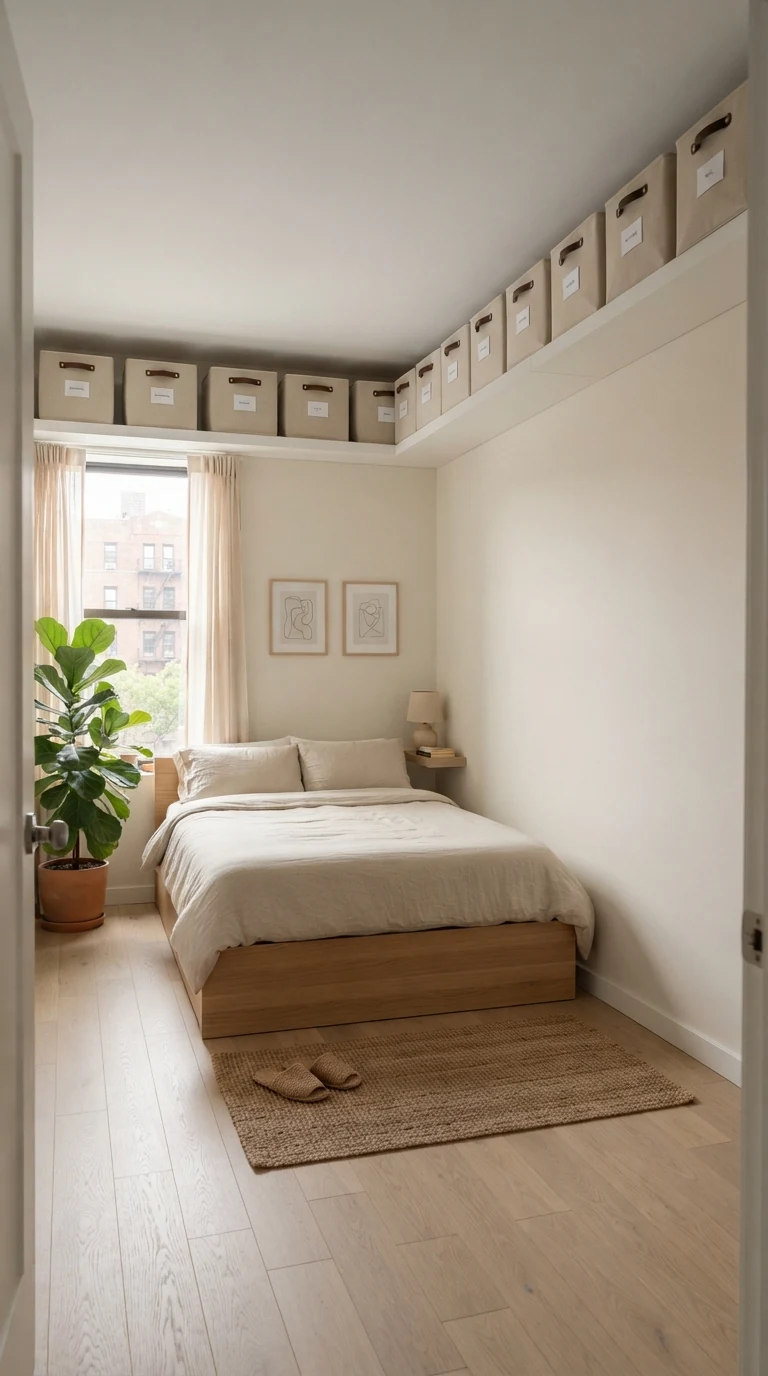
Most bedrooms stop using wall space at eye level, leaving the top two feet between your picture frames and the ceiling completely empty. That upper perimeter is prime storage territory that never interferes with walking paths or furniture arrangements.
Install a continuous floating shelf twelve inches below the ceiling line along one or two walls. Line the shelf with matching fabric storage boxes, and use them for items you only reach for occasionally, like tax documents, holiday decor, formal shoes, or spare tech cables.
Because the shelf sits well above head height, it draws the eye upward and preserves your floor space. If your bedroom is ten by ten feet or smaller, my walkthrough on 10×10 bedroom layout ideas shows how to balance high perimeter shelving with tight furniture clearances so the room feels balanced.
3. Vacuum Compression for Bulky Soft Goods
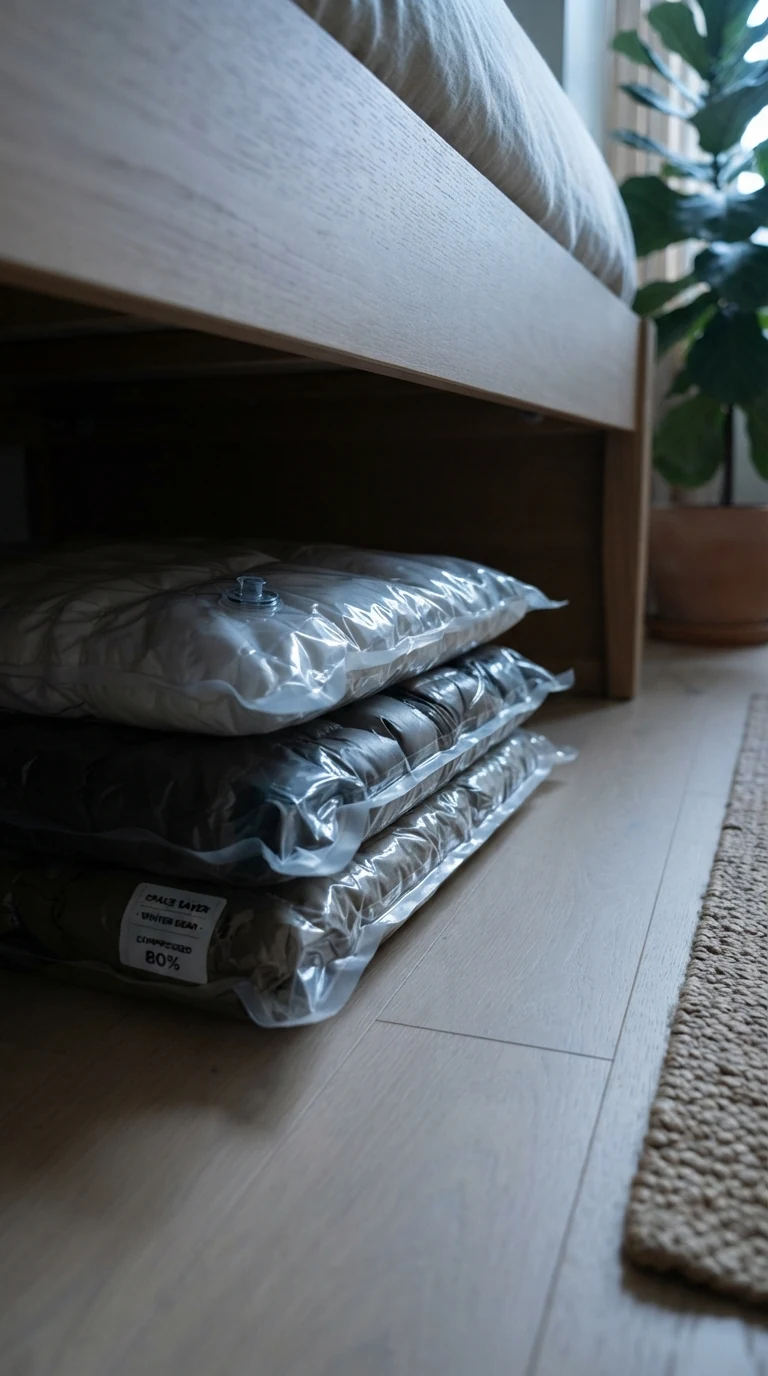
Bulky textiles like winter parkas, extra pillows, down comforters, and thick knit blankets take up an enormous amount of cubic volume simply because they are filled with trapped air. Letting puffy blankets occupy precious closet shelf space chokes your daily storage.
Pack those items into these heavy-duty airtight vacuum storage bags that shrink bulky winter duvets. Using your standard vacuum hose or the included hand pump, you can remove all the air in forty seconds, flattening giant blankets down to eighty percent of their original size.
Once compressed, those blankets become flat, firm slabs that slide easily into low under-bed bins or stack neatly on high closet shelves. If your bedroom has no closet at all, my post on clothes storage for a bedroom with no closet walks through how to pair vacuum compression with hidden curtain wardrobes.
4. Vertical Cascading Closet Hardware
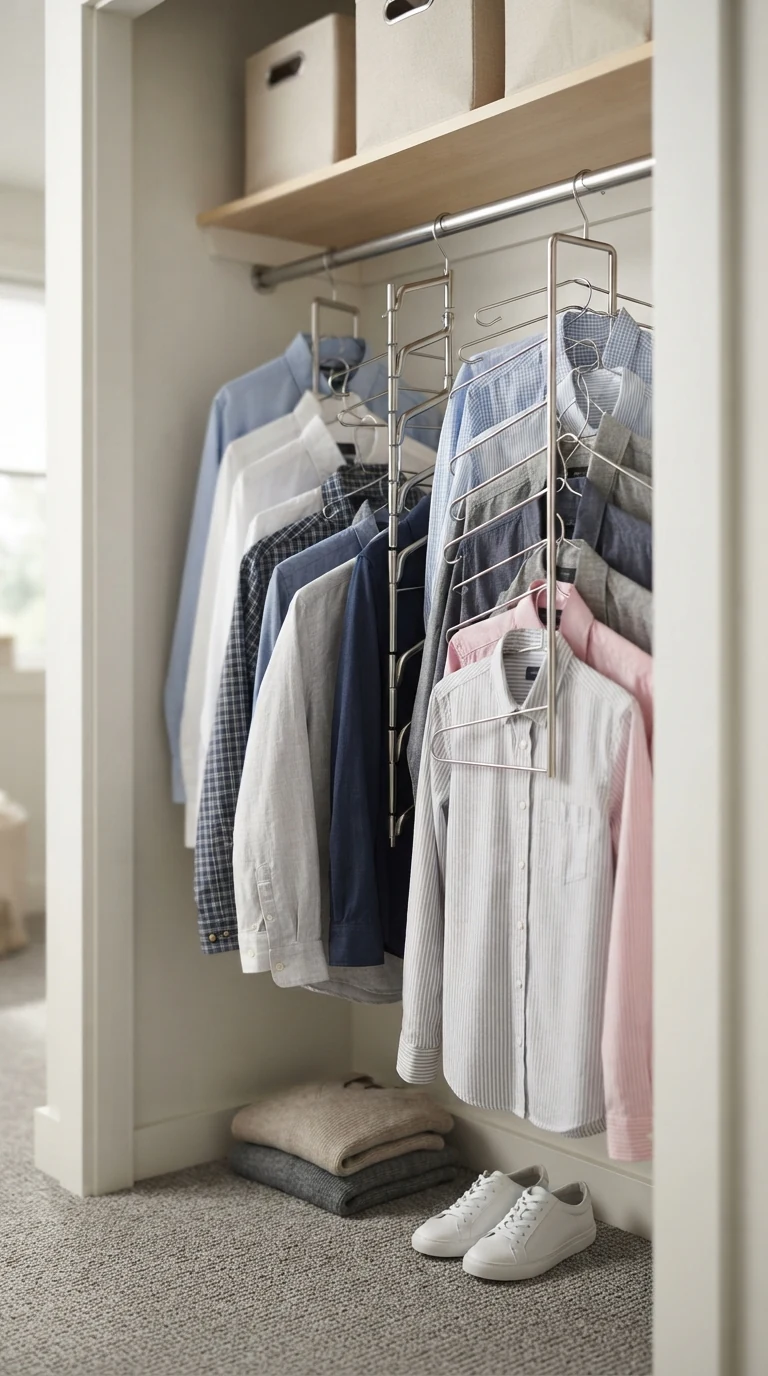
If your closet is crammed so tightly that you cannot slide hangers apart to pick an outfit, horizontal rod space is your primary bottleneck. Trying to shove fifty individual plastic hangers onto one four-foot bar inevitably causes clothes to wrinkle and snag.
Switch your daily shirts, jackets, and pants onto these stainless steel cascading space-saving hanger organizers. Each metal bar holds five garments across standard hanger hooks. Once loaded, you release one end hook, and the bar drops down vertically into a neat vertical tier.
This single swap condenses thirty inches of horizontal hanging space down to six inches of bar space. You free up seventy percent of your closet rod for longer dresses and coats while keeping your everyday shirts organized and accessible.
5. The Back-of-Door Utility Station
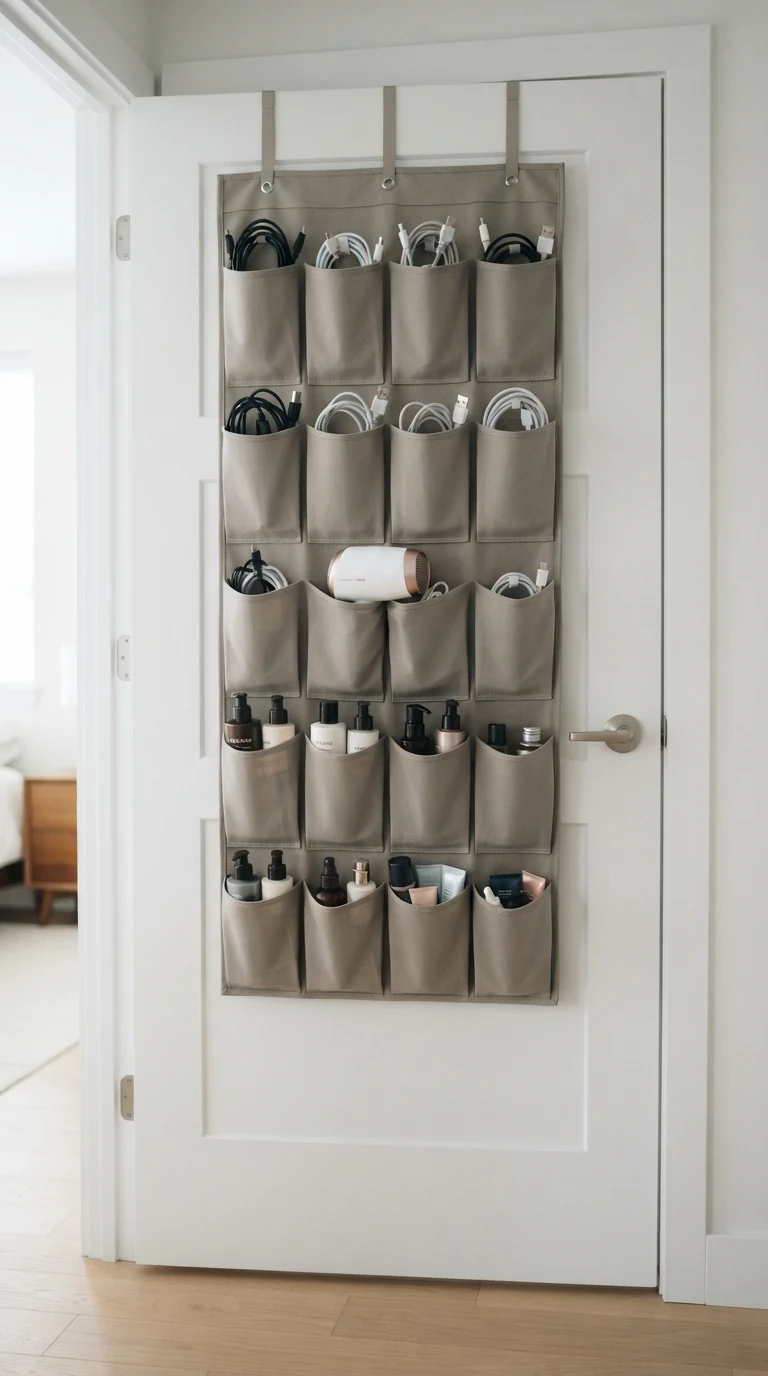
Small loose items are the hardest things to organize in a packed bedroom. Chargers, hair brushes, lint rollers, moisturizers, prescription bottles, and belts constantly end up scattered across dressers and nightstands because they lack an assigned home.
Hang this heavy-duty deep-pocket hanging door organizer for cables, shoes, and toiletries on the back of your bedroom or closet door. Avoid flimsy clear vinyl pockets that tear under weight; choose breathable, opaque canvas pockets that hold heavy bottles and keep visual clutter concealed.
Assign specific pockets for daily essentials. Having twenty-four individual compartments keeps small items organized by category, clearing your nightstand and dresser surfaces completely. For more tips on keeping tight bedroom surfaces clear, my guide on how to make a small bedroom feel bigger breaks down the psychological value of clean horizontal surfaces.
6. The Upholstered Storage Trunk Footboard

The empty floor space at the foot of your bed is often an awkward dead zone. A standard bench provides seating but wastes the volume underneath, while leaving the space empty does nothing to solve your storage crunch.
Place a deep upholstered storage ottoman bench across the foot of your mattress. A forty-eight-inch bench gives you a comfortable spot to put on shoes in the morning while providing a deep, four-cubic-foot chest for heavy keepsakes, workout dumbbells, or extra sheet sets.
Because the trunk is fully upholstered in neutral fabric that matches your bedding, it blends into the sleep zone naturally instead of looking like an extra storage crate dropped in the middle of the room.
7. The Slim Vertical Column Shelving Unit
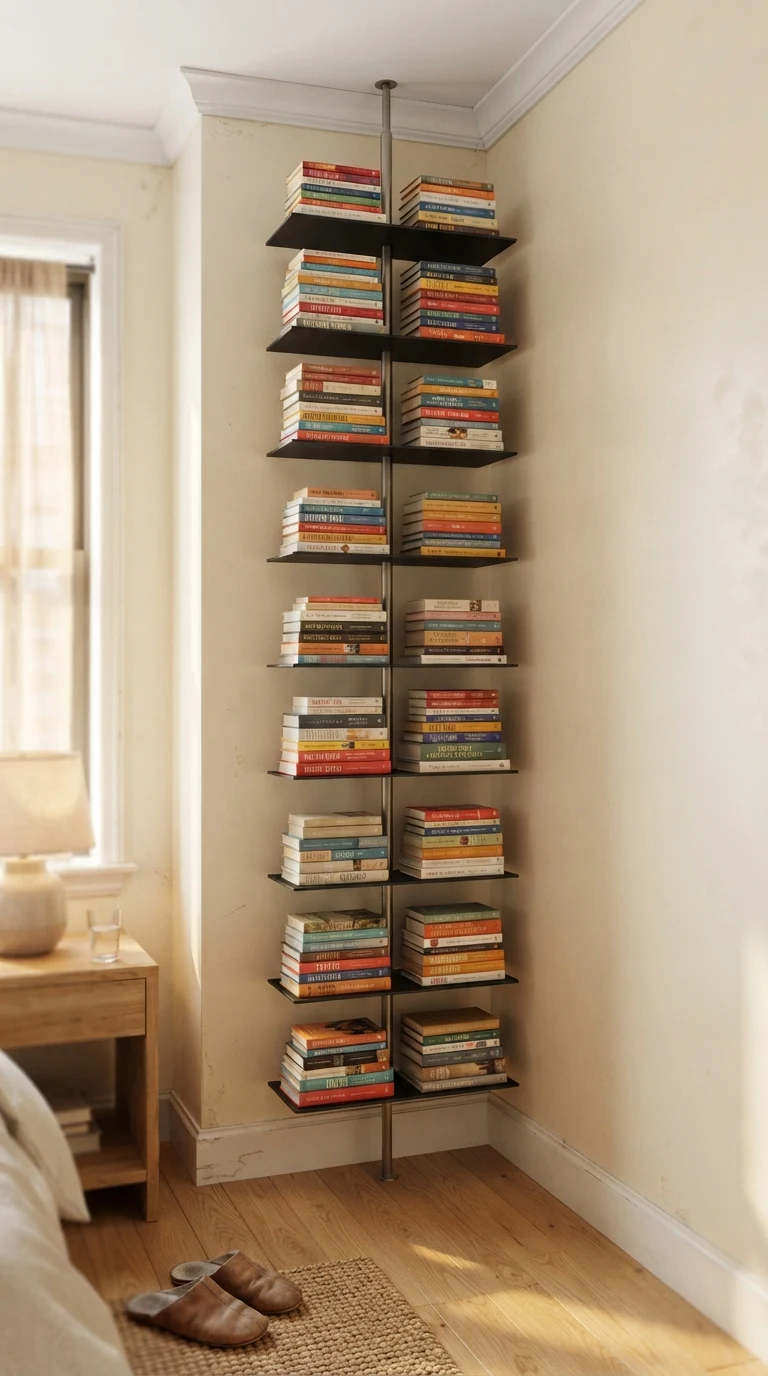
When you have dozens of books, binders, or collectible items, trying to fit them into wide, deep bookshelves will swallow half your floor plan. Wide bookcases project twelve to fifteen inches into the room, cutting into your walkways.
Look for a vertical spine bookshelf or a slim column bookcase that measures less than twelve inches wide and ten inches deep. Stacking books and media vertically from floor to ceiling turns an unused ten-inch sliver of drywall next to your door into an organized library without eating into your walking paths.
Three Organizing Traps to Avoid When You Have Lots of Belongings
First, steer clear of open wire wire grid cubes. Wire baskets might look trendy in loft photos, but when filled with cords, folded t-shirts, or paperwork, the open metal mesh displays every messy edge and makes the room look cluttered from across the room. Stick to solid fabric bins with lids.
Second, avoid cheap stacking plastic drawer carts. Lightweight plastic drawers bow in the center when loaded with heavy paper or jeans, making the drawers stick and warp within two months. Invest in solid furniture with smooth metal glides or sturdy structured canvas bins that hold their shape under heavy use.
Third, do not purchase small decorative baskets before measuring your actual items. Small decorative bowls and six-inch baskets look cute on store shelves, but they only hold three pens and a receipt, leaving you with little organizers that actually create more clutter on your dresser.
You do not need to organize every possession in a single afternoon. Start by grouping your belongings into active daily items and deep seasonal storage.
Vacuum-pack your out-of-season blankets, slide them beneath a high-clearance platform bed, and put matching opaque bins on your highest shelves. When your belongings are tucked into assigned, hidden zones, you can keep everything you care about while finally enjoying a bedroom that feels calm and restful.