
This post contains affiliate links. If you buy something through my links, I may earn a small commission at no extra cost to you. I only recommend things I genuinely use or believe in.
Finding practical clothes storage for a bedroom with no closet is one of the hardest challenges of small-space living. When I moved into a vintage rental apartment with charming hardwood floors and literally zero closet space, I thought I could manage with a cheap rolling garment rack from a grocery store. Within three weeks, my bedroom looked like a flooded discount clothing bin. Shirts were sliding off plastic hangers, winter coats bent the metal bar in half, and every surface had a mountain of unfolded laundry that made falling asleep feel impossible.
Most online guides tell you to buy open clothes racks and display your wardrobe like a boutique shop. That advice only works if you own eight beige linen shirts and never wear gym shorts, hoodies, or thick sweaters. In real life, having all your clothes exposed creates visual chaos that makes a small room feel noisy and cluttered. Below are seven practical arrangements that keep your clothes organized, protected from dust, and largely hidden from view even without a built-in closet door.
Clothes Storage for a Bedroom With No Closet: The 70/30 Rule
The single biggest mistake people make without a closet is trying to hang everything they own. A standard wardrobe consists of around seventy percent items that should be folded, like t-shirts, loungewear, denim, underwear, and athletic gear. Only about thirty percent of your clothes, like dresses, structured blazers, button-down shirts, and coats, genuinely require a hanger.
When you force folded items onto hangers, they stretch out at the shoulders and crowd the rack until you cannot slide anything aside to see what you have. Build your storage around the seventy-thirty ratio. Give the seventy percent a home inside drawers, fabric bins, or under the bed, and reserve your hanging space for pieces that wrinkle easily.
1. The Faux Built-In Wardrobe with Ceiling Curtains

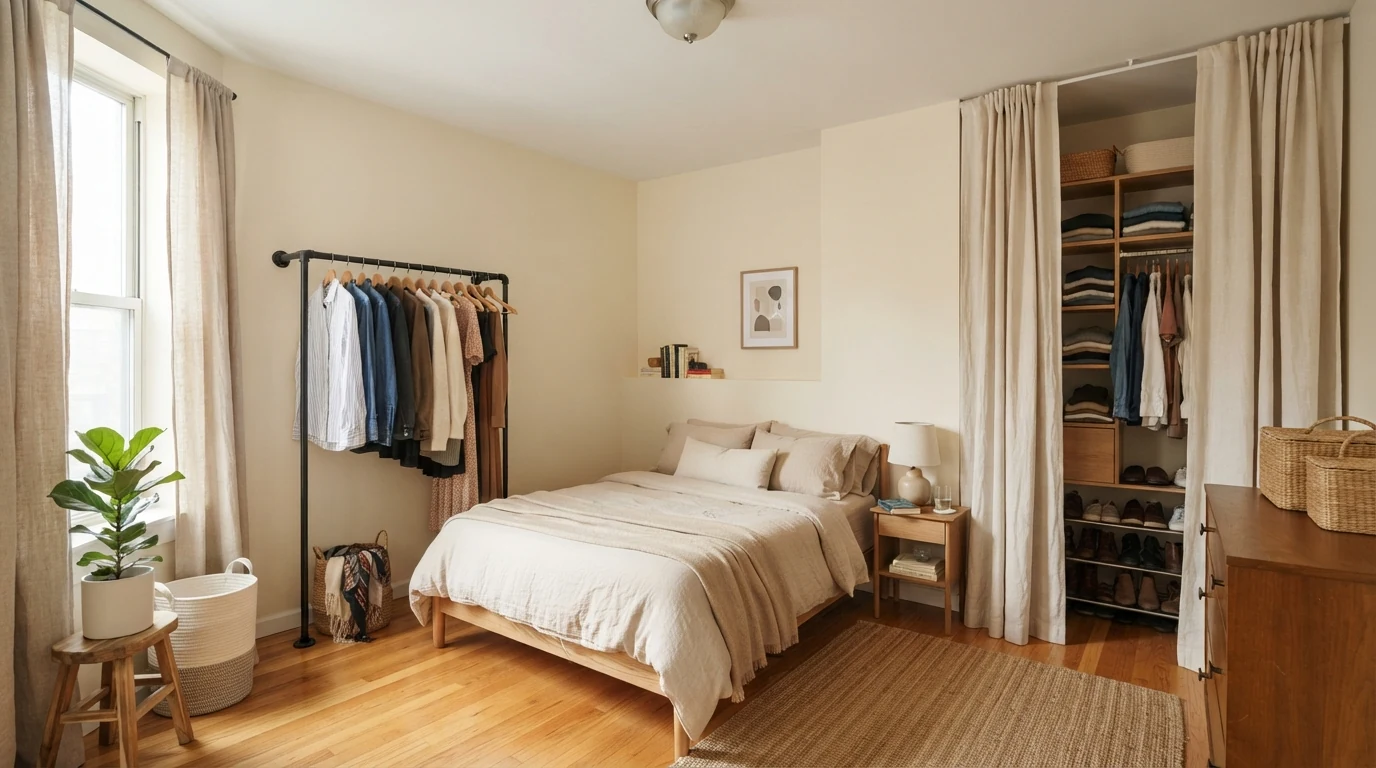
If you have an unused alcove, a recessed wall nook, or simply six feet of empty wall, you can build a complete built-in wardrobe look without hiring a carpenter. Instead of buying a heavy wooden armoire that costs eight hundred dollars and weighs two hundred pounds, use the ceiling curtain technique.
Mount a slim curtain track directly to your ceiling about twenty-four inches out from the wall, and hang floor-length linen drapes from ceiling to floor. Behind those curtains, you can place a simple hanging bar and stack inexpensive shelving units. When friends walk into your room, they see clean, soft fabric panels that add texture and acoustic softness. When you need an outfit, you pull the curtain aside to access your entire wardrobe.
I installed this bendable ceiling curtain track kit that lets you hide clothes behind linen drapes in my previous rental. It mounts with small plastic drywall anchors that leave tiny pinholes you can patch with a dab of spackle in two minutes when your lease ends.
2. The Heavy-Duty Industrial Pipe Rack
Flimsy chrome garment racks from big-box stores are built with plastic joint fittings that warp under the weight of winter wool coats. After two months of daily use, the entire rack leans twenty degrees to one side before collapsing in the middle of the night.
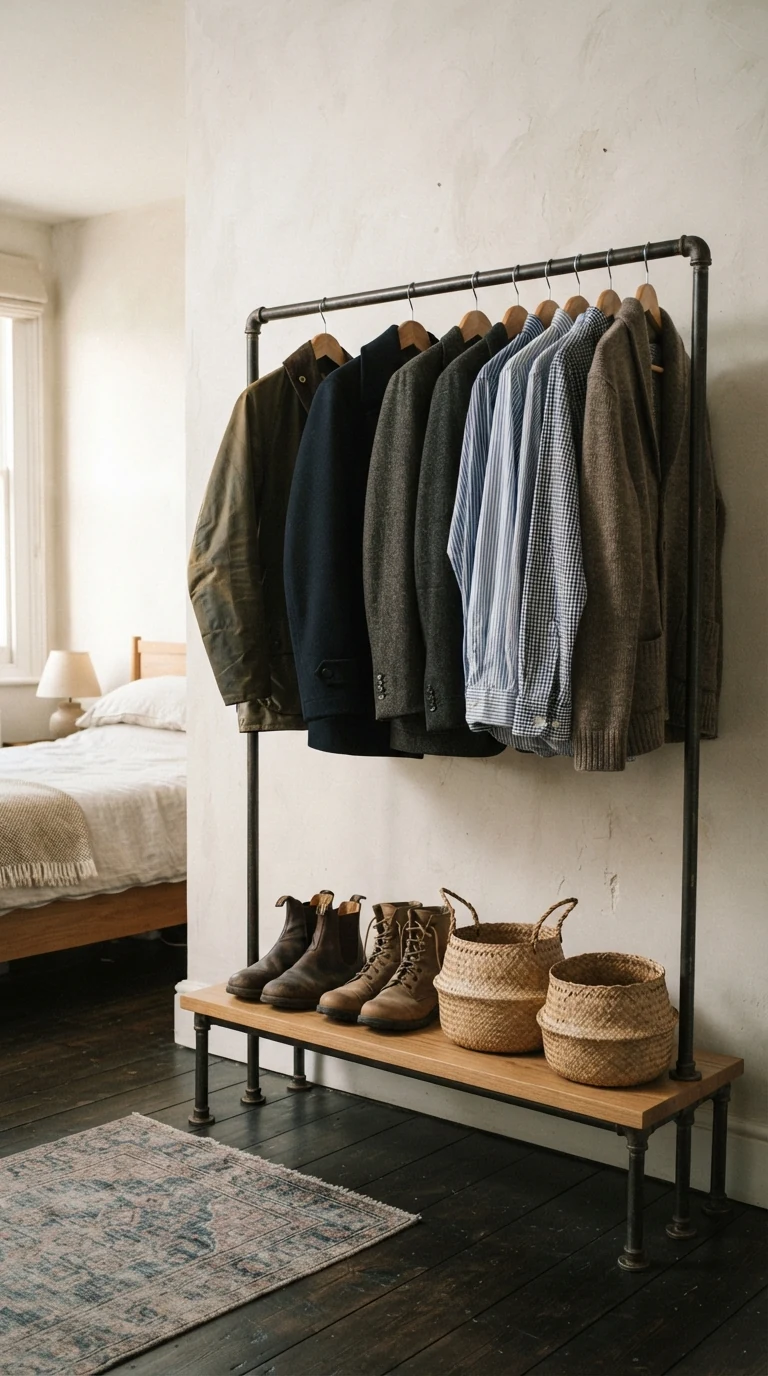
If you need a freestanding hanging solution, look for industrial steel pipe construction rated for at least one hundred and fifty pounds. Industrial pipe racks screw together with solid threaded metal joints that never wobble or bow under weight.
Pick up this heavy-duty industrial pipe clothing rack with lower wooden shoe shelf. The built-in bottom wood shelf anchors the base, keeps the rack perfectly square, and gives you a raised platform for shoes or fabric bins so nothing sits directly on dusty floorboards.
3. Maximizing the Nine-Inch Under-Bed Zone
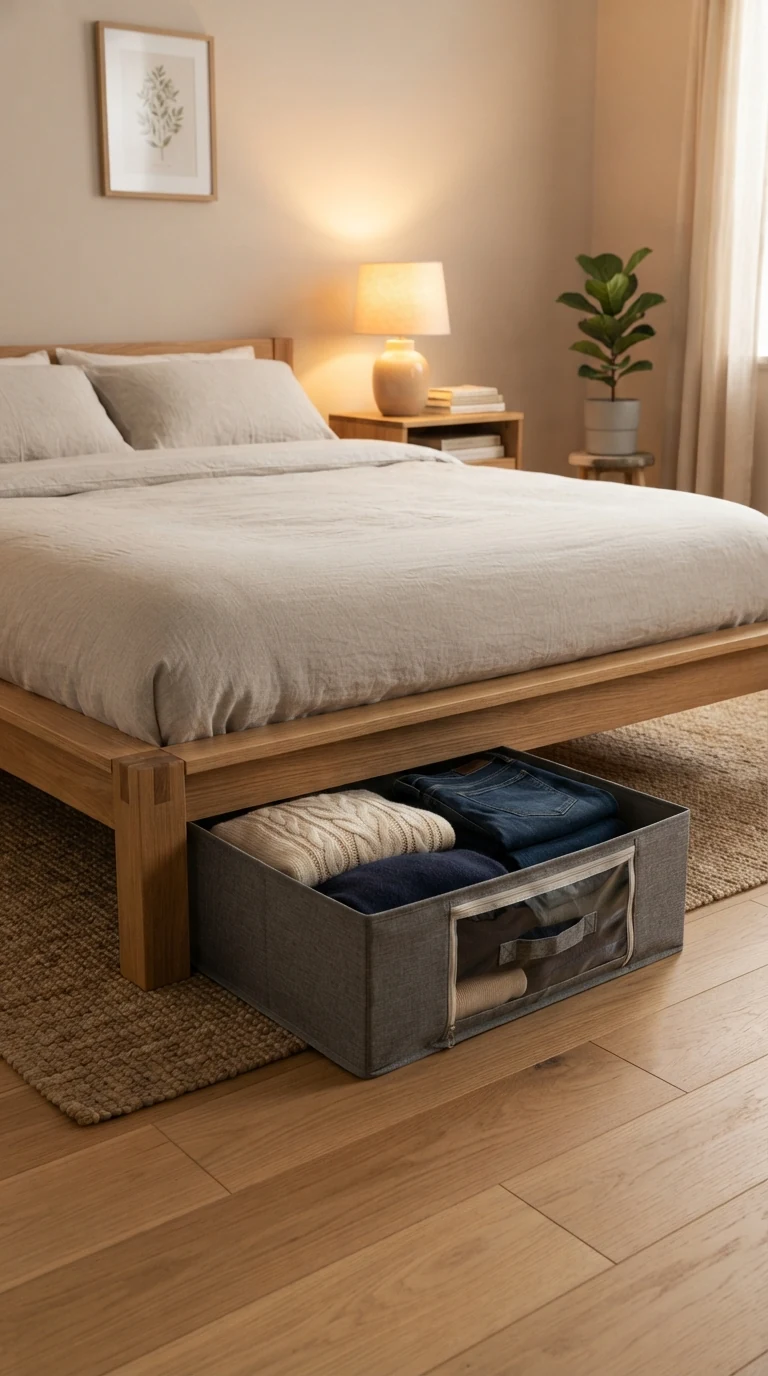
The space beneath your bed is often the largest single block of unused storage in your entire home. A queen-size mattress covers approximately thirty-three square feet of floor area. Letting that zone collect dust bunnies while your floor space is cramped is a huge wasted opportunity.
Avoid solid plastic bins with snap lids under your bed. Thick plastic traps moisture, lacks breathability, and the rigid lids tend to catch against the underside of low bed rails. Instead, choose breathable woven fabric organizers with reinforced web handles and three-sided zippers.
I use these low-profile breathable fabric under-bed storage containers with reinforced handles for off-season sweaters and extra jeans. They slide smoothly over hardwood or low-pile rugs, and the clear vinyl window on top lets you identify what is inside without unzipping every container.
4. The L-Shaped Corner Wardrobe Unit
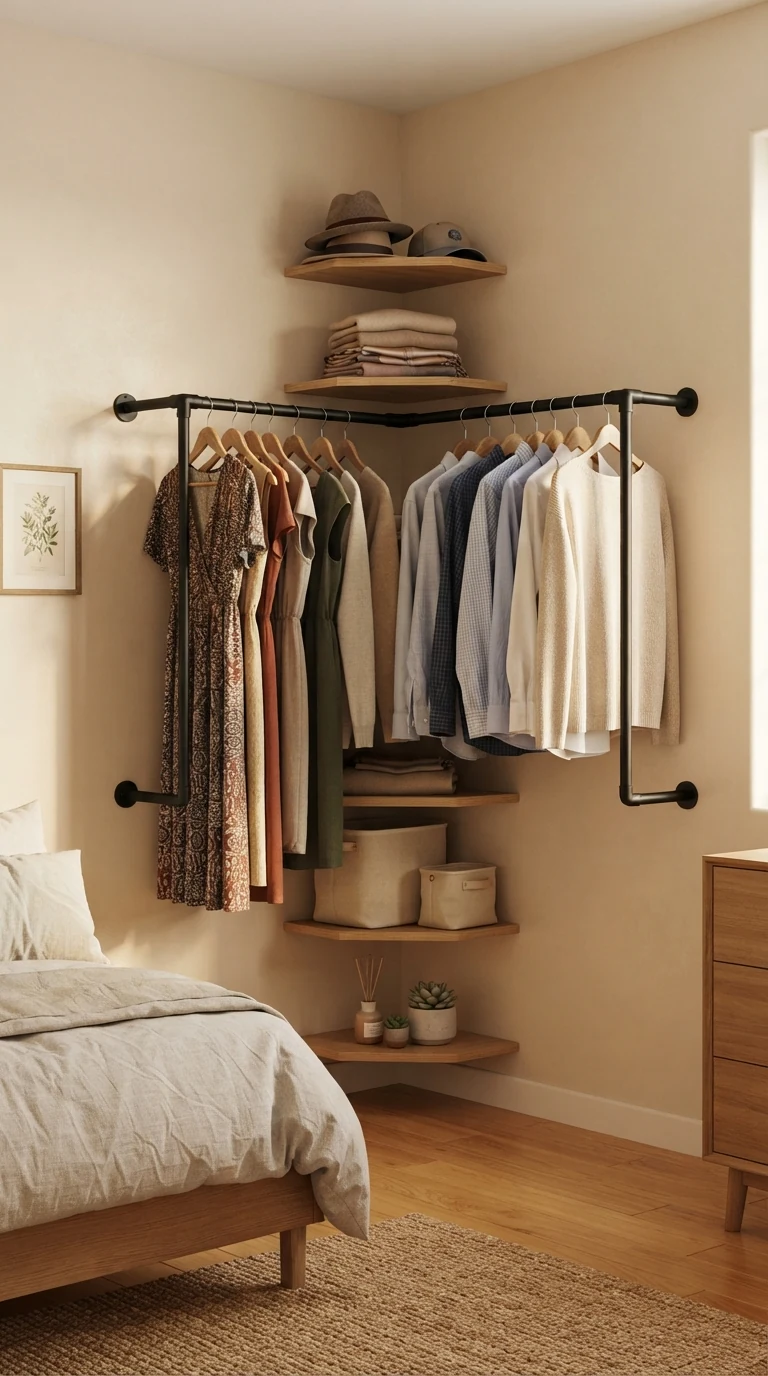
Corners are notoriously difficult to use in small bedrooms. Standard dressers and straight clothing racks leave awkward empty triangles on either side that gather dust and make the room look fragmented.
A corner-specific rack takes advantage of that dead ninety-degree angle. By running hanging rails along both walls from a single central corner post, you get double the hanging capacity while consuming half the floor depth of a straight rack positioned across the room.
Keep the corner rack on the wall adjacent to your entry door so the visual depth stays out of your direct line of sight when you walk into the room. If your bedroom door swings inward and limits your available corner space, my walkthrough on small bedroom door opening into room solutions shows how to position storage units so door handles never bump your clothes.
5. The Vertical Dresser and High Floating Shelf Stack
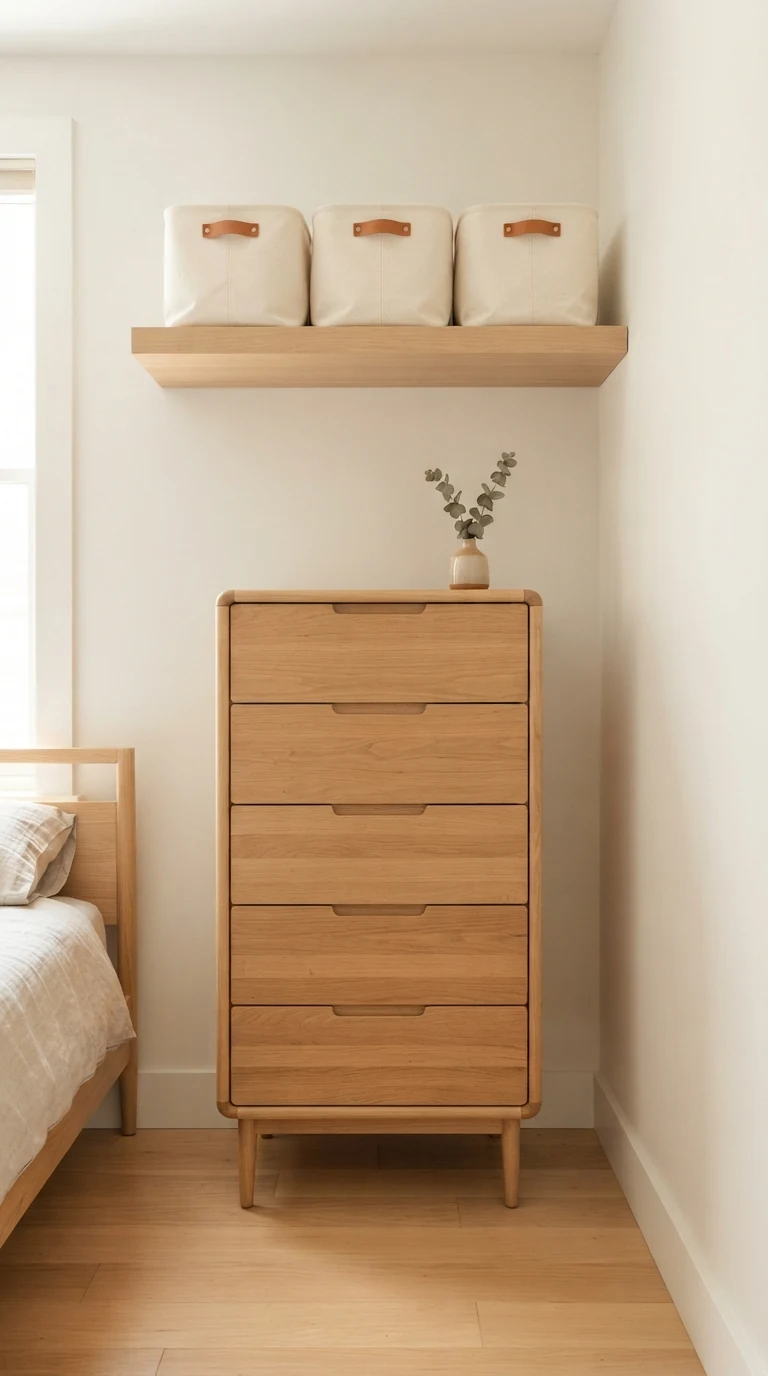
When you lack a closet, horizontal dressers that spread out four or five feet across the wall are the enemy. They eat up prime floor real estate where a bedside table or comfortable walking path should be.
Switch to a vertical lingerie chest or five-drawer tallboy dresser that measures under twenty-four inches wide. You get the same drawer cubic footage by building upward toward the ceiling instead of spreading outward along your baseboards.
To take this even further, install a floating shelf twelve inches above the top of your tall dresser. Place matching canvas storage boxes on that high shelf for items you only need once a month, like swimsuits, seasonal scarves, or formal wear. Stacking storage vertically keeps your walking paths completely clear, and my guide on how to make a small bedroom feel bigger explains how preserving continuous floor plane sightlines makes tight rooms feel twice as spacious.
6. The Over-the-Door Accessory Station
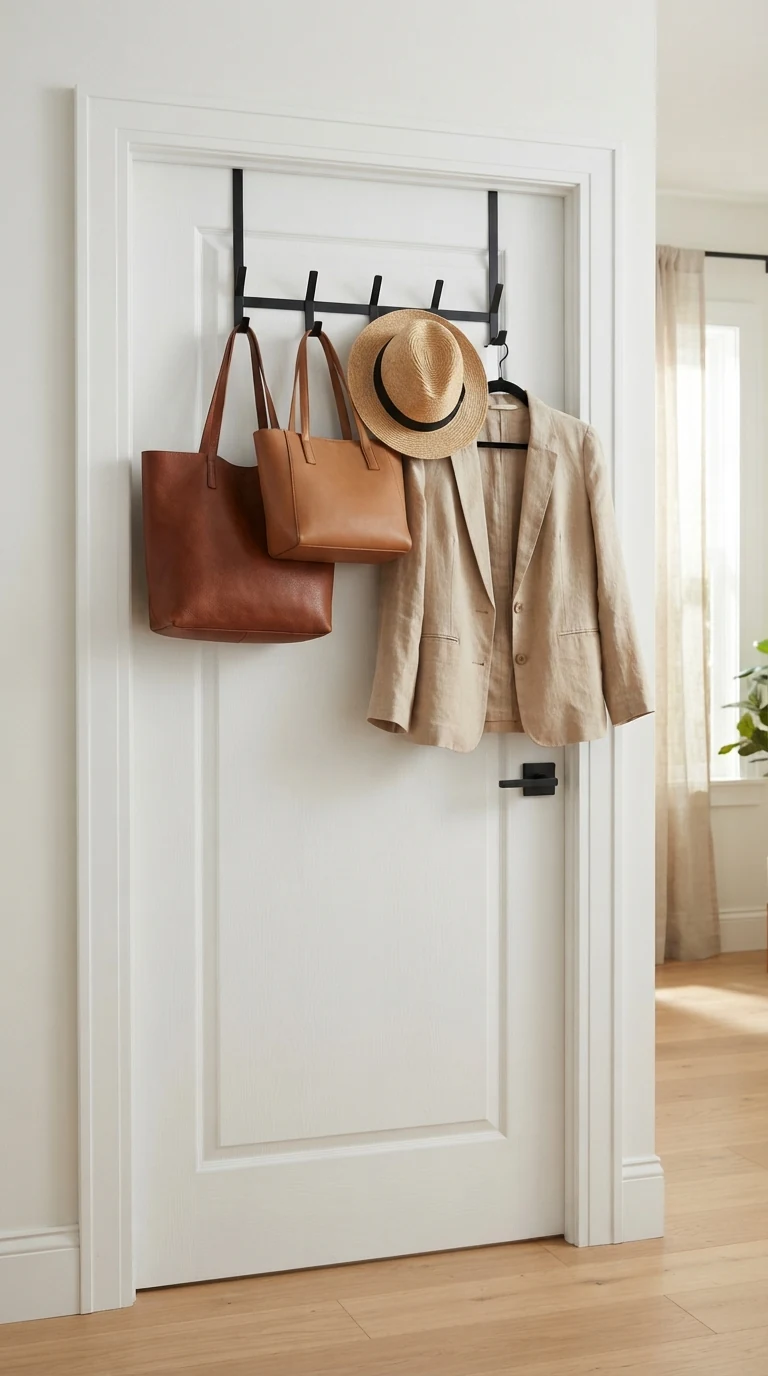
Accessories like tote bags, belts, hats, and light jackets are the usual culprits that end up piled on bed corners or desktop surfaces. When horizontal surfaces get covered in small items, a bedroom immediately feels cluttered even if the laundry is done.
Put the back of your bedroom door to work with this slim over-the-door matte black organizer rack with deep double hooks. Flat steel brackets slide right over standard doors without preventing the latch from clicking, giving you ten dedicated hanging spots for everyday bags and hats that would otherwise crowd your clothing rail.
7. The Hanging Vertical Shelf with Fabric Drawers

If you have an open wardrobe rail with spare horizontal bar space, you do not need to buy an extra freestanding chest of drawers to store folded socks and underwear. A hanging fabric closet organizer gives you instant vertical shelving directly on your existing rail.
Choose this reinforced six-shelf hanging closet organizer with slide-out fabric drawers. It converts twelve inches of hanging bar into six compartmentalized pull-out drawers for folded t-shirts, socks, and workout sets, keeping small items organized and completely out of sight.
Three No-Closet Mistakes to Avoid
First, never buy transparent plastic drawers for visible bedroom corners. Clear plastic storage shows every mismatched sock and crumpled t-shirt inside, creating visual clutter that makes your room look messy no matter how neatly you try to fold. Stick to solid canvas bins, woven baskets, or opaque wooden drawers that conceal the contents completely.
Second, protect your open hanging clothes from shoulder dust. If you use an open pipe rack, garments that sit untouched for more than two weeks gather a fine layer of gray dust across the shoulder seams. Use breathable non-woven shoulder covers over formal jackets and dresses to keep them pristine between wears.
Third, do not skip the seasonal swap. Trying to store heavy winter parkas, boots, summer swimsuits, and linen shorts in one small no-closet bedroom will overwhelm your space. Pack out-of-season clothing into airtight compression storage bags and tuck them under your bed or in a high storage bin until the temperature changes.
You do not need to buy five different storage units all at once. Start by clearing off your bed and sorting your clothes into the seventy-thirty split.
Measure the clearance beneath your bed frame, pick up two low-profile fabric bins for folded sweaters, and choose one sturdy industrial pipe rack for your daily hanging essentials. Giving every single piece of clothing an assigned zone takes the stress out of mornings and gives your bedroom the calm, restful feel it was always meant to have.