

This post contains affiliate links. If you buy something through my links, I may earn a small commission at no extra cost to you. I only recommend things I genuinely use or believe in.
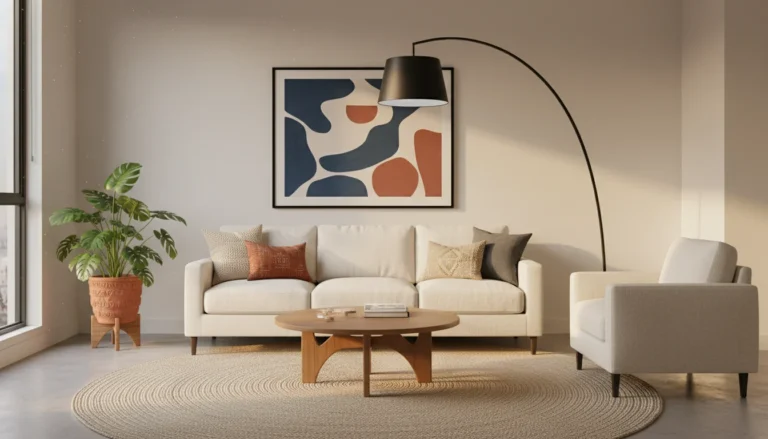
For almost a year after moving into my current apartment, I dreaded coming home after dark. I would walk into my living room, flip the wall switch, and instantly feel irritable. The single builder-grade flush mount on the ceiling blasted every corner with harsh, flat white glare. My second-hand sofa looked washed out. The room had zero depth, and sitting down to watch a movie felt like waiting in an urgent care clinic.
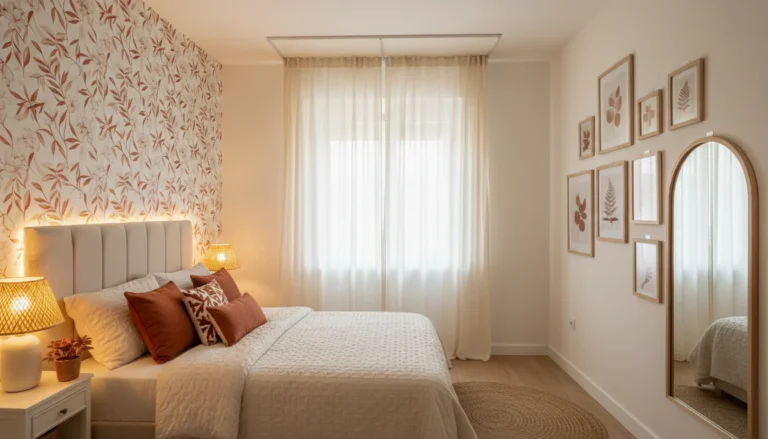
Most people try to fix a cold room by buying one tall floor lamp and placing it in a random corner. All that does is trade one harsh light source for another, leaving half your space in dark shadows while one armchair gets blinded. True coziness in a small living room comes from small pools of warm light placed at different heights. Below are the seven accent lighting setups that completely transformed my small space, along with the exact bulb rules that make them work.
The Bulb Number You Cannot Ignore
Before buying a single lamp or strip light, look at the small print on your lightbulbs. Every bulb has a Kelvin rating on the box. If you see numbers like 4000K or 5000K, or words like daylight and bright white, unscrew those bulbs immediately. Those cool blue-white tones tell your brain it is noon on a cloudy day, which makes relaxing on your couch nearly impossible.
For a cozy living room, you want 2700K warm white bulbs across every single fixture. At 2700K, light has a gentle golden tone that softens fabric textures, flatters skin, and makes paint colors look rich instead of chalky. If you want an extra relaxed feel for late evenings, look for 2200K amber bulbs for small secondary accent lamps. Keeping the color temperature consistent across the entire room prevents visual clutter before you even turn your attention to placement.
1. The Floor Can Uplight Behind a Tall Plant

This is the cheapest and most dramatic accent move I have ever made in an apartment. Instead of letting dark corners gather dust behind your furniture, tuck a tiny metal can light directly onto the floor behind a potted houseplant.
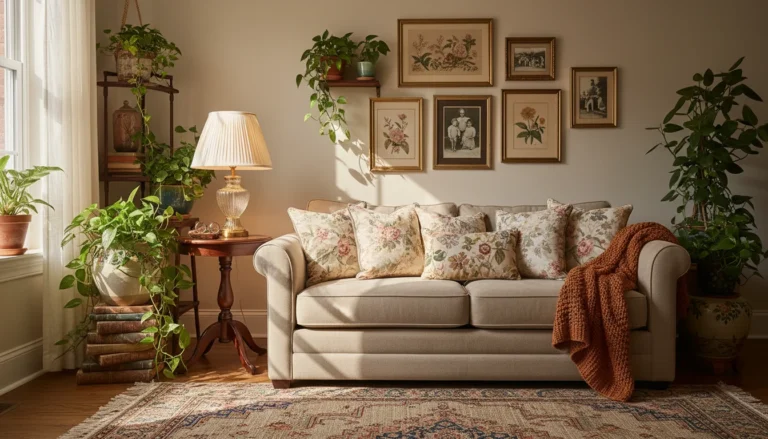
When the beam points upward through monstera or fiddle-leaf fig leaves, it projects gentle botanical silhouettes across your ceiling and wall. It turns a blank, boring corner into a soft living focal point without taking up an inch of tabletop space. I use this compact mini floor uplight with a foot-tap switch because you can hide the tiny metal cylinder completely behind the pot and turn it on with your toe as you walk past.
If you do not have a tall floor plant, place the uplight directly behind your sofa. The gentle upward wash of light bounces off the wall and creates a soft floating glow behind your seating area that makes the room feel four feet wider than it actually is.
2. Cordless Rechargeable Table Lamps for Cable-Free Spots
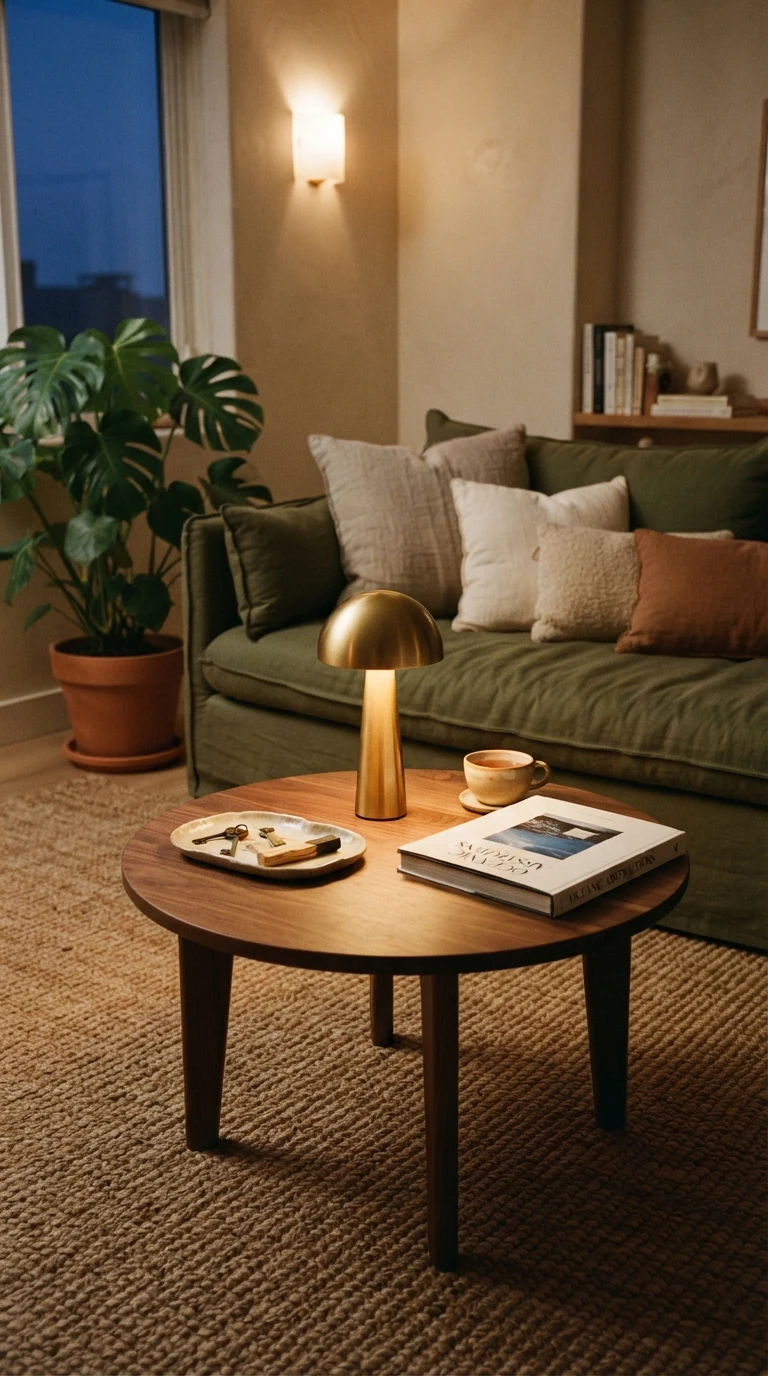
In a small living room, wall outlets are never where you actually need them. Running an extension cord across the floor to your coffee table or floating shelf looks messy and creates an immediate tripping hazard. That used to mean coffee tables and open shelving stayed dark all evening.
Cordless rechargeable lamps completely solve this problem. These small metal lamps charge with a standard USB cable during the day, then run for twelve to twenty hours on battery power. You can pick them up and set them in the middle of a dining table, on a bookshelf, or directly on your coffee table with zero cords dangling down.
I keep two of these cordless rechargeable mushroom lamps that give off a warm amber glow on my living room shelves. The heavy metal base keeps them stable, and touching the top rim lets you dim the brightness down to a soft candle-like flicker when movie time starts.
3. Plug-In Wall Sconces Flanking the Couch

When your living room is compact, side tables quickly become crowded junk drawers for remotes, water glasses, and books. Placing a standard table lamp on top eats up eighty percent of that usable surface. Moving your accent light onto the wall frees up your side table while framing your sofa like a boutique hotel lounge.
You do not need an electrician or landlord permission to do this. A plug-in wall sconce mounts with two simple drywall anchors and plugs into the nearest baseboard outlet. Look for designs that feature an articulated swing arm so you can pull the shade close for reading or push it flush against the wall when you want wider room glow.
To keep the look clean, pick up these matte black swing-arm sconces with braided fabric cords rather than cheap clear plastic wiring. The textured cloth cord looks deliberate and vintage against your drywall rather than looking like an unsightly cable you forgot to hide.
4. Magnetic Under-Shelf Puck Lights for Depth
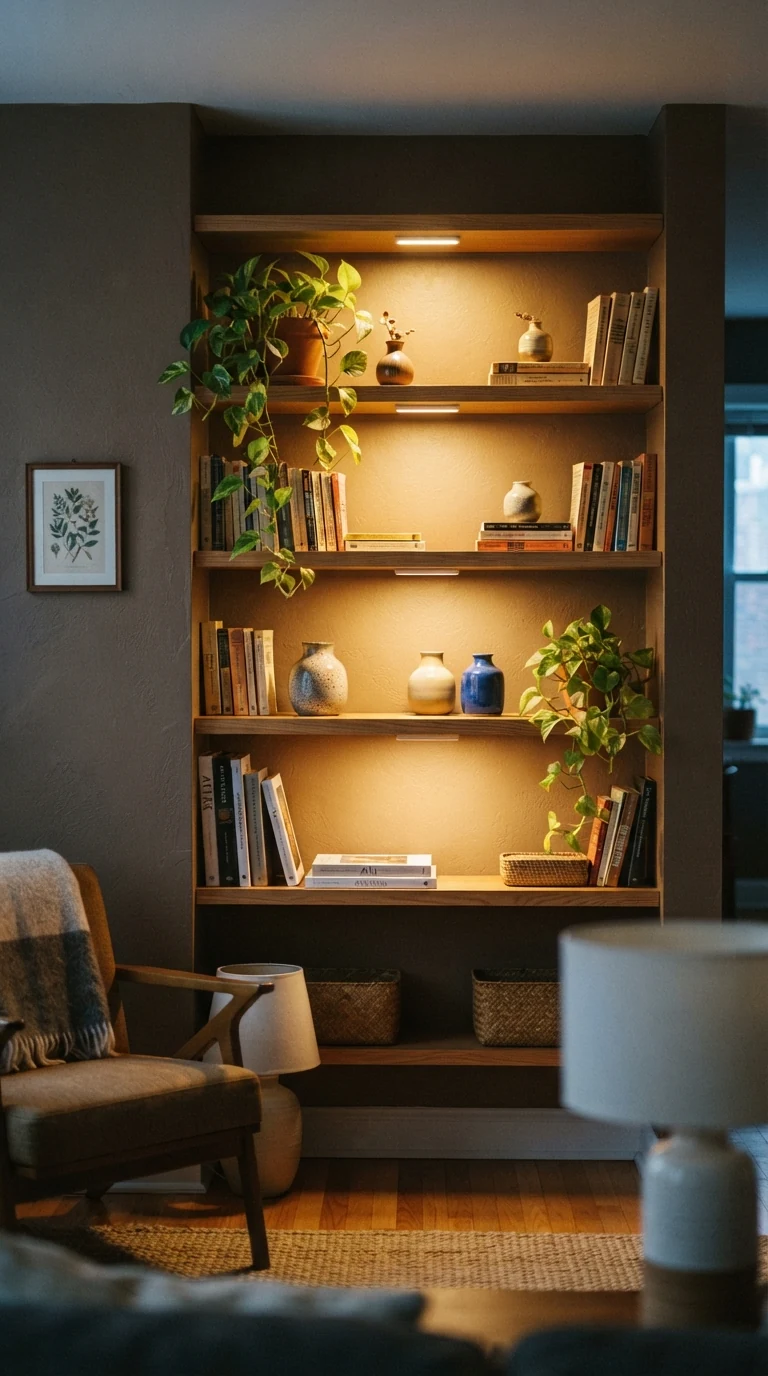
Standard room lights leave bookshelves and open credenzas looking flat and shadowed. When storage units are dark, they read as heavy solid blocks that visually weigh down a small room. Adding subtle downward lighting under each shelf creates depth that makes the entire wall feel recessed.
Avoid wire-heavy systems that require drilling holes through your furniture. The smartest renter solution is battery-powered puck lights that mount with adhesive magnetic plates. You stick the thin metal plate under the shelf lip, and the light snaps on magnetically. When the battery runs low after a month of use, you pull the light down, plug it into a phone charger, and snap it right back up.
I recommend the rechargeable magnetic puck lights with warm 2700K presets because they come with a small remote control. You can tuck them under three different shelves and turn them all on with a single button press from your sofa without getting up.
5. A Wireless Picture Light Over Wall Art

Nothing elevates inexpensive wall prints faster than dedicated art lighting. A framed poster from a thrift store instantly looks like a curated gallery original the second you wash it in warm direct light from above.
Traditional picture lights required running wiring inside your drywall, which renters simply cannot do. Modern wireless versions have completely changed the game. They run on internal rechargeable lithium batteries and slide onto a tiny bracket that mounts with two small finish screws right above your frame.
Take a look at this wireless brass picture light that mounts with two small screws. It has a built-in auto-off timer that turns the light off after two hours, so you never accidentally drain the battery overnight while sleeping.
6. Warm Bias Backlighting Behind the Television
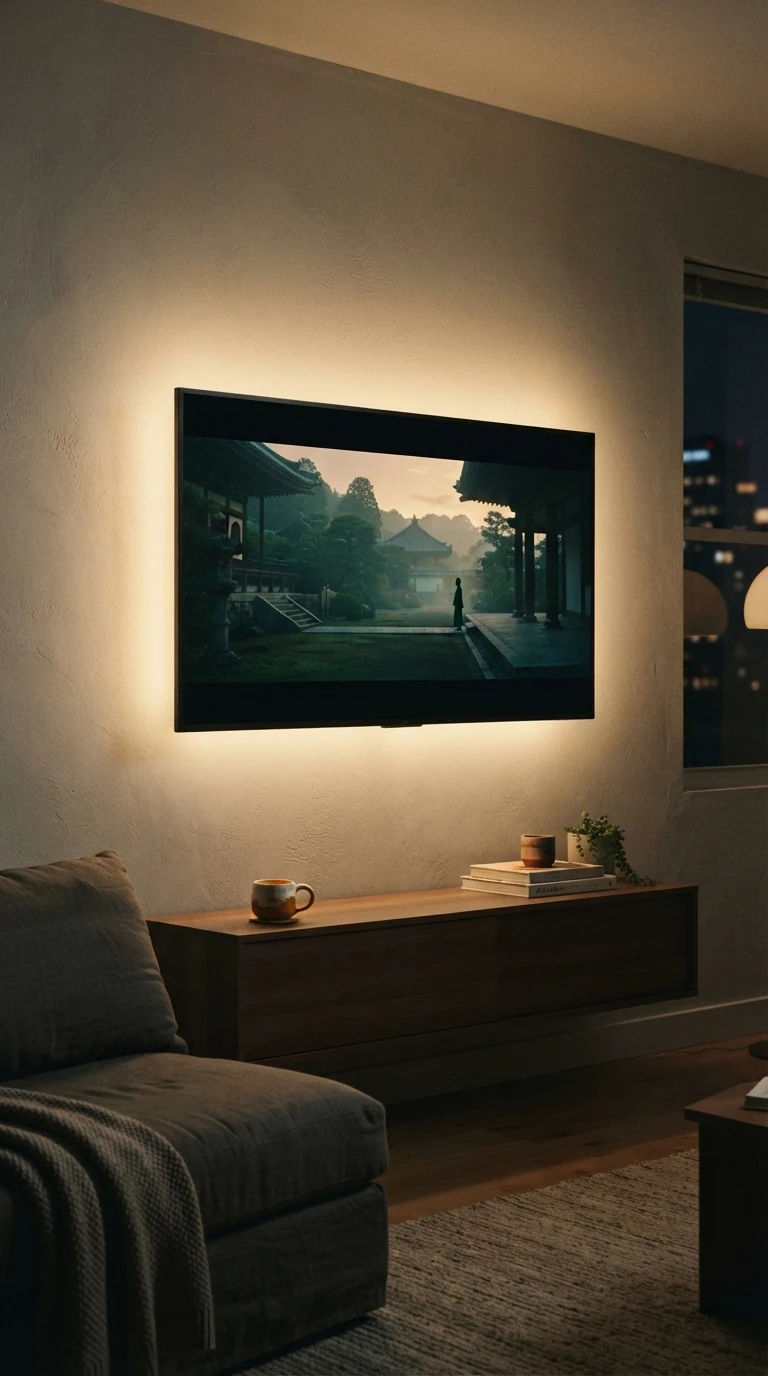
Watching television in a completely pitch-black room causes serious eye strain. Your pupils constantly dilate and contract as bright scenes switch to dark scenes on the screen. But turning on a regular lamp reflects distracting glare directly off the glass.
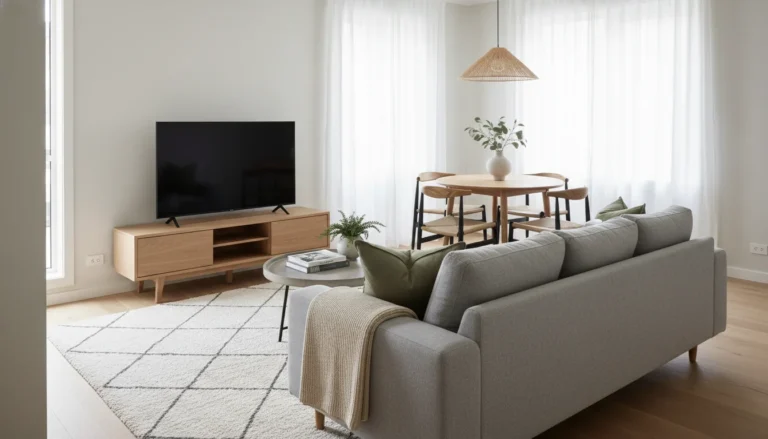
The answer is bias lighting. This is a thin strip of soft LED lights that adheres directly to the back perimeter of your TV casing. When turned on, the light bounces off the wall behind the screen, creating a halo of soft illumination without shining a single beam into your eyes or onto the glass.
Choose this warm white bias lighting strip that plugs straight into your TV USB port. Because it draws power from the TV itself, the accent glow turns on automatically the second you power on your television and shuts off when you turn it off.
7. The Low-Level Sideboard Table Lamp

Most people place table lamps too high. When a lamp sits on a tall bookcase or high mantle, the bulb shines downward into your eyes when you recline on the couch. That direct bulb glare breaks the cozy mood instantly.
Place one small accent lamp on a surface that sits lower than your seated eye level, such as a low sideboard, a TV console, or a stool. Keeping light below shoulder height recreates the primal feeling of sitting around a campfire. It signals to your body that the day is over and it is time to unwind.
Always pair low lamps with shades that hide the bulb from view. A small pleated fabric empire shade or a frosted globe diffuses the glare and creates a soft pool of golden light right where you rest your eyes.
The Three-Point Triangle Map for Small Rooms
You do not need dozens of lights to make an apartment feel warm. In fact, too many competing fixtures make a small room feel chaotic. The magic formula is a simple three-point triangle.
Stand in your doorway and identify three distinct corners or walls around your seating area. You want one low-level light in one corner (such as the plant floor uplight), one eye-level light on the opposite side (like the swing-arm sofa sconce), and one soft accent light in between (such as the TV backlighting or a shelf puck light). If your living area shares floor space with a dining table, my guide on styling ideas for a combined living and dining area breaks down how to balance lights across both zones without them clashing.
When you sit on the couch, those three points of illumination wrap around your peripheral vision. Every corner has gentle depth, no harsh shadows loom over your head, and the central ceiling fixture stays permanently switched off. If your living room has unusual angles or odd doors, my post on arranging awkward living room layouts shows how to place accent tables in dead zones to anchor these light points neatly.
Three Accent Lighting Mistakes to Avoid
First, steer clear of bare Edison bulbs. They look charming on store displays when turned off, but once switched on, the exposed amber filaments sear bright yellow lines into your retinas whenever you glance in their direction. Always choose diffused bulbs or fixtures with shades that protect your direct line of sight.
Second, avoid dark tinted lamp shades. Thick black or dark navy shades might match a moody decor palette, but they trap eighty percent of the lamp output inside the cylinder. Instead of spreading a warm glow, they create harsh spotlight cones straight up and down. Stick to linen, cream, textured paper, or frosted glass shades that distribute light evenly.
Third, do not turn on each lamp individually every night. Walking around turning on five separate switches gets old within a week, and you will end up defaulting back to the harsh ceiling light. Plug your accent lights into a budget mini smart plug outlet set so you can turn your entire cozy evening lighting setup on with a single tap on your phone or a bedside remote clicker.
Where to Start Tonight
You do not have to overhaul your entire apartment this afternoon. Start by simply unscrewing your main overhead ceiling light or leaving the wall switch untouched tonight.
Move one small table lamp to a lower shelf or credenza, check that the bulb is a warm 2700K, and tuck a small uplight behind your nearest floor plant. The moment you sit down on your couch without that cold overhead glare beaming down, you will wonder why you spent months living under the big light.