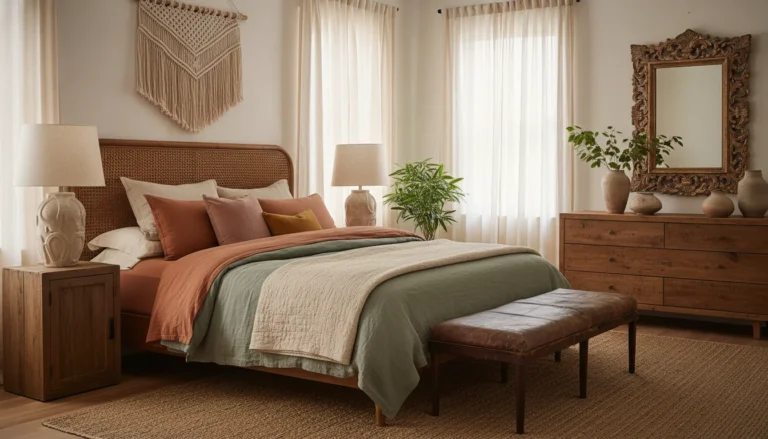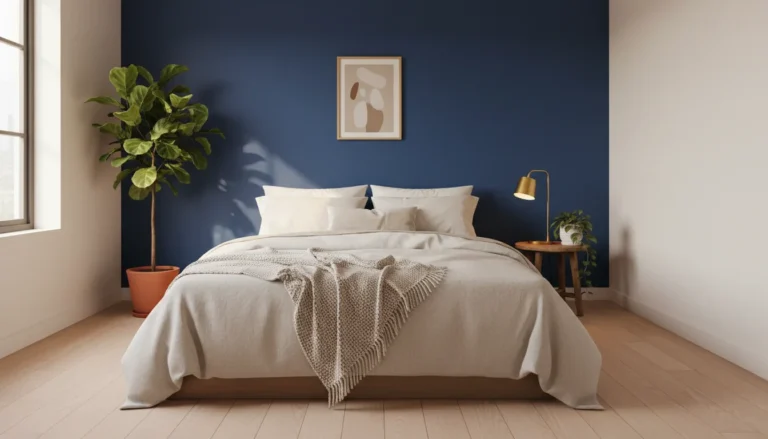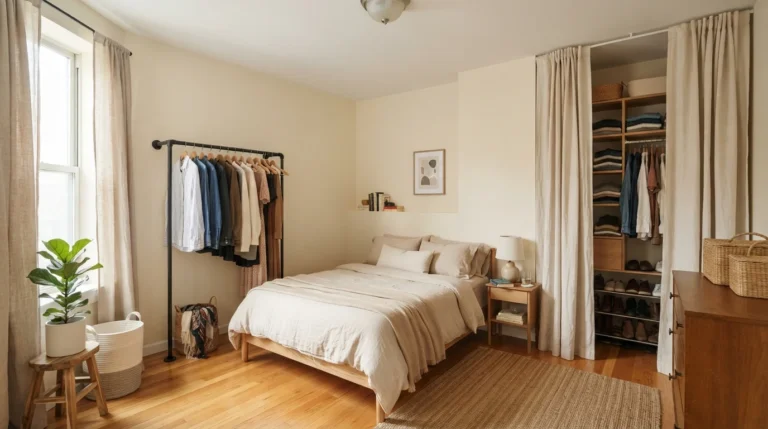

This post contains affiliate links. If you buy something through my links, I may earn a small commission at no extra cost to you. I only recommend things I genuinely use or believe in.
The single biggest mistake people make in a small bedroom is trusting the overhead fixture that came with the apartment. I call it the doom light. It sits centered on the ceiling, blasts down a harsh cone of glare into the middle of the mattress, and leaves every corner of the room in deep, gloomy shadow. That contrast between a blinding center and murky corners is the exact reason small rooms feel cramped, boxy, and uninviting.
If you need help calculating lumens or choosing bulb temperatures first, start with our complete guide on what lighting is best for a small bedroom. This guide focuses on visual styling, placement tricks, and practical arrangements.
When I moved into my 580-square-foot Austin apartment, my bedroom had a standard ceiling fan dome light with a bulb that looked like a dentist office. The room felt tiny and depressing. The moment I flipped off that central light and set up three low-level lighting points around the perimeter, the room changed. It did not just feel cozier. It felt noticeably larger because the eye was no longer forced into one harsh center point.
Here is the truth about lighting a small bedroom: you do not need more wattage. You need light placed at different heights so shadows dissolve and your eyes track the outer boundaries of the room. Here are the 15 specific, budget-friendly lighting ideas that actually work in compact spaces.
Before we continue, if you’re tired of buying decor that doesn’t look right together, I created something specifically for this…
The Science of Lighting Small Bedrooms: Kelvin and Lumens Explained
Before you spend a single dollar on lamps or sconces, you have to understand bulb temperature and brightness. Most people buy whatever four-pack is on sale at the grocery store, which usually turns out to be 4000K or 5000K daylight bulbs. In a small bedroom, daylight bulbs are disastrous. They cast a cold, bluish-white tone that highlights every speck of dust and makes walls look sterile.
For a bedroom, you want 2700K warm white bulbs. 2700K replicates the gentle warmth of candlelight and sunset, which encourages your nervous system to wind down. In terms of brightness, aim for 400 to 600 lumens per accent lamp instead of one 1500-lumen overhead scorcher. Spreading lower-lumen light across three or four points around the perimeter makes the room feel soft, expansive, and intentionally styled.
15 Small Bedroom Lighting Ideas to Expand Your Space
1. Swap Table Lamps for Plug-In Bedside Wall Sconces

In a small bedroom, nightstand surface area is precious real estate. If your nightstand is only 14 or 16 inches wide, a standard table lamp base eats up more than half of the usable surface. You end up knocking your water glass over in the middle of the night just reaching for your phone.
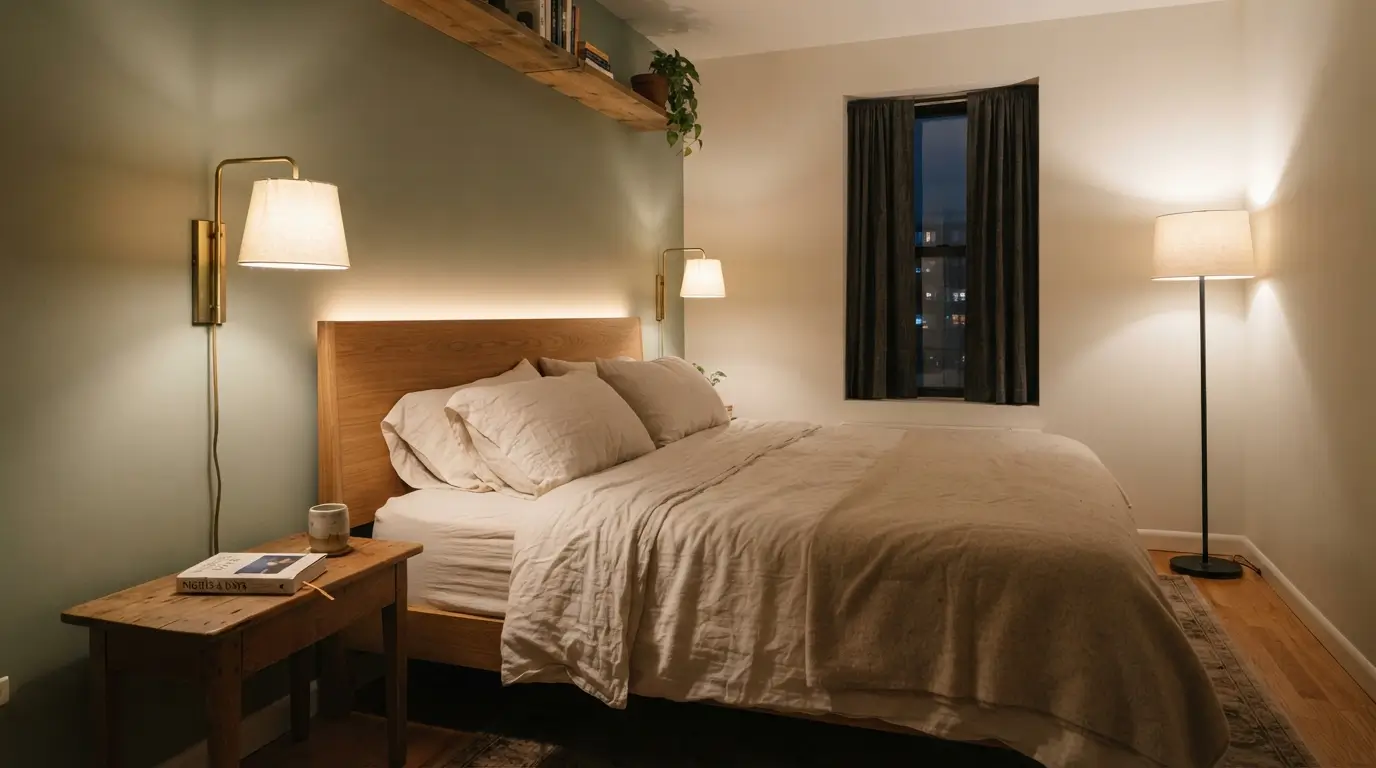
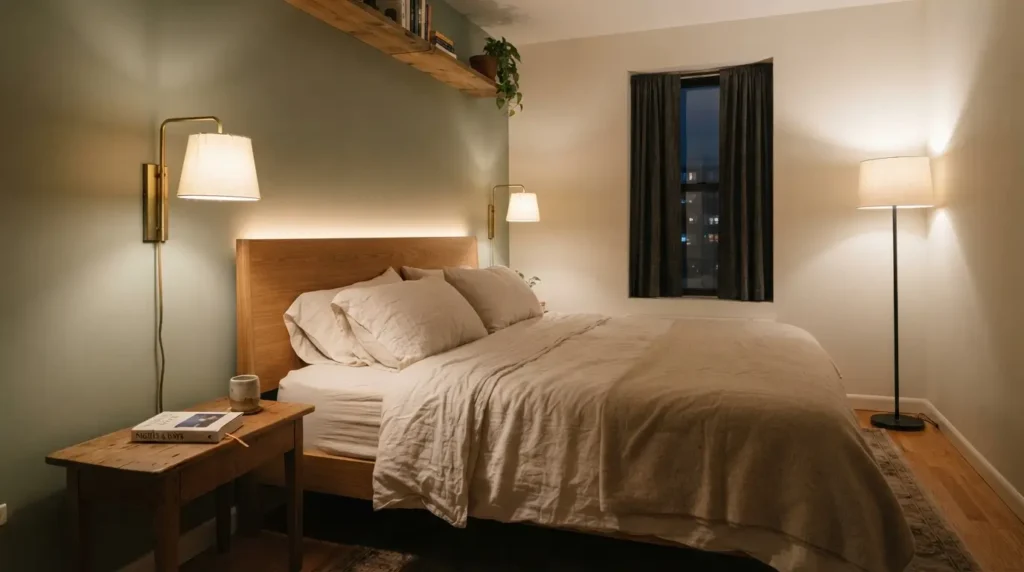
Plug-in wall sconces solve this instantly with zero electrical work required. You mount the backplate directly into drywall with two anchor screws, plug the cord into your wall outlet, and your nightstand table stays completely clear. Mount them roughly 30 to 36 inches above the top of your mattress so the light pools downward onto your book rather than shining in your face. Look for a pair of plug-in brass swing arm wall sconces that let you adjust the direction of the beam as you read.
2. Backlight Your Headboard with Warm LED Strip Lights
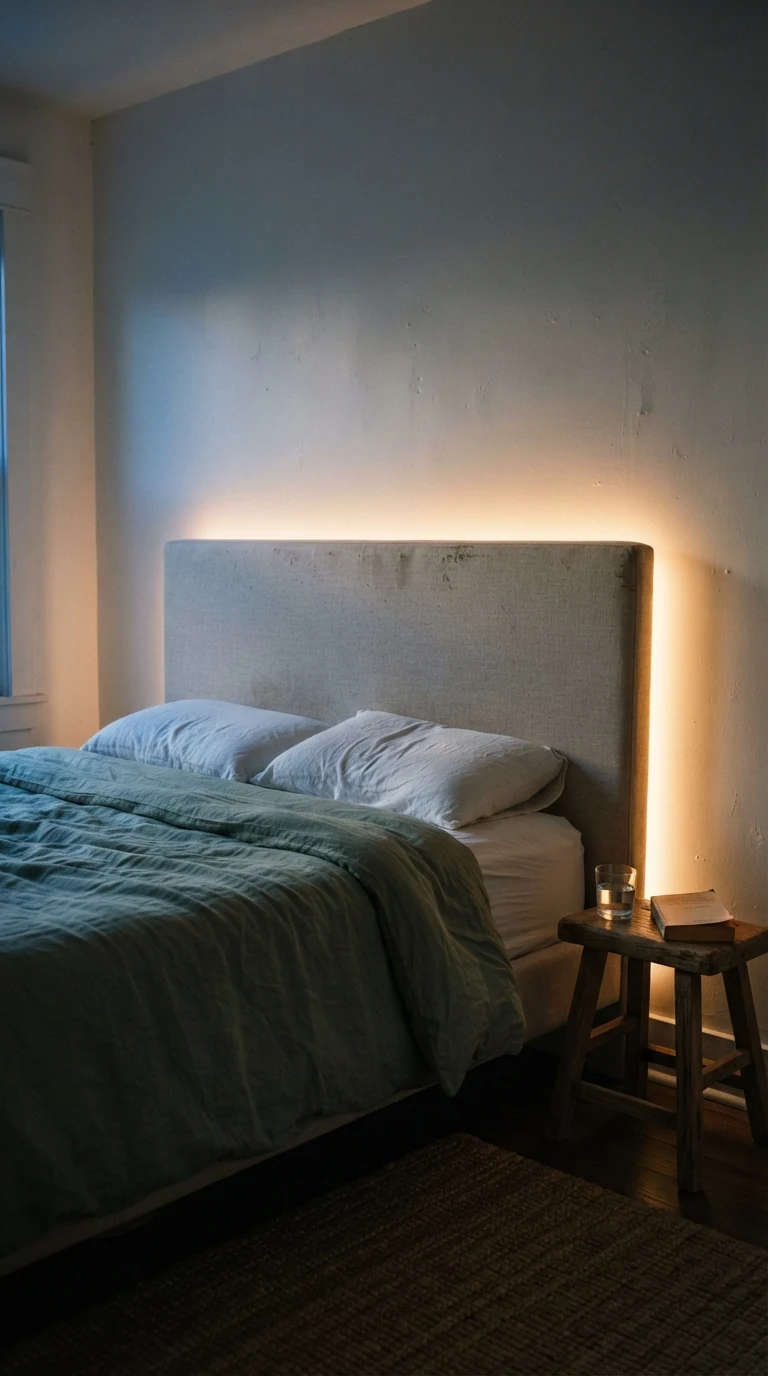
Backlighting your headboard is one of the easiest ways to make a budget bed frame look like something out of a five-star boutique hotel. When you adhere a strip of warm white LEDs along the back perimeter of your headboard, the light bounces off the wall behind the bed rather than firing directly into the room.
This indirect glow creates a soft halo effect that visually pushes the wall backward, giving the illusion that your bedroom has several extra inches of depth. The key rule here is that the LED diodes themselves must be completely hidden from view. You only want to see the soft, diffused wash of light rising up the wall. Use a cuttable warm white LED strip with inline dimmer so you can dial down the intensity before sleeping.
3. Bounce Light Off the Ceiling with an Uplight Floor Lamp
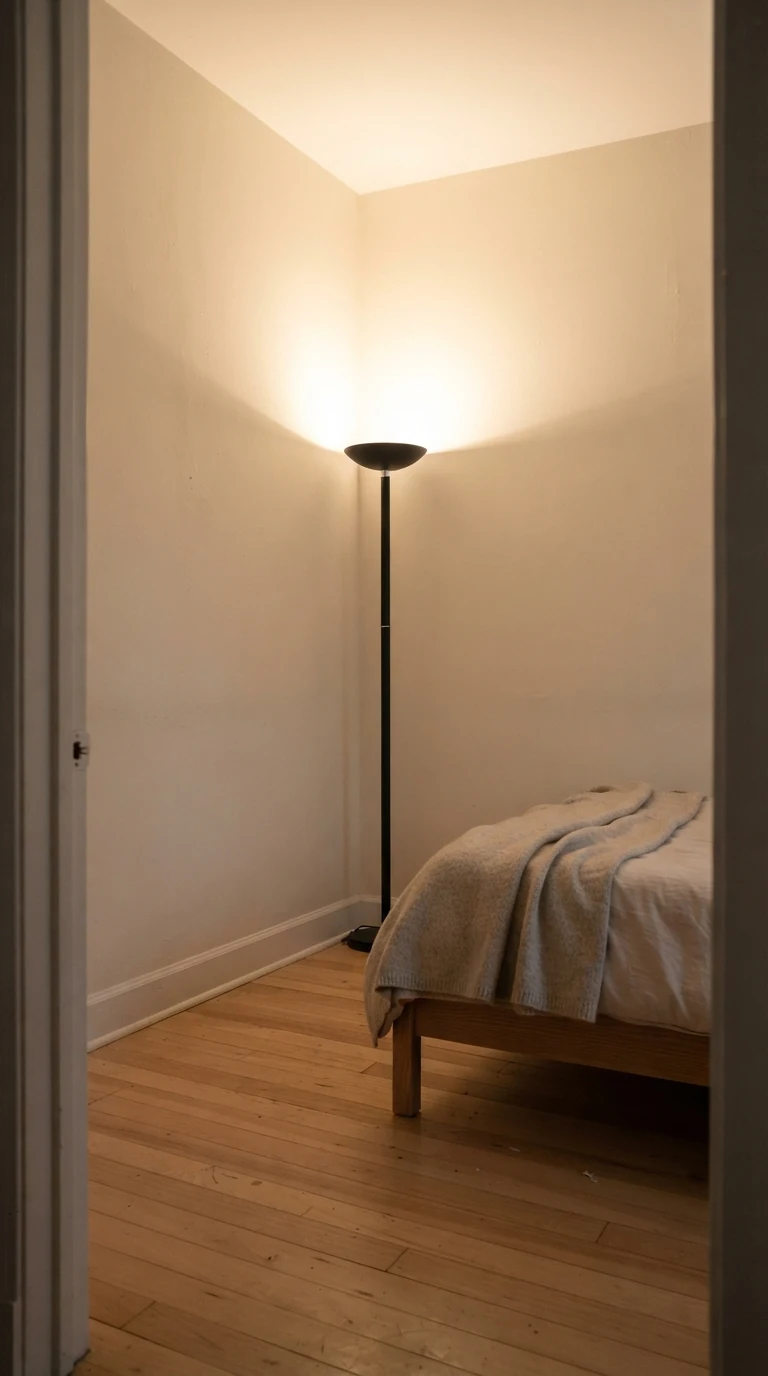
Most floor lamps cast light downward, which only illuminates your baseboards and creates an illusion that the ceiling is closing in on you. An uplight floor lamp, often called a torchiere, does the exact opposite: it sends a clean cone of light straight up to the ceiling.
When light washes across your ceiling, the entire upper boundary of the room becomes a massive passive reflector. Your eye naturally tracks upward along the illuminated walls, which makes even an eight-foot ceiling feel significantly taller. This technique works especially well in rooms that already struggle with vertical proportions, similar to the strategies I outlined in my guide on decorating small bedrooms with high ceilings. Choose a slender floor lamp with a footprint under 10 inches so it tucks into dead corner space without eating walkway room.
4. Hang a Plug-In Pendant Light with a Ceiling Swag Hook

If you want overhead lighting that does not feel aggressive, a swagged plug-in pendant is the renter secret weapon. You screw a small ceiling hook into the ceiling directly above a corner chair, desk, or bedside table, loop a long fabric cord through it, and plug it into the nearest baseboard outlet.
Because the light hangs low over a specific zone rather than dead-center in the middle of the room, it defines that corner as a dedicated destination. A pendant with an organic paper or pleated linen shade diffuses the light in all 360 degrees, softening room corners and adding sculptural height. Look for a plug-in pendant light kit with an inline toggle switch so you can turn it off without having to unplug it from the wall every night.
5. Add an Under-Bed Floating Perimeter Glow

In a small bedroom, a solid platform bed or full mattress can feel heavy and dominant on the floor plan. If your bed feels like a giant block that swallows the entire room, placing a soft, low-lumen LED strip under the bottom lip of the bed frame changes the visual weight entirely.
The under-bed glow creates the visual trick of floating. Because light pools under the bed frame, the eye registers floor space underneath rather than a solid wall of furniture. It also doubles as the best midnight nightlight imaginable: warm, grounded, and low enough that it never shocks your eyes if you wake up to grab water. If you are arranging a full mattress in a tight room, this pairs naturally with the space-saving layout principles from my breakdown of small bedroom ideas with a full bed.
6. Pair Every Lamp with a Plug-In Slider Dimmer
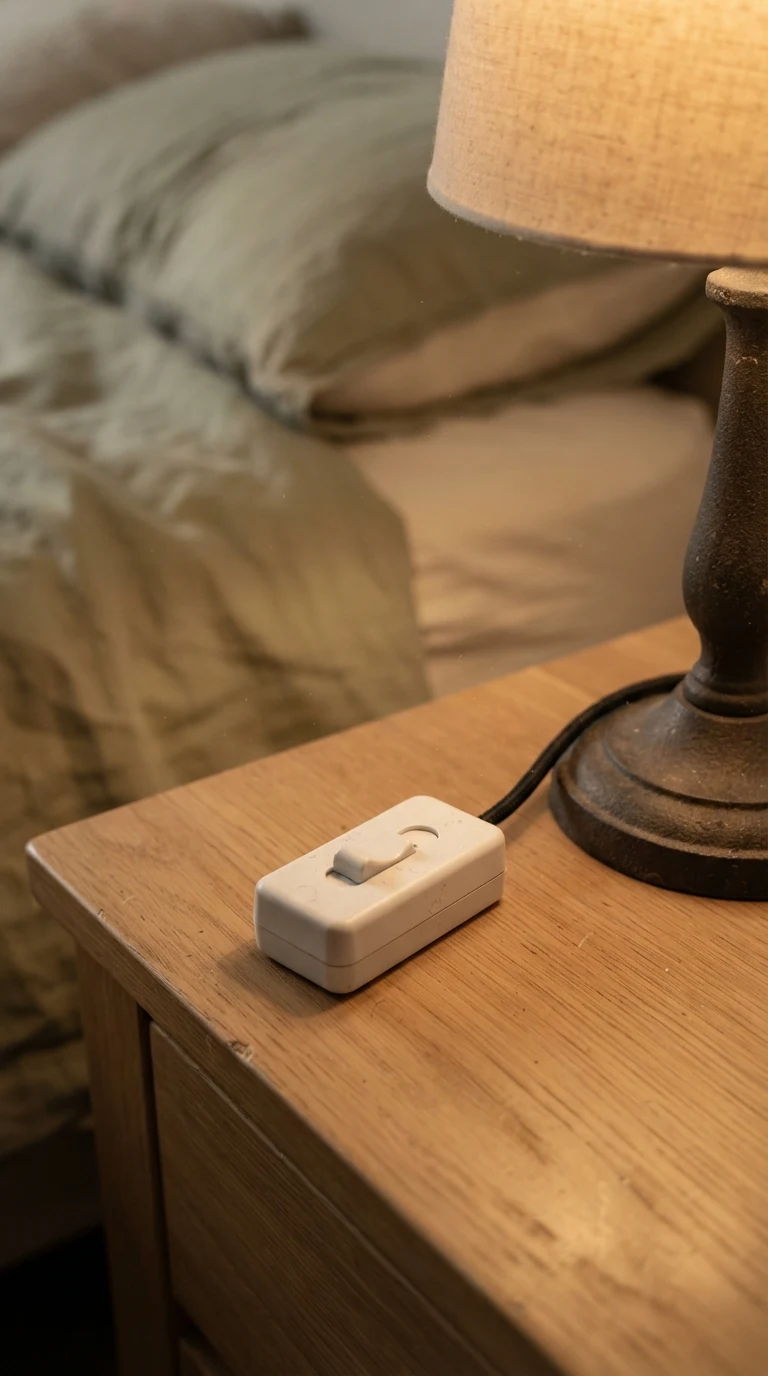
This is genuinely the highest return on investment upgrade in all of home decor. You can buy a plug-in tabletop dimmer module on Amazon for roughly twelve dollars. You plug your lamp cord into the module, plug the module into the wall, and suddenly any standard lamp has full dimming capabilities.
A lamp that only has one setting is either too dim for reading or too bright for winding down. Having slider control means you can keep your bedside light at 100 percent while reading a book, slide it down to 40 percent while watching a movie in bed, and lower it to 10 percent as you drift to sleep. Pick up a tabletop plug-in slider dimmer switch compatible with dimmable LED bulbs for every single lamp in your room.
7. Place a Mirror to Multiply Your Best Light Source
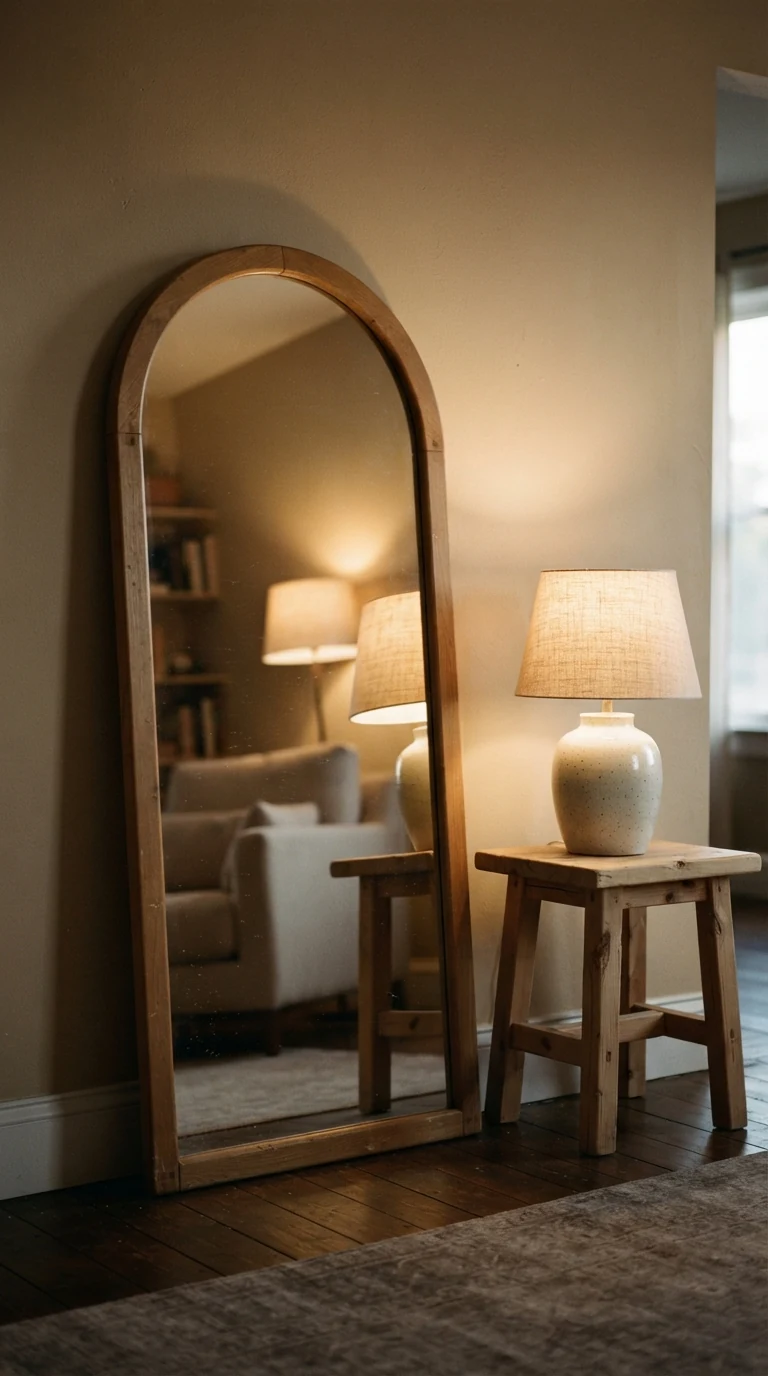
Every small-space decorating guide tells you to put a mirror opposite a window. That is great advice between 10 AM and 2 PM, but once the sun goes down, that mirror simply reflects an empty, black rectangle of glass. It adds zero illumination to your evening room.
Instead, place an arched or standing mirror directly adjacent to your warmest artificial light source, like a nightstand lamp or a corner accent light. The glass catches the warm bulb light and bounces it back into the darkest quadrant of the bedroom. You get twice the perceived illumination without adding another electrical cord to your outlets.
8. Choose Translucent and Pleated Shades Over Opaque Metal
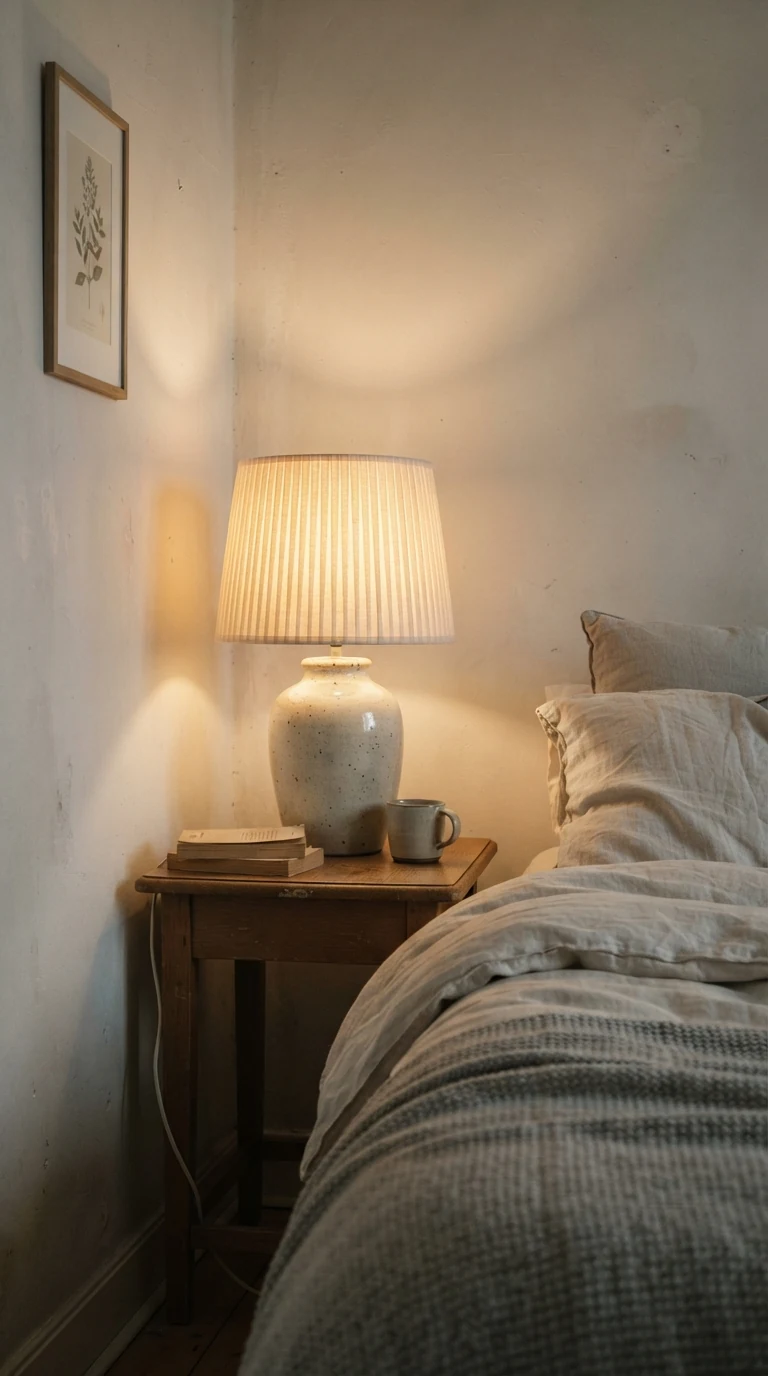
Lamp shade material matters just as much as bulb wattage. Opaque metal or dark lacquered shades trap light inside and direct it purely upward or downward like a spotlight. In a large room that can feel dramatic, but in a small bedroom it creates harsh contrasts that make the room feel disjointed.
Translucent lamp shades made of woven linen, pleated cotton, or frosted white glass glow from within. They cast light horizontally across your walls, which softens hard shadows and creates the visual illusion of blurred boundaries. That softness makes compact walls feel like they recede, expanding the room naturally.
9. Install Rechargeable Magnetic Strip Lights Inside Your Closet
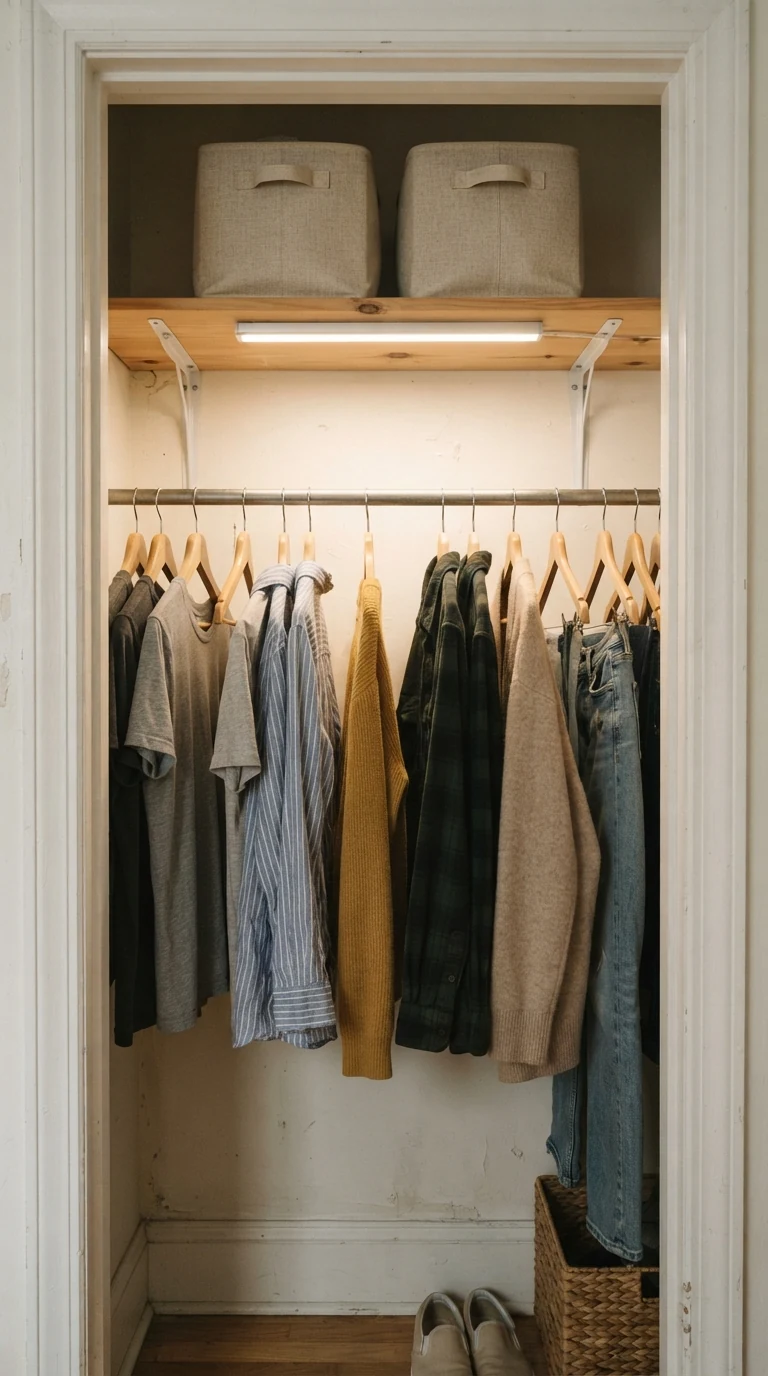
An unlit closet is a literal shadow sink in a small bedroom. When you glance across your room at night and see an open closet doorway that looks like a dark cavern, it absorbs light and makes the entire room feel smaller and messier than it actually is.
You do not need an electrician to wire closet fixtures. Grab a rechargeable magnetic LED light bar with a built-in motion sensor. You stick the thin metal adhesive plate under the top closet shelf, snap the magnetic light bar into place, and it automatically turns on the second you slide the door open. It eliminates closet shadows entirely, which is an essential hack if you are working with tight wardrobe layouts like the ones in my guide to small bedroom ideas with no closet.
10. Drape Warm Micro-LEDs Behind Sheer Linen Curtains

Fairy lights often get a bad reputation because people picture them pinned to college dorm walls with plastic thumbtacks. When hung bare, they can look messy and juvenile. When filtered through fabric, they look like high-end architectural diffusion.
Hang warm white copper wire micro-LEDs directly against your window frame, then pull semi-sheer linen curtains closed over them. The fabric blurs each tiny light point into a soft, glowing curtain of vertical warmth. Because the light spans the entire height of your window wall, it draws the eye from floor to ceiling and makes the window wall feel like a glowing focal point. Grab a strand of warm white copper wire micro-lights with a USB remote for under fifteen dollars.
11. Use a Cordless Rechargeable Touch Lamp for Clutter-Free Surfaces
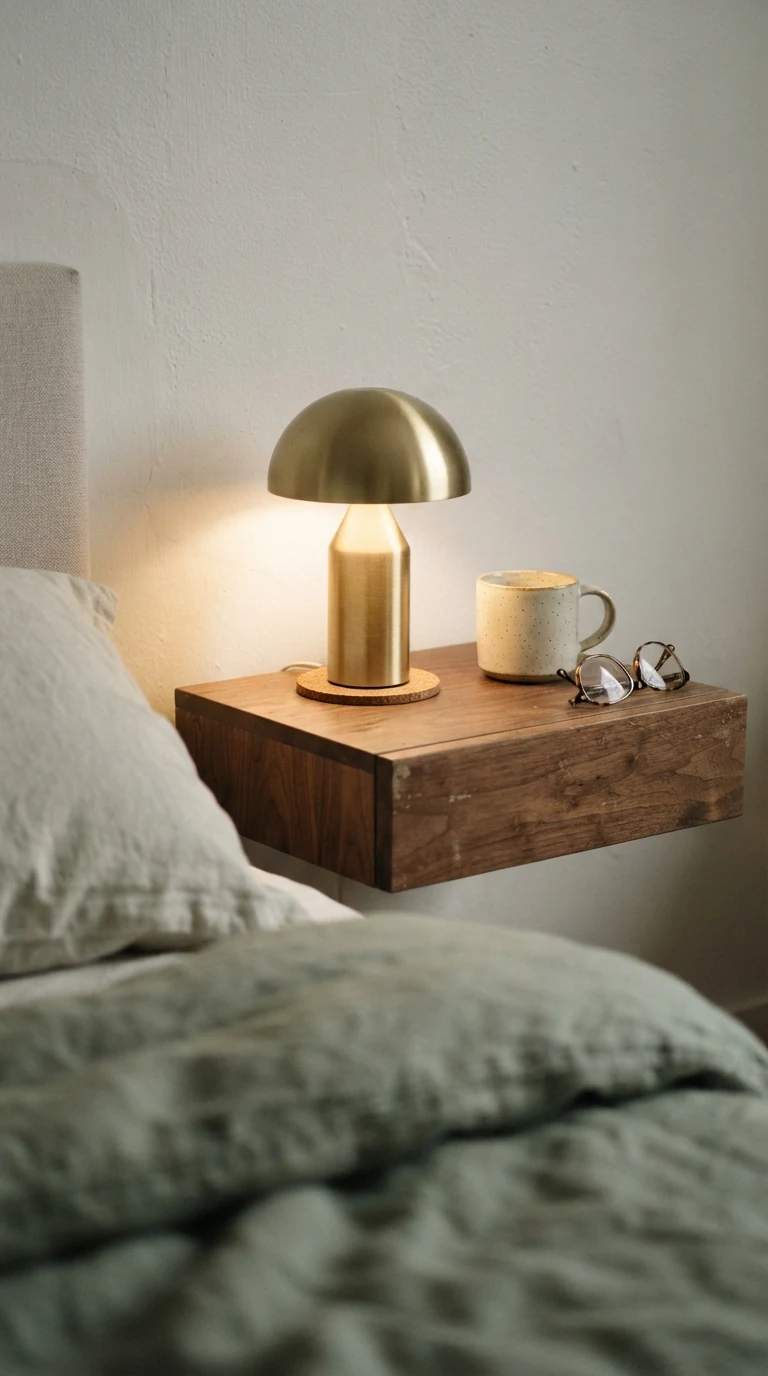
Cord clutter is one of the quickest ways to make a small bedroom feel visually chaotic. When power cords from lamps, phone chargers, and alarm clocks snake across your nightstand and down your baseboards, your brain registers visual noise that makes the space feel constricted.
Cordless rechargeable table lamps have completely solved this problem over the last two years. These touch-activated LED lamps run on built-in lithium batteries for twelve to sixteen hours on a single USB charge. You tap the base to adjust brightness, and there are zero wires dragging across your table. You can also pick it up and carry it to your dresser, windowsill, or reading nook whenever you need a pool of light in a spot without an outlet.
12. Mount an Art Accent Picture Light on the Farthest Diagonal Wall
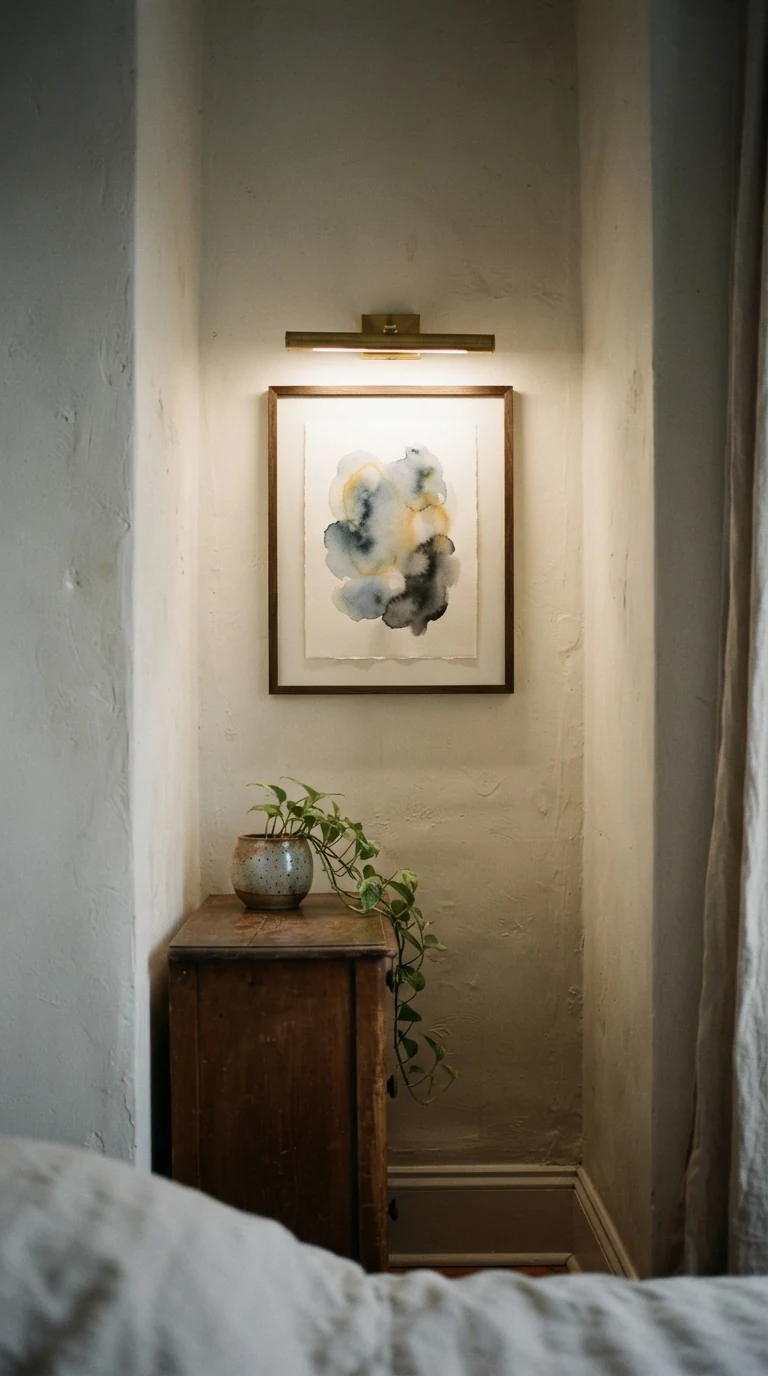
When you walk into any room, human sightlines naturally follow the longest available diagonal path to the farthest corner. In an awkward or narrow small bedroom, that farthest corner is often left in deep shadow, which cuts the perceived depth of the room in half.
Mounting a slim, battery-operated brass picture light above a single framed print or floating shelf in that back diagonal corner pulls the eye straight to the perimeter wall. By illuminating the absolute farthest boundary of the room, you give your space an immediate sense of depth that makes it feel like it extends further back than it actually does. If your room has an irregular floor plan, this technique pairs brilliantly with the arrangement rules in my guide on arranging small rooms with awkward layouts.
13. Replace Heavy Ceiling Fixtures with a Paper Lantern Pendant
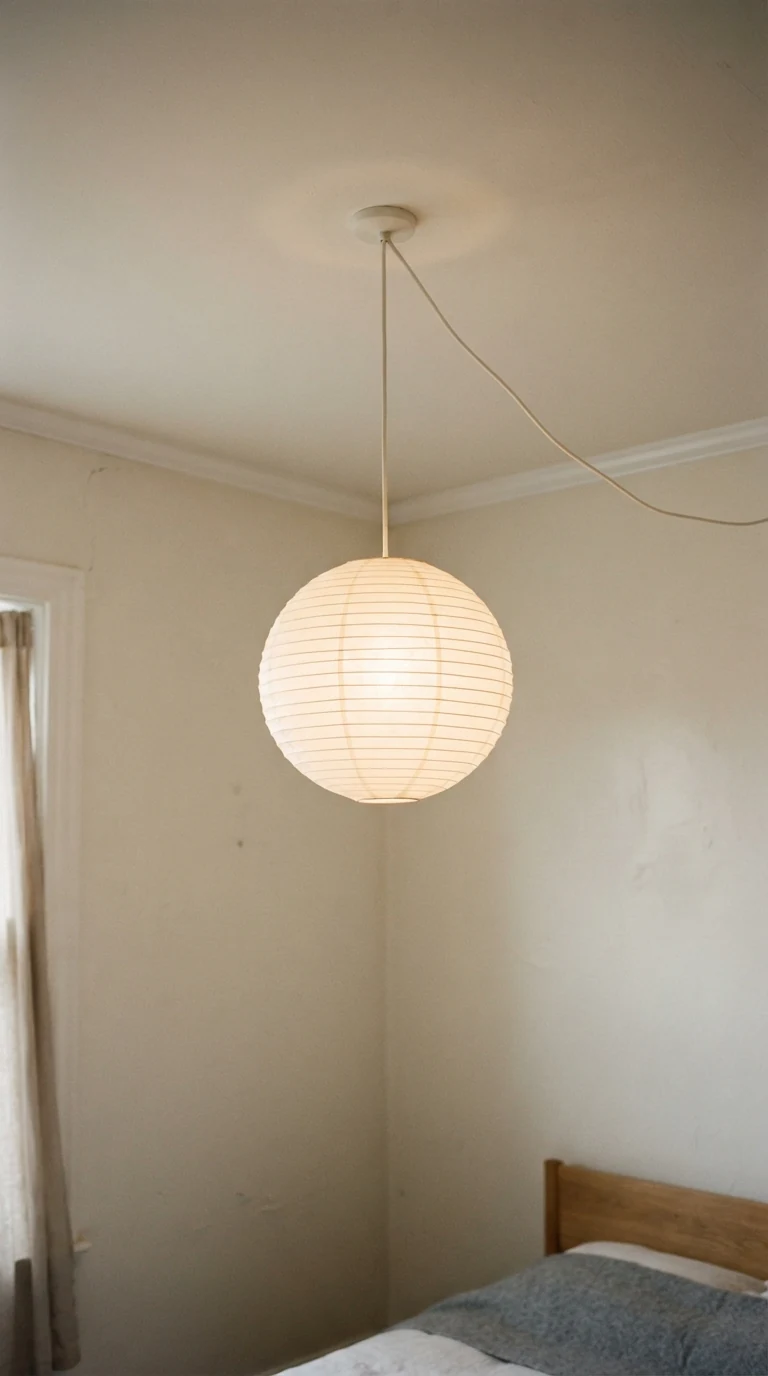
If you have an existing ceiling junction box and want to keep an overhead light for general cleaning or folding laundry, take down the heavy glass or dark metal flush mount fixture. Chunky fixtures hang down like heavy weights in the center of the room, drawing attention to limited ceiling height.
Replace it with a paper lantern pendant light, like the classic Japanese Noguchi Akari style or an inexpensive spherical paper shade from IKEA. Rice paper weighs almost nothing visually and diffuses light uniformly in all directions. It fills the room with a cloud of glare-free light while giving the ceiling an open, airy feeling that heavy glass bowls can never achieve.
14. Hide Puck Lights Under Floating Shelves for Downward Wash
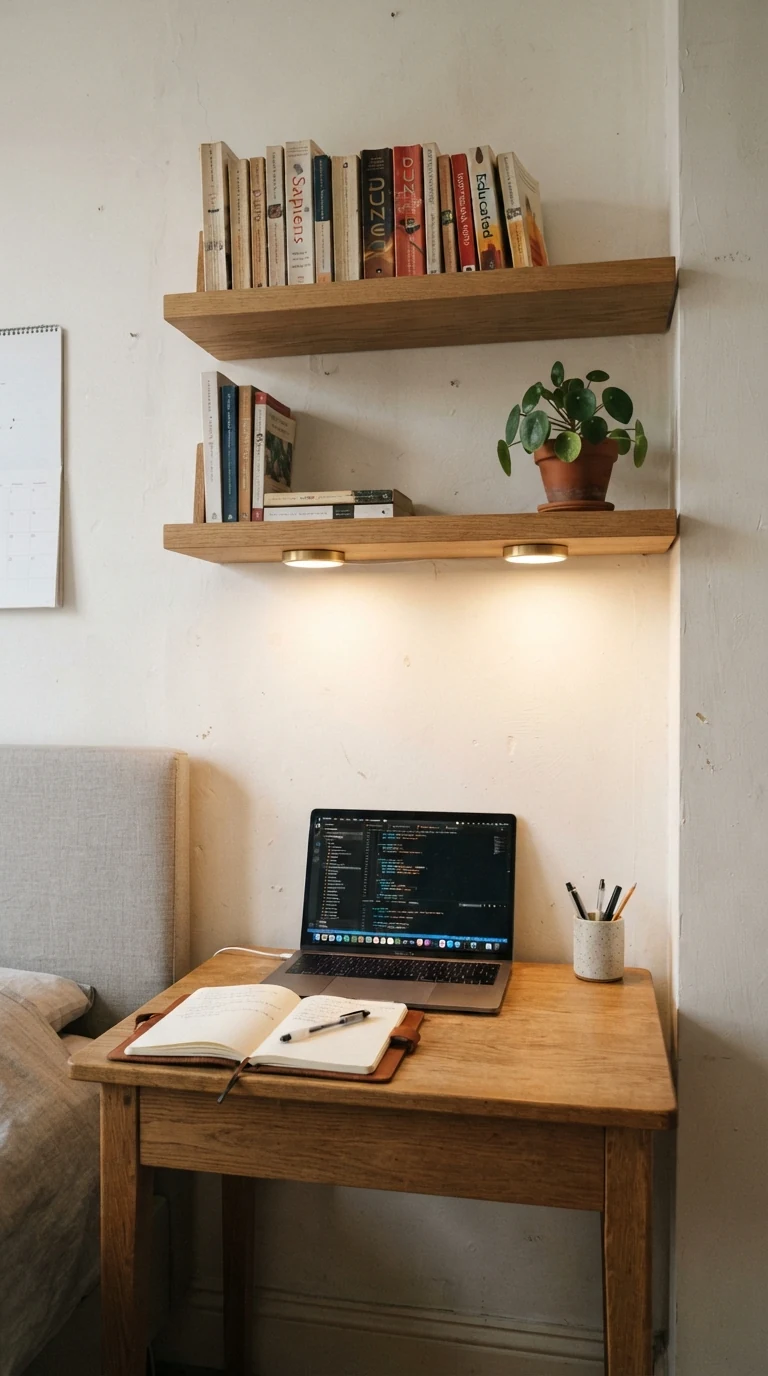
Floating shelves are great for small-space storage, but they also cast dark horizontal shadows across whatever wall or furniture sits directly underneath them. A shelf mounted above a desk or low dresser can turn that surface into a dim dead zone.
Stick rechargeable or battery-operated slim puck lights to the underside of the shelf. Because the puck light is hidden beneath the shelf lip, you see only the downward architectural pool of light washing over your books, plants, or small decor pieces. It turns functional vertical storage into a warm accent lighting feature without using up any plug-in wall outlets.
15. Use Floor-Level Baseboard Wash Lights to Anchor the Room
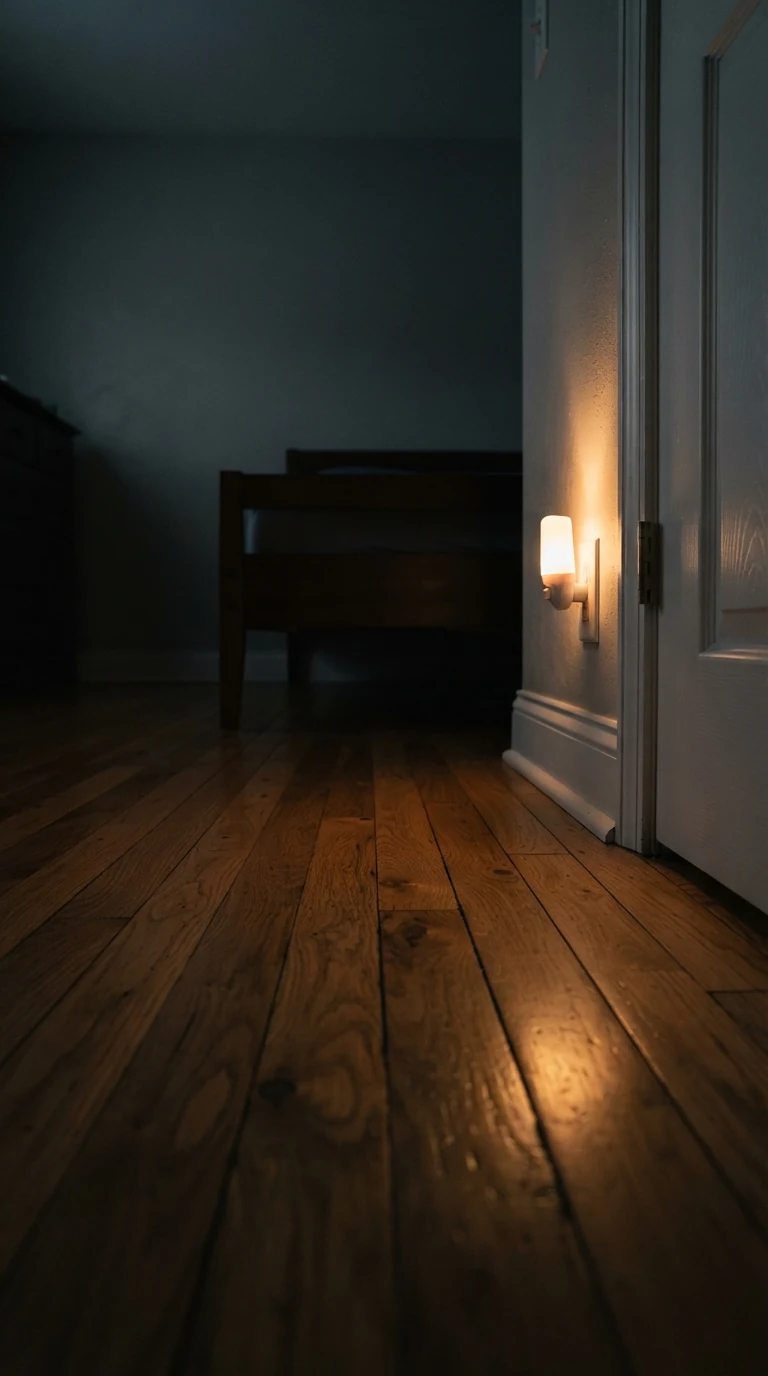
Most people only think about lighting at eye level or ceiling height. But in a small bedroom, having a tiny touch of light near the floor plane grounds the room and makes the floor space read as continuous and open, even in near total darkness.
Low-profile plug-in nightlights with dusk-to-dawn sensors and warm 2200K amber LEDs cost under fifteen dollars for a multi-pack. When plugged into baseboard outlets near the doorway or bathroom path, they cast a subtle five-lumen pool of warmth across the floor planks. It adds that final, luxurious layer of hospitality lighting that separates a thoughtfully designed bedroom from a messy room with a lamp.
Small Bedroom Lighting Quick Reference Guide
| Lighting Fixture Type | Ideal Color Temp (Kelvin) | Target Brightness (Lumens) | Primary Job in Small Bedroom |
|---|---|---|---|
| Bedside Wall Sconces | 2700K Warm White | 400 to 500 Lumens | Focused reading light while keeping nightstands clear |
| Corner Uplight Floor Lamp | 2700K Warm White | 800 to 1100 Lumens | Bouncing light off ceiling to create vertical height |
| Headboard Backlight Strip | 2400K to 2700K Amber | 300 to 450 Lumens | Floating depth halo that visually expands back wall |
| Cordless Rechargeable Lamp | 2700K Warm White | 150 to 300 Lumens | Flexible, wire-free accent light for tiny surfaces |
| Closet Magnetic Light Bar | 3000K Neutral Warm | 200 to 300 Lumens | Eliminating dark wardrobe shadows that absorb room light |
The $150 Complete Small Bedroom Lighting Refresh
You do not need an electrician or hundreds of dollars to overhaul your bedroom lighting. Here is the exact budget formula I recommend to completely transform a small room on a real budget:
- Pair of plug-in wall sconces: $45 to $60 for the set on Amazon.
- Warm LED strip light for headboard: $14 for a 16-foot cuttable roll with dimmer.
- Tabletop plug-in dimmer switch: $12 for instant slider control.
- Rechargeable closet light bar: $16 for a magnetic motion-sensor bar.
- Four-pack of 2700K dimmable warm LED bulbs: $14.
- Total investment: Roughly $100 to $116 total.
For roughly one hundred dollars, you eliminate the harsh overhead doom light, free up your nightstand surfaces, and give your small room the layered, cozy glow of a boutique hotel. Turn off the big light tonight and test one of these moves. You will never look at your bedroom the same way again.